10 “True” Movies That Glossed Over Major Controversies

Sometimes poetic licence gives characters an easy ride...
The "based on a true story" label is a lucrative one for movies, whether they're heavyweight dramas gunning for critical adoration or horror films looking to add a verite feel to their gruesome tales. As we move into Oscar season, we're due another wave of prestige films trumpeting their real life credentials in a bid for statuettes. However, films based in real life often have a tendency to massage the truth in an attempt to make their stories more palatable, either to conservative Academy voters or the wider cinemagoing public. The simple fact of the matter is that real people tend to be flawed, and famous people tend to be even more flawed. Often, with the more dramatic Oscar bait, there's little room for narrative complexity, particularly when it could cast a shadow over otherwise uplifting material. The old journalistic quip that you should never let the facts get in the way of a good story also seems to be true for cinema. Sometimes, the character flaws that these films gloss over are perfectly forgivable and make sense in terms of streamlining the narrative. There are occasions, though, when these decisions seem to be predicated on a desire to simplify the facts of the story rather than the creative impetus to make a better film.

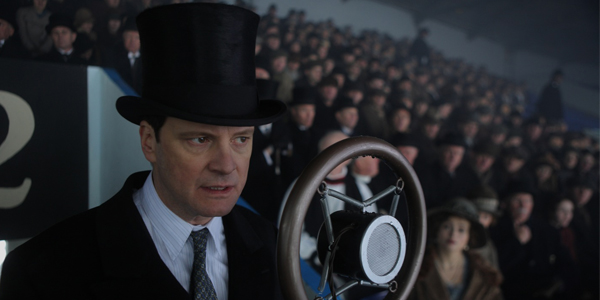
10. The King's Speech

The Lie: Contrary to the film, Winston Churchill was actually firmly on the side of Edward VIII and opposed his abdication. It's pretty safe to say that Winston Churchill is a hero to millions of British people. He is the historical figurehead of modern education around World War Two and is widely regarded as one of the greatest Prime Ministers in the history of the United Kingdom. As a result, the portrayal of him in 2010 Oscar juggernaut The King's Speech is pretty straightforward. Timothy Spall portrays Churchill as a supportive friend of Colin Firth's stammering King George VI. In reality, according to Christopher Hitchens, Churchill was staunchly loyal to King George's older brother, King Edward VIII, who abdicated the throne in order to marry American socialite Wallis Simpson and is widely believed to have been sympathetic to Adolf Hitler and the Nazis. In fact, Churchill is reported to have encouraged Edward to resist the pressure to abdicate the throne. It's easy to see why the filmmakers avoided including this particular detail in their film, given that the image of Churchill is so firmly ingrained in the British historical narrative. Painting the political powerhouse as a more flawed character may well have disrupted the uplifting story and put a roadblock on the route to Oscar glory. And when you have Harvey Weinstein behind your film, Oscar roadblocks are intolerable.

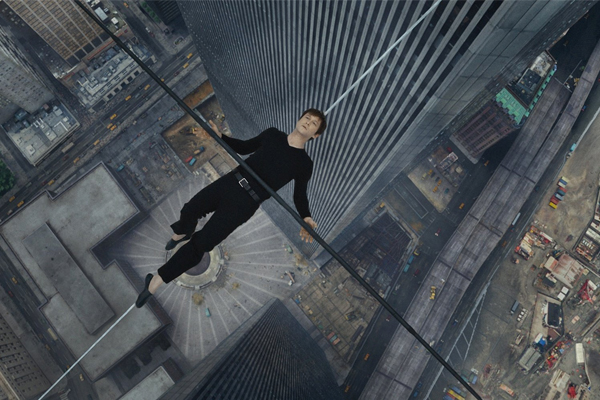
9. The Walk

The Lie: In reality, Philippe Petit was a difficult man to be around, who cheated on his girlfriend. Robert Zemeckis' visually impressive The Walk, which tells the story of tightrope daredevil Philippe Petit, is currently wowing audiences in cinemas around the world. Petit is most famous for his highly illegal 1974 stunt in which he walked a wire hung between the towers of the World Trade Center. The stunt was the subject of James Marsh's 2008 documentary Man On Wire, which went on to win the Best Documentary Feature prize at the Oscars. Petit was heavily involved in the production of The Walk, teaching star Joseph Gordon-Levitt how to walk on a tightrope in order to enhance the realism of the central stunt sequence. Possibly as a result, the film glosses over the more difficult aspects of Petit's personality, including the fact he cheated on his girlfriend with a total stranger almost immediately after coming down from the towers. It seems that, when you're telling a story based on an incredible human achievement, there's no room to actually humanise the protagonist.

8. The Theory Of Everything

The Lie: The film glosses over Stephen Hawking's split from his wife Jane. Earlier this year, Eddie Redmayne scooped the Best Actor prize at the Academy Awards for his impressive turn as iconic scientist Stephen Hawking in glitzy biopic The Theory of Everything. There's no doubt that Redmayne's performance, with its physically transformative nature and surprising degree of humour, was an excellent one, but the film itself was something of a fluffy watch, lacking in any criticism of its subject. The film's script was based upon Jane Hawking's 2007 book Travelling to Infinity: My Life with Stephen, which reflects a brighter relationship between the former married couple. Had the film been based on Jane's earlier book, Music to Move the Stars, the film might've emerged considerably more critical of Redmayne's character. Throughout the 1980s, the relationship between the Hawkings was strained, culminating in 1990 when Hawking left the family home in order to marry nurse Elaine Mason, with whom he had grown close. It wasn't until Hawking and Mason divorced in 2006 that his relationship with Jane and his family was repaired. Given the inspirational, awards-baiting story that The Theory of Everything was trying to tell, there was very little room to showcase the more difficult, darker side of Hawking's personality. Given that Jane, played in the film by Felicity Jones, is essentially the second lead of the film, it was necessary for the plot to keep the Hawkings together or risk losing the emotional arc of the film.

7. Foxcatcher

The Lie: The film makes many changes to the timeline of the climactic murder. Unlike many of the films on this list, Foxcatcher is a deeply grim story. It followed reclusive millionaire John du Pont, played by an unrecognisable Steve Carell, and his attempts to put together an Olympic wrestling school on his family estate. Du Pont would ultimately shoot dead one of his star performers Dave Schultz (Mark Ruffalo) in a bizarre fit of rage. In order to create the slow burning narrative of the film, director Bennett Miller compressed and altered the real historical events in a number of ways. Crucially, Dave and Mark Schultz (Channing Tatum) never spent time together at the Foxcatcher ranch. Dave only became a permanent resident at the ranch six months after Mark left. By the time Du Pont shot Dave in 1996, the entrepreneur's interest in wrestling had begun to wane and Dave had made it clear that he was about to leave the ranch to take up a coaching position elsewhere. These factors may well have fed into the murder, but are totally ignored in the film, which places Mark at the centre of events.

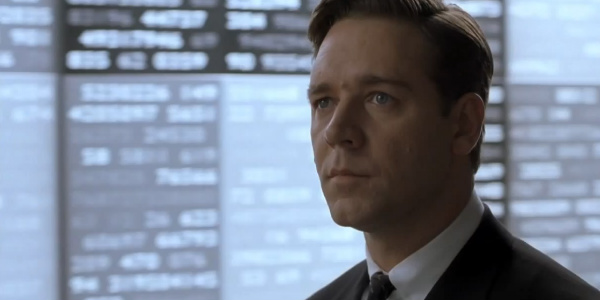
6. A Beautiful Mind

The Lie: The film omits difficult aspects of John Nash's personal life, including affairs. Ron Howard's drama A Beautiful Mind, which won four Academy Awards back in 2002, told the story of mathematician John Nash and his battle to succeed in his field despite hallucinations brought about by paranoid schizophrenia. Russell Crowe's portrayal of Nash won him a BAFTA and an Oscar nomination. Crucially, though, the film places a Hollywood sheen on Nash and fails to acknowledge the fact that the real man behind the story was an intensely flawed character and had a far more turbulent personal life than the film suggested. Nash experimented with homosexuality as a young man and fathered a child as a result of an affair with an older nurse. As soon as Nash found out the woman, Eleanor Stier, was pregnant, he abandoned her and was cruel to both her and the child. On top of these cruelties, Nash was allegedly an antisemite, which is something he has subsequently chalked up to his schizophrenia. A Beautiful Mind is another case of a Hollywood biopic stripping down a flawed human being in order to more easily court awards glory. In fact, the real Nash would arguably have been the subject of an even better film. It certainly would've been a braver story to tell.

5. American Sniper

The Lie: The war hero of the film was actually something of a racist. American Sniper, directed by Clint Eastwood, stands as one of the most controversial movies to be nominated for the Best Picture Oscar in the last few years. On the way to an impressive $500m at the worldwide box office, the film was received in a hail of controversy as a result of its simplification of its central character, who was largely painted as a black-and-white American hero. Marketing material for the film was drenched in stars and stripes and the tagline boasted Chris Kyle's credentials as "the most lethal sniper in American history". However, a look into the world of Kyle suggests that the real man was not quite as straightforwardly heroic as the film portrays. There's no doubt that Kyle was exceptional at his job, but it's deeply uncomfortable to see quotes from his memoir in which he discusses enjoying killing and describes the Iraqis he shot in alarmingly racist terms ("damn savages"). The film shaves off all of these harder edges to Kyle, casting everyman extraordinaire Bradley Cooper and giving the story a fairly standard hero narrative. There's little doubt that American Sniper would have been considerably less successful had it maintained the complexities of its protagonist. However, the story had the potential to be a complex and interesting look at an incredibly controversial conflict, anchored by a flawed central character. American Sniper clearly worked for a certain audience, but it describes a relatively modern story in terms of a disturbing false dichotomy in which white Christians are the good guys and everyone else is bad.

4. The Fifth Estate

The Lie: The rape allegations against Julian Assange are almost completely ignored. Despite its commercial failure and the relative kicking it came in for from critics, Bill Condon's The Fifth Estate was actually a rather engaging look at the life of polarising WikiLeaks founder Julian Assange. Benedict Cumberbatch disappeared into the role completely in an outstanding piece of mimicry, alongside Daniel Brühl as Assange's partner in crime Daniel Domscheit-Berg. The film focused primarily on the rise of WikiLeaks and the increasingly difficult personality of its enigmatic founder. Unlike many of the other biopics on this list, The Fifth Estate didn't shy away from creating a flawed protagonist, but notably avoided the biggest controversy around Assange. The film ends with Assange holed up in the Ecuadorian embassy in London, where he still resides to this day, but there's very little exploration in the film of the circumstances that led him there. In The Fifth Estate, Assange is painted as something of an anti-hero, leaving no room for the fact that he is currently wanted for questioning surrounding sex crimes. Given that the allegations against Assange are such a major part of his recent history, it's remarkable that they were barely mentioned in The Fifth Estate.

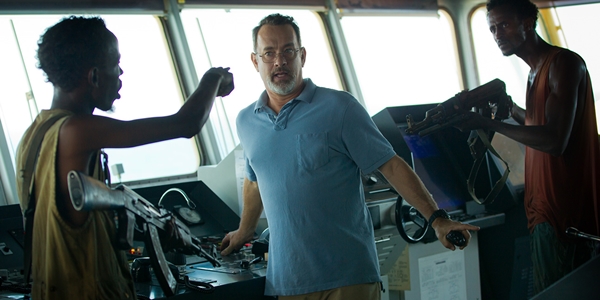
3. Captain Phillips

The Lie: According to his crew, the real Captain Phillips was far from being a clean cut hero. One of the most harrowing films of 2013, Captain Phillips told the story of the eponymous sailor and his attempts to defend his ship from a gang of heavily armed Somalian pirates. Tom Hanks gave one of his best performances as the beleaguered captain, including a heart-breaking final scene in which emotion and shock got the better of him. The central narrative of Captain Phillips is a simple example of the humble American hero going above and beyond the call of duty in order to protect those around him. Whilst some, including director Paul Greengrass and first mate Shaun Murphy, stand by the portrayal of Phillips on the big screen, several of the members of the real Maersk Alabama crew have taken issue with the way in which Phillips was lionised by the film. They alleged that Phillips had been told not to sail as close to Somalia as he did and describe him as "real arrogant" in his lack of fear of piracy. This one is perhaps less clear than many of the other entries on this list, given that the events are disputed. However, it's fair to say that the film shies away from exploring the flaws of Phillips as a captain, instead choosing to focus on his perceived heroism. In this case, it's easy to see how Captain Phillips could have been a considerably less entertaining film if it had hewed closer to reality.

2. The Pursuit Of Happyness

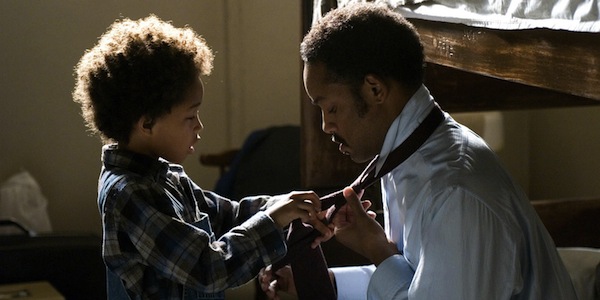
The Lie: The film ignores domestic abuse allegations against Chris Gardner. The Pursuit of Happyness is a prime example of a film about the American Dream that paints it as achievable with enough heart and elbow grease. Will Smith stars as Chris Gardner who must overcome financial and professional difficulties in order to provide a better life for his son, played by real son Jaden. There's a rather glaring omission at the centre of the film's narrative, which paints Gardner as an almost model citizen. In The Pursuit of Happyness, Gardner is forced to spend a night in prison as a result of several unpaid parking tickets. For the real Gardner, however, his arrest was rather more sinister. The reason behind Gardner's original arrest was actually an accusation of domestic violence against the mother of his son, Jackie. It was only once Gardner had been arrested for this that he was additionally charged for the parking tickets. Again, this is a case of a character's real life flaws being removed in order to make the character the centerpiece of a feel-good tale. Considering the fact that the real Gardner had a brief cameo in the film, it was unlikely to be a warts-and-all telling of his life story.

1. Straight Outta Compton

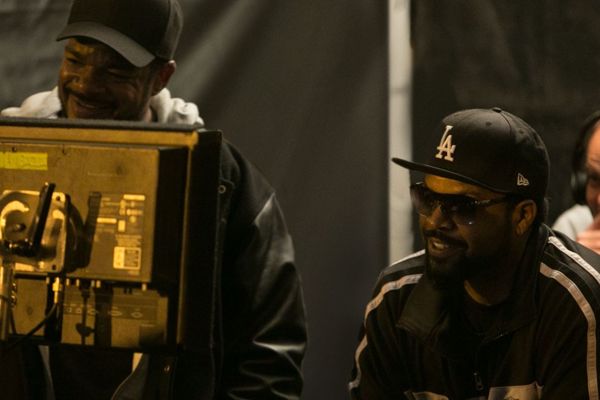
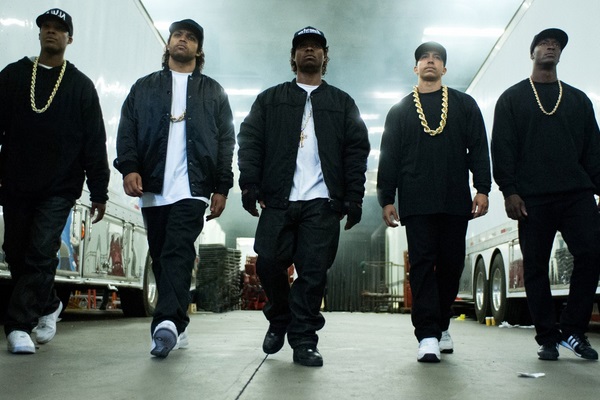
The Lie: Dr Dre has a well-documented history of violence against women. The film ignores this. Earlier this year, F Gary Gray's NWA biopic Straight Outta Compton became a smash hit both commercially and critically, Tracing the origins, break-up and more recent lives of the core members of the group, the film served as an interesting and incendiary compendium of moments from the careers of true rap pioneers. A quick glance at the film's credits shows that NWA members Ice Cube and Dr Dre were producers on Straight Outta Compton. It is perhaps this nugget of information that explains the film's unforgivable omission of Dr Dre's history of violence against women. In a confrontational and heart-wrenching Gawker article, rapper and TV personality Dee Barnes described her brutal attack at the hands of Dre and mourned the absence of an acknowledgement of the incident in Straight Outta Compton. Dre also abused ex-wife Michel'le, who was entirely absent from the film as well. Given the rather congratulatory nature of Straight Outta Compton, it's understandable from a filmmaking perspective why these moments were not included in the story. However, when shocking physical abuse is dismissed as "side stories", there's clearly some rather huge massaging of the truth at play.

In this post: 
Tom Hanks
 
Posted On: 
Contributor
Contributor

Freelance film journalist and fan of professional wrestling. Usually found in a darkened screening room looking for an aisle seat and telling people to put away their mobile phones. Also known to do a bit of stand-up comedy, so I'm used to the occasional heckle.