10 Times Film-Makers Ruined Their Own Damn Movies
If it ain’t broke, don’t fix it.

Nobody sets out to make a bad movie but as any avid film fan will tell you, there’s more bad than good out there in the world of film. Even movies that show promise or are bolstered by big budgets and stellar casts can fall short of the mark.
Often, it’s a consequence of studio interference, or misjudged casting or any other of the myriad ways a film can fail but more often than not nobody else is to blame than the captain of the cinematic ship himself – the director.
Some of the movies about to come under the microscope never even stood a chance. Though armed with brilliant, or at least mostly entertaining, concepts and all the right ingredients to be a hit, their directors laid them to waste even before they saw the light of day usually because of ego, inexperience or poor decision-making or a combination of all three.
Others were nigh on perfect as they were but then came the dreaded Director’s Cut that proved to be the cinematic equivalent of taking a big, steaming dump all over the original film.
Sometimes, directors only have themselves to blame.
10. Jan De Bont Based Speed 2: Cruise Control On A Dream

After the commercial success of action
flick Speed, 20th Century Fox were only too happy to give the go
ahead for a sequel and though original Speed screenwriter Graham Yost came up
with some pretty entertaining ideas – including one about a plane that can’t
ascend above 10,000 feet but happens to be in the Andes, one of the world’s
highest mountain ranges – director Jan de Bont had a better idea.
De Bont had been plagued by a recurring dream about a cruise ship crashing into a Caribbean island but rather than putting it down to eating too much cheese before bedtime, he insisted his dream vision form the basis of Speed 2 and had its writing team work backwards from his idea.
The thing is, a slow-moving cruise ship travelling at a few knots per hour doesn’t really have the same appeal or thrill as a speeding bus rigged with a bomb and the movie puttered along with all the excitement of a canal boat excursion on the Norfolk Broads.
And that fateful final scene de Bont dreamed up himself? It took roughly a quarter of the movie’s $110 million budget to film – then one of the most expensive stunts ever filmed – but failed to help Speed 2 scrape back much at the box office.
9. Peter Jackson Makes The Hobbit A Trilogy

Some have criticised Peter Jackson’s
Lord of the Rings trilogy as overlong in parts but considering that J.R.R.
Tolkien’s original work was a three-volume tome totalling over 1,000 pages in
length, a three-film franchise was justified. Although that cheesy and rather
homoerotic frolicking hobbit reunion scene in The Return of the King could’ve
(and maybe should’ve) been cut entirely.
But Jackson’s Hobbit trilogy? That’s a different story entirely. You see, Tolkien’s Hobbit is only around 300 pages long which – if we’re going by LOTR trilogy standards – equates to approximately one film’s worth of content being stretched out to a trilogy and one that clocks in at nigh on eight hours in length (or nearly nine hours if you’re watching the extended versions).
So, we got a ridiculously overlong set of three films that could’ve easily (and probably should’ve) been condensed into one film. It’s a shame really as when Guillermo del Toro was still attached to direct he’d envisioned the movie adaptation of the Hobbit initially as a single film and later a two-parter, but then Jackson took the helm and confirmed it would indeed be a trilogy and a senselessly meandering one at that.
8. Walter Hill Dumbs The Warriors Down

Though it wasn’t well received by many
mainstream critics after its 1979 release, Walter Hill’s The Warriors has been
redefined as a cult classic in recent years. Until, that is, Hill buggered it
up with his Ultimate Director’s Cut edition in 2005.
Released to coincide with the launch of a video game adaptation of The Warriors by Grand Theft Auto creators Rockstar Games, Hill’s Ultimate Director’s Cut only adds a little over a minute’s worth of extra running time but managed to insult its audience’s intelligence in the process.
You see, back during filming Hill had wanted to include a couple of sequences that referenced both movie’s literary origins – it being based on Sol Yurick’s novel of the same name, itself an adaptation of Greek epic Anabasis – and his own love of comic books.
Thanks to a mixture of time constraints, limited budget and studio finger-wagging, Hill didn’t get to include these in the classic cut of The Warriors but indulged himself when reediting for his Director’s Cut by adding a narrated sequence explaining its Greek origins and comic book-style interludes in between live action scenes. As if it wasn’t pretty easy to deduce the film’s themes and influences with a little research anyway.
Maybe Hill thought a new generation of viewers, which he presumably viewed as less intelligent, needed the film explained explicitly to them. We didn’t, but thanks anyway.
7. Steven Spielberg Gets A.I.'s Tone Wrong

After a few detractors pointed out
that A.I. Artificial Intelligence reads like an uneasy mash-up of Stanley
Kubrick’s usually bleak style and stereotypical Spielbergian sentimentality,
Steven Spielberg was quick to proclaim how faithful he’d remained to the film
that Kubrick had imagined and insisted that its darker, more depressing
elements were actually his and the more mawkish parts, in particular the
much-maligned ending, were actually Kubrick’s invention.
That may very well be the case and it’s a claim that’s backed up by Ian Watson, the screenwriter responsible for the movie’s original story treatment penned when Kubrick was still alive and attached to the project. But it’s also arguable that had Kubrick directed A.I. Artificial Intelligence it could be a very different movie.
It all comes down to tone, really. Kubrick and Spielberg are two very, very different directors and though Kubrick may have wanted to include some uncharacteristically saccharine elements in A.I. Artificial Intelligence, it’s likely it would’ve been executed in a style noticeably different to Spielberg’s.
And though Spielberg did attempt a homage of sorts in adding darker elements in a Kubrickian vein, it’s still executed in his trademark mawkish fashion. Ultimately, even though he had Kubrick’s blessing, Spielberg was the wrong director to take over an unfinished Kubrick project and in the process ruined not only his, but Kubrick’s film too.
6. Michael Cimino Forgets About Restraint For Heaven’s Gate

Heaven’s Gate might’ve been reassessed as a masterpiece by some, but for those not so prone to retrospective glorification the Western remains the over-bloated vanity project it was back in 1980.
Hot on the coattails of The Deer Hunter and presumably buoyed by everyone hailing him as a genius, one-time wunderkind Cimino looked set to repeat his success armed with an engaging story inspired by an interesting part of American history, a generous budget and almost total creative control over the project.
But by the time Heaven’s Gate was finally finished, Cimino had ruined not only the movie but also practically bankrupted its studio United Artists while effectively putting an end to both his own career.
Cimino’s obsessive devotion to detail – which included six weeks roller skating training for his actors, handpicking extras for each scene, insisting on a ridiculous number of takes for certain shots and, at one point, demanding cast and crew wait until the perfect cloud rolled into take – meant the production was massively delayed and over budget.
Cimino ended up amassing almost 220 hours of footage, which was eventually edited down to three hours and 39 minutes for the theatrical cut (a mere wisp compared to Cimino’s five-and-a-half-hour-long work print), but still proved overlong for many.
In the process of favouring detail above all else, Cimino forgot to craft a film with compelling characters and plot which is kind of what makes a film worth watching. With a little more self-restraint, Heaven’s Gate could’ve been amazing but instead Cimino took his ego and ran with it, ruining both the film and his career in the process.
5. Rocky Morton & Annabel Jankel Ignore Super Mario Bros.' Source

It’s no secret that movie adaptations of video games are typically awful and the movie that kicked off that whole trend – the very trend that would later give us such films as Street Fighter, Lara Croft: Tomb Raider and all those bloody Resident Evil films – was the cinematic abortion otherwise known as Super Mario Bros.
Rather than targeting Super Mario Bros. young demographic by actually basing the movie even slightly on the game, directors Rocky Morton and Annabel Jankel decided to instead go the cyberpunk-inspired dystopia route in an attempt to appeal to adult audiences - because why the f*ck not?
This ill-advised vision combined with the directing duo’s relative lack of experience resulted in one of the early 90s most shambolic productions ever. So terrible in fact that Bob Hoskins, who later called the experience “a f*ckin’ nightmare”, and his co-star John Leguizamo took to downing shots in between takes just to get through filming.
Though studio execs tried to intervene and guide the movie down a more faithful and kid-friendly route, the damage was already done with even Morton himself eventually deeming the movie a “humiliation”.
4. Zack Snyder Goes For Style Again - Sucker Punch

Described by the director himself as
“Alice in Wonderland with machines guns”, Zack Snyder’s Sucker Punch had all
the makings of a great film with its female focused cast and promises of badass
female empowerment but in reality the asylum-cum-brothel set fantasy fell way
short of the mark.
After a good few critics pointed out that Sucker Punch, though visually arresting, is not much more than a two-hour long excuse to watch beautiful women wielding big guns and fighting monsters while not wearing very much clothing, Snyder handily claimed his movie is actually a critique of sexist geek culture – a lofty claim considering the film plays out like a fetishistic rape fantasy plucked straight from B-movie exploitation flicks of yore.
Even ignoring its more problematic elements, Sucker Punch is little more than a series of cool-looking scenes that culminate in a largely shallow and forgettable film. Like many of Zack Snyder’s films, it’s another case of style over substance.
3. M. Night Shyamalan Misinterprets The Last Airbender

Even equipped with brilliant, critically acclaimed source material and the biggest production budget he’d ever seen, M. Night Shyamalan somehow managed to utterly f*ck up The Last Airbender.
That might sound dramatic, so let’s put into perspective just how bad The Last Airbender truly is. Not only is it Shyamalan’s most derided film to date – yes, even more hated than The Happening and After Earth – it also swept the board at the 2011 Golden Raspberry Awards even when up against fellow sh*t-fest The Twilight Saga: Eclipse.
There’s so much wrong with The Last Airbender that it’s hard to pinpoint its biggest failings but whitewashing much of its main cast, Shyamalan’s soulless direction, those godawful 3D effects and barely consulting with the original animation’s co-creators Michael Dante DiMartino and Bryan Konietzko certainly didn’t help.
It’s such an unfaithful adaptation, in fact, that DiMartino and Konietzko have officially said they both like to pretend the movie doesn’t exist with Konietzko condemning it a gross misinterpretation and misrepresentation of their work.
It was originally planned as the first in a trilogy of films and although any further instalments haven’t officially been ruled out there doesn’t seem to be anything concrete in the pipeline in the foreseeable future. Fingers crossed they’ve been abandoned, for everybody’s sake.
2. Richard Kelly's Donnie Darko Director's Cut
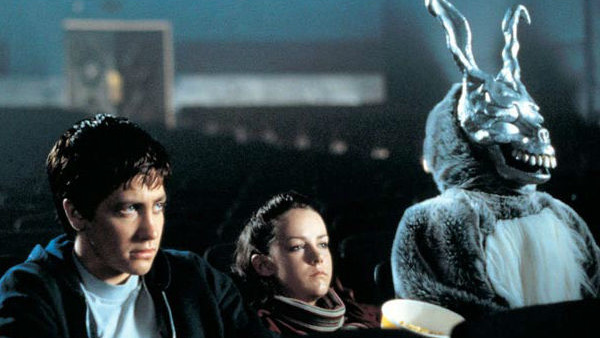
Though it performed poorly at the box
office first time round, writer-director Richard Kelly’s feature debut Donnie
Darko gained a new lease of life thanks to DVD sales, midnight screenings and
success in the overseas market and earned itself a cult following.
Conversely, it was this very success that led Donnie Darko’s distributor Newmarket Films to approach Kelly and request he rerelease the movie, which in turn led to his diabolical director’s cut. We really wish they hadn’t bothered.
Peppered with superfluous scenes deleted from the theatrical cut and cut with over-explanatory text detailing Kelly’s take on time travel that basically handholds its audience throughout the movie, Donnie Darko geeks weren’t too pleased with the director’s cut and felt it stripped much the original cut’s mystique and ambiguity.
Perhaps one of the director’s cut’s biggest sins was his messing with its practically perfect soundtrack, especially the substituting of Echo & the Bunnymen’s The Killing Moon with INXS’s Never Tear Us Apart during Donnie Darko’s opening scenes which kind of messed with its doom-laden feel.
Donnie Darko: The Director’s Cut may be the film Kelly originally intended us to see, but it definitely isn’t the superior version.
1. George Lucas Mess With Star Wars

Without a doubt one of Hollywood’s
most meddlesome filmmakers, George Lucas just can’t leave Star Wars alone much
to the consternation of diehard fans who feel his incessant tinkering – put
bluntly – sh*ts all over the sanctity of the original trilogy.
In 1997 while preparing to butcher the Star Wars franchise with his crappy prequel trilogy, Lucas released a Special Edition remaster of the original trilogy with the intention of modernising the movies and making them consistent with the forthcoming prequels. Well that’s Lucas’s line anyway though we suspect dollar signs may have been twinkling in his eyes.
Many of the changes made in the Special Edition were kind of stupid and superfluous like throwing in a couple of extra CGI rocks and digitally airbrushing out Darth Vader’s eyebrows, but other alterations royally riled a lot of us the most controversial being the Greedo shooting at Han Solo first debacle.
Adding insult to injury, Lucas then released the much-maligned prequels and again made further changes to the original trilogy with its 2004 DVD release and 2011 Blu-ray release.
He’s defended his changes by claiming this is Star Wars as he wants Star Wars to be, but that attitude is a far cry from the younger, perhaps more idealistic George Lucas who once made an impassioned plea to Congress to enact legislation to protect works of film, saying “People who alter or destroy works of art and our cultural heritage for profit or as an exercise of power are barbarians”.
Hypocritical much, Mr Lucas?