10 Things You Didn't Know About The Cabin In The Woods
As its own tagline says: "You think you know the story..."

From rocky beginnings, The Cabin In The Woods, the clever, post-modern monster flick from writer-director Drew Goddard and his co-writer and producer Joss Whedon, has risen to become a modern cult classic, its jabs at genre tropes enjoyed by horror aficionados and haters alike.
The movie's whole concept is that there is more going on beneath the surface than would first appear, so it should come as no surprise that The Cabin In The Woods is packed to the rafters with Easter eggs, references, and interesting nuggets of behind the scenes information.
Cabin is absolutely one of those movies that gets better the more attention you pay to the little details and the more that you know about what went into making it. So, with that in mind, here's ten things that you might not already know about the story of ritual sacfrice and zombified backwoods idiots.
10. Its Multiple Delays Were A Blessing In Disguise
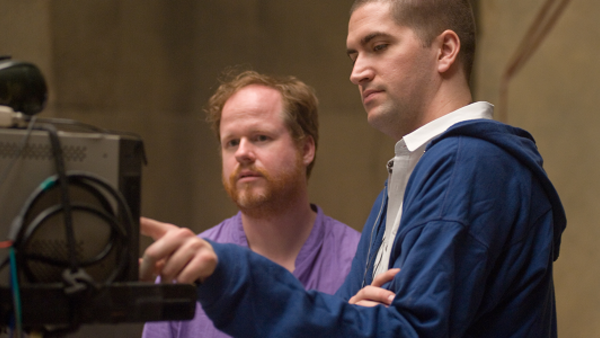
The Cabin In The Woods was originally shot in 2009 and intended for release in February of 2010, but it didn't actually come out until April 2012.
Generally when a movie suffers that kind of delay it isn't a good sign for its chances of eventual success. In the case of Cabin, though, Whedon and Goddard have since admitted that the delay may actually have been good for the film.
Studio MGM initially delayed the movie to cash-in on the craze for 3D a decade ago, pushing Cabin's release back to 2011 to allow for a post-production 3D conversion in spite of the objections of the film's makers who had never conceived of it as a 3D experience.
Ultimately, they received a reprieve from having to retroactively add an extra dimension when the post-production process was halted by MGM going into bankruptcy. Unfortunately, this left Cabin on the hook without a release date in sight.
When it was finally picked up by another studio, Lionsgate, however, it was with a far greater enthusiasm for and understanding of the movie than MGM ever had, allowing Goddard and Whedon to complete it without any of the cuts MGM were pushing.
Besides, with Chris Hemsworth being cast as Thor during shooting for Cabin, by the time the movie eventually came out it was with the benefit of featuring a newly minted A-lister.
9. You Were Supposed To Think That You'd Accidentally Wandered Into The Wrong Theatre

One of the big objections that The Cabin In The Woods' original backers at MGM had was with the sense that the plot thread involving the office drones at the Facility belonged in a different movie to the horny teens getting picked off one-by-one pitch. That, though, was entirely the intention.
Goddard has noted that opening the film on Richard Jenkins and Bradley Whitford as white collar workers engaging in small talk about the office betting pool was specifically designed to make audiences who had bought tickets for a youth-focused backwoods horror think that they had accidentally walked into a screen showing a different film.
Whedon described this opener as "one of the favourite things that we accomplished", establishing from the start that there was more going on than audiences might have expected, as well as beginning by placing us in the mindset of the Facility workers as just ordinary people doing their jobs.
The MGM executives, however, also thought that this opening scene might make people unsure whether they were watching the right movie and became deeply concerned that audiences would be confused or even walk out.
Of course, Goddard and Whedon won out in the end, giving us a suitably idiosyncratic starting point to a different kind of horror film.
8. The Wolf Had A Sweet, Sugary Tongue

Disgusting, sexy or "they think the wolf is going to eat her face" was how Whedon described the various reactions to the Truth or Dare scene in which Anna Hutchison's Jules makes out with a taxidermy wolf's head, all reactions that he was happy to elicit.
As you can imagine, though, the scene promised to be less of a thrill for Hutchison, who was unsure when reading the script of exactly how the scene would eventually be staged.
Those wolf kisses were sweeter than Hutchison might have expected, though, because prop master Dan Sissons coated the detachable silicon tongue in powdered sugar. It served to make the taxidermy look dusty but also made the experience of tangling tongues with the wall-mounted beast a lot more pleasurable for the actress.
"The best kisser I ever had in a film? That wolf is up there", Hutchison would later say of the experience.
7. Sigourney Weaver Was Really Into Werewolves
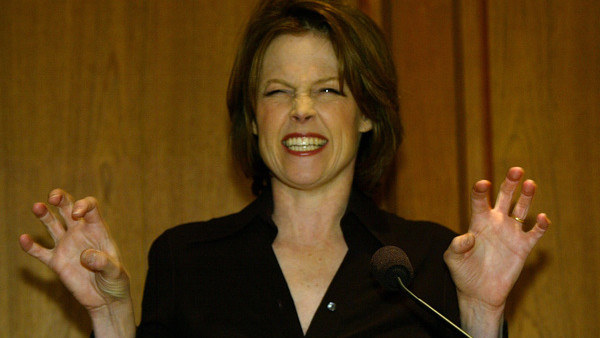
If anybody in the cast should have been allowed some sweet wolf intimacy, though, perhaps it should have been Sigourney Weaver, if her devoted werewolf enthusiasm is anything to go by.
From the start of writing the script that would eventually become The Cabin In The Woods, Goddard and Whedon knew that the pivotal role of the Director in the final scene would be an excuse for a cameo from a genre icon. Jamie Lee Curtis was strongly considered, but once she found out she would get to appear in a movie with a werewolf Weaver instead jumped at the chance.
That Weaver only did the movie because she had always wanted to co-star with a werewolf was not a throwaway gag either. As soon as she arrived on set she was eagerly asking Goddard when the werewolf would be showing up.
She even expressed great disappointment to the director that nobody sat with the werewolf during the lunch break.
Richard Cetrone, the actor who portrayed the werewolf, was also beneath the prosthetics for the fan-favourite merman. But, while Whitford's Hadley was desperate to see the latter, it was only the lycanthrope that Weaver had eyes for.
6. They Had To Try Hard To Conceal Fran Kranz's Buffness

From William Shatner's girdle beneath his Star Trek uniform to the sculpted muscles on Michael Keaton's batsuit, filmmakers across the generations have had to find creative ways to make the average physiques of their heroes look like ultra-buff supermen. The Cabin In The Woods, unusually, had the opposite problem.
Marty, the stoner slacker who fulfills the "fool" archetype in Cabin's sacrificial ritual, was played by Whedon fave Fran Kranz, a veteran of Dollhouse who would go on to appear in Whedon's homemade take on Shakespeare's Much Ado About Nothing.
Kranz, however, did not come with the build of your typical slacker. In fact, according to Whedon and Goddard, he was "ripped like muscular Jesus", maybe more so than the film's "athlete" and future Thor: Hemsworth.
As a result, the film had to go as out of its way to hide Kranz's ripped body as others do to build up their out-of-shape stars. He was given a deliberately overly baggy wardrobe and, in the scene in which all of his castmates take off their shirts and leap in the lake, Marty remains standing fully clothed on the dock.
Really, though, given that the movie is all about subversion and Marty not being the stoner fool that he appears, would it have hurt the themes to give us a look at that ripped body?
5. The Film Was Sued For Plagiarism (But Not By The Makers Of Evil Dead)

A bunch of horny young people gather in a rundown remote cabin where they read from a mysterious tome and get menaced in a comedy horror fashion? Sounds a lot like another movie, doesn't it? Especially when you throw in the presence of "deadites" and an "angry molesting tree".
Of course, the seams between a parody and a rip-off can be incredibly thin, so even though most would acknowledge The Cabin In The Woods as the former, it should come as no surprise to see it the subject of a plagiarism lawsuit. It was not the makers of the Evil Dead, whose remake was beaten to the punch by Cabin, however, who chose to sue Goddard, Whedon and Lionsgate.
In fact the case was brought by novelist Peter Gallagher who claimed that Goddard and Whedon had ripped off his book The Little White Trip: A Night In The Pines. Gallagher, whose novel is also a meta-horror about a group of young people staying in a rural cabin and getting picked off one by one at the hand of unseen watchers, demanded $10 million of the movie's takings in compensation.
Ultimately, in 2015 a judge ruled against Gallagher, noting entirely accurately that "the concept of young people venturing off to such locations and being murdered by some evil force is common in horror films" and was not, therefore, protectable under copyright law; not to mention the fact that Gallagher's relatively serious book approaches the subject in a completely different style to the parodic tone of Cabin.
4. Goddard's Influences Included Growing Up Around Nuclear Weapons And Watching The Breakfast Club As An Adult

The Cabin In The Woods obviously draws heavily on previous examples of the remote murder cabin horror sub-genre, but its creators also drew on some more esoteric influences. Goddard, in particular, has highlighted two elements of inspiration for the perspective of the Facility workers in the film.
The director cited his childhood growing up in the town of Los Alamos, New Mexico as a major touchstone for the film's ideas and aesthetic. The town is a place that only exists to serve as a base for research and development of the US nuclear weapons programme.
That everybody lives under the constant shadow of working on weapons which could destroy the world, but still go about their lives like any old office job (only perhaps with a little added gallows humour), provided the inspiration for the way the Facility characters behave. Meanwhile, the retro appearance of a 1950s-era weapons plant provided the look of the location,
On top of that, the idea that, in Goddard's words, "at the end of the day, both sides are right" came from watching The Breakfast Club as an adult and realising that you can still sympathise with the teen protagonists even while seeing why the adults put them in that situation.
3. The Makeup Was Done By A True Scream Queen

The Cabin In The Woods is so filled with tributes and references to classic horrors past that it even went on behind the scenes with one beloved "scream queen" taking on an important role behind the camera.
Since appearing as final girl Nancy in A Nightmare On Elm Street, and two of its sequels (including the meta-fictional New Nightmare, one of The Cabin In The Woods's self-aware horror predecessors), Heather Langenkamp has used her horror past for cameos in the likes of American Horror Story and Truth Or Dare. Mostly, however, she has gone on to do makeup and prosthetics work.
Since marrying David LeRoy Anderson, an Oscar-winning makeup artist on the likes of Men In Black, Langenkamp has pursued her husband's profession. Between them they founded a visual effects makeup company, AFX Studios, and did prosthetics work on the likes of the Zack Snyder remake of Dawn Of The Dead.
On Cabin, Langenkamp and the AFX team worked on the special makeup effects for a whole array of practically designed monsters and creatures. You would be hard pressed to find the horror icon's name in the credits, though, because she is listed under her married name: Heather L. Anderson.
2. Unused Monster Concepts Were Kind Of Vaginaphobic

Both the concept art in the movie's tie-in visual companion book and The Cabin In The Woods novelization reveal that, beyond the sixty different monsters that did make an appearance in the movie, there were several others considered which didn't make the cut.
These included a shark-creature, a pirate, a minotaur, a seaweed monster, a dog with the head of an alligator, and a version of the Creature From The Black Lagoon (this was before Guillermo del Toro had turned him into a desirable romantic leading man).
There is a bit of a theme to some of the rejected monsters, though, and it revolves around the horrific potential of female anatomy.
The Cabin In The Woods novelization features such gynocentric nightmare fuel as a woman with "vagina dentata" (the urban legend of a castrating set of teeth inside the vagina, as depicted in cult horror fave Teeth) and another with a mound of Medusa-style snakes for pubic hair.
You can probably tell why this material didn't make the cut, even in an R-rated movie. It was probably for the best, though, as none of this would have helped with the decline of Whedon's former reputation as an icon of geeky feminism.
1. Monster Cameos Include Creatures From Left 4 Dead 2 And A Reaver From Serenity

Even without some of the rejected options, the huge array of monsters that we see in the shifting cage cubes inside the Facility is still an impressive roster of iconic genre tropes with a few curveballs thrown in (one of them is literally just a cat).
The eagle eyed can probably spot a few interesting cameos, including a boomer, charger, hunter, smoker, tank and witch from the game Left 4 Dead 2 and one of the mad, cannibalistic reavers from Whedon's earlier movie Serenity (and its TV predecessor Firefly, although they never truly appeared in person in that).
While the reasoning for the latter is a clear nod to the writer-producer's other work, the use of the former is a bit less obvious.
The creatures' appearance is all that remains of a once proposed tie-in deal between Valve and MGM in which the former's survival shooter would have added downloadable content allowing players to blast their way through the movie's cabin and facility.
Unfortunately, just as it set the release of the movie back years, so too did the MGM bankruptcy put paid to the game tie-in. But at least it gave Goddard and Whedon a bunch of cool monsters to make the scene look even more packed.