10 Things You Didn't Know About Memento

Remember Sammy Jankis.
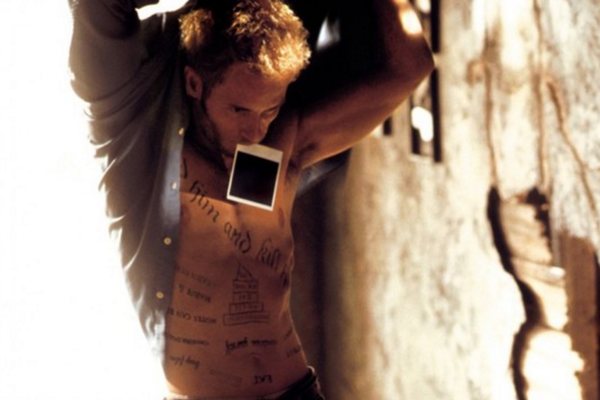
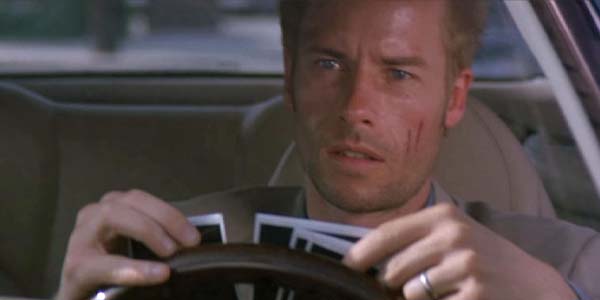
Memento is the movie that launched Christopher Nolan's career. It€™s a tale of amnesia and revenge, which offers some hefty talking points around the fallibility of memory as well as offering an entertaining murder mystery full of twists, turns and secrets. And the fun doesn€™t stop there, either. Behind the scenes, and before the film was finished, Memento was already an interesting movie. Casting decisions didn€™t all go the way that Nolan wanted, elements of the script were entirely improvised, and there were a few nods to Nolan€™s future projects that may or may not have been totally accidental. For hardcore Nolan fans, there€™s plenty of trivia here to get your head around. Unless you€™re a hardened super-fan who€™s devoured every commentary, analysis and interview going, then, there are probably a few things that you don€™t yet know about Memento. Take note of these behind-the-scenes facts to get you up to speed. Just remember to tattoo them all over yourself you don€™t forget them all in five minutes€

10. The Premise Was Conceived On A Road Trip
€˜Where did the idea for Memento come from?€™ is a question that€™s probably crossed your mind at some point. Well, the genesis of concept idea was cooked up on a road trip back in 1996 (four years before Memento would finally get a release). Christopher (26 years old at the time) and Jonathan Nolan (20) were driving the 2,000-mile journey from Chicago to Los Angeles (where Christopher was moving), presumably in the hope of ramping up their respective careers in the creative industries upon their arrival. The idea for a film based around anterograde amnesia came up at some stage during the journey. Jonathan would go on to write the short story Memento Mori, and Christopher wrote the script for Memento. The brothers would correspond about their projects - which were written pretty much simultaneously - although the two narratives are far from identical. In Memento Mori, there is no Leonard (Guy Pearce€™s character). The equivalent is Earl, a patient at a mental institution who convinces himself to escape and get revenge on the man who killed his wife. Unlike Memento, Memento Mori doesn€™t have an ambiguous ending. Earl gets his man, and the story ends. Jonathan€™s story is credited in the finished film as an inspiration, regardless of the differences.

9. Nolan Wanted To One-Up TV Storytelling
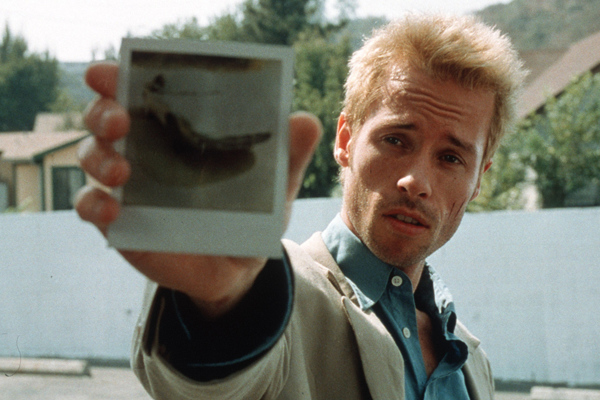
Memento€™s narrative structure is one of the film€™s big talking points. By telling the tale through three strands - the €˜present day€™ investigation running backwards, the black-and-white pre-amble told in the right order, and the Sammy Jankis cutaways that add further context €“ Chris Nolan weaved together an impressive and complex story. It turns out that Nolan€™s dislike of TV plotting inspired this. He told the LA Times of his opinion that "film narrative has been held back by television,€ before elaborating that €œit comes down to what I call the pizza delivery scenario. If a pizza arrives while you're watching TV, you have to answer the door, deal with the man and then be able to get straight back into the story, having missed three or four minutes.€ Nolan wanted to make a movie that wasn€™t so simple to flit in and out of, and he definitely succeeded. €œIf you come in three minutes late you miss the whole movie,€ he claims, as well as admitting that €œthough I've got a good visual memory and I've seen it about a thousand times, if I walk into a screening when the film's been on for 20 minutes, even I don't know what scene is coming next." That being said, you could always watch the €˜in the right order€™ DVD version if you€™re worried about getting distracted. It€™s not as good, though.

8. Guy Pearce Wasn€™t Nolan€™s First Choice

Guy Pearce gives one of the best performances of his career as Memento€™s vengeful tattooed amnesiac protagonist Leonard. However, he wasn€™t the first name linked to the film. Before he took the role, Christopher Nolan and co. had wanted Brad Pitt to lead the movie. A scheduling conflict €“ possibly with Fight Club, considering that the films came out in consecutive years €“ ruled Pitt out, but he had apparently been very interested in the script despite Nolan€™s slightly-empty-at-that-stage CV. "Truthfully he did read the script," Nolan later said at the Slamdance Festival, before mentioning that Pitt had €œliked it€ but €œnothing came of it.€ Pitt€™s interest, though, did have a benefit. Just by displaying an interest in the script, Nolan thinks that Pitt helped get Memento made. The talent agencies community €œsort of perked up a bit of interest in what was a very obscure project, otherwise,€ thanks to Pitt€™s interest, Nolan claims. €œAnd I think really that€™s how it came to Guy Pearce€™s attention, and you know, he sort of got the ball rolling.€ So, in a weird way, we have to thank Brad Pitt for helping get Memento off the ground. Cheers, man!

7. Neither Was Carrie-Ann Moss

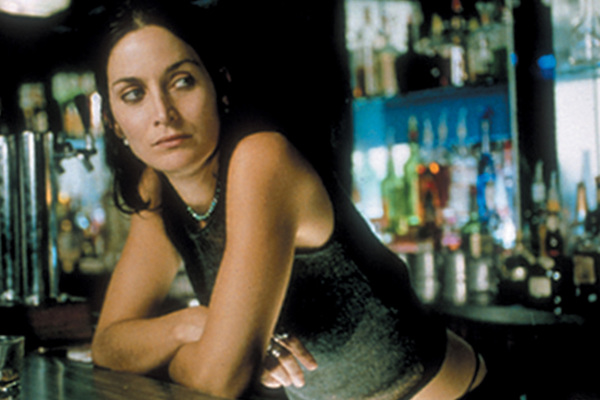
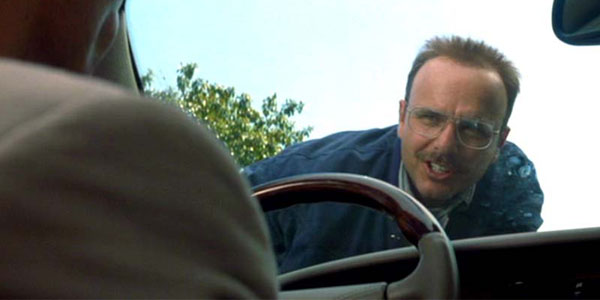
The casting of Leonard wasn€™t the only decision that didn€™t go the initial way Nolan had intended, either. Although Carrie-Ann Moss puts in a fine shift as the duplicitous bartender Natalie, she wasn€™t the first name linked to the role. Ashley Judd, Famke Janssen and future Mrs Brad Pitt, Angelina Jolie, were all linked to Memento€™s female lead at various stages. It€™s unclear how close any of them got to the role, but they were all in contention. Once Moss was cast, though, she suggested her former Matrix co-star Joe Pantoliano for the role of corrupt policeman Teddy. He wasn€™t the first choice, either, because comedian Denis Leary and the mighty Alec Baldwin had both previously been considered. Memento€™s casting process wasn€™t a simple one, then; almost every character ended up with a second or even third choice actor in the role. Regardless, it€™s impossible to picture any other version of this cast working as well together as Pearce, Moss and Pantoliano did. That€™s part of the reason we€™re all so sceptical about a remake €“ the chemistry in the original film was nothing short of excellent.

6. The Film Took Less Than A Month To Shoot

Nope, that isn€™t a typo. Christopher Nolan€™s career-launching feature film Memento €“ with its confusing narrative consisting of multiple timelines €“ was somehow shot in under a month. In fact, the entire filming block was completed in just 25 days between September 7th and October 8th 1999. On these 25 days, Guy Pearce was the only actor required on set every day. Everyone else worked less. Carrie-Ann Moss completed all her scenes within a week, and only worked with her Matrix co-star Pantoliano for one day (the first day of filming, when the exterior scenes outside Natalie€™s house were shot). Memento€™s shoot put an immense amount of pressure on Guy Pearce, then, when you think about it. As the only actor who worked through the entire shooting session, it was up to him to keep the momentum going and essentially carry the film. If he€™d fluffed up his performance, the whole movie would have hugely suffered. As you probably could have guessed, the vast majority of shooting took place at real locations. The Travel Inn in Tujunga California was used as the Discount Inn, for example. The interior of the derelict building where Leonard kills Teddy and Jimmy was one of the few actual built sets. All this just goes to show that you don't need a big elaborate shoot to make a great movie.

5. The Opening Scene Isn€™t As Reversed As You Think

One of Memento€™s most memorable scenes is its opening sequence. The film appears to be playing backwards, as a polaroid picture fades away and retreats back into a camera. We then see a blood flow back towards a corpse, a bullet jump back into Leonard€™s gun and Teddy€™s glasses return to his face. Teddy returns to life, begins to stand up and starts yelling. As you may not know, this has been cited as the most difficult scene to film. And it€™s not quite as backwards as you think. Although many wouldn€™t notice the difference, all the sound effects except Teddy shouting €˜No!€™ are actually played normally despite the action running backwards. Some of the action is shot forwards, too. For example, a close-up shot of bullet€™s shell casing sliding along the floor was originally created by a crew member getting on his hands and knees and blowing the casing into the camera€™s field of vision, to create the elusion of it sliding €˜backwards€™ back towards the gun it came from. It kept slipping out of view, though, causing some confusion on the set. In the confusion, the camera was rigged to shoot backwards, so Nolan ended up with a shot of a casing being sucked slowly away form a gun, rather than blown back towards from it. What you€™ve seen in the final film is the result of a bit of editing trickery €“ it€™s essentially a reversal of a forward-running practical effect that was designed to appear as a reversal but was accidentally shot backwards. Confused? Me too.

4. Stephen Tobolowsky Improvised All His Lines (And Genuinely Suffered From Amnesia Once)
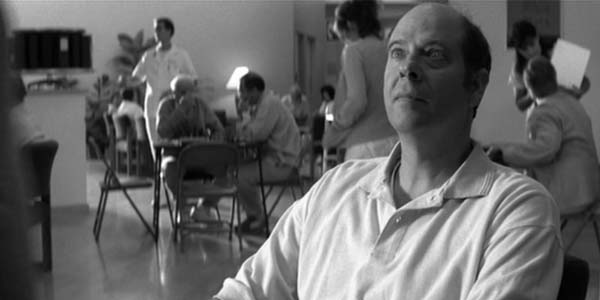
In a great exampled of a €˜you couldn€™t make this up€™ Hollywood story, Stephen Tobolowsky €“ who plays Sammy Jankis €“ genuinely used to suffer from anterograde amnesia. He was temporarily afflicted with memory loss issues after a medical procedure, years before starring in Memento (admittedly, he had a much less severe case than the one he depicts in the film.) Because of this experience, Christopher Nolan keenly encouraged Tobolowsky to improvise his lines in the black-and-white segments that detail Jankis€™ severe memory issues (psychosomatic or otherwise). €œPart of my brain had to remember what it was doing, and another part had to not remember what I was doing,€ Tobolowsky later told AV Club, as well as mentioning that playing Jankis €œwas certainly the most difficult thing that I€™d ever done.€ This means, of course, that one of the film€™s funniest lines €“ €œTest this you f*cking quack!€ €“ was made up on the spot by Tobolowsky on the spot, before going on to become one of the most quotable dialogue snippets from the film. Nice work, sir!

3. Joe Pantoliano Invented Character Traits Too
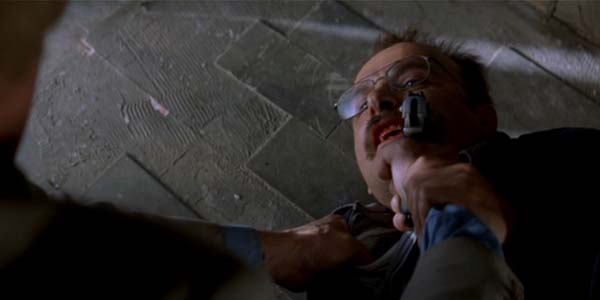
Despite the complicated skewiff timelines of Nolan€™s Memento script, it seems like he was quite keen to take ideas from the actors where possible. And this wasn€™t just with Tobolowsky, either. One memorable moment in particular came from Joe Pantoliano, who suggested €“ according to the DVD commentary - the part where his character Teddy is waiting in Leonard€™s car without Leonard knowing. As a result, Leonard is understandably frightened when he gets in. This is a small moment, but an important one. It suggests at a wider world outside of Leonard€™s understanding, and helps to harbour both the scariness of amnesia and the idea that Teddy is a little more shifty than he€™s letting on. More improvised content can be found in the black-and-white scenes, which Guy Pearce is said to have had particular free reign during. He also came up with the tiny idea of Leonard writing €˜don€™t trust her€™ in different handwriting than his usual style, to remind him to scratch it out later (because it was a suggestion from Teddy, whose lies he can€™t believe). All in all, then, Memento is an example of a cast working closely with their director to help make the best film possible.

2. Nolan Named The Tattoo Parlour After His Future Wife

This one€™s a particularly tiny detail, but it€™s a fact that you might not previously have known about Memento. The tattoo shop that Leonard visits is called €˜Emma's Tattoo,€™ a reference to Emma Thomas (Nolan€™s constant producing partner, former girlfriend and current wife). Emma Thomas worked as an associate producer on Memento, and has been cited as being a vital part of getting Memento made. So, this little Easter Egg stands as Christopher Nolan€™s nod of appreciation within the language of the film. The duo have since worked together on Insomnia, The Dark Knight Trilogy, The Prestige, Inception, Interstellar and raising four children. Their next collaboration will be the mystery Christopher Nolan film slated for 2017. (We€™ve got some theories about that film, right here, if you€™re interested.) They€™ve also both served in executive producer roles on Man Of Steel and Batman V Superman: Dawn Of Justice. Which brings us to the final, superhero-themed point on this list€

1. It Has An Unintentional Foreshadowing Easter Egg

And finally, in a particularly spooky Easter Egg that can€™t possibly have been deliberate, Memento features a fleeting nod towards a pair of DC Comics characters €“ Superman and Batman, both of whom Nolan has since gone on to work with on the big screen. As you surely know, Nolan directed The Dark Knight Trilogy for Warner Bros, and has since stuck around to executive produce Man Of Steel and Batman V Superman: Dawn Of Justice. But before he landed either gig, Nolan had snuck both superheroes into his movie. Leonard drives past the iconic emblems of Batman and Superman in one of the many driving scenes in Memento. Of course, this is merely background dressing and might not have even been under Nolan€™s control. But still, it€™s nonetheless a cool little moment with a bit of hindsight on your side. Judging by the other logos on that briefly glimpsed shop window, we can surely expect Nolan to work on a Pokemon movie, some WWF wrestling broadcasts and his own Star Wars film at various points in the future. Or, y€™know, he might not... Either way, this tiny prophetic Easter Egg is one of the best little-known facts about Memento €“ it turns out that Chris Nolan was working with DC years before Batman Begins. What€™s your favourite fact about Memento? Tell us in the comments€

Contributor
Contributor

Film & TV journo. Quite tall.