10 Things You Didn't Know About The Hobbit Trilogy

They're, er, prequels.
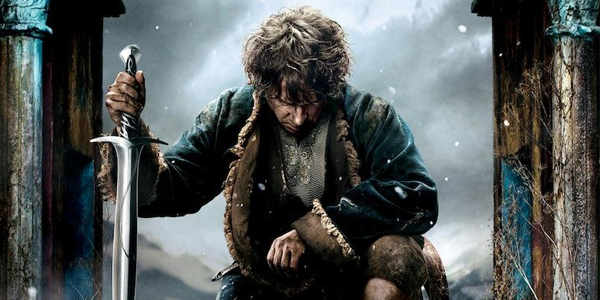
In just a few days€™ time, the release of The Hobbit: The Battle Of The Five Armies will see Peter Jackson bring the curtain down on his adventures in Middle-earth - remarkably, just shy of two decades after it all began. Jackson first started exploring the possibilities of adapting J.R.R. Tolkien€™s fantasy novels in 1995, but he could never have imagined that the journey he embarked upon would occupy such an enormous stretch of his career. In the intervening period, the New Zealand native has only directed two films - King Kong and The Lovely Bones - that don€™t involve orcs, elves, wizards and Bagginses. Unless Jackson decides to take on The Silmarillion at some point, The Battle Of The Five Armies will be the sixth and final entry in a remarkable body of work. The Lord Of The Rings films - rightly recognised as one of finest trilogies in motion picture history - grossed almost three billion dollars worldwide and won seventeen Oscars, with The Return Of The King triumphing in all eleven categories in 2004 and earning Jackson the coveted Best Director gong. Having achieved such extraordinary success, he could have been forgiven for passing on the opportunity to direct the planned two-film adaptation of The Hobbit when numerous legal wrangles and production problems saw Guillermo del Toro reluctantly depart the project. However, Jackson couldn€™t bear to see anyone else take the reins, reprising director duties as two films became three. Somewhat inevitably, The Hobbit films have come in for criticism in some quarters. Reviewers and paying customers alike have labelled the trilogy a bloated cash grab, but it would be churlish to deny that Jackson has again delivered some outstanding entertainment. As the curtain comes down on the final instalment, it€™s time to find out more about Jackson€™s unexpected journey.

10. Jackson Wanted To Make The Hobbit First
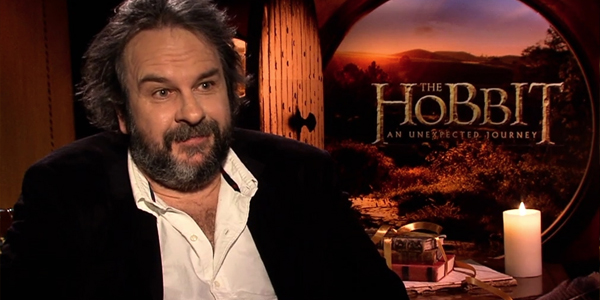
The first seed for what would become a sprawling saga was planted when Tolkien, an Oxford professor at the time, was marking exam papers and jotted down the words €œIn a hole in the ground there lived a hobbit€ on a blank page in one of the answer booklets. From such humble beginnings sprang The Hobbit, which was published in 1937 to great critical and financial success, and its popularity prompted calls for a sequel that morphed into the three-volume The Lord Of The Rings. Peter Jackson€™s initial plans for developing Tolkien€™s works for the big screen were much more conventional than what ultimately transpired. In 1995, the director was enjoying an elevated profile thanks to the surprising success of his New Zealand-based drama Heavenly Creatures and opened discussions with Miramax Films regarding the adaptation of Tolkien€™s works. Jackson€™s original proposal was to make The Hobbit as the first part of a trilogy, with The Lord Of The Rings novels condensed into a two-part sequel should the film prove successful. Needless to say, these plans didn€™t come to fruition as rights issues and financial concerns prevented Miramax from backing Jackson€™s original vision. Of course, before long the New Zealander would see his hopes of realising his vision Middle-earth resurrected, but he wasn€™t the first director to achieve the feat.

9. An Unexpected Reboot

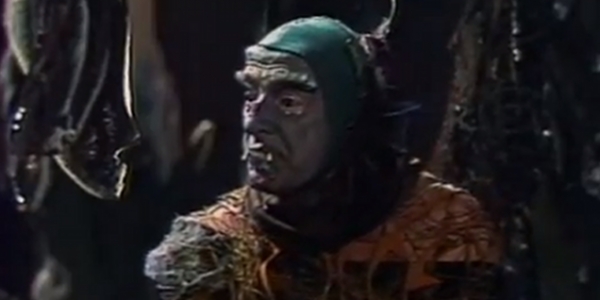
Given the huge success and influence of Tolkien€™s fantasy novels, it comes as no surprise that numerous parties have engaged in attempts to make screen adaptations of either The Hobbit, The Lord Of The Rings or both. One of the more intriguing could-have-beens was the mooted adaptation of The Lord Of The Rings planned by The Beatles. John Lennon, who hoped to play Gollum, was the driving force behind the project, with Paul McCartney lined up for Frodo, Ringo Starr as Sam and George Harrison set to play Gandalf. Apparently Stanley Kubrick was even approached to direct, but Tolkien didn€™t warm to the idea and the project (and inevitable accompanying album) stalled. A 1978 animated version of The Lord Of The Rings was released to little fanfare, as was a cartoon version of The Hobbit the year before, but Peter Jackson wasn€™t the first director to bring a live-action version of The Hobbit to life on screen; that honour belongs to Vladimir Latyshev. Not that you€™d ever confuse Jackson€™s highly polished, exorbitantly expensive epics for the 1985 Soviet film adaptation. With puppets used to render Smaug and the Mirkwood spiders, several notable characters missing and dancing goblins pervading the teleplay set, the end product was more akin to a school play than a hefty blockbuster. Still, first is first.

8. Sherlock Almost Cost Jackson His Bilbo
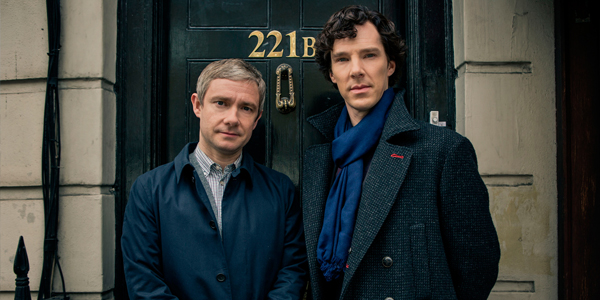
It€™s been well documented that Peter Jackson only ever really considered one actor as a viable candidate to play Bilbo Baggins. Martin Freeman€™s performances in The Office and The Hitchhiker€™s Guide To The Galaxy earmarked the English actor for the lead in The Hobbit, but securing his services proved anything but straightforward. Bankruptcy issues affecting rights holders MGM caused numerous delays to the planned production, and by the time Jackson was in a position to formally approach Freeman the actor was already committed to filming the second series of Sherlock. Jackson€™s predicament was such that just six weeks before shooting was supposed to begin he still didn€™t have a lead actor in place, causing sleepless nights as he has described €œtorturing myself by watching Sherlock on an iPad at 4 o€™clock in the morning.€ Daniel Radcliffe, Shia Laboeuf, James McAvoy and Tobey Maguire were all apparently under consideration to play Bilbo instead, but Jackson was set on casting Freeman, even if it meant dramatically altering the production schedule. Which is exactly what ended up happening, with the director shutting down production completely for a two-month spell after an initial four months of shooting in order to allow Freeman to return to England and fulfil his commitments. Jackson has since acknowledged that the delay was actually beneficial and gave him a head-start editing early footage and addressing some technical areas, but other casting concerns also threatened to derail his plans.

7. Ian McKellen Almost Bailed

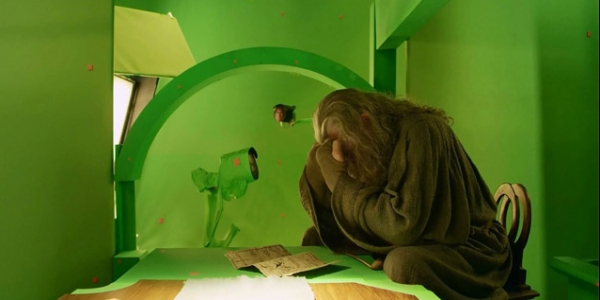
Much as it€™s a strange prospect to think of anyone other than Freeman playing Bilbo Baggins, it€™s almost unimaginable to consider anyone besides Sir Ian McKellen donning Gandalf€™s robes. Yet that came perilously close to being a reality, both prior to the start of production and on the first few days on set. McKellen was initially reluctant to reprise his most famous role, commenting, €œAt my age, each job might be your last,€ and he wrestled with the prospect of another lengthy shoot thousands of miles from home. He eventually agreed to appear in The Hobbit for fear of disappointing his fans should he decline, but the first day of filming gave him cause for regret. The demands of shooting in 3D and at a higher frame rate ruled out repeating the forced perspective trick employed on The Lord Of The Rings to make Gandalf appear bigger than the other actors, and instead McKellen was isolated from the rest of the cast and made to perform in a green screen environment. The time he spent alone and responding to the other actors€™ voices via an earpiece was distressing enough to bring on tears, and he considered quitting the role and even giving up on acting entirely. Unbeknownst to McKellen, his distress was audible to all concerned via his microphone, and the cast and crew made an effort to cheer him up by decorating his tent with props and personal messages. Fortunately for all concerned, it did the job.

6. Written In The Stars For Richard Armitage
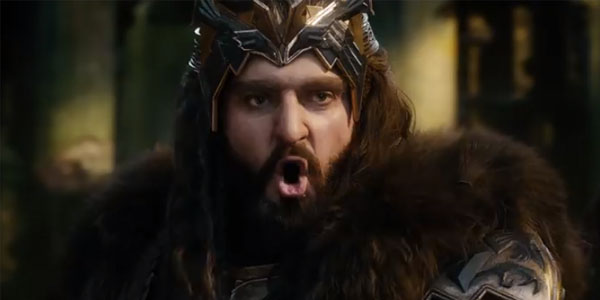
In contrast to the unexpected difficulties securing Martin Freeman as Bilbo and keeping McKellen on board and happy, casting some of the actors proved easy enough and, in one case, arguably serendipitous. Richard Armitage had already dipped his toes in blockbuster waters before becoming a part of The Hobbit ensemble via a fleeting appearance as a Naboo fighter pilot in Star Wars Episode I: The Phantom Menace and playing the part of a Hydra villain in Captain America: The First Avenger. However, the Brit€™s career had been mostly defined by roles in popular TV shows like Cold Feet, The Vicar Of Dibley and Spooks before Peter Jackson came calling. Armitage€™s central role as Thorin Oakenshield should elevate his career to new heights, but his New Zealand adventure wasn€™t the first time he€™d found himself in Middle-earth:
€œMy first experience on stage was in a production of The Hobbit at the Alex Theatre in Birmingham and I played an elf € so it€™s kind of been there in my childhood very prominently. So to come to it as an adult ... a middle-aged man and ... have another look at it is a brilliant opportunity.€

5. Andy Serkis Pulled Double Duties

As the undisputed mo-cap king of the world, Andy Serkis has become the go-to guy for performance capture acting, even founding The Imaginarium Studios in Ealing, England, to continue perfecting the art of creating believable, emotionally engaging digital characters. Although his face has since been seen in the likes of The Prestige and Sex & Drugs & Rock & Roll and his voice recently lent the Star Wars: The Force Awakens trailer suitable gravitas, most film fans first became familiar with Serkis thanks to his remarkable turn as Gollum in The Lord Of The Rings trilogy. Sméagol was the stand-out star of Jackson€™s first set of Middle-earth adventures, and much of that was down to the unique vocalisation and superb physical performance that many felt should have earned Serkis serious awards consideration. There was never any doubt that Serkis would reprise the role of Gollum for An Unexpected Journey, but the actor didn€™t say his goodbyes after filming the pivotal game of riddles sequence. Serkis, who has long harboured filmmaking ambitions of his own, was offered the role of second unit director by Jackson and spent 200 days in charge of a huge team to film crucial battle sequences and aerial shots. The results indicate that Serkis did a fine job, and his apprenticeship with Jackson paved the way for his own directing career - Jungle Book: Origins, scheduled for release in 2016, will mark his first outing at the helm.

4. The Trilogy Cost Twice As Much As The Lord Of The Rings
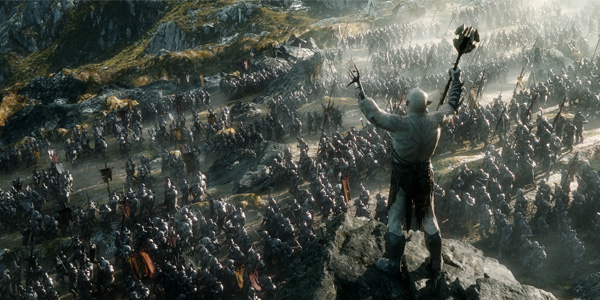
It€™s fair to say that, despite some understandable initial reservations from the moneymen behind the project, Jackson€™s first Middle-earth trilogy represented good business. The director€™s plan to shoot all three movies back to back was an unprecedented undertaking that required an official outlay of $281 million, while independent estimates posit that the trilogy€™s final budget pushed $330 million. Tack on marketing costs in the region of $200 million and what you have is one of the biggest gambles in moviemaking history. In hindsight, the films were cheap at the price. Close to three billion dollars in global box office receipts, not to mention the bounty reaped from merchandising, DVD sales, Blu-ray box sets and Extended Editions, was evidence enough of a clear-cut home run, so there was considerably less deliberation when Peter Jackson confirmed his intention to direct The Hobbit films. Nevertheless, it€™s a good thing the Bilbo-centred films are enjoying a comparable level of box office success. According to documents filed in New Zealand over a year ago, production costs were already in the region of $561 million before April 2013. Factor in months of additional filming, digital effects work carried out in the interim and ever-rising marketing costs and it€™s clear that The Hobbit films€™ profitability won€™t come close to that of The Lord Of The Rings trilogy. In that $380,000 was reportedly spent on coffee alone, so it€™s a good thing that the first two films have taken home an average of almost a billion dollars apiece.

3. The Actor's Five O€™Clock Shadow Turned Blue

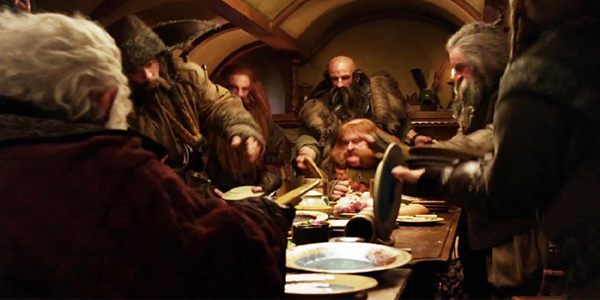
Peter Jackson€™s decision to film The Hobbit at 48 frames per second instead of the traditional 24 fps was an innovative move that he claimed would result in €œa much more lifelike and comfortable viewing experience.€ Nonetheless, some of the reactions to preview footage and a number of early reviews for An Unexpected Journey were decidedly negative as regards the higher frame rate, while plenty of paying customers have also emerged with the impression that the film€™s practical effects suffer from the heightened clarity. The elevated realism also proved something of a challenge for the makeup artists, as early makeup tests revealed that the actors€™ skin took on a yellow, jaundice-like colour in the new, high-resolution format. This necessitated that the makeup artists overcompensate with red hues, leaving the majority of the actors looking distinctly sunburned throughout production. What€™s more, as each day of shooting neared its end, the predominantly male cast€™s five o€™clock shadow appeared blue on film and required constant touch-ups. Set designers also found the new format a challenge and were forced to use real materials as much as possible in order to maintain the appearance of authenticity.

2. Yukkety Yak

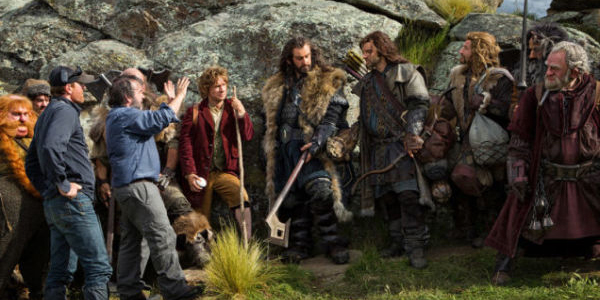
Transforming Richard Armitage, James Nesbitt, Graham McTavish and the rest of Thorin€™s Company into dwarves each day was a massive undertaking that required an army of makeup artists and numerous props and prosthetics. Aidan Turner was fortunate in that it only took thirty minutes to ready him to play Kili, whereas Stephen Hunter had to spend three times as long in the makeup chair each day to be transformed into Bombur. In addition to donning latex head cowls, prosthetic pieces and costumes weighing upwards of seventy pounds, almost every actor was required to wear wigs and fake beards obtained from an unusual source: yaks. Hair from the longhaired mammals found throughout the Himalayas was harvested in vast quantities, with six wigs and eight beards created for each dwarf character. Yak hair has been a popular wig-making material since the eighteenth century and was used to create Chewbacca€™s costume in Star Wars, but it€™s safe to say The Hobbit films set a record as far as quantities are concerned. The costume department cleared England€™s suppliers out of yak hair to stockpile 60-80 kilos altogether, and key makeup-and-hair supervisor Rick Findlater estimated that the amount used was enough to stretch to 450 miles, with 20 litres of glue required to fix it all in place.

1. All Of New Zealand And Australia's Gold Paint Was Used Up By The Production

When it came to realising Peter Jackson€™s vision for The Hobbit Trilogy, the makeup artists weren€™t the only ones with their hands full (although presumably they were the only ones who had their hands full of yak hair); creating the props and sets was a herculean task that required the hard work input of hundreds of dedicated crew members. Weta Workshop mocked up in the region of 500 primary illustrations for conceptual designs and eventually produced some 8,000 digital paintings all in all, and although CGI was used extensively the crew still had to create dozens of practical sets for Bilbo€™s epic journey. Perhaps the single most important €“ and certainly the most ostentatious €“ set in the entire production was the lair of Smaug the dragon, filled as it is with precious jewels, gemstones and, above all, mountains of gold. In order to create the desired effect and survive the scrutiny of the 48 fps cameras, the crew used up so much gold paint that they virtually exhausted the entire supply to be found in New Zealand and Australia - and even that wasn€™t enough. They then had to import additional supplies of gold paint from Germany to finish the job, but their hard work resulted in the perfect setting for what might be the trilogy€™s standout scene. Excited about the final instalment of The Hobbit trilogy? Share your thoughts in the comments section below.

Contributor
Contributor

I watch movies and I watch sport. I also watch movies about sport, and if there were a sport about movies I'd watch that too. The internet was the closest thing I could find.