10 Stupid Movie Controversies That Totally Missed The Point

Scandalizing is a lot tastier than actually getting the point of a movie. Who'd have thought?
It sometimes seems like controversy makes the world go round. If a film veers even slightly from the middle-minded values of the majority, it's going to be attacked for permitting this, glorifying that, or committing some grand moral indecency that simply cannot be tolerated. While it's fair to say that most of these complaints do come from the right of the political spectrum, whatever your politics, it's easy to see that controversy is so often spun out of misinformation and ignorance. Are these 10 films challenging in their own ways? Absolutely, but the criticisms are so often off-base because people love to get swept up in a scandal, and frankly, it's much easier to just regurgitate what a newspaper is telling you to be outraged about than actually do the research and think for yourself. That's the reason these completely misplaced controversies came about in the first place. Do you disagree? Are the complaints apt? Feel free to let me know in the comments!

10. The Wolf Of Wall Street Glorifies Its Scumbag Characters

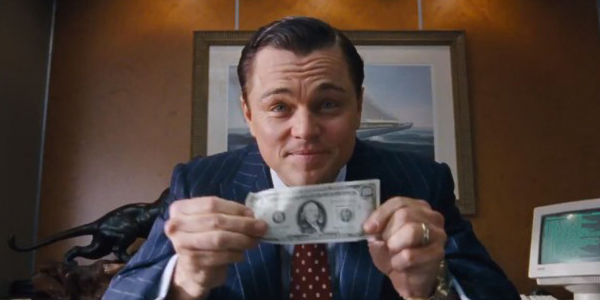
Martin Scorsese's new release The Wolf of Wall Street revolves around the true story of a young man, Jordan Belfort, a New York stockbroker who became an industry mogul in the 1990s by committing massive securities fraud and essentially making money by duping people into buying bum stocks. Much of the criticism has tended towards the fact that the film does reportedly not do enough to chastise Belfort and his cronies for their acts, instead making them out to be charming, likable rogues. Still, anyone who has actually seen the film knows the score. Ten minutes don't go by where someone doesn't lambast Jordan for his selfish, irresponsible, illegal actions, and though the man's ambition and gall are admirable, never once does Scorsese expect us to accept it as right. The film doesn't linger on the victims, but then, what would be the point? Sad as it is, this isn't their story, they are just cogs in the wheel. Besides, basically everyone involved with the scam ended up going to prison, and the film depicts this, so it's not like they got off scot free.

9. Kids Exploits & Sexualises Its Young Cast

Larry Clark's excellent drama about teenage sexuality was controversial from the word "go", because of its extremely frank depictions of sex between youngsters, both with regard to the graphic dialogue, and the unsavoury themes including date rape, drugs, minors being groomed, and hormonal teenagers engaging in sexual activity. The film was rated NC-17 by the MPAA, and some critics went as far as to label it child pornography. Though the film does not especially judge the characters, there is no glorification or implication that what they are doing is in any way desirable, it is simply a natural curiosity about one's sexuality. Any accusation that the film is exploitative and lingers too long on the youngsters' bodies ignores the point that most of the sex in the film is shown to be ugly, emotionless, and in the case of the climactic sex scenes (in which two characters are presumably exposed to HIV), dangerous. It is not titillating in the slightest, but in fact rather nauseating, and bracingly effective.

8. Was Child's Play 3 Responsible For James Bulger's Death?

The debate about the impact of violent films on our youth is one that will rage forever more, and in 1993, this debate was given a bright spotlight in the UK, when a moral panic abounded around the film Child's Play 3, with sensationalist tabloid newspapers suggesting that the film may have been "responsible" for inspiring Robert Thompson and Jon Venables to murder infant James Bulger in brutal fashion. Though the police rejected the claim, it didn't stop the tabloid rags from banging the drum to the point that large portions of the public were whipped into a frenzy, and to cope with the outrage, the Criminal Justice and Public Order Act 1994 then clarified what video material children could have access to. Even if you don't believe that violent films don't have a particularly adverse effect on our children (I've been watching Terminator and Aliens since I was a baby, I think I turned out alright-ish), the police did investigate the tabloid claim, and discerned that though Venables' father had rented the film, it was during a period at which the child did not even reside at the property, so it is impossible for him to have at least accessed it this way. This sort of scaremongering continues today, though the campaign has shifted more towards violent video games than movies. Still, to knee-jerk blame a movie for a human being's actions is to completely gloss over the fact that a) it is an overwhelming minority of people who could even be said to possibly be affected by films like this and b) other psychological factors that are much more likely to blame.

7. Did Cannibal Holocaust Feature Real Murder?
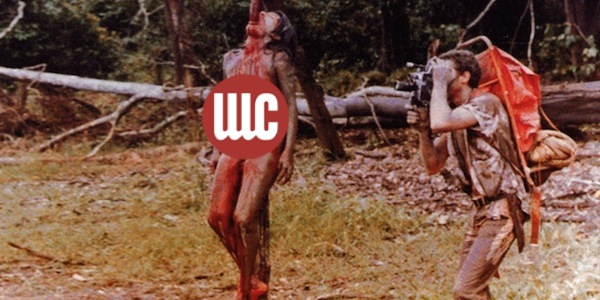
Cannibal Holocaust is one of the most infamous films ever made, telling the tale of a US documentary crew who travel to the Amazon to document the local tribes, and find themselves being picked off by the cannibals who live there. It's extremely grim viewing, yet even so, this led to one of the most idiotic controversies in cinema (and possibly legal) history, as director Ruggero Deodato was hauled up on obscenity charges by the Italian courts, who bought into rumours that some of the actors had been killed for real, believing that he had actually made a snuff film. This was exacerbated by the fact that Deodato convinced the actors to sign agreements saying they wouldn't appear in any other projects for a year after release, to help sell the belief that the film was real. Deodato eventually managed to gather the four actors in question together, and explained how the famed impalement scene (pictured above) was put together, at which point the charges were subsequently dropped. However, he did still receive a 4-month suspended sentence for obscenity and violence charges. In this case, the courts missed the point that it is a movie. Nothing more, nothing less.

6. Pain & Gain Trivialised The Horrific True Story

Michael Bay's most recent film, Pain and Gain, is an extremely liberal take on the true story of a group of bodybuilders who decided to kidnap, torture and murder people all in the name of making some money. With the publicity surrounding the film, some of the victims and investigators associated with the crimes were interviewed, expressing their disdain for a film which takes a semi-comedic approach to real life crimes which resulted in death and a lot of misery, and moreover, may make audiences sympathise with or idolise the protagonists. Though it's fair to say that the film does make the protagonists out to be more sympathetic than in real life, Bay's film makes it very clear from the outset that it is only loosely based on the actual events. More to the point, it uses the facts as a base to weave a satire about the American dream, painting Mark Wahlberg's character in particular as a deluded dufus who absolutely nobody in their right mind would aspire to. Is it arguably a little tacky to treat the real tragedy like this? Perhaps, but to attack the filmmakers overtly and question their moral fiber because of it is a different kettle of fish altogether. Does The Great Escape trivialise the Holocaust because it has a flighty tone and fudges the facts? Absolutely not. It's maybe not the best comparison, but you get the idea.

5. Compliance Is Exploitative & Too Ridiculous

Craig Zobel's Compliance was one of the most discussed and divisive films of 2012, premiering at the Sundance Film Festival and immediately opening a dialogue about the film's merits (or apparent lack thereof) in the post-film Q&A, where director Zobel was shouted at by some members of the audience (whereas others simply chose to walk out). The film's premise is about a young girl working at a fast food restaurant who is accused by a police officer of stealing from customers. The police officer never appears at the fast food place in person, but in fact convinces the restuarant's manager of his identity over the phone, and then further convinces the manager and other employees to detain the young girl, escalating to the point where he asks them to perform a humiliating strip search on the girl also, among other things. The depravity of the film's premise caused some to label it as exploitative and simply too ridiculous to believe. After all, surely any girl being asked to strip would simply leave the premises? The disturbing truth is that the film is in fact based on true events, and more to the point, the film actually tones down the depravity, not directly showing some of the more lascivious events that took place in the real incident. The film may not be pleasant, but it's a disturbing reminder of the power of authority, or more to the point, the power of presumed authority.

4. Basic Instinct Is Homophobic

Basic Instinct is best known for bringing star Sharon Stone to our attention, largely by way of a number of steamy sex scenes, and the infamous leg-crossing moment pictured above. Though its sleazy, sexually explicit content was enough to anger some, the real controversy came from gay rights groups, who saw the film's depictions of homosexuals and bisexuals as overwhelmingly negative. Stone's character, Catherine Tramell, is a bisexual who is also the murderous psychopath at the heart of the story's investigation, and her partner Roxy has similarly violent tendencies, attempting to murder Michael Douglas' detective character out of jealousy. The film was heavily protested, but aren't the protesters missing the point somewhat? This is a sleazy erotic thriller with almost its entire purpose being to thrill and titillate. I don't think the film has much of agenda in regard to making the characters lesbians other than the fact that men find this hot. Isn't that the whole point of the movie?

3. You Should Boycott Ender's Game Because Orson Scott Card Is A Homophobe

Prior to Ender's Game hitting cinemas late last year, there was a lot of controversy over the views of the novel's author, Orson Scott Card, namely his controversial views on homosexuality and same-sex marriage. Campaigns were set up to boycott the film, in the hope it would send a message that his views aren't tolerable. Whether a result of this boycott or the marketing, Ender's Game ended up being one of the biggest box office bombs of 2013, failing to even make its budget back. But those protesting missed the point, because Card cut his deal for a movie adaptation of Ender's Game years and years ago, and it did not include a back-end off the film's box office, so he's already made his money, and he probably wasn't going to make anymore anyway. All these protests may have done is tell studios that they shouldn't invest in slightly risky sci-fi projects, because they're never going to make money, which sucks. If people want to make a statement about Card, maybe they should boycott his books instead.

2. Natural Born Killers Glorifies Murder
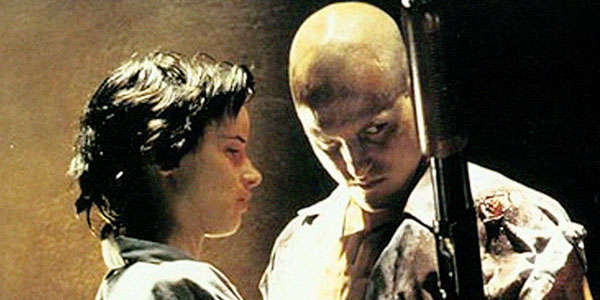
Oliver Stone's Natural Born Killers is one of the most controversial films of all time, depicting the nation-wide killing spree of two psychopaths. It wasn't long before accusations began to pop up that the film had inspired a number of copycat killings, and it was wildly condemned for its disturbing, violent content. However, as with so many violent films, the mass media completely misses the point in the quest to create a panic and sell more newspapers. As Oliver Stone has said himself, Natural Born Killers is a satire of the way that the media depicts charismatic serial killers, glorifying their behaviour and in some instances depicting them as rock stars. If some viewers didn't pick up on this, then they clearly weren't paying much attention, as Stone is hardly subtle about it. The irony is that in missing this subtext, they then sensationalised the violence of the film itself and gave it more publicity as a result.

1. The Deer Hunter Is Historically Inaccurate
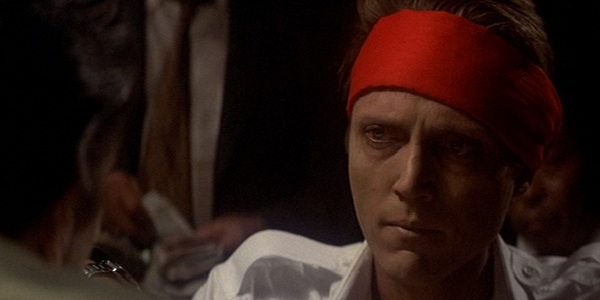
Michael Cimino's war movie masterpiece is one of the most powerful depictions of the effects of the Vietnam War both at home and abroad. The most famous scene involves Vietcong soldiers forcing POWs to play Russian roulette in a sick game to the death, and it soon enough received accusations of inaccuracy, that there were no reports at all of this happening in reality, despite director Cimino claiming that he had found newspaper clippings of such incidents taking place in Singapore. Whether it's true or not is far from the point. Roger Ebert summed it up perfectly by saying that the Russian roulette sequence is a metaphor for war itself, its random violence, and how it affects the minds of those forced to play it, quite aptly suggesting that it "is a brilliant symbol because, in the context of this story, it makes any ideological statement about the war superfluous". It doesn't matter if this ever actually happened, but these scenes are in the interest of making a more powerful and important allegorical point about war, and it does that extremely well. Are there any other controversies we forgot? Or do you agree with any controversies listed? Let me know in the comments thread.

Contributor
Contributor

Stay at home dad who spends as much time teaching his kids the merits of Martin Scorsese as possible (against the missus' wishes). General video game, TV and film nut. Occasional sports fan. Full time loon.