10 So-Called Sad Movie Endings That Are Happier Than You Think
Save your tears for another day.

A movie's ending - more than any other component of the story - is most likely to provoke the strongest response from the viewer.
It's easy to get swept up in the emotion of a story's ending, and as such, it can be easy to misread it in the moment. One of the most notable examples of this is Whiplash: there were plenty of anecdotes of viewers so caught up in the euphoric intensity of that movie's finale that they misread the ending as a happy one.
Of course, when you take a step back, you realise it was anything but.
There are plenty of so-called happy endings that are considerably grimmer than they first look, but what about sad endings that are secretly happy? Well, there are quite a few of those out there too.
The endings vary quite a bit. Some are more bittersweet than they're sometimes given credit for, while others are karmic conclusions that the film's characters actually deserved, offering their own kind of catharsis. One is even based on a true story that had a happier ending later on. Nevertheless, if these movies make you sad, here's a little something to cheer you up...
10. Memories Of Murder

This one is a major outlier. The true story Memories of Murder adapts did have something approaching a happy ending, it's just that said ending emerged long after the film's story concludes.
Memories of Murder, an excellent early effort from Bong Joon-ho, is based on the Hwaseong Serial Killings, which were South Korea's first confirmed serial murders. In 2003, which is when the film out, the murders remained unsolved and protagonist Park Doo-man (Song Kang-ho) is left haunted by his failure to bring the killer to justice.
The movie ends with Park stopping by where he found the first victim and a local girl mentions that she once saw a man, strongly implied to be the real killer, looking in and reminiscing about something he did a long time ago. Park asks what he looked like, to which the girl replies he was entirely ordinary-looking. Then, in one of the most memorable final shots of the 2000s, Park breaks the fourth wall and stares right into the camera, looking for the killer among the audience.
Well, Memories of Murder is a less depressing watch now because the murders were eventually solved, with an incarcerated man confessing to the killings in 2019. Therefore, it's comforting to think that Park and the other police characters would've eventually found some semblance of peace. At least, one hopes so.
9. Nearly All Of The Saw Movies
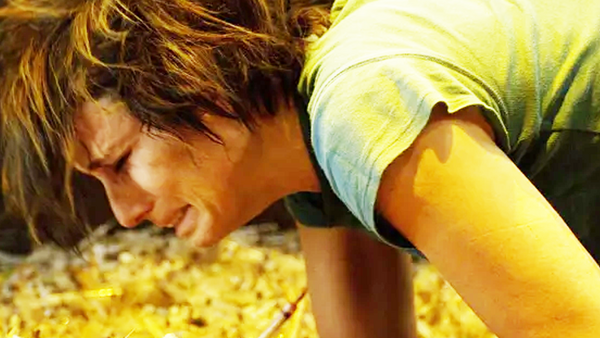
Unhappy endings and horror movies go together like cheese and crackers. So many films in this genre end badly and use their unhappy endings to give viewers one last spook. The Saw franchise is no exception, with only Saw X having a particularly uplifting conclusion.
The difference with that one is that viewers are aligned with Jigsaw (Tobin Bell) and not his victims, so Jigsaw's inevitable victory feels triumphant. Normally, though, Jigsaw and his apprentices are positioned as the antagonists while the various people he's putting through his games are positioned as the good guys.
Here's the thing though: so many of the characters who end up in Jigsaw's games are appalling people. He's tested a few less-deserving people but they are in the minority, to be frank, and most of Jigsaw's victims aren't actually the good guys at all. This isn't to say that they deserved to die, but many of them should've been serving lengthy jail sentences, put it that way.
Take, for example, Saw VI, in which many corrupt people in the US healthcare system are put through a sadistic game that few of them survive. These people had doomed so many innocent lives with their unethical practices, and it's tricky to feel masses of sympathy for them as a result.
If you look at the Saw movies as stories of bad people receiving karma, they actually feel considerably more upbeat.
8. Romeo + Juliet

This particular adaptation is one of the most famous and widely-viewed Shakespeare films, and on its own terms it is, of course, one hell of a sad watch. Leonardo DiCaprio and Claire Danes might've ostensibly bristled against each other in real life, but they were a lovely, sympathetic couple on-screen and their deaths are difficult to take, especially as it was all so avoidable.
If only Romeo had looked down and see Juliet stirring. If only.
Nevertheless, the original story of Romeo and Juliet is, while still a tragedy, more of a bittersweet work than this movie suggests. Out of the screen adaptations of Romeo and Juliet, this one is quite possibly the best and it's certainly a fascinating, brilliantly inventive take on the material. Having said that, it does make a huge error by leaving out one of the play's most important scenes - the reconciliation of the families.
In the play, once Romeo and Juliet die, the Montagues and Capulets have learned the hard way the cost of their hatred and they vow never to fight again, so something good does come out of these sad events. In many ways, this is the whole point of the story, and omitting this was a strange decision for what is otherwise a well-crafted adaptation.
7. Pain & Gain

Pain & Gain, Michael Bay's black comedy based on true events, has another rather misleading ending.
This revolves around a group of dim-witted and frustrated bodybuilders - Daniel (Mark Wahlberg), Adrian (Anthony Mackie) and Paul (Dwayne Johnson) - who carry out a kidnapping and extortion scheme in order to get rich. They ultimately murder two people and get caught, with all of them being sent to prison and two of them even being sentenced to death. This is a tragic ending, right?
Of course it isn't. They kidnapped and tortured an innocent man and murdered two innocent people - the gang got exactly what they deserved and a better film would've emphasised this more.
One of the very worst things about Pain & Gain is that it fails so completely as a satire. Instead of laughing at these characters and their greed the movie seems to glamorise them and their wealthy lifestyles once they attain them. By making them semi-likeable, Pain & Gain aligns audiences with the criminals instead of against them; it should've done the opposite.
Pain & Gain is based on a true story and it offensively reworks the entire thing, with the victims being unlikable rich A-holes and the criminals being a bunch of funny goofballs. In reality, they were a gang of violent sadists, and nothing like what you see in the film. Whether you look at the real case or this problematic fictionalisation, justice was done. That's a happy ending right there.
6. District 9

Neil Blomkamp's brilliant debut District 9 is not only one of the best sci-fi movies of the century thus far, but it's also one of the toughest.
Set in South Africa, a group of aliens (known as Prawns) have been trapped on Earth for decades and are subjected to cruel conditions in a prison camp. A bureaucrat at the Department of Alien Affairs, Wikus (Sharlto Copley in a fantastic debut performance), becomes infected with an alien fluid and begins transforming into one of the Prawns. He begins to experience the cruelty of the Department first-hand and eventually forms an alliance with an alien named Christopher (Jason Cope).
District 9 is a violent and unrelentingly bleak look at xenophobia and human cruelty, but one of the many things that makes it so great is that it finds plenty of light amidst the darkness. It ends with Wikus fully transformed into a Prawn and living in a prison camp and while often described as a depressing ending, it's arguably more of a bittersweet one.
It's unfortunate that Wikus couldn't stop his transformation, but he and Christopher formed an unlikely, positive alliance together and while Christopher does leave on a spaceship at the end, he promises to return to cure Wikus and rescue the other aliens from their hellish existence on Earth. Also, Wikus was able to do the right thing and put the Prawns' interests before his own, and that's also something to celebrate.
5. Gone Girl
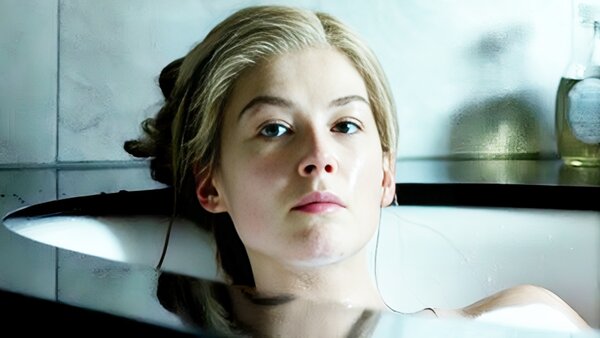
Despite it being claimed that 2014's Gone Girl adaptation would have a different ending from the novel, it does in fact end in the same way: the psychopathic Amy Dunne (Rosamund Pike) gets away with all her crimes and her husband Nick (Ben Affleck) decides to stay with her after she impregnates herself with his child.
At the time this was widely viewed as a massive downer ending - but was it really?
Amy is an awful person but let's not forget, Nick wasn't exactly a good guy either. He's a charmless A-hole who neglects his wife and cheats on her with one of his students, who was decades his junior. During the course of her faked disappearance, Amy does kill an ex-boyfriend named Desi (Neil Patrick Harris), but he seemed like an awful creep - the kind-of person who could've easily gone on to hurt someone one day.
Earlier in the film Nick does meet a man whose life Amy ruined by lying about him, so this isn't to say that Amy escaping arrest wasn't a huge injustice - it absolutely was. Rather, there's an argument to be made that the ending for Nick and Amy was quite fitting: they're two terrible people who deserve each other.
4. Runaway Train

This arguably overrated 1980s thriller, hampered by its low stakes and insufferable characters, does have a memorable and undeniably powerful ending which represents a classic example of clever cinematic manipulation. The acting, visuals and haunting music make this ending seem much sadder than it actually was, though.
Runaway Train sees two convicts, Manny (Jon Voight) and Buck (Eric Roberts), trapped on a runaway train alongside an assistant locomotive driver named Sara (Rebecca De Mornay). The train is speeding through the Alaskan wilderness and has been redirected into an empty siding. If the trio don't stop the train, they'll all die.
Eventually, Manny manages to get onto the front engine shut the rest of the train down. However, choosing to die instead of being recaptured, he stays on the train and takes a prison warden, who'd boarded the train via helicopter, with him to his doom.
In the moment, it's easy to get swept up in the emotion and yet, on further reflection, this ending really isn't that downbeat after all.
On balance, this dangerous runaway train situation actually ended pretty well. Only three people lost their lives. They were Manny, a terrible person who would've gone back to prison anyhow, and two idiotic law-enforcement officers who were stupid enough to board a speeding train that had already been redirected into an empty siding in order to derail. Really, what's there to be depressed about?
3. Emilia Perez

This widely-loathed and polarizing Best Picture nominee Emilia Perez presents its ending as a sad one, even though plenty of viewers are unlikely to feel the way the filmmakers no doubt wanted them to feel.
Emilia Perez tells the story of a Mexican cartel boss (Karla Sofia Gascon) who fakes their death so that they can disappear and transition into a woman. Once she's done this and is going by Emilia Perez, she invites her former wife Jessie (Selena Gomez) and her two children back to Mexico to live with her, where she pretends to be a distant cousin of their supposedly dead father.
Eventually, when Jessie wants to move away with the children and her new partner, Gustavo (Edgar Ramirez), Emilia uses violence and blackmail to try and stop them. This situation eventually leads to a car crash in which all three of them are killed. Secondary lead Rita Castro (Zoe Saldana) adopts Emilia's children and a big funeral is held for Emilia, celebrating her work in helping victims of the cartel.
Look, if writer-director Jacques Audiard wanted viewers to feel sorry for Emilia, he went the wrong way about it. She killed God-knows how many people as a cartel boss (something the movie never makes enough effort to hold her to account over) and, by trying to control the family that she herself had abandoned, she created the circumstances that led to her death. Despite what the film wanted us to believe, she was always the bad guy.
2. Unfriended

In this underrated screen-life horror film, which sees six teens being stalked by the vengeful ghost of a girl named Laura Barnes, who killed herself due to cyberbullying, the villain does win, in that the ghost kills all six of them. Having said that, was she really the villain?
There are unlikable horror movie casts, and then there's Unfriended. These guys are the lowest of the low and despite how young they are, it's nigh-on impossible to feel even the faintest bit of sympathy towards them. Throughout the film they're all revealed as a group of backstabbing bullies, and one of them even turns out to be a rapist.
As for 'protagonist' Blair (Shelley Hennig), it eventually turns out that she was the person who spread the video that led to Laura's suicide even though Laura was a good friend of hers, and at the end of the movie she actually allows Laura to kill her own boyfriend just to save her own skin.
This isn't meant to be a criticism of Unfriended - quite the contrary. The characters being so hateful makes it an interesting commentary on the darker sides of modern-day teen culture. There are many kids horror series, such as Goosebumps and Grizzly Tales for Gruesome Kids, which feature antisocial and unpleasant children facing quirky, darkly funny comeuppance for their actions. Unfriended is like an adolescent version of such stories, so it's hard to look at the ending as anything but a case of wrongdoers getting their just desserts.
1. Goodfellas
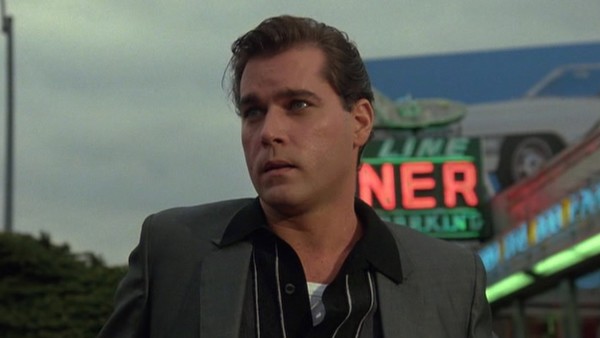
Martin Scorsese's masterpiece of a crime drama features a particularly clever stealth tragic ending. Goodfellas tells the story of Henry Hill (Ray Liotta), a gangster who rises and falls, ultimately having to go into witness protection and betray his fellow gangsters to stop them from assassinating him.
Even though he gets to live, he laments this outcome at the end and confesses that he'll miss the gangster lifestyle. "I'm an average nobody... get to live the rest of my life as a schnook" he narrates. The final shot of him closing his door is accompanied by the sound effect of a prison door closing, hammering this home.
One of the many things that makes Goodfellas such a fascinating film is that it's narrated by a guy who sees himself as the hero when he's actually the villain. He's been a violent gangster the whole way through and he hardly deserves any sort of happy ending. Really, the only thing that's downbeat about this ending is the fact that he doesn't end up in prison, which is arguably where he belonged.
In the end, as Hill's final voiceover showed, he didn't learn anything at all, and this conclusion is precisely what he deserved. His thuggery, his greed and his constant double-crossing of all his friends (who were also vile, but still) led him to living the life of a nobody. It was his fault and his alone - as they say, you make your bed, you lie in it.