10 RIDICULOUS Horror Movies That Are TERRIFYING
When horror movies make the most of their very silly concepts.

Above all else, audiences generally expect horror films to be scary or at least basically unnerving, though that can become a serious challenge when dealing with more out-there subject matter that viewers may also struggle to take seriously.
Silly, over-the-top horror movies are great, don't get us wrong, but to be totally absurd and also utterly horrifying is an incredibly tricky balance to strike, and one only a select few horrors can really lay claim to. And so, inspired by this recent Reddit thread on the very subject, here are 10 undeniably ridiculous horror films that still managed to scare the hell out of basically everyone.
The synopses for most of these movies sound totally outrageous devoid of their context, and even then, they still come off pretty damn daft. And yet, each overcame that potential limitation to ensure the "colourful" setup didn't undermine all the scares the filmmakers worked so hard to develop.
It's nothing if not a testament to the tenacity of the cast and crew who worked on each film, taking truly wild material and spinning it into pure genre gold...
10. The Ring

It's easy to imagine another version of The Ring - either the 1998 original Ringu or its surprisingly solid 2002 U.S. remake - that just doesn't work at all.
The premise, of a cursed VHS tape that causes viewers to die seven days later, sounds totally laughable on paper, and with both films arriving in an era where goofy techno-centric horror films were all the rage, The Ring could've gone so, so wrong. But credit to original filmmaker Hideo Nakata and remake director Gore Verbinski for soaking this undeniably silly concept in an almost unbearable amount of dread.
Both films make masterful use of slow-burn storytelling to heighten the viewer's unease, enough to make them forget how utterly daft the whole cursed videotape setup actually is. More than 25 years after Ring's release, it remains a high point of modern international horror, while Verbinski's sumptuous feast of a remake is basically the benchmark by which all glossy Hollywood retellings are measured.
9. Oculus
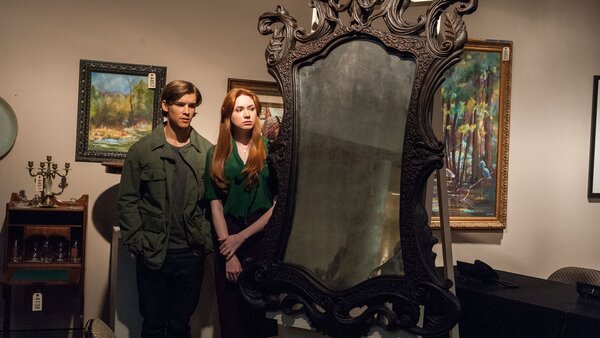
From one comically haunted object to another now, we have Mike Flanagan's Oculus, which revolves around a haunted antique mirror which attempts to kill anyone it has sustained contact with. But trust genre veteran Flanagan of all people to take this seemingly daffy idea for a horror movie - which originally started out as a short film he directed - and render it staggeringly tense.
Flanagan's creativity as a filmmaker allows him to wring every possible drop of suspense out of two adults (Karen Gillan and Brenton Thwaites) battling an evil mirror. This is aided by the film's low budget, which forces Flanagan to ditch any over-the-top mirror-based set-pieces - like you might expect to see in a bigger-budget studio version of this story - in favour of a more subtle, restless brand of horror.
Against the odds, Oculus is a film that well and truly burrows under the skin, and helped propel Flanagan to the success he rightly enjoys today.
8. Hellraiser

Oh, Hellraiser...
Clive Barker's madcap horror classic is almost too loony for words, revolving as it does around a puzzle box that can be used to summon extradimensional sadomasochistic entities known as Cenobites, and a dude who attempts to regain his human form by killing other dudes, all so he can have sex with his former lover once more.
Hellraiser is about as out-there as quasi-mainstream horror gets, but Barker impressively renders all of this ridiculousness in raw, visceral terms through the film's extreme body horror and its utterly iconic, singular depiction of the Cenobites themselves.
Barker and his production team invested all their energy in the right places, ensuring that audiences were so busy staring slack-jawed at the stunning gore effects and Pinhead (Doug Bradley) himself, that there wasn't too much time to question how preposterous the entire enterprise was.
Sadly, the center did not hold throughout the rest of the franchise, though.
7. Suspiria

Dario Argento's Suspiria sounds positively laughable when you read the pitch aloud, centered as it is around a prestigious German dance academy that's actually a front for a coven of witches.
Sure, why the hell not?
Throw in the film's totally wild approach to lighting and production design, its dreamlike storytelling, and that Goblin musical score, and Suspiria feels like a mishmash of incongruent ingredients that really shouldn't work. But such is the pleasure of the giallo subgenre, focused as it is on feeling over water-tight logic, and extremely stylised aesthetics over boring kitchen sink realism.
Argento's surreal approach is precisely what makes Suspiria so effective, ensuring the audience can never get comfortable with what they're watching, instead constantly having to field unhinged curveballs being lobbed their way by the master filmmaker.
It's bewildering stuff, and while Suspiria should be incredibly difficult to take seriously, it's ultimately so intoxicatingly, atmospherically bizarre as to muster genuine fear throughout.
6. Child's Play
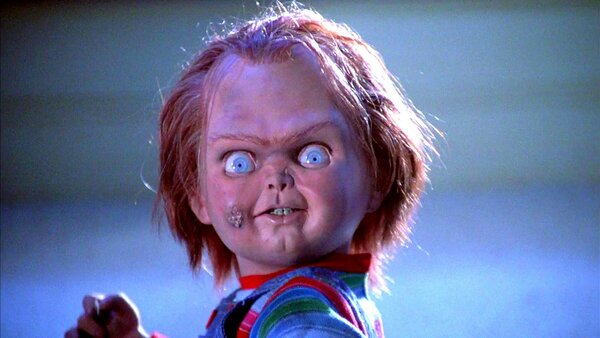
Though the Child's Play franchise has leaned increasingly into its silly, satirical side over the years, it remains impressive that the original 1988 film is not only a totally straight-faced slasher flick about a killer toy doll, but actually manages to get away with it.
An adorable doll coming to life and murdering people as a result of a voodoo chant that transplants a serial killer's soul into it is about as silly as horror movie setups get.
But thanks to the film's many smart creative choices - minimal footage of Chucky in action, superb puppetry work, and a brilliant vocal performance by Brad Dourif - it adds up to an experience primed to terrify kids and adults alike.
That franchise creator Don Mancini later decided to pivot the franchise into horror-comedy territory starting with the fourth film, Bride of Chucky, was probably a smart call all things considered, especially with the diminishing returns of the second and third movies as serious-minded slashers.
5. The Shallows
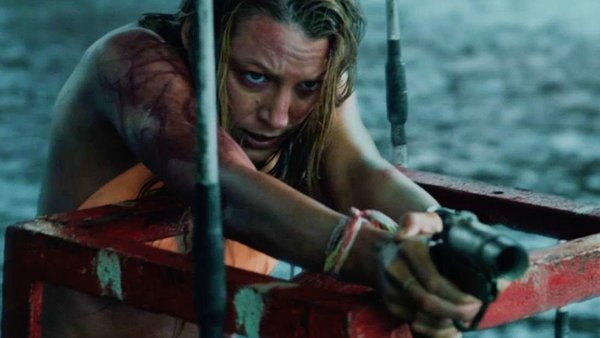
Shark movies are inherently pretty daft at the best of times, but 2016's The Shallows rocks a uniquely laboured, convoluted setup in which a young woman (Blake Lively) ends up stranded on a rock 200 yards from shore while being stalked by a great white shark.
This is one of those gimmicky "everything that can go wrong, will go wrong" horror-thrillers that's a ton of fun to watch even though it requires extraordinary suspension of disbelief.
If you buy into the contrived circumstances that leave Lively's protagonist imperiled, and the increasingly dire wrinkles that further complicate her survival, The Shallows does capture the visceral terror of being pursued by a natural predator in a way few other post-Jaws shark films ever have.
Credit to Lively for not only her intensely physical performance but also her ability to carry the film almost solo, persuading most naysayers to buy fully into her protagonist's predicament despite our greater instincts telling us otherwise.
4. Hell House LLC
It was incredibly easy to write Hell House LLC off from the outset - a found footage film that uncovers the truth behind a haunted house attraction that "malfunctioned", causing the deaths of 15 punters and staff members alike.
Such a concept felt very passé even back in 2015, when the found footage genre was already well past its peak, and it just didn't seem like a rollercoaster ride through an actually haunted haunted house would offer much in the thrills department.
But what a pleasant surprise it was to be totally wrong. Hell House LLC makes the most of its low budget to thoroughly creep the audience out with subtle visual frights, while preying upon that most elemental of audience fears - our collective hatred of clowns.
In theory, Hell House LLC throws up a lot of red flags, indicating yet another listless, unintentionally comical found footage flick that won't raise the pulse much at all. However, Stephen Cognetti's atmospheric direction works wonders in making the most of his scant, shrewdly selected resources.
3. Idle Hands

Idle Hands is a riotous horror-comedy revolving around a slacker stoner, Anton (Devon Sawa), whose hand becomes possessed and starts killing people, creating quite the predicament for him.
It's one hell of a kooky setup, and while Idle Hands is an unabashedly insane comedic horror film, it does manage to tap into something terrifying on a primal level - the loss of one's bodily autonomy.
Being pursued by a masked killed is one thing, but when your own body betrays you and is weaponised against you and the ones you care about, that's one hell of a unique approach to body horror.
Again, Idle Hands is all about wacky, off-the-wall dark comedy, but at its core is an idea that's really quite frightening, even if at an extremely heightened level. We all take for granted that our body is only ours to use, but Idle Hands posits a scenario whereby that freedom is taken away, creating an uneasy "what if?" for viewers.
2. Smile

The marketing for Smile admittedly did it no favours at all, focusing on the most tropey and conventional elements of its high-concept setup, enough that many assumed it'd be another Blumhouse-tier slop-fest in the vein of 2018's Truth or Dare.
The story revolves around a therapist, Rose (Sosie Bacon), who is preyed upon by a trauma demon which forces her to witness visions of those around her wearing eerily enthusiastic smiles on their faces, as part of its plan to torment her to death.
The trailers made it look resoundingly stupid, but credit to filmmaker Parker Finn, who actually crafted a surprisingly character-driven, stylish, and brilliantly acted slice of horror that made its dubious premise genuinely unnerving. Better yet, Finn managed to repeat this success with the recent Smile 2, which arguably turned out to be even better than its predecessor.
What an outcome for an initial logline that invited so little optimism from horror fans.
1. Christine

John Carpenter's Christine is a movie that just shouldn't work, given that it's basically an unhinged "love" story in which a car grows jealously, murderously possessive of its owner, Arnie (Keith Gordon).
Christine was written in Stephen King's "cocaine era," and it absolutely shows. The prospect of adapting something so deranged into a live-action movie, where a 1958 Plymouth Fury has a mind of its own, attempts to control the object of its affection, and kills anyone who gets in its way, just seems like a non-starter.
And yet, 1980s Carpenter was no slouch, and he inexplicably managed to make Christine a genuinely disturbing piece of work. Carpenter's greatest achievement lies in truly making Christine herself feel like a character in the movie, rather than a mere mechanical killing machine. Seeing the damage that Christine is capable of, not to mention her ability to repair herself, makes for legitimately tense and eerie viewing, far from the inherent cartoonishness of the idea.