10 Ridiculous F**k Yous In Famous Films
 It's a sad fact of life that occasionally, you're not going to get on with certain people. Somehow, some individuals will find a way to get on our wick maybe it's that negligent flatmate who forgets to do the vacuuming, maybe it's that frenemy who only ever has a bad word for you, or maybe one of your mules used the last of the good cocaine. Either way up, disagreements happen, and it's how we respond to them that shapes our character. Some people choose to reconcile, others choose to compromise, and for a certain happy few, they choose to make things a whole lot worse. The above applies just as much in film as it does in real life, if not more so. Like most creative types, film-makers can tend to preach and identify targets at which to throw their invective. Oftentimes, it's because these people feel wronged in some way, they've had their ego deflated or occasionally, it can be just for the sheer hell of it. Yet whatever the reason, these choices tend to echo throughout the ages precisely because of the medium. Make no mistake, while bruises can heal and we can recover from hurt feelings, when somebody with a grudge gets in front of a camera, all sorts of silliness can occur. This list is dedicated to those magnificent bastards the kinds who felt they had to make a point. Be warned, I'm throwing in the mild SPOILER WARNING now. By the way, I'm not going to talk about Lady In The Water. It's far too easy, and you're better than that.
10. Godzilla's Stupid Mayor Was Modeled On Roger Ebert
 Roger Ebert's career told us a universal truth which time after time, certain film-makers failed to heed. What was that truth? Simply put, you do not argue with Roger Ebert. It just won't go well for you the man didn't win a Pulitzer for film criticism off the back of ill-informed trolling, he got it for possessing a razor-sharp wit and film knowledge of which you could only dream of possessing. So if he and Gene Siskel take a dislike to your body of work, they'll do so with good reason and they'll do it with style. If you're smart, you'll take the criticism on board, internalise the rage and come back with a better film. If you're Roland Emmerich, you'll create cutout f**k you characters in revenge. Disregarding whether Godzilla was a good film on its own merits (it wasn't), calling out blokes who are witty for a living is pretty much career suicide. Yet Emmerich indulged his inner humorist by making the mayor of Godzilla-ravaged New York a buffoon modelled off Ebert, who came in-tow with an ass-kissing lackey (read: Siskel). There wasn't even a subtext the mayor's literally called 'Mayor Ebert,' and that's probably the least blatant thing about this attempt at satire. Ebert responded with the greatest touché ever after being insulted he loved it, and treated it as flattery. In fact, here's a quote from his review.
"These characters are a reaction by Emmerich and Devlin to negative Siskel and Ebert reviews of their earlier movies ("Stargate," "Independence Day"), but they let us off lightly; I fully expected to be squished like a bug by Godzilla. "Now that I've inspired a character in a Godzilla movie, all I really still desire is for several Ingmar Bergman characters to sit in a circle and read my reviews to one another in hushed tones."Hot damn, Emmerich. You got burned.
9. Citizen Kane Declared War On A Real-Life Media Mogul
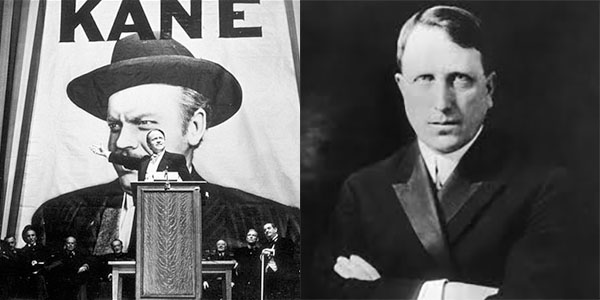 The Citizen Kane of... oh, wait, you can't use that here. Born in the fevered brain of cinematic wunderkind Orson Welles, the trademarked Best Movie Ever is renowned for its knife-twisting of a public figure to the extent that it's wink-wink nudge-nudge criticisms are probably the reason why it was ostracised at the Oscars. You might who the hell Welles had to criticise for his film to be blackballed so thoroughly, and I guess that's a fair question. The answer is William Randolph Hearst, the mogul to end all media moguls. Hearst was a defining voice in American journalism whose actions influenced the industry in all sorts of ways, but he was not without his critics. However, most critics don't have access to a film camera, never mind possess the storytelling talents of Welles. So with the film-maker having chosen his target, the longest suicide note in filmic history played out for all to see. Watching media mogul Charles Foster Kane decline from a noble-minded journalist into a vindictive, power-consumed shill was a riveting watch, but its hardly-complimentary tone inspired by co-writer Herman J. Mankiewicz's insider knowledge of the man resulted in Hearst banishing all mention of the quasi-biographical film from his considerable arsenal of papers. Needless to say, Kane suffered.
8. Dodgeball Calls American Audiences Stupid
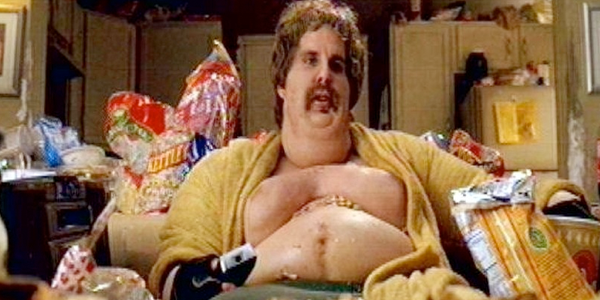 Inserting a f**k you into a Frat Pack movie is a little like wearing trousers at an orgy you're clearly there for the wrong reasons, so you might as well leave now. Yet still, Ben Stiller committed whole-heartedly to this odd move, ending a movie often reliant on juvenile humour (nothing wrong with that by the way, Dwight Goodman is a great comic creation) with a strange little broadside against American audiences. I suppose the whole thing gets lost under Ben Stiller's and Rip Torn's awesome performances and the now-excruciating Lance Armstrong cameo retrospectively ruining that scene was a tragedy akin to defiling the Tour de France but if you stick around to the end and actually listen to what Goodman/Stiller is saying under the fat suit about you as the viewer, it's pretty damning stuff. Ostensibly, the character operates as the writer's mouthpiece, decrying the film's overly optimistic ending by saying that American audiences can't handle tragedy, so they make do with fart jokes and idealism. What's interesting is just how truthful the statement actually is, and it seems oddly fitting that the point gets lost under the milkshake man-boob dance.
7. Funny Games Mocks You For Being A Sick B*stard
Michael Haneke is many things controversial, strange, talented but one thing he isn't is stupid, and he showed this to a tee on Funny Games. Concerning two gents (Peter and Paul) who hold a family hostage with sadistic games, the family must survive until 9 o'clock the next morning. The film is notorious for its premise, but I couldn't honestly write a list without including it. Here goes Peter and Paul are very aware of standard film tropes, and Paul even breaks the fourth wall and calls out the audience on their expectations with a big smirk on his face. All the way through you feel insulted and frankly, a little bit dirty. Of course, that's the point Haneke wanted to send up the bad-things-happening-to-people-we-don't-know mentality which powered the slasher genre. He did this in the most blatant way possible, telegraphing all the plot points you might anticipate in a film of this genre, including a clichéd characters-left-alive ending which the killers promptly wind back and remedy. Seriously, that actually happens. For my money, it's one of the most genius plots I've seen on-screen, delivering a middle finger to the viewers who absolve enjoying the characters' pain because it's all rosy at the end. Seeing Anna get chucked out of the boat second time round robbed us of this 'catharsis,' and exposed us as the horrible voyeurs we can occasionally be. As a cinematic telling off Haneke has admitted the film, with all its violence, is utterly pointless and a satire of audience expectation it's extremely hard to beat.6. Auric Goldfinger Is Based On An Architect Ian Fleming Hated
 You don't make it to 23 films without suffering a fallout behind the camera, and the Bond franchise is no exception to the rule. Now a finely-polished corporate product, the adventures of Britain's favourite amoral superspy was a much different affair back when Ian Fleming was still alive and exerting his considerable influence on the films. In-keeping with his reputation as an all-round badass (seriously, read about his army career), Fleming was often quick to anger and not above inserting jibes in his books, and by extension, his films. Case in point, classic villain Auric Goldfinger. You might think his name is too fantastic to be real, but you'd be wrong Goldfinger is an unsubtle take-down of Erno Goldfinger, an architect of whose personality, buildings and beliefs Fleming wasn't overly fond. Seriously, that's all it took for an immortal lampooning some ugly buildings (he's partly responsible for London's eyesore tower blocks) and communist sympathies. Justifiably annoyed at seeing himself turned into a diminutive, traitorous megalomaniac, Goldfinger attempted to sue and that's where things got childish. The writer made his position even clearer if he had to bow to studio pressure and say his villain wasn't based on Goldfinger, he'd label him Goldprick instead. It's at this point that Goldfinger's lawyers backed down, presumably scared by what the hell Fleming might've tried next. Presumably, it would involve a title even more suited to porn.
5. Shrek Is One Long Jibe At Disney
 It's probably one of the more obvious points on my list, but hell, I had to mention it for sheer gumption alone. As you might know, the Shrek films began an inexorable slide into mediocrity straight after the second film, ending in a kid-friendly 3D extravaganza featuring a conga-line of effects-friendly witches because, hey, why the hell not. But there was once a time when the Shrek films had real bite, and though I could've put the second film's good-natured ribbing of Hollywood culture in here, the original's sharp take-down of Disney takes the prize. Simply put, Duloc was a glorious pastiche of Disney World, all lovingly put together by their biggest animation rivals, Dreamworks. Granted, Dreamworks have probably never reached Pixar's utterly transcendent level, but still credit where credit's due. The whole place is fantastic the overly santised environment, the fakeness of it all, the queuing, it all rings true with anyone whose traipsed around one of Disney parks, right down to the bobble-headed mascots (in this case, Lord Farquaad). But obviously, the best part is the It's A Small World-aping Duloc singing sideshow, poking fun at the overly saccharine, fun-all-the-time ethos with which the Mouse House is associated. It later comes back with the applause cue-cards, but it's here that the satire's at it's finest. There's even a ride-style picture at the end, for god's sake. When you combine this with Donkey's pitch-perfect audience piss-take ("Let's do that again!"), you've got to appreciate that Disney totally got served.
4. Studio Sues Alan Moore Over The League Of Extraordinary Gentlemen And Casts An Actor He Hates
 Alan Moore is a renowned grump who absolutely loathes what Hollywood has done to his comics. It's been this way forever he's famously apathetic about the movie industry in general, and the balls-up that was From Hell didn't help matters. Yet 20th Century Fox's next Moore adaptation The League Of Extraordinary Gentlemen was a balls-up of epic scope, a colossal misfire on all levels that runed the material, killed a potential frnachise and inadvertently forcing the magnificent Sean Connery into early retirement. The whole thing started an ugly court battle between writer and studio after a fellow scribe claimed the on-screen add-ins to Moore's comic were taken from their own unpublished script. Despite this not being Moore's fault, the studio hung him out to dry, labelling him a plagiarist and forcing him to give a ten hour deposition in which he said he was treated like he'd "raped and murdered a schoolbus full of retarded children after selling them heroin." That's a pretty big f**k you, really. But the weirdest f**k you in all of this? Moore hates James Bond, and that's pretty public knowledge. He's labelled him a misogynist and has gone as far as directly spoofing him in the League Of Extraordinary Gentlemen's pages, with the unsubtly named and Sean Connery-modelled Jimmy Bond. Proving they couldn't have missed the point any harder , when it came time to cast Allan Quartermain they brought in the very embodiment of Moore's derision Sean Connery. I seriously can't think of any more ways they could flip Moore the bird, aside from taking a dump on his lawn. Frankly, I wouldn't put anything past them after this, although I wish they'd stop I've had enough of Alan Moore's awful analogies for one lifetime.
3. The Clash Of The Titans Remake Mocks Its (Far Better) Original
 Imagine a friend you hold in high esteem the sort of individual loved by most, who lights up the room just by entering it. Now imagine he had a younger sibling. In much the same way as your friends' brothers, he sort of resembles the person you like, but it's a pale imitation made all the worse by the fact he doesn't seem to like his accomplished sibling. Right there in that tortured analogy is the sort of relationship the rebooted Clash Of The Titans has with its more illustrious forebear. I for one don't understand it. Sure, the Ray Harryhausen effort wasn't the most amazing film in the world, but there was a sort of camp quality in there which marks it out as one of the legendary animator's better-loved films. Hell, trading off the goodwill of the original is the whole reason why the Sam Worthington-backed series exists in the first place, so when one of the soldier-types played by future Davos Seaworth, no less mocks the incongruous owl in one scene, you can't help but scratch your head. Granted, it's one of the more good-natured insults on this list, but it's still bizarre and frankly, I didn't quite know how to take it. I get being slightly ashamed of a pulpy origin, but when your remake is as cookie-cutter gritty reboot as it comes and trading off the nostalgia, this smacks of sticking two fingers up at your dinner ticket. Yeah, the Bubo the owl was a tad goofy, but things like his presence make it clear this is a Titans film. After all, there's a reason the owl turns up again in the sequel without such touches, it may as well be called 'Australian Beats Up Mythology,' for all the reverence it shows the source.
2. 500 Days Of Summer Calls Out Jenny Beckman
 I really hope Jenny Beckman doesn't exist, because I don't think anyone deserves this much abuse. Though I'm of the opposite gender, I can't imagine being called a bitch is ever a pleasant experience for a woman, and that's only in private. When you're being called a bitch in the first lines of a wildly successful not-a-rom-com billed as the spiritual successor to Annie Hall, it's fair to say a different ball-game has erupted. Here's the line in question. "Any resemblance to people living or dead is purely coincidental... Especially you, Jenny Beckman... Bitch."
 Again, it's all probably a joke, in-keeping with 500 Days Of Summer actually-not-that-sunny disposition, and there's every chance in the world that the name Jenny Beckman is just a name pulled out a hat. But apparently, the entire script was inspired by co-writer Scott Neustader's flaming car-wreck of a break-up, with Summer herself a facsimile of the girl in question. Whether or not that girl was actually called Jenny Beckman is up for debate (hint: it's probably not), but calling out an ex-girlfriend in the mass media must certainly be viewed as a f**k you of biblical proportions. After all, even if it's not 'Jenny', there's still a number of people who know exactly who this film is about, and it's got to smart to see your dirty laundry being aired in the DVD aisle.
1. Sucker Punch Is Zack Snyder's Middle Finger To Male Geekdom
 I watched Sucker Punch, and I was left cold. It was utterly underwhelming, nonsensical in places, overly fetishized and jam-packed with forgettable characters. By and large the critics agreed with me, agreeing that Zack Snyder's first attempt at an original screenplay went down like a lead-lined Hindenburg. Yet a strange thing happened next a minority of my cinema friends started telling me that Snyder was being far cleverer than you might have thought, and all that voyeuristic flesh-shows (seriously, look at the above) totally had a point, dude. Apparently, Snyder was making it clear in interviews that the whole thing was a satire of male geekdom and their inherent sexism. If it's true and not just an attempt at re-establishing credibility then I've got to hand it to him for potentially out Haneke-ing Haneke. It's well known that as a cultural group we tend to objectify women, so to managing a damning indictment of the culture by biting the hand that feeds can certainly be viewed as ballsy, if nothing else. I guess if you go in for a second time with this interpretation in your head, it certainly does put a different spin on on it. After all, there comes a point somewhere between the quasi-dominatrix murder and the incongruous Asylum-set strip club scenes (read that back for how mental it sounds) that you realise something might be up, and Snyder might just be a genius. Of course, it might all just be as shallow as we originally thought, but we can dare to dream, right? Right?