10 Recent Non-Horror Movies That Are TERRIFYING
These recent films couldn't be called horror movies, but they were still plenty scary...
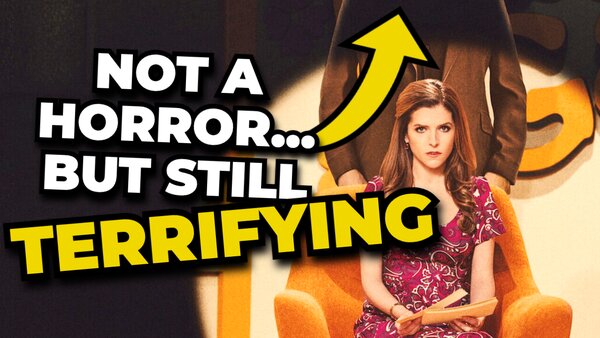
There's no strict definition of a horror movie, and while there are obvious ideas and imagery we commonly associate with the genre, different things can be horrifying to different people.
And of course, there are films that categorically don't sell themselves as horror movies in the traditional sense which are nevertheless more terrifying than the overwhelming majority of card-carrying horrors you'll ever sit down to watch.
And that's absolutely the case with these 10 non-horror movies, which while being "horror-adjacent" at absolute best, nevertheless left audiences reeling all the same.
Perhaps they adopted the aesthetics of the horror genre to heighten the unnerving nature of their story, used modern tech to do something unexpectedly nightmarish, or simply offered such a real window into deep-seated existential horrors that we were all left positively shook.
Great horror movies will stick with you and keep you thinking about them weeks, months, even years later, and the same is absolutely true of these 10 films, which evidently made it their mission to make you as uncomfortable as possible and leave you positively terrified.
They're not horror movies, but they might as well be...
10. Friendship

To take one look at the new film Friendship, you'd safely assume it to be an indie comedy, given that it stars the ever-hilarious duo of Paul Rudd and Tim Robinson.
But this fascinatingly genre-bending affair is something quite different indeed.
Robinson plays Craig, a socially awkward man who attempts to make friends with his charismatic new neighbour Austin (Rudd). Yet despite the expectation of goofy hijinks, this is a strangely unsettling black comedy more in the vein of something like The Cable Guy.
Robinson's absolute inability to be "one of the guys" makes for squirm-inducing viewing, which combined with a moody aesthetic more typically reserved for A24's card-carrying horror films, increasingly leads the audience to expect a genuinely horrific outcome.
Though Friendship absolutely has its gut-busting laughs, the presentation throughout - both in terms of its visuals and unpredictable performances - makes this an anxiety attack of a "comedy" sure to leave you on edge until the end credits finally, mercifully roll.
It's an extremely tricky thread to needle tonally, and one which probably resulted in some disappointed viewers, but filmmaker Andrew DeYoung deserves so much credit for the boldness of his vision here.
9. Baby Invasion
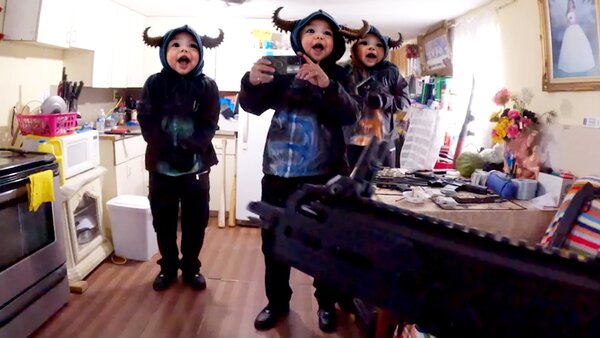
Baby Invasion is the latest film from Harmony Korine (Gummo, Spring Breakers), and only further cements his total disinterest with conventional narrative filmmaking.
This utterly bewildering experimental thriller takes place within a first-person shooter video game as a group of mercenaries invade the mansions of the rich and the powerful.
The big, bizarre hook, however, is that each of the mercenaries' faces have been swapped with the faces of babies created through AI technology.
Even putting aside the debate about the ethics of using AI in films - something Korine appears wholeheartedly committed to - watching a movie where the gun-totting aggressors all have cherubic baby-faces is absolutely uncanny, perhaps even downright cursed.
Couple this with Korine's decision to regularly cover the screen with video game-y visual effects, and it adds up to a film that feels like watching a genuine waking nightmare.
It's certainly a singular filmmaking vision alright, albeit one that few will actually want to spend time watching.
8. Mountainhead
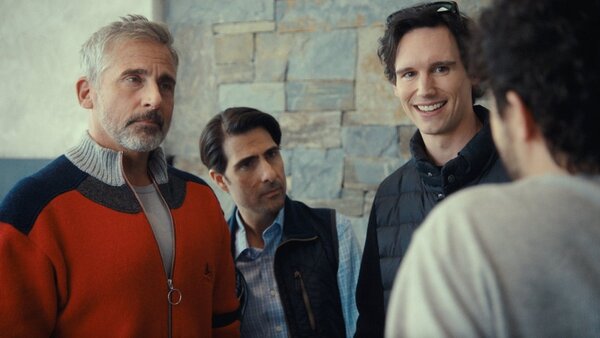
Mountainhead is a new TV film from Succession's Jesse Armstrong, starring Steve Carell, Jason Schwartzman, Cory Michael Smith, and Ramy Youssef as four billionaire friends who go on a secluded weekend retreat just as the world plunges into chaos caused by AI-generated misinformation.
Though Mountainhead transpires largely inside a lush mountain home, we're continually fed updates on how one of the group's unstable AI tech is basically setting the world on fire in real time.
Exaggerated though it might be for dramatic effect, it nevertheless offers a genuinely frightening window into a world that, like it or not, is going to become increasingly entwined with AI in the years to come.
Just as horrifying, though, is the sociopathy of the four billionaire protagonists, most of whom are concerned less about the world-ruining implications of the tech than how they can harness it to rule their respective fiefdoms and increase their net worths.
Mountainhead isn't really saying anything we don't already know, but presenting such dystopian ideas in such matter-of-fact fashion leaves an unmistakably bruising impact.
7. Hard Truths
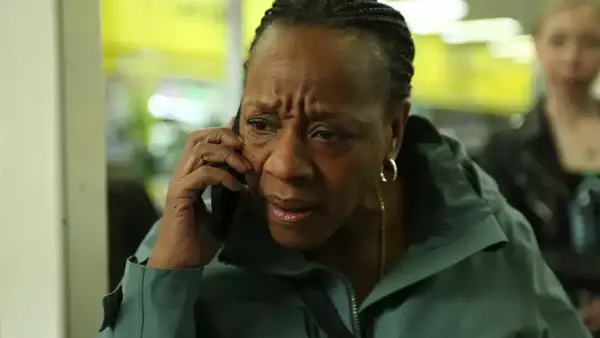
Of all the filmmakers we could associate with horror, the great Mike Leigh would probably be right at the bottom of the list.
And yet, his most recent film Hard Truths is more difficult to sit through than most gore-soaked slasher flicks, because it's such a discomforting depiction of an individual whose unhappiness has turned them into an insufferable, hateful person.
Few films have better depicted depression as a swirling black hole hell-bent on dragging in everything within its midst.
The film focuses on Pansy (Marianne Jean-Baptiste), a middle-aged woman whose short fuse causes her to get into arguments with just about everyone she meets, usually about wholly mundane matters.
Hard Truths is a wince-inducing 97-minute exercise in watching someone who is very clearly their own worst enemy make their life even worse at just about every turn.
The result is so skin-crawlingly real that it's tough to imagine many going back for a second viewing, Oscar-worthy though Marianne Jean-Baptiste's central performance absolutely was.
6. Warfare
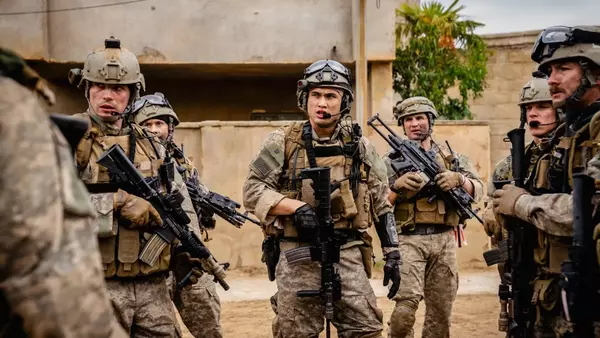
Alex Garland and Ray Mendoza's war thriller Warfare kicks off with our central squad of soldiers bro-ing out while watching the infamously hyper-sexual music video for Eric Prydz's 2004 hit tune "Call on Me."
And while this opening might suggest a film that's mostly interested in the flag-waving, adrenaline-pumping aspect of war, all it really does is lure audiences into a false sense of security.
Because Warfare couldn't be further from a glorification of war - this is a deeply upsetting and unpleasant film about the human cost on all sides of a combat scenario.
Garland and co-director Mendoza, the latter a U.S. Navy SEAL on whose experiences the film is based, make every effort to strip the sexiness and "cool factor" out of the typical war movie, focusing almost explicitly on the anxiety of looming death, and the clinical means through which munitions can obliterate the human body.
Garland, who has spent a good chunk of his career working in the horror genre with films like 28 Days Later, Annihilation, and Men, transplants that visual language onto his war movie, which is evidently committed to ensuring that not a single person leaves the cinema feeling "pumped."
5. The Surfer
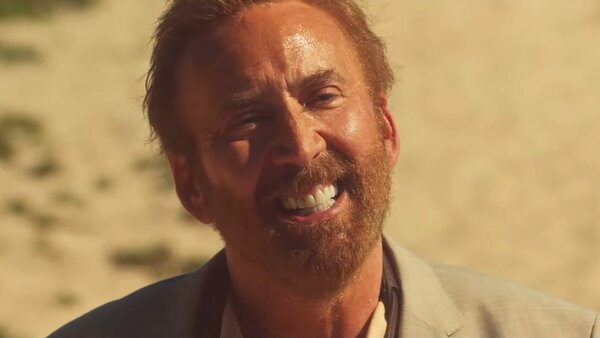
Finally, we have a film with the courage to explore that enduring question - is there anything scarier than facing off against an Australian surfing cult after you've lost your shoes?
Much as Nicolas Cage regularly dabbles in the horror genre, The Surfer is really more of a psychedelic thriller, albeit one that's so nightmarish in its construction that it's frequently unnerving to bold.
The entirety of the movie is centered around Cage's unnamed protagonist progressively surrendering his sanity while battling the aforementioned locals and their toxically masculine ideology.
Much of the horror stems from the fact that the surfer himself is something of an unreliable narrator for most of the movie, his sun-drenched and later drug-infused perspective ensuring we as the audience aren't quite sure whether to trust the increasingly unhinged sights we're seeing.
It adds up to a film that's so discomforting and downright icky you'll probably want to go take a shower the moment it's over.
4. I'm Still Here

Oscar-winning drama I'm Still Here is a devastating depiction of existence under a military dictatorship, centered around the true story of Eunice Paiva (Fernanda Torres), a Brazilian woman who desperately fights for accountability after her husband is disappeared by the regime.
Though extremely measured in tone and in no way over-the-top, the film does a magnificent job of depicting the sheer mortifying reality with which those in power can make those who threaten them vanish.
And it then falls to those who are left behind to pick up the pieces and try to hold those responsible to account before it's too late.
Furthermore, I'm Still Here feels like a relevant, cautionary tale in an era defined by overpowering political polarisation, where violent right wing-extremism is on the rise.
Much as we have more than 50 years of distance from the crimes depicted in the film, the dangers it depicts still feel frighteningly current - the most terrifying truth of all.
3. A Different Man

A Different Man is a million miles away from the film that many expected when it was first announced.
Far from a typical feat of stunt casting in which Sebastian Stan plays a man with neurofibromatosis under layers of Oscar-nominated makeup, Stan's casting is ultimately central to the film's twisted exploration of identity.
Stan plays Edward, a man with neurofibromatosis who undergoes an experimental procedure to cure his condition, after which he assumes a new identity and pretends that "Edward" has died.
Edward, now going by the name Guy, appears to be living a much happier life, though this is all upended with the arrival of Oswald (Adam Pearson), another man with neurofibromatosis who begins insinuating his way into Guy's life, causing Guy to suffer an existential crisis.
It's terrifically provocative and thoughtful filmmaking, examining how a seemingly life-improving procedure in fact causes Guy to lose his sense of self entirely, spiralling down a destructive rabbit-hole of his own making.
2. Woman of the Hour
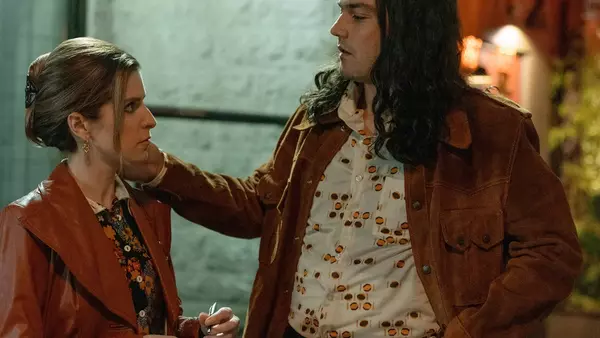
Though Woman of the Hour isn't a horror in the traditional sense, it's such a nerve-jangling, well-crafted crime thriller that it proves director-star Anna Kendrick could make one hell of a horror flick if she wanted.
Best described as "horror-adjacent," this film focuses on the real-life case of Rodney Alcala - a serial killer who appeared on TV game show The Dating Game in 1978 in the midst of his killing spree.
But the focus is less on Alcala than Sheryl Bradshaw (Kendrick), the woman with whom Rodney "wins" a date on the game show, and who narrowly avoids becoming his next victim.
On one hand Kendrick's depiction of Alcala is absolutely chilling, but on the other she's clearly far more interested in examining the horrifying realities of simply existing as a woman, where structural misogyny allows men to get away with violent crime while the concerns of women aren't taken seriously.
And as might the scariest part of all, it's a subject as relevant today as it was when it happened to Bradshaw almost 50 years ago.
1. The Brutalist
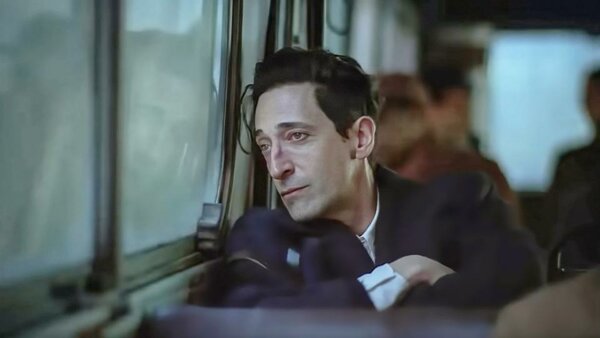
Brady Corbet's mesmerisingly ambitious, Oscar-winning drama The Brutalist is one of the bleakest cinematic skewerings of the American Dream ever made.
This is a film that begins chillingly enough, with protagonist László Tóth (Adrien Brody) surviving the Holocaust and immigrating to the United States, where he hopes to build a better life for himself.
But ultimately Tóth only survives the concentration camps to find himself commodified and abused in another way, as he becomes the plaything of wealthy industrialist Harrison Van Buren (Guy Pearce).
This leads to Tóth becoming a heroin addict, which the film zeroes in on with torturous detail, before of course, the upsetting full extent of Harrison's abuses become clear much later in the story.
As an existential drama about how a single person can be dominated by those in power, used for everything they're deemed "worth," and then discarded, The Brutalist is uncommonly potent, even if it makes for one hell of a gruelling sit - especially with that 215-minute runtime.