10 Recent Movies That Grossly Overestimated What Their CGI Could Do
CGI is no substitute for soul.

Love it or hate it, CGI is used in almost every single Hollywood movie nowadays, from cleaning up continuity errors in the smallest indie films to creating entirely digital characters in $200 million tentpoles.
It can be a fantastically inventive tool when used by talented artists for the right reasons, yet as we all know, it's too often employed as a technical crutch and a lazy shortcut, or simply stretched beyond its convincing bounds.
And while this past year has certainly delivered a shedload of great CGI in movies such as Avengers: Endgame, Detective Pikachu, Spider-Man: Far From Home and even not-terribly-good movies like Alita: Battle Angel and Dark Phoenix, there are many more productions which had an inflated idea of the problems CGI tech could solve.
And so, we have these 10 films, most of them CGI-slathered blockbusters which cast aside practical solutions and more modest effects-driven sequences in favour of offputting digital bloat - the cinematic equivalent of over-stuffing yourself with candy floss.
Whether the movie as a whole was good or not, and no matter the passion (or lack thereof) on offer, these films were all incredibly optimistic about what VFX could do for their production, and the results were often mocked by audiences en masse...
10. Men In Black: International
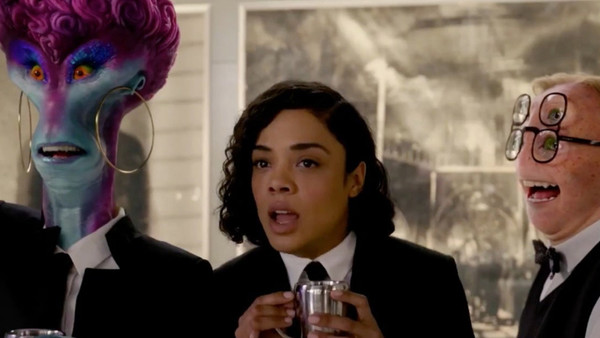
Men in Black: International was a crushing disappointment for many reasons, not least its frustrating deference towards excessive CGI compared to the previous three entries into the series.
Legendary seven-time Oscar-winning makeup artist Rick Baker - who won one of his Oscars for his work on the first MiB - provided the stunning practical alien makeup for the original trilogy, and though Baker retired in 2014, Sony decided not to seek many tactile, practical solutions for International's extraterrestrial creatures.
While some of the film's alien effects are still "real", there's a decidedly greater abundance of CGI this time around, and the results pale massively compared to Baker's more considered and lifelike designs and effects.
That's not to ignore some of the movie's iffy green screen, either, for while the original films employed their fair amount of VFX work, it was decidedly more sparing than the soulless overkill on display here.
9. Venom

Venom wasn't a terribly good film, but unlike the latest Men in Black, at least you can't call it completely bland - Tom Hardy's madcap performance just about kept it interesting enough to be memorable.
But Hardy was constantly battling against the movie's sub-par barrage of CGI - an inherent requirement for a Venom movie for sure, but not one that the film's modest-ish $115 million budget could support.
Though Venom actually looks relatively decent in isolation, whenever the film calls for the CGI model and a live-action Hardy to be integrated, the results are hilariously bad.
Any illusion of Venom being a "real" entity is entirely broken when a low-fi black mass rendering juts awkwardly out of Hardy's face, and the final battle between Venom and Riot (Riz Ahmed) devolves into a near-incomprehensible mess of shiny goop rolling around.
Fingers crossed that with Venom's astronomical box office success, the upcoming sequel might benefit from a few numbers being added to the VFX budget.
8. Aladdin

Disney's live-action Aladdin remake received flak for its wonky visual effects immediately after the release of its very first trailer, with fans noting a distinct uncanny valley effect in Will Smith's Genie.
And while the Genie ultimately turned out one of the middling remake's most successful elements, that doesn't mean the movie as a whole was a VFX triumph - or indeed much of a triumph at all.
Like so many big-budget fantasy productions, Guy Ritchie's film over-relies on distractingly noticeable green screen backdrops, giving virtually every exterior scene an ugly, blurry sheen.
But worse still is the film's action sequences, especially the various beats involving the magic carpet and the climactic Iago chase, which clearly see the visual effects budget stretched past snapping point, with ugly, formless effects dominating the screen, alongside actors unconvincingly composited into the frame.
Despite a $183 million budget, Aladdin was pretty much what everyone feared when a live-action re-do was announced, because adapting cartoonish concepts into a believable, "realistic" format is extremely difficult.
7. Captain Marvel

Though Captain Marvel absolutely deserves all the praise in the world for giving fans a jaw-droppingly note-perfect rendition of a younger Nick Fury (Samuel L. Jackson), it's safe to say that some of the movie's other sequences clearly had to suffer in order for that effect to be completed to such a high standard.
In fairness, directors Anna Boden and Ryan Fleck are total newbies on the action front, but even so, the movie's third act goes the all-too-common superhero route of relying on generic CGI blast-a-thon mayhem.
And sadly, the VFX couldn't quite deliver that vision convincingly, deferring to a cacophony of digital blurs, and especially the hilariously awful compositing of Carol Danvers (Brie Larson) crashing back down to Earth (pictured above).
The movie had more effort put into its VFX than most of the films on this list, but there's also an inconsistency which suggests the production was struggling to meet its release date (as infamously happened with Black Panther's video game-esque mess of a final battle last year).
6. Mowgli: Legend Of The Jungle

Andy Serkis' Jungle Book movie Mowgli: Legend of the Jungle ended up being dumped on Netflix late last year after Warner Bros. realised its commercial prospects were dead in the water.
Yet despite going direct-to-streaming, Mowgli clearly boasted a titanic, blockbuster-worthy budget, as evidenced by the complexity of its impressive digital landscapes and cast predominantly comprised of CGI animals realised through performance capture.
And while the technology is undeniably impressive, Serkis' attempt to combine a realistic-looking animal with the face of their actor also reveals the limitations of these tools, creating a jarring uncanny valley effect that's majorly offputting.
Case in point, Christian Bale's Bagheera (above) clearly inherits the eyes and facial structure of the actor himself, yet in a way where Bagheera doesn't so much look like a panther as he does a creepy abomination lab experiment.
Compare it to the more realistic CGI animals in Jon Favreau's The Jungle Book - which similarly used performance capture yet more subtly integrated the human into the animal - and there's no contest between the two.
The ambition can't be faulted here, but from both a technical and design perspective, it just couldn't pass muster.
5. Bohemian Rhapsody

Bohemian Rhapsody was one of the most divisive-yet-successful films of last year, scooping a Best Actor Oscar for Rami Malek alongside three other awards, including a rather baffling Best Film Editing win.
But one Academy Award it wasn't up for? Best Visual Effects.
Though the Freddie Mercury biopic smartly keeps its use of CGI minimal, the climactic recreation of Queen's iconic Live Aid performance suffers through some distractingly roughshod VFX.
While a period-accurate Wembley Stadium is lovingly recreated with an impressive photorealism, the CGI crowd sadly proves decidedly less convincing.
In order to fill the 72,000-seater arena, several hundred crowd extras were filmed in front of a green screen and then digitally replicated throughout the stadium.
During the sequence's ostentatious crane shots, the CGI aspect becomes especially obvious, as well as those on-stage shots behind the band, demonstrating the seams between the live footage and the copy-paste job.
Granted, it would've been a tough sequence for any filmmaker to pull off, but clearly either time or money was a factor in not making this anywhere near convincing enough.
4. Dumbo
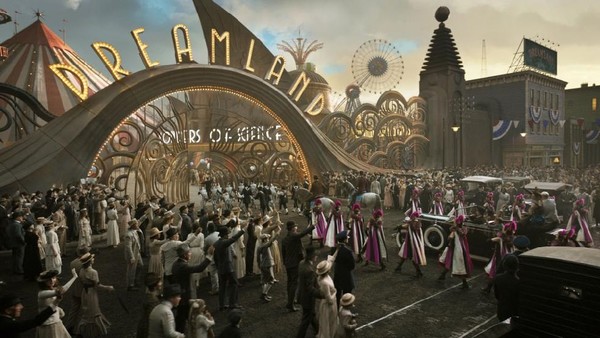
In measured defense of Tim Burton's recent live-action Dumbo remake, the movie actually got the most important thing right - the titular CGI baby elephant looked adorable as hell, no matter the film's mixed bag of a narrative.
But as is typical of Burton's more recent outings, he also let far too much of the heavy lifting be done in post-production, especially as it pertains to Dumbo's sets.
This is particularly troublesome when the Dreamland amusement park is introduced in the film's second half, a distractingly shiny CGI monstrosity which looks too slickly clean to be an actual, tangible location.
Given how so many of Burton's earlier films were praised for their stunning practical production design work, it's depressing to see him leaning back so lazily on charmless VFX solutions.
3. It Chapter Two
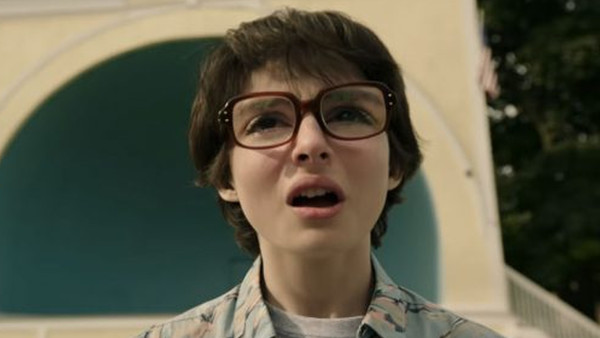
It Chapter Two's visual effects are mostly rock solid and appropriately deployed by director Andy Muschietti, though there's one "subtle" element of the VFX package which left many viewers with raised eyebrows.
Due to the young Losers ageing during the two years between movies, digital de-ageing techniques were applied in post-production in order to make the actors more convincingly resemble their younger selves.
Unfortunately, as is often the problem when this effect is used without sufficient care or resources, the actors in question end up with a skin tone resembling plastic, to the point where it actively pulls the audience out of the respective scenes.
That's not all - the young cast's voices were also pitched slightly upwards to sell the illusion, though this results in a number of moments where the voices have a noticeable modulation applied to them, especially in the case of Eddie (Jack Dylan Grazer).
Honestly, Muschietti may have been better off just featuring the Losers as is, because it's unlikely two added years would be more distracting than the totally intrusive CGI facial smoothing we ended up with.
2. The Lion King

To conclude the trifecta of visually dubious live-action Disney remakes released this year, we have Jon Favreau's The Lion King, a film that looked like a stunning recreation of the classic animation in select stills and clips...until audiences saw the entire thing for themselves.
The big problem with the remake, surprisingly enough, is the visual effects and the manner in which Favreau had opted to implement them.
The aggressively high level of photorealism ultimately creates a dual issue: it results in the actors having to tone their performances down to the point of inertia for the sake of "realism," and in the movie's more melodramatic moments - namely Mufasa's (James Earl Jones) death - causes some unintentional comedy.
There's no denying that the estimated $260 million spent on the film's CGI produced some spectacular images in isolation, but in striving so staunchly for photoreal shots, much of the animation's emotion feels clipped away and neutered.
And that is a limitation of this technology that Hollywood in general has clearly failed to appreciate.
Had The Lion King gone slightly less realistic, then some of the more heightened expressiveness of the animation could've come through without the end result plunging headlong into the uncanny valley.
1. The Predator

Shane Black's The Predator is, to be kind, a big 'ol mess, a confused, tonally jarring car crash of ideas that don't really work, yet what disappoints more than anything is the fact that the $160 million production vomits up a repulsive CGI Predator for the heroes to face.
Though the Predator franchise has always been supported by visual effects, this is the only entry where those effects actively felt like a detriment to the end product.
With Black and Fox trying to soft-reboot Predator as a tentpole franchise, the film is awash in a greater abundance of CGI, and in the interest of making a Bigger, Better Sequel, the hybrid upgrade Predator of course has to be an 11-foot-tall VFX behemoth.
Yet the creature has depressingly little convincing presence throughout Black's film, shot in low lighting conditions for the most part in order to hide how utterly vile it looks (and not in a good way).
This culminates in an outrageously sloppy third act finale, which was in fact cobbled together in late-day reshoots.
As a result, both the "ultimate" Predator and most of the CGI-fuelled action is an eyesore, and it's clear that Black should've just hired a basketball player to play a 7-8 foot Predator instead.
Given that the fanbase for this franchise skews a little older, they're really not in the market for excessive CGI beasties when a tangible monster would've done the job splendidly.