10 Reasons You Need To Revisit Star Trek: The Motion Picture
For better and for worse, there really is no comparison.

Released in December 1979 to mediocre reviews, Star Trek: The Motion Picture nearly destroyed the franchise. Again. The unceremonious cancellation of The Original Series in 1969 was bad enough, but now a decade of goodwill built on rabid fan devotion and coveted syndication ratings was being thrown right out the airlock.
In the wake of The Motion Picture's critical failure, the Star Trek franchise found the nearest dermal regenerator, licked its wounds, and moved on. Largely absent was creator Gene Roddenberry, who was reduced to pitching rejected scripts about the Klingons trying to stop the Kennedy Assassination. I guess they took his death pretty hard.
With the surprise success of 1982's The Wrath of Khan, fans and critics looked back on The Motion Picture as a dull mess and the curse of the odd-numbered Star Trek movies was born.
Yet for all its flaws, Star Trek: The Motion Picture remains a remarkable achievement. The film's scale and beauty, though at times ponderous, are yet to be matched by anything else in the series. Shirking the epic space battles of Star Wars, The Motion Picture embarked on a thoughtful adventure about creation, life, and the search for meaning. What could be more Star Trek than that?
Check your phasers at the door. We won't be needing them where we're going.
10. Stunning Visual Effects

All right, let's get this one out of the way. Yes, they're indulgent. Sure, they could've used a good trim in parts. But The Motion Picture's visual effects are absolutely incredible and hold up surprisingly well, even by today's standards.
From the initial encounter between the Klingons and the energy cloud to every painstaking shot of the Enterprise traversing the living machine V'Ger, The Motion Picture's visual effects create an immersive world that's a far cry from the often clunky Original Series. The film's overwhelming colours and surreal imagery are a true feast for the senses. And no, you don't need drugs to appreciate them.
Of course they're not perfect by any stretch. There's the odd appearance of a probe on the Enterprise bridge that attacks Ilia, in a scene more reminiscent of a space disco than an act of horror. Yet despite the occasional embarrassing moment, The Motion Picture's visual effects represent one of the film's crowning triumphs and go a long way in building the movie's aura of discovery and exploration.
9. It's Not As Lifeless As You Remember

One of the most common criticisms of The Motion Picture is its slower pace and more serious tone compared to The Original Series. Such accusations have led critics to deride the film with nicknames like The Motionless Picture and The Slow Motion Picture. Real clever, guys.
At the core of the issue is the film's supposed inability to properly characterize the likes of Kirk, Spock, and McCoy, whose witty banter and bromance were among the most beloved hallmarks of The Original Series.
Yet The Motion Picture's slower pace doesn't mean there isn't rich character development here. And one can hardly bemoan the film's producers for preferring to tease the rekindling of this friendship rather than give us a heartfelt reunion from the outset. Where's the payoff in that?
Kirk's initial insecurity/midlife crisis in taking command of the Enterprise from Decker, only for the two of them to gradually build an abiding respect for one another, is a forgotten arc worthy of far more appreciation.
Spock rediscovering the value of friendship after mind melding with a machine that can never hope to experience what he has with Kirk and McCoy also ranks among the film's strongest moments. What is life without love? As it turns out, not very much.
These scenes changed our understanding of the cast and set the table for future films, where the subject of aging and mortality would become even more pronounced. Go a little easier on your dad the next time he brings up his motorcycle.
8. No Big, Bad Villain

While Star Trek II: The Wrath of Khan deserves credit for revitalizing the franchise, it also established a regrettable standard for future films. Almost every subsequent movie in the series was built around an angry villain with a destructive weapon. You mad, bro?
Looking back on what followed, one of the more appealing elements setting The Motion Picture apart from most of its peers is the film's lack of a real villain. Although there's the obvious threat of annihilation, it's always presented as a problem to be solved instead of an obstacle waiting to be blown up. The Klingons already tried that approach. Look where it got them.
Bringing back one of Kirk's most memorable foes worked for The Wrath of Khan. Nobody would dare say otherwise. He was a fitting nemesis who played off our hero's nagging self-doubt and looming sense of mortality. Shinzon? Not so much. You can only hear "deploy the weapon" so many times before it loses all meaning. More like deploy the remote so I can turn this thing off!
7. Those Wonderful Costumes And Sets

The Motion Picture's astronomical $45-million budget, the most of any Star Trek film until 1996's First Contact, always meant fans were going to enjoy some serious eye candy along the way. Add the period's distinct influence and you've got the makings of a visual marvel. This is the only live-action Star Trek from the 1970s - and it shows.
Before the naval-inspired outfits introduced in The Wrath of Khan, audiences were treated to Kirk's short-sleeved uniform and McCoy's disco jumpsuit. Spock's black cloak was a bit moody, but he'd just about finished Kolinahr, so give him a break, will you? Forget V'Ger, it's all about V-necks on this journey. While they certainly look dated, there's no denying The Motion Picture's iconic costumes beautifully set the tone and contribute to the film's optimistic flair.
And in terms of set design, the Enterprise has never looked more stunning. The Motion Picture's attention to detail spares no expense. Even the most random crew lounge is suddenly given the VIP treatment. And on top of all that, we get to see Earth and Vulcan in an entirely new light. Not too shabby.
6. It's The Perfect Antidote To Star Wars

Releasing Star Trek: The Motion Picture a mere two years after Star Wars and not saturating it with space combat? Whose brilliant idea was that? No, seriously. Where do I send the flowers?
Owing no small debt to Kubrick's 2001: A Space Odyssey and Tarkovsky's Solaris, The Motion Picture's meandering pace and pensive tone were almost revolutionary in light of Star Wars' runaway success, at least for an established franchise. In today's era of formulaic blockbusters and Hollywood reboots, the film feels like a breath of fresh air.
Aside from an initial confrontation between the Klingons and the energy cloud, The Motion Picture features no starship battles of any kind. In fact, the only time the Enterprise fires a weapon is a lone torpedo against an asteroid. Was it at least fired in anger? Well, you'll have to ask Chekov.
Paramount could've taken the easy way out and centred The Motion Picture around an epic showdown with the Klingons or Romulans but instead decided to follow a different path. That decision deserves more respect.
5. That Incredible Score

One of The Motion Picture's only resounding successes among the film's detractors is its memorable score by Jerry Goldsmith, which weaves traditional orchestral flourishes with more experimental elements ready-made for science fiction.
Central to Goldsmith's more surreal compositions is the blaster beam, a hulking metallic instrument capable of producing otherwordly bass tones. Eat your heart out, Flea. The blaster beam was employed to great effect in creating V'Ger's seminal sound, which remains the stuff of legend and mushroom trips throughout the Alpha Quadrant. Warp speed, Mr. Sulu!
From the stress-inducing "Klingon Battle" to the soothing "Ilia's Theme", Goldsmith's score sets the mood perfectly. His work on The Motion Picture began a long association with Star Trek that would continue all the way until 2002's Nemesis. It's a shame he had to bow out with that one, though. An alternate version of The Motion Picture's main title was even used as the theme for Star Trek: The Next Generation. It's that good.
4. Reunited And It Feels So Good

Go ahead, make fun of the infamous scene where Kirk and Scotty take the scenic route to the Enterprise via the galaxy's slowest travel pod. That's low-hanging Golana melons. These relentless shots of the Enterprise, as tedious as they are to some viewers, play an important role in The Motion Picture. We're meant to live vicariously through Kirk and feel his excitement in finally being back aboard the Enterprise. What Star Trek fan hasn't fantasized about a moment like this?
And watching the crew interact in live action for the first time since The Original Series is nothing short of revelatory. After 10 long years, fans were about to witness the reunion they'd all been waiting for. Only they didn't get to enjoy it right away.
There are awkward moments, to be sure. I mean, how would you feel going back to your old job after a decade? But that's part of the film's emotional core. As much as the audience loves Kirk, Spock, and McCoy, they're not bosom buddies anymore. At least not yet. A lot's changed.
After enduring Spock's initial callousness towards the crew, we're gifted the joy of him remaining aboard the Enterprise and rekindling his bond with Kirk and McCoy. Kolinahr can wait. The lads are off to Risa!
3. It Embraces The Best Of Star Trek
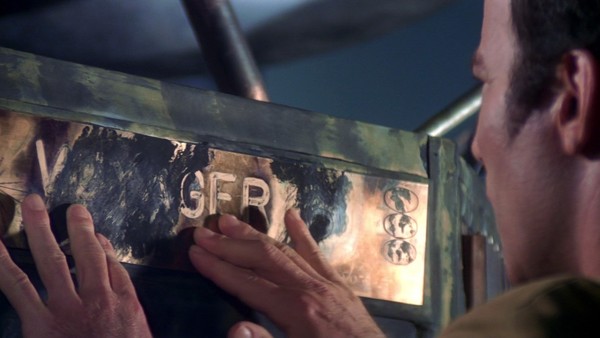
Instead of the Enterprise crew battling a maladjusted villain in a mindless fight to the death, The Motion Picture sees them embark on an epic adventure about the meaning of existence and our place in the universe. It's the kind of story the Star Trek television shows told so well. The movies? Not so much. That's part of what makes The Motion Picture so refreshing. We're here to seek out new life and new civilizations, not light up their world like the Fourth of July.
The Motion Picture embraces Star Trek's spirit of discovery and exploration in a way no movie in the series has since, with the possible exception of The Voyage Home. It's about using our knowledge and talents to solve a problem, not photon torpedoes. Well, maybe one photon torpedo when an asteroid gets in our way. That thing had it coming, though.
2. Meet The (New) Klingons

One of The Motion Picture's forgotten achievements is how it reshaped the Klingons for a new generation of fans. From those now iconic forehead ridges to the new K't'inga class battlecruiser, The Motion Picture squeezes a lot of mileage out of the Klingons' fleeting moments of screen time. The film even marked the first time audiences heard the Klingon language on screen. But that was just the beginning. Those few simple phrases opened the floodgates to the Klingon weddings and college courses we enjoy today. The universe is a wild place sometimes.
It's all for the best, though. The Motion Picture's impressive Klingon makeup and uniforms set the standard for years to come. Even the bridge of the Klingon battlecruiser does an amazing job of building tension and excitement in the film's opening moments. Although the Klingons are quickly dispatched by V'Ger, they sure go out in style. And that initial Klingon vocabulary, developed by producer Jon Povill and actor James Doohan, adds a rich new layer to one of the franchise's most enduring species. Is there anything Scotty couldn't do?
1. You'll Never See Another Star Trek Movie Like It

With its increasingly diminished returns, the JJ Abrams reboot series has proven that Star Trek is always a hard sell on the silver screen, even when presented as blockbuster action schlock. Recent series like Discovery and Picard have also taken Star Trek in a darker, more violent turn. Pitching a Star Trek film like The Motion Picture today is likely to get one tossed out of every major Hollywood studio. Although these new shows and movies try to reinforce Star Trek's core message, it's usually presented within the context of stopping another villain of the week.
Whether you find it pretentious or brilliant, The Motion Picture deserves to be celebrated. It's a gorgeous, optimistic film that depicts the kind of rose-coloured future the world desperately needs right now. There's plenty to criticize. The pace is slow. The visual effects feel almost decadent. Yet some of us wouldn't want it any other way. There's an entire universe to get lost in here. Bless this mess.
And after an additional 12 Star Trek films and countless hours of television, there's still no comparison. Vive la différence!