10 Reasons The Dark Knight Is Still The Best Comic-Book Movie Ever
Batfleck can't dethrone Bale.

2016 is just about nine months old, and we've already had no less than five huge comic-book movies slapped on the big screen, with a sixth - Doctor Strange - still to go. Nowadays, they're the most prevalent type of blockbuster your hard-earned cash can buy, and that means there are dozens of contenders looking to sit atop the pile.
But, as many critics, online pundits and random people in the street will tell you, there's one movie that's been sitting atop that pile for 8 years - The Dark Knight. In fact, it was so universally acclaimed that it forced the Academy to change the number of Best Picture nominees from five to ten, with a lot of people angry that the Bat-sequel didn't receive a nod.
The reason for that anger? The Dark Knight is a fantastic movie. It may have missed the golden age of comic-book adaptations that we find ourselves in now, but there's a reason for that - it's the one that started it.
The past 8 years have brought us many superb movies, from The Avengers to X-Men: Days Of Future Past - but here are ten reasons why Batman's still the best of the bunch...
10. It Took Sensible Liberties With The Source Material

When you're directing an adaptation, do you have to religiously obey the source material? It's a question that has baffled many a comic-book filmmaker, if certain evidence is any indication. The answer is no - not religiously anyway - but you do have to keep the characters intact in such a way that they mesh with the feel of the movie while retaining their essence.
Unfortunately, this mantra has been ignored numerous times over the years - Jesse Eisenberg's Lex Luthor wasn't really Lex Luthor, and Fantastic Four: Rise Of The Silver Surfer's Galactus wasn't a world-crushing cosmic entity, he was... a cloud. The Dark Knight, on the other hand, did what any sensible adaptation would do - it cherry-picked the most suitable elements of its source material and tweaked them to fit the tone and world of the movie.
The Joker and Batman were undisputedly those characters, but they were altered just enough that they fit perfectly into this version of Gotham. Director Christopher Nolan made necessary changes to the characters, not unnecessary ones like Eisenberg or Galactus. As a result, it worked well as an adaptation, but it didn't sacrifice its own vision to accommodate the comic-books on which it was based.
9. It Can Be Enjoyed As A Standalone Movie

Nowadays, comic-book movies are steeped in easter eggs and references to other films. At times, watching the latest Marvel feature can make you feel like you skipped comic-book class, and it can quickly become overwhelmingly confusing.
There's something to be said for the pleasure of watching a self-contained story, and The Dark Knight is very much that. It doesn't rely on a suite of other movies to prop up its shortcomings; it is raw, complete, and absolute. It isn't building toward the next entry in a cinematic universe (and at the time, it wasn't even building toward a sequel), and as such, the writing was able to be the best it could be - the filmmakers didn't have to create this story with the next story in mind.
On the other hand, 99% of the comic-book movies released after The Dark Knight rely on you watching a couple of other films first, and this detracts from the enjoyment of each individual film. It's painful to be enjoying a story, only to be suddenly interrupted by a random plot point that exists purely to set up a sequel (see Thor's side-mission in Avengers: Age Of Ultron).
Fortunately for The Dark Knight, it missed the dawn of the cinematic universe, and the movie is all the better for it.
8. It Doesn't Contain Any Needless Spectacle

If there's one thing you can usually expect when you take your seat to watch a comic-book movie, it's spectacle. They're choc-full of explosions, fisticuffs and vehicle chases, but often, it's derivative - action for the sake of action. The end of The Avengers, for instance, was fun, but it didn't need to have as many faceless Chitauri minions - for our heroes to use as punching bags - as it did.
But sometimes, this spectacle is treated with the respect it deserves. Take the opening Batman scene from The Dark Knight - the Caped Crusader fights his way through a car park of goons, but it's only about four of them, as it would be in reality. Christopher Nolan didn't add in an army of thugs so Batman could demonstrate all his awesome gadgets. The action made sense.
Toward the end of the third act, The Dark Knight even actively avoids blowing up two boats so we can have a great character moment, something a lesser movie may not have opted to do. This way, rather than having the audience sit through a brainless explosion, the scene carries weight, and when the action does happen, it happens for a reason - making it all the more satisfying to watch.
7. The Way IMAX Cameras Highlight Key Moments

Since 2009's Avatar slaughtered every box-office record on the planet, most comic-book movies have been released in 3D. But rather than being used as a way to enhance the film and the story - as it should be - it's used by studios to make more box-office dollar.
Conversely, The Dark Knight killed both these birds with one giant, IMAX-sized stone. Buying an IMAX 2D ticket for the film did take more from your wallet, but it was a decision that would actively improve the experience, highlighting several key scenes and increasing the impact they had on you in the moment.
The opening bank heist needed to be epic in scope - it needed to introduce the Joker on a grand scale, to get viewers on board from the word go. The 'Rachel's Letter' scene needed to be as detailed as possible, so we could see every drop of blood on Harvey's wound and every line of pain on Alfred's face as he read her final words.
IMAX allowed both these scenes - and a couple of others - to have that punch in the gut that the writing demanded they have. Forget making more money by slapping an extraneous feature onto the film - The Dark Knight made money by ensuring story was king, at every level.
6. It Transcends The Genre

Comic-book movies, as entertaining as they can be, come packing quite a few expectations and cliches. There's usually a world-ending threat in the third act, there'll be an after-credits scene, the action will be tame with little to no blood, and the story will be simple enough for youngsters - whom all the tie-in merchandise is aimed at - to enjoy.
These expectations can cause the films to be rather predictable, trapped within the very genre they're trying to represent. Comic-book movies are written as comic-book movies, and that means they're limited in what they can do. The Dark Knight was able to smartly dodge this effect by making all the 'comic-book elements' - the costumes, the character names, the gadgets - stylistic elements, rather than story elements.
As a result, it isn't just a comic-book movie - it's a crime drama, it's a thriller, and it's an action-adventure. Because it wasn't definitively linked to one genre, all the tropes associated with that genre vanished. Director Christopher Nolan hasn't been coy about the influence that 1995's Heat had on his film, and you can truly see it - The Dark Knight isn't a solid Batman movie, it's a solid movie with Batman in it.
5. The Practical Effects

Most comic-book movies are fun, sure, but you never get the sense that our heroes are in any real danger - we can tell they're fighting a tennis-ball on a stick in some Hollywood soundstage. The Dark Knight, on the other hand, relentlessly used practical effects in almost every scene - and you'd be surprised at how little CGI is actually in the film.
The average comic-book feature has between 1,000 and 2,000 VFX shots; The Dark Knight has 650. That truck flip? It was real. That hospital explosion? Real. The Tumbler and the Batpod? Both real, working and driveable. This lends the movie stakes - you can tell that everything is happening in-camera, and that makes the danger seem real. As a result, the tension is heightened, and the film is more engaging.
Not many blockbuster productions use practical effects in the way The Dark Knight did, and in this sense, it was a landmark. The sets and the equipment were tangible, and that gave the actors something to work with - consequently, the performances were a cut above the cheesy, forced delivery you tend to see in more CGI-heavy pictures. The decision to head down the practical route had positive ripples across the entire production, and that's not something most other comic-book movies can claim.
4. The Supporting Cast
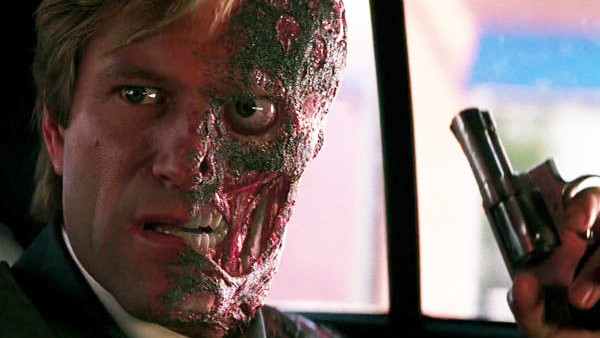
With the amount of buzz that Heath Ledger's performance received, most of the other supporting players in The Dark Knight went underappreciated. It's sad to see that, because unlike in so many other comic-book movies - where the supporting cast are used as plot devices rather than 3D characters - The Dark Knight gave everyone a pivotal role in the story, and the actors excelled.
Just look at The Avengers, where Hawkeye is used as a mindless puppet, or X-Men: Apocalypse, which restricted Psylocke to the eye-candy, or even The Dark Knight Rises, which seemingly only included Talia Al Ghul so there could be a big third-act reveal. On the contrary, every chess piece on The Dark Knight's board had an important move to make, and that made every scene feel important.
Harvey Dent's story is the emotional backbone of the film - he isn't just a random villain, like Talia. Gordon was the one who arrested Joker after the truck chase, and Fox was critical in helping Bats capture the Clown Prince atop Prewitt Building. In a way, the supporting cast were the foundations of this rock-solid skyscraper - without them, it would have crumbled.
3. The Use Of Music To Define Character
It's not often we get a truly memorable score in a comic-book film. Because these movies are all interconnected nowadays, a lot of the same music is used and it all starts to blur together. The Dark Knight's composers Hans Zimmer and James Newton-Howard did something very different with their score, however. They started making it before they'd seen a single frame of the film, and that meant The Dark Knight's characters were completely defined by their sound.
The Joker's - a raw, uncompromising, razor-sharp string note - raised the hairs on the back of your neck, even when he wasn't on-screen. It reminded you that he was a force of nature, that he was relentless, and that he could be around every corner. Elsewhere, Batman's bombastic, thundering drums plowed through a scene, drowning out any other noise unfortunate enough to get in its way.
Very rarely does music provide an accurate auditory representation of a character, and what's more, these two sounds are literally polar opposites - just as Batman and Joker are in the movie. It was a clever parallel, and it meant that story permeated every aspect of the film; even its score.
2. The Way The Action Was Filmed
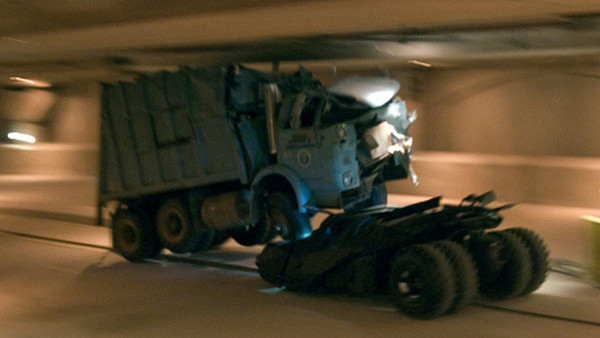
Most modern action scenes have The Bourne Supremacy to thank for the way they're shot. In Supremacy, everything from fisticuffs to car chases was filmed using a variety of fast-cuts and shaky-cam, and the ramifications of this decision can still be felt on the industry today.
But, inherently, it causes many problems for the viewer. The action is all chopped up and incoherent, proving difficult to follow and more difficult to invest yourself in. It's a cheap way to shoot action, and that's why many studios opt to include it - but it doesn't help engage people in a scene or give them any reason to care about the outcome of the fight. We can't tell what's going on!
But action is only important if it bears emotional resonance, and The Dark Knight doesn't lose sight of that. Rather than going with the quick and easy shaky-cam, cinematographer Wally Pfister chose to hold his camera steady on each shot, for two or three seconds - just watch the truck chase or the bank heist for evidence.
This allows us to see the pain, frustration, anger and exhaustion pop up on the characters faces, never losing sight of that emotional connection throughout all the explosions and gunfire. It also made the frenetic action much easier to follow, which helped the film hold the viewer's attention, something that could've been lost had the Bourne method been adopted.
1. Heath Ledger's Joker

Heath Ledger's Joker has already been described with every superlative under the sun, so it seems fruitless to add more. But it's not faint praise; without his performance, the film simply doesn't work as well as it did.
The main reason for this is that the central theme at the heart of The Dark Knight is duality - law and chaos, officials and vigilantes, justice and revenge - and the Joker, as a character, thrives on taking the 'good' side of this coin (law, officials, justice) and flipping it over. He kills a judge, turns our hero into a vigilante and makes Harvey Dent abandon the path of justice in favour of some bloodthirsty revenge.
The Joker's nature, as a character, perfectly complements The Dark Knight's core theme, and that's why Ledger's role was invaluable to the production. For a film that's all about the chaos derived from breaking the rules of civil decency, there's only one Bat-villain who can deliver on that promise - and you all have his card.
What do you think of The Dark Knight? Where does it rank in the pantheon of comic-book adaptations? Share your thoughts in the comments below!