9 Pointless Characters From The Dark Knight Saga

Would the movies really be any worse if these characters weren't present?
Christopher Nolan€™s Dark Knight saga is highly regarded for both bringing Batman€™s cinematic viability back after the disaster of 1997€s Batman & Robin and for raising the bar for comic book films with The Dark Knight in 2008. While the films have garnered much praise over the years, they€™re not entirely without faults. Throughout all three films, a number of fantastic, entertaining and memorable characters have helped to weave the saga€™s narrative together. However, for every set of great characters and actors that Nolan utilizes in the movies, he also inserts a handful of out-of-place, wholly unnecessary and/or cringe-worthy ones that often threaten to derail tone, pacing or audience engagement. In nearly all of these cases, the films would almost entirely seem to benefit from their exclusion, due to the fact they fail to move the narrative forward or even offer insight into other characters, themes or situations. With the series now behind us and distance allowing for more critical objectivity, let€™s take a look at some of the saga€™s characters who might as well have not been a part of it. Be warned, for this article still contains spoilers for the entire trilogy.

9. Miranda Tate/Talia Al Ghul

The idea of Talia al Ghul showing up in Nolan's films was sparked the moment Ra's al Ghul showed up in Batman Begins. Bringing her into the fold for the final film -- allowing Bruce's history with the League of Shadows to come full circle -- was, on paper, a solid decision. When Internet speculation about "Miranda Tate" being Talia began at exactly the same moment Marion Cotillard was cast, expectations were set for her to have a major part in The Dark Knight Rises. But then, as the movie unfolded, Miranda Tate's highest point came when she slept with Bruce, allowing Bane to steal the show. When she finally revealed herself to be Talia, it was a case of too little too late, as it dramatically reduced Bane's character to nothing more than a puppy dog in the process and landed with a resounding thud for occurring too far into the film for Talia to be given enough to do to shine. Miranda had hardly made an impact on the audience for the twist to be as gasp-worthy as it should've been, which may have been amended had Talia actually done something beyond stabbing Bruce and dying after a chase sequence. Talia had all the potential to become a great, vengeance-fueled villain for the saga with a great actress filling her shoes, but with the presence of her character within the film ultimately serving to water down Bane and failing to provide anything truly satisfying in the end, one can€™t help but wonder why she was even included in the first place. As it stands, she feels as though she's in the film just because she can be and not because she should be, which is disappointing and a disservice to the viability of both the character and Cotillard.

8. Victor Zsasz

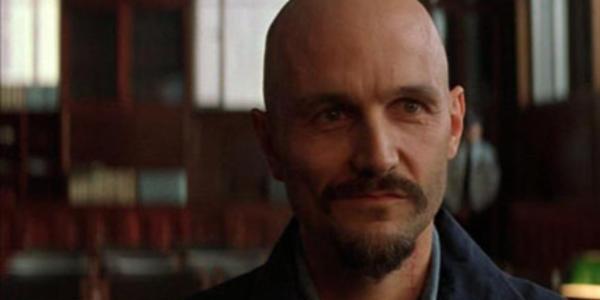
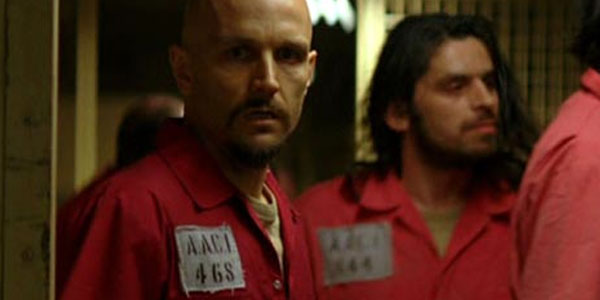
Making his only appearance in the saga during Batman Begins, homicidal maniac Victor Zsasz wound up being nothing more than an Easter egg for fans of the comics. While it€™s cool to see the character in live-action for the first time, Zsasz is limited to a courtroom scene that helps shine a light on the character of Jonathan Crane before escaping Arkham Asylum near the end of the film only to do... nothing. When he approaches Rachel Dawes with several other inmates while brandishing a knife, those with knowledge of the character were likely holding their breath, expecting Zsasz's inner psychopath to finally reveal itself. Unfortunately, Batman quickly saves Rachel, the story moves on and Zsasz might as well have been Unnamed Inmate #1.

7. Peter Foley

As Deputy Commissioner of Gotham City, the existence of Peter Foley makes logical sense from a realistic perspective, given that someone would need to be around to step in for James Gordon should anything happen to him. As it stands, though, Foley spends too much time gossiping about Gordon or dismissing his claims about Bane than doing anything to endear himself to audiences. When Bane takes over Gotham, Foley ends up tucking tail and hiding at home with his wife rather than fight for the city, until he's inevitably convinced to suit up in uniform and lead the GCPD into taking on Bane's forces before dying in the fight. This subplot of Foley rising to become a hero could've had some sort of weight to it had he been given a glimmer of likeability at all throughout the film or, perhaps, been present somewhere in one or both of the previous films so audiences could've known him ahead of time. Instead, the character amounts to nothing more than a way to prevent Bane's potential capture not once, but twice, by ignoring Gordon's warnings about his activity in the sewer and by ordering the entire force to chase Batman instead of having even a few continue to chase Bane after the incident at the Stock Exchange. In the end, his death does nothing for the audience and the character could've easily been excised in favor of finding a more logical, natural solution for Bane continuing to elude capture.

6. Desmond Harrington's Character

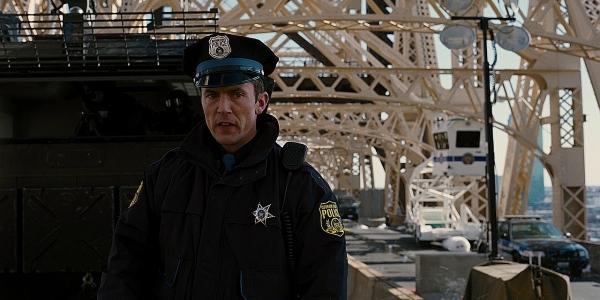
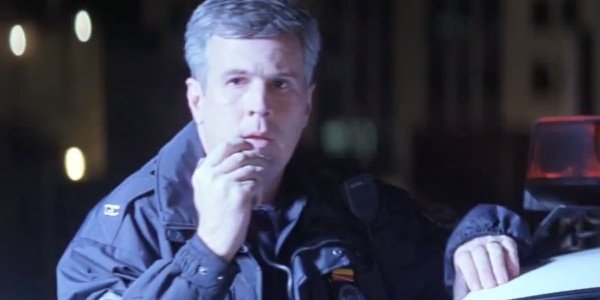
Chances are, if you saw The Dark Knight Rises in a packed theater, you were able to spot fans of the Showtime series Dexter in the audience when Desmond Harrington showed up on screen. And that's about as important as the character gets. When John Blake attempts to lead an evacuation across Gotham's last standing bridge, Harrington is there to warn him before the bridge is ultimately destroyed to prevent Blake and his group from crossing. Sadly, the scene provides little tension beyond giving Blake something to do on-camera when the real action is taking place elsewhere, as audiences are smart enough to know that Harrington's character isn't going to shoot Blake and that the film isn€™t going to let a bus full of orphans perish in a nuclear explosion. Ultimately, Harrington is an unnecessary character in an unnecessary sequence that might have been better off left on the cutting room floor to keep the rest of the film's pace hurtling forward.

5. Little Boy

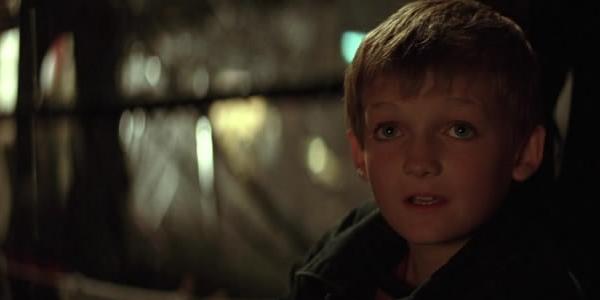
Years before he would become King Joffrey, a young Jack Gleeson appeared as a little boy in Batman Begins. After a brief scene where he and Batman cross paths, the little boy pops up again during Ra's attack on Gotham, unable to find his parents, shoved in the face by a member of the League of Shadows and then protected by Rachel Dawes when everyone in the Narrows begins going crazy. While the earlier scene between the boy and Batman provides some insight into how people who aren't cops and criminals have begun to view the myth of the mysterious vigilante, his inclusion during the film's final act is nothing more than an attempt to put a child in peril and garner some unneeded extra tension. Without him, Rachel's scenes in the Narrows and confrontations with characters like Scarecrow and Zsasz would've remained entirely the same, especially due to the fact that the kid is never even seen again after Batman saves the pair.

4. Patrick Leahy's Character

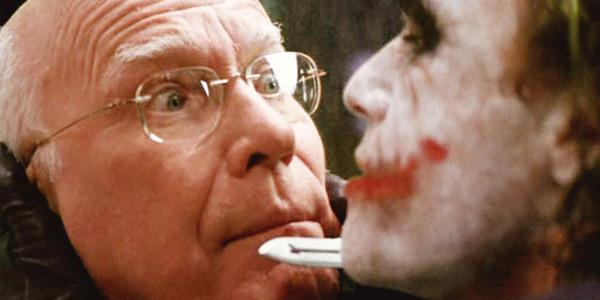
United States Senator Patrick Leahy was no stranger to all things Batman when he made a cameo at the fundraising party the Joker crashes in search of Harvey Dent. A lifelong fan of the Dark Knight, Leahy had lent his voice to an episode of Batman: The Animated Series in 1995, made a cameo in 1997's Batman & Robin and would also pop up again in The Dark Knight Rises. Although the Joker grabs Leahy, prepping the audience for another great moment as he says, "You remind me of my father," Rachel steps in and breaks it up. Leahy is the only character in the room to stand up to the Joker before Rachel, uttering the line, "We're not intimated by thugs," inadvertently highlighting the irony that every single person in the room is, in fact, intimated by the Joker and his men. Without his line, the overall fear gripping the room would be understandable and worth ignoring, but the fact that he speaks for everyone and the subsequent fact that no one in the giant group outnumbering the Joker and his men, including Leahy himself, steps in to help subdue them when they're distracted by or knocked onto the ground while fighting Batman serves to render his words, courage and appearance hollow and needless.

3. Homeless Man

When Bruce decides to run away from Gotham, he leaves what money he has, along with the "nice coat" on his back, to a homeless man. Years later, when Bruce makes his first full-on appearance as Batman when taking down Carmine Falcone and his men, the two happen to see one another again, leading Bruce to give him back the "nice coat" comment. Batman Begins is a solid, straight-faced film, and the first scene between Bruce and the homeless man is easily forgivable compared to the second, which has undoubtedly left numerous people with headaches from their eyes rolling back more than they should. On the back of Bruce's big "I'm Batman" moment, the interaction with the homeless man nearly derails the scene through its utter corniness and unbelievable convenience.

2. Gotham's One-Liner Cops

"He's flying on rooftops!" "At least tell me what it looks like... Nevermind." "That's not good... Okay, that's not good!" Throughout Batman Begins and The Dark Knight, a number of Gotham's police force spouts off quite a few cringe-worthy lines, all of which are awkwardly inserted like a running commentary during an otherwise excellent action sequence, such as Batman's rush to save Rachel in the Tumbler or the Joker's attack on the SWAT caravan transporting Harvey Dent. Each one seems to get worse than the last courtesy of multiple characters who would otherwise take up this entire list if not condensed to this one entry. Fortunately, by The Dark Knight Rises, the one-liner cops are practically nowhere to be found -- hopefully fired from the department -- but the sting of their presence continues to linger over the first two films to their detriment.

1. Jen

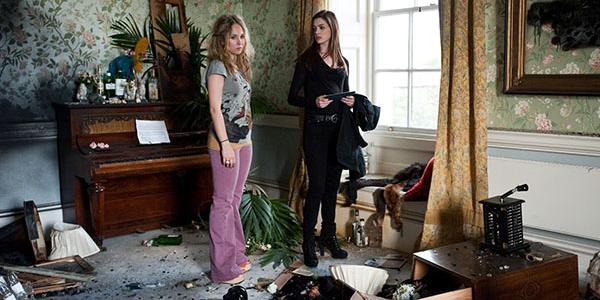
Unless you're Juno Temple, you most likely can't remember a single thing her character said in The Dark Knight Rises. You'd probably even be just as hard-pressed to remember anything important that she did besides just being in the movie, if you even remembered that she was. While many have speculated that her character, Jen, is a nod to Catwoman's comic ally Holly Robinson, that conjecture is irrelevant in that -- even if she was intended as such -- there's nothing rewarding about her existence to even be a good Easter egg. The character ends up being so pointless that it's astounding that the few scenes in which she's in manage to paradoxically be both a boring waste of time and yet so utterly unmemorable that one forgets they even happened the moment they're over. Compared to other pointless characters, like the homeless man or the cops, who at least left a mark through their sheer ridiculousness, Jen fails to offer anything positive to enjoy or negative to laugh at. Of all the characters across Nolan's otherwise very strong trilogy, Jen is the one who most embodies what's wrong with needless character excess.

Contributor
Contributor

Writer, film enthusiast, part-time gamer and watcher of (mostly) good television located on the fringe of Los Angeles, who now has his own website at www.highdefgeoff.com!