10 Movies You Hated Before You Even Saw Them
Why bother seeing a film when you can hate it unconditionally?

Not to go all Matrix Reloaded on you, but film criticism is a great example of causality. You watch a film of a certain quality and you form an opinion. Cause (whether the film is good) and effect (what you think). Simple, right?
Unfortunately, sometimes it operates a bit differently; people form an opinion of a film before they see it, with the finished product itself having no impact on what they view on it. It's the sort of thing that would drive The Merovingian insane.
This is where a fan-boy mentality comes from, with audiences fully prepared to overlook whatever a films flaws may be out of unconditional love for a property. But on the other side of the coin is people who go into a film already hating it. At least when people say they dislike The Dark Knight Rises or Man Of Steel, two films released with high levels of optimism, they've reached their conclusion by objectively watching the film. They may be wrong (about The Dark Knight Rises - Man Of Steel was utter tripe), but at least they've seen the film.
Today we're going to look at ten films that people hated without even bothering to buy a ticket.
Was it unjust hate or did the movie really end up that bad...
10. The Woman In Black

Why people hated it: For his first project post-Potter, Daniel Radcliffe went out of his comfort zone for an adaptation of Susan Hill's beloved ghost novel, The Woman In Black.
Telling the story of a lawyer who, in an attempt to sort out a deceased client's affairs, becomes embroiled in her family's dark history, the jokes about Harry Potter fighting ghosts were instantaneous, with expectations low.
How could an actor who just a year before we'd been watching run around a school (admittedly fighting dark wizards) suddenly mature to convince not only as a father, but a widower? This was amplified by the book's existing legacy; it had already been adapted to the stage to great success.
The West End sensation is a genuinely terrifying experience with a horror that came directly from its theatrical medium, which has helped it run for a whopping twenty-five years.
Was the hate justified: The Woman In Black obviously couldn't match the sheer terror of the stage play, but James Watkins' film is far from a dud.
The horror may be toned down with jump scares breaking an overarching sense of dread so the film can reach a family-friendly rating, but it's still effective, while Radcliffe was convincing in a more mature role too, prompting discussion of a successful adult acting career.
9. The Lone Ranger
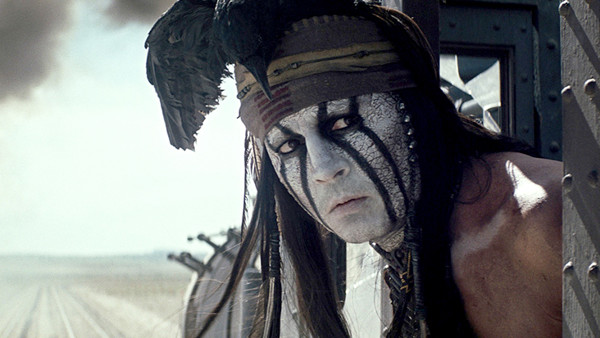
Why people hated it: Some films the press just want to fail to provide something to write about. The Lone Ranger is one of those. A modern rejig of a fifties radio serial/sixties TV show about a cowboy and his Native American side-kick, the film appeared to be proof Disney didn't know how to make non-Marvel movies. The subject matter was too old for any of the target audience to have any affinity, while casting Johnny Depp as Tonto came across as racially insensitive.
This was amplified by a troubled production (shooting was actually stopped halfway through) that meant by the time The Lone Ranger lurched towards its summer 2013 release it became apparent the film wouldn't make its money back. And conventional wisdom states if a film is going to loose so much cash it has to be doing something fundamentally wrong.
Was the hate justified: Compared to the likes of John Carter or Waterworld - high profile box office bombs that still provide an enjoyable, if throwaway, experience - The Lone Ranger is a lot more flawed.
The reliance on Johnny Depp's Tonto is misguided and given the simplistic origins its rather bloated. But people should have waited until the film actually arrived before reaching that conclusion.
8. Titanic

Why people hated it: During production critics were keen to liken Titanic to Waterworld, another sea-set movie with a mammoth budget, predicting another embarrassing box office bomb. However, once they actually saw the film that reaction changed; they realised that unlike Kevin Costner, James Cameron was onto a winner. But that didn't stop audiences remaining sceptical, ignoring the critics and readying themselves for something awful. It was three hours to see a ship sink; how could it be any good?
What's interesting is that the subsequent backlash against the film seems to come from the same ignorance; most of the criticisms that are levelled at Titanic now are the same ones that greeted it upon release. Those smuggly stating they know how it ends may think they're being really smart, but they're not; their 'criticisms' are almost two decades old.
Was the hate justified: In no way at all. Titanic is, as it always was, exemplar blockbuster film-making. Investing time into its characters so when they're plunged into terror we have a real reason to care about what's going on, it's slight missteps (occasionally awkward dialogue) are offset by the grandeur of the whole thing. The hate comes from people seeing the 194 minute runtime and baulking.
7. Divergent
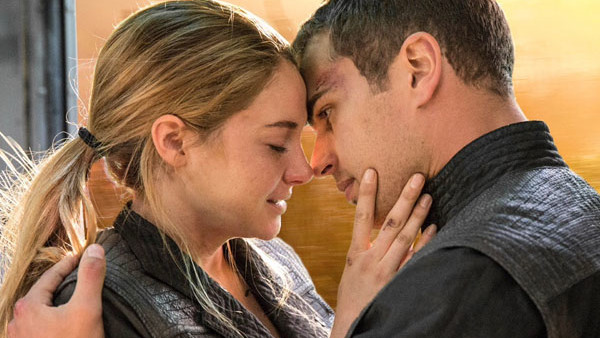
Why people hated it: There's no two ways about it, Divergent is a Hunger Games rip-off. A dystopian sci-fi that divided the population into clearly defined factions with a plot pushed forward by a young female heroine and fleshed out by her romantic interests, clearly Veronica Roth's young adult trilogy, which came out a year after Suzanne Collins' series finished, only exists to tap into that sci-fi/romance subgenre that manages to cross the gender divide.
The film adaptation, rushed out to strike while the Panem iron was hot, was expectedly successful with the pre-teen girl audience, but a mainstream audiences who had developed a love of The Hunger Games were quick to be condescending.
Was the hate justified: Divergent couldn't escape its teen-fiction trappings with the same confidence as The Hunger Games, but even though it may have been financed to cash in on Katniss, Neil Burger's film tried to be its own beast. There's enough good stuff - particularly Shailene Woodley (who, along with The Fault In Our Stars, has carved a niche in young adult fiction) - to make it an worthwhile franchise starter.
How much that ultimately is worth will have to wait until we've seen the three (three?!) sequels.
6. The Girl With The Dragon Tattoo

Why people hated it: This is breaking our self-imposed 'no remake' rule, but this isn't the usual case of modern Hollywood remakes an old/foreign language classic, destroying what made the source originally work and replacing it with mainstream conventions. Although it is that expectation that made people hated David Fincher's The Girl With The Dragon Tattoo pre-release.
Stieg Larsson's Millennium trilogy had already been turned into a series of films in his native Sweden to some impressive success (not only was the original Dragon Tattoo beloved by critics, but it made over $100 million worldwide), so Columbia's remake smacked of an attempt to build on that popularity by bringing in people irrationally afraid of subtitles. And in doing it odds were that some of the films darker moments would be axed.
Was the hate justified: David Fincher is an incredibly competent director. Had he not been brought onto the project then, yes, the film probably would have ended up the meritless disaster everyone expected. But this is, after all, David Fincher.
His film felt a part of its Swedish home, shooting the country beautifully and making the rape scenes particularly horrific to watch. He didn't just make something worthy of the original. He made something better.
5. Batman And Robin

Why people hated it: Mass hatred of Batman And Robin is one of those universal constants, like the speed of light or other sciency stuff we don't understand. But not all of the dislike of the film that almost broke the Bat came in reaction to it.
That Batman And Robin was a complete disaster wasn't a surprise in any way. This was the early days of the internet, with sites like Ain't It Cool News just coming into existence and quickly making a name for themselves in the industry. Any pre-release images of the film were brutally dissected in a way that makes modern methods look lazy, with audiences fully prepared for it to suck.
That's why it struggled so much at the box office; people had known it was a frozen squib months before. A lot of the hate at the time came from the costume design, with some rather unsettling abuse thrown against gay director Joel Schumacher for homosexualising a series trying so hard to escape that label. You can see why that argument has been dropped over time.
Was the hate justified: It wouldn't still stand as the nadir of the superhero genre if it wasn't terrible. Obviously Schwarzenegger's ice-puns are painful and bat-nipples woefully ill-advised, but its real crime is ignoring all the good Tim Burton did in making the franchise massive and instead invoking the Adam West TV series.
4. The Impossible

Why people hated it: The Boxing Day tsunami is one of the worst natural disasters ever, with almost three-hundred thousand killed and millions more severely affected. Centred in the Indian Ocean the majority of those affected were Indians, Indonesians and Sri Lankans.
So when the first high profile film on events was going to focus on an English family on holiday people were quick to scream about its insensitivity. Picking out a white family amongst all the people whose lives were irreversibly ruined smacked of Western cinema repurposing the disaster for their own financial gains.
Starring Ewan McGregor, Naomi Watts and Tom Holland (who does not act like a first-timer at all), the film gained added controversy as the story had made the family, who were in real-life Spanish, English.
Was the hate justified: Well, The Impossible is a good film, so any hate is a little unjustified. This isn't meant to be the definitive take on the tsunami and its aftermath, rather one story that came from it. Sure, it positions itself to play directly for an English/American audience, but so do most films.
Almost in response to the controversy, the final scenes of the film see (spoiler) the reunited family leave the country, with them finally seeing the widespread nature of the destruction.
3. Cars

Why people hated it: If a car was a living thing where would its eyes be? It's obviously the headlights. And that is one of the central sources of why people hated Pixar's Cars from the very start.
Putting the eyes in the windshield was read as an attempt to make more marketably cartoony characters in preparation for a merchandising empire. This approach, coupled with a human-less world from the normally incredibly inventive Pixar (up until that point all their films had been only slight twists of our own), meant from its very conception people were very expectant this would be the film to break Pixar's winning streak.
Was the hate justified: Cars was a more commercially minded film from the studio that traditionally put ideas first, but it wasn't the terrible film some would have you think. The world on a base level is stupid, but its creatively brought to life and them moral, while not original, is touchingly delivered.
In fact, when compared to the competition it's one of the better movies for kids. The series even tried to address the headlight controversy by showing us what the cars would like in Cars 2, but by that point the original detractors had given up.
2. The Amazing Spider-Man

Why people hated it: Superhero movies are big bucks. So naturally the movie studios who provide the initial bucks required to make the profit bucks will want to protect their investment. But while the likes of Marvel seem to have perfected the balance between producer and director, Sony keep stumbling. Spider-Man on film has been dominated by how the studio/distributor keep interfering with the film-making process; Sam Raimi, who directed the original trilogy, was forced to include Venom in his already stuffed Spider-Man 3 on their demands.
That's nothing compared to The Amazing Spider-Man, a reboot that only exists so the rights to the character don't go to Marvel. With a decision not only financial, but also time-specific, defining its very existence, people were quick to push total hatred on the new film. Some critics may as well have written their reviews of the movies before even sitting down and watching it.
Was the hate justified: Neither The Amazing Spider-Man movies are worthy Spider-Man films. They're not the worst blockbusters out there, nor do they show the superhero genre at its most cynical, but they just aren't that good. However, what makes the first film fail is less its attempts to distance itself from Raimi's films (although that does play a part), but its lack of comitance to its own ideas.
The first half sets itself up as a Peter Parker movie, giving us a mystery about his parents and a hunt for Uncle Ben's killer, but baulks mid-way through the second act and returns to the old formula of big villain, epic showdown, bored audiences.
1. Noah

Why people hated it: Biblical epics may seem like something reserved for old school Hollywood, but it seems they're making a comeback. Darren Aronofsky's long gestating passion project (he'd wanted to make a big screen take on the Great Flood since he was kid) came with heaps of controversy and low-expectations. Mainstream audiences were expecting some pandering religious film. Religious types were expecting a sacrilegious destruction of one of Genesis' central stories. Nobody was prophesying anything good.
The production saw multiple clashes between director and distributor Paramount, with the latter keen to have something reverential to keep the vocal Bible-bashers at bay. Because the old biblical epics, that existed mainly to get around the Hays code (you could show more gratuitous nudity if the film was religious), were so reverential anyway.
Was the hate justified: In the end Aronofsky won out, getting his final cut in cinemas. And what a film it is. Embracing the fact that the Garden Of Eden is only a few generations ago, the story serves as other-worldly fantasy. It's a reimagining, sure, with giant rock monsters and Noah at one point running around trying to kill a baby, but at its core the message is something befitting the original story.
Which films did people unconditionally dislike before they were even released? Let us know what you think down in the comments.