10 Movies With Hidden Subtext You Totally Missed
What lies beneath...

Sometimes what you see is what you get. That horror movie just wanted to scare everybody senseless and that rom-com was merely another uninspired attempt to merge two of the most popular genres.
There are, however, other times when the movie in question has more layers than an onion, masses of subtext and symbolism that bring new meaning to the entire story.
At times, it's stirring the audience square in the face. Neill Blomkamp's District 9 is quite obviously a metaphor for apartheid, with speciesism representing racism and xenophobia, while the mutant prejudice in the X-Men movies is intended to mirror the real-life hardship minorities face every day.
But these themes aren't always surface-deep. Often they're buried deep beneath the core narrative and the message goes unheeded until repeat viewings, background reading and your know-it-all friend brings it to light.
It isn't just sophisticated or politically-charged movies that harbour these hidden depths. Everything from kids films to supernatural horrors have slipped them in under the radar, and here are some of the concealed messages that may have passed you by.
10. Toy Story 3 Evokes The Holocaust

Toy Story 3 may be all misty-eyed nostalgia and coming of age on the surface, but beneath it all lies a metaphor for one of the darkest events in human history.
Don't let the family-friendly certification fool you, director Lee Unrich appears to have buried a pointed Holocaust analogy deep inside the toy box.
The parallels between the Jewish people left behind when World War II broke out and Woody's gang are in place. Sunnyside Daycare is the closest thing you'll ever see to a Nazi concentration camp in a Pixar movie - the toys even end up in a giant oven of sorts before a last-minute rescues saves them from a fiery fate.
Woody, Buzz and co are later taken to a Bonnie’s house, a place where their kind can live in harmony, which has been interpreted as a nod to Israel.
Holes only appear in the theory when you consider that Lotso is way more evil than Hitler.
9. The Dark Knight Mirrors The War On Terror

You may have thought you were watching a battle of good and evil between Batman and The Joker, but when Christopher Nolan is at the helm, nothing is as it seems.
Viewers don't have to look too far beneath the surface to realise that The Dark Knight's Clown Prince of Crime is depicted as an urban terrorist, with a penchant for blowing up buildings and sending his men on suicide missions, no less.
Delving deeper, the Nolanverse sequel becomes an obvious metaphor for then-US president George W Bush and his war on terror when the Caped Crusader's method of dealing with the threat is scrutinised.
Bruce Wayne uses his technology to transform Gotham City's mobile phone network into a SONAR device for tracking The Joker's location, sparking fervent objections from his gadget-man-in-chief Lucius Fox.
Batman's ethically questionable tactics have drawn comparisons to the passing of the Patriot Act, which gave the authorities the power to search a terror suspect's home, business and records without consent in the wake of 9/11.
Nobody can blame Lucius for being uneasy about this strategy.
8. RoboCop Is A Christ Metaphor

Never in the bible does Jesus riddle non-believers with bullets or inject a spike from his knuckle to stab one in the neck, but RoboCop is a Christ metaphor nonetheless.
Okay, so this is quite blatant when he appears to walk on water in the scrapyard scene, but you might not realise how deep the connection between Alex Murphy and the son of god actually goes.
Murphy's gruesome death at the beginning of the movie is his crucifixion and his return as the city's cyborg saviour is supposed to mirror the resurrection.
Taking the allegory even further, director Paul Verhoeven has revealed that RoboCop's stilted, stoic dialogue is a nod to the monosyllabic Jesus that emerged from the tomb.
So, there you have it. The original RoboCop is a Christ metaphor from start to finish. The 2014 remake, however, is probably something to do with Satan.
7. Aliens Plays Out Like The Vietnam War

A technologically advanced military force with questionable motives goes to war in a far-off territory only to underestimate its indigenous enemy. Remind you of anything?
The above sentence just as accurately describes the Vietnam War as it does the plot for Aliens, give or take a Xenomorph queen and the odd android.
First and foremost, James Cameron’s 1986 sequel is a sci-fi action flick, but the space marines' gung-ho attitude and the fact they're blindsided by their extraterrestrial opponents adds an on-the-nose metaphor to the equation.
Aliens arrived with the tagline 'This time, it’s war', and the digger you deep, the more obvious it becomes which war it is they were talking about.
6. The Fly Is About Technology Turning Against Mankind

Seth Brundle's stomach-churning transformation in David Cronenberg's The Fly is laden with metaphor. The most obvious parallel is terminal illness, but there's extra subtext in there you may not have considered.
The 1986 remake is also an allegory for technology turning against mankind, a concept other films such as Terminator have tackled in a more in-your-face way.
Seth finds himself merged with an insect at molecular level because of the technology he created. The computer's cold logic is his downfall when his telepods are faced with the man-plus-fly conundrum.
It's no coincidence that Brundlefly ends up merged with his tech at the end of the film - he becomes a living (just about) metaphor for the damage technology could potentially do without the appropriate safeguards.
Seth's ultimate fate is subtly foreshadowed earlier in the film when he rolls on a circuit board and it becomes embedded in his back.
5. Roger Rabbit Is An Allegory About Segregation In The US

Who Framed Roger Rabbit has always been one of those films that offers as much for grown-ups as it does for children, but beneath the surface there's even more substance for the former to appreciate.
Robert Zemeckis's live action-animation hybrid is a cautionary tale that evokes segregation in US society. There's a clear divide between the humans and the toons, who are forced to live in a designated zone called Toon Town.
The vast majority of the cartoon characters are employed in show business, while performance was one of the few accepted lines of work for minorities during this dark chapter of American history. Coincidence? Probably not.
If you need further convincing, the evil Judge Doom's plan to demolish Toon Town and replace it with a freeway has been interpreted as a reference to gentrification, which would tie in neatly with the overarching theme.
4. Drag Me To Hell's Subtext On Eating Disorders

Spare a thought for Drag Me To Hell's Christine. She doesn't just have a literal demon on her back, there's also a metaphorical one in the form of an eating disorder.
That's what Sam Raimi's 2009 horror is really about. The protagonist is often seen bringing food to others, drinking coffee or water while her peers eat lunch, lying about her eating habits and being assaulted by food-related visions.
Post-curse, hellish entities throw up on Christine, while others try to take a bite out of her, and then there's that scene where the piece of cake oozes bodily fluid. Gross.
The film makes various references to the character's youth, during which she was overweight, and the childhood trauma connected to this is what we see playing out in Drag Me To Hell.
There's even a possibility that there is no curse at all, besides Christine's eating disorder. Check out how nonchalantly the other characters react to the demonic happenings, for starters.
3. High Noon Is An Indictment Of McCarthyism

Westerns don't come much more classic than High Noon, but this Gary Cooper-fronted movie is more than just a Western.
It's also a damning indictment of McCarthyism inspired by screenwriter Carl Foreman's own brush with the House Un-American Activities Committee.
Cooper plays a soon-to-be-retired marshal who has just two hours to decide what to do about a gang of killers heading for the town, a problem none of his neighbours seem willing to help out with.
The town folk's inaction in the face of evil mirrors the unwillingness of Hollywood to stand up for persecuted writers, actors and directors during the McCarthy witch hunts.
2. Jurassic Park Is About Fear Of Parenthood

Jurassic Park is about more than an amusement park full of prehistoric reptiles. The perils of playing god is a foreground theme, but there's a lot going on beneath the surface too.
There's a sneaky subtext about overcoming the fear of parenthood, personified by Alan Grant, who is reluctant to procreate with his broody partner Ellie Sattler.
This theme stares the audience in the face come the ending when Doctor Grant, having actually spent time with kids, appears to have warmed to them, and would likely have gone on to have them with Sattler had Jurassic Park III not ruined everything.
The call-backs to this concept are on display throughout the film. The apparatus the palaeontologists use to look at the raptor skeleton in the opening scene is supposed to resemble an ultrasound machine.
Later in the movie, the two doctors watch on as a dino baby is born, and Sattler gets to use her maternal instincts when caring for the sick triceratops. There's so much symbolism around the theme of parenthood.
In Jurassic Park, life found a way to overcome biological hurdles and endure, and within the confines of its two main characters' relationship, it found a way to overcome social hurdles.
1. Terminator 2's Commentary On Police Brutality
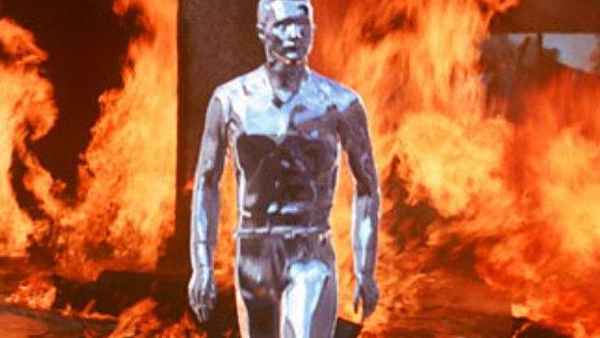
If Terminator 2's allegorical look at the dangers of technological advancement is too blatant for you, James Cameron's contender for best sequel ever carries subtler messages too.
The T-1000 didn't take on the form of a law enforcement officer just for the hell of it. Cameron wanted the character to symbolise a recurrent issue in modern America, police brutality.
The liquid-metal killing machine masquerades as the good guy but operates with a hidden agenda, much like crooked cops do every day.
Making T2 all the more poignant, the beating of Rodney King occurred while the film was being shot and the incident itself took place directly opposite the bar where Arnie secures his clothes, boots and motorcycle.