10 Movies Totally Ruined By Fan Service
It's not charming. It's lazy.
Fan service is an extremely tricky element of franchise filmmaking to get right, because when it feels earned - as in Avengers: Endgame - or actually adds something interesting to the lore - as in Doctor Sleep - it can deepen an audience's love for an IP.
But as Hollywood has proven time and time again, studios and filmmakers too often use nostalgia and past successes as a crutch, over-relying on iconic characters, imagery, themes and even entire plots, dining out on them past the point that it's acceptable.
It's often said that casual viewers actually like predictability and familiarity in their movies, hence why the recent trend of re-starting an ailing franchise with a half-sequel, half-reboot has proven so popular and successful.
But there's a line where fan service isn't fun or charming anymore: it's just lazy, cynical storytelling hoping to wring every last dime out of a movie property before fan fatigue finally kicks in.
These 10 films are all especially outrageous examples of movies actively harmed by their excessive approach to baiting fans with familiar yet vacuous, even soulless, ideas and images...
10. Solo: A Star Wars Story

There's a fair argument to be made that a number of Star Wars movies were fatally compromised by excessive, nostalgia-fuelled fan service - namely The Phantom Menace, The Force Awakens and Rogue One - but no single Star Wars film feels quite as perfunctory and cynical in its conception as Solo: A Star Wars Story.
Many groaned when it was first announced, simply because there wasn't a huge collective desire from fans to have Han Solo's past demystified with a prequel, to say nothing of the fact that Harrison Ford's portrayal is so iconic and statuesque that even the best-fitting actor would struggle to fill his duds.
And despite Solo being a well-acted, action-packed and competently helmed film, it's also a frequently cringe-worthy outing rife with pandering shoutouts and callbacks that fans never asked for.
To name just a few of the toe-curlingly embarrassing scenes: Han's surname and Chewbecca's nickname have their origins needlessly explained, numerous classic Star Wars lines are invoked in cutesy says ("I've got a good feeling about this!"), Han shoots someone first, we witness the Kessel Run, there are appearances by a younger Lando (Donald Glover) and Darth Maul (Ray Park), Han's dice and blaster make their debuts, and at any one moment the screen is littered with countless visual nods to franchise iconography. Phew.
It adds up to a flashy yet hollow film that's certainly easy to watch, but ultimately a rather lazy and insulting effort for all but the most committed Star Wars zealots.
It tanked at the box office as a result, and clearly, both fans and Han Solo himself deserved better.
9. Jurassic World
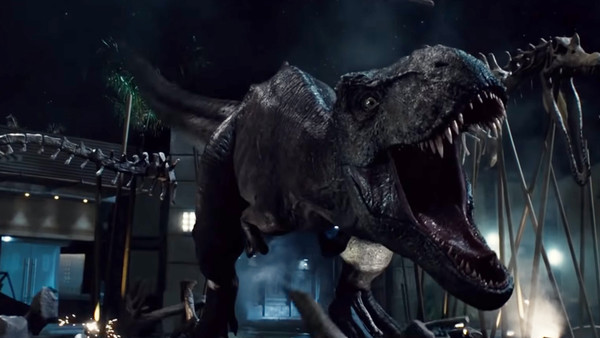
At a stretch you can probably call Jurassic World the series' best film since the first, but that's saying so, so little.
Designed as a now-fashionable "reboot-sequel", Jurassic World resurrects the franchise with new characters residing within the existing continuity, yet nevertheless can't help constantly hearkening back to Steven Spielberg's classic 1993 original.
For starters, the plot is endlessly indebted to Jurassic Park: a park infested with genetically engineered dinosaurs malfunctions, leaving two kids desperately trying to survive, before the heroes are rescued by an "heroic" T-rex - the very same one from the original movie, in fact.
And of course, endless beloved Jurassic Park imagery is invoked throughout: the feeding sling, the recreation of the original's iconic herd shot, literally dusting off the classic Jurassic Park jeep, and one of the park's engineers, Lowery (Jake Johnson), even wears a damn Jurassic Park T-shirt for the entire movie.
But what's especially annoying about Jurassic World is that it wants to have its cake and eat it too, offering up a smug meta-commentary on how difficult-to-please audiences are, all while returning to the same dried-up well yet again.
After two divisive sequels, Universal clearly banked on a "return to form" by literally reverting back to the first movie with a slight contemporary twist.
But the whiff of cynicism is strong throughout, accentuated by the film's hypocritical critique of greedy businesses, juxtaposed against on-the-nose product placements for fancy new cars and Coca Cola. Yikes.
Sadly the sequel, Fallen Kingdom, didn't fare much better, loosely remaking large portions of The Lost World and doing it badly. Universal probably doesn't much care, though, as both films annihilated the box office, and so a third film is already pencilled in for summer 2021.
8. Terminator: Dark Fate

The Terminator franchise is practically defined by fan service: even as early as the incredible second film, it was happily making cute callbacks to the 1984 original, but at least T2 had the incredible writing, directing and acting to back it up.
Ever since, the series has increasingly used its prior successes as a stepping stone to lure audiences back, culminating in the spectacularly embarrassing nostalgia-fest Terminator Genisys, and just recently the reboot-sequel Terminator: Dark Fate.
Dark Fate's selling point was that it pressed the reset button on all the post-T2 movies, wiping them from the continuity and aiming to deliver the "true T3."
Except, all that James Cameron and Tim Miller have really done is put the first two movies in a blender, add some scattered new ingredients and serve it up once again to a fatigued fanbase.
The film literally opens with a highly controversial sequence which undoes one major aspect of Terminator lore, after which it becomes a lazy reprise of T2, rife with lame dialogue callbacks to the first two movies, action sequences that feel like hollow rip-offs, and even exact shots which are cut-and-pasted near-wholesale from T2 in particular.
And even with solid performances from a returning Linda Hamilton and Arnold Schwarzenegger, Dark Fate feels like a film in a perpetual state of identity crisis, wishing to reinvent itself for a new generation all while handcuffing itself to the series' legacy characters and most iconic imagery.
Unsurprisingly Dark Fate has already bombed at the box office worldwide, and if the franchise is truly going to outlive Hamilton and Schwarzenegger, it probably needs to return to the chase movie roots of the original film, with a far lower budget, more practical action and an entirely new cast free of all the insincere fan-baiting.
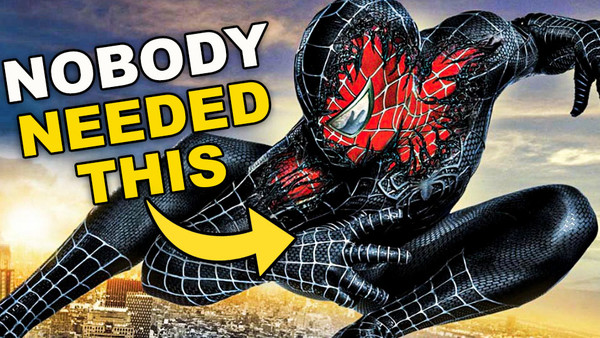
7. Spider-Man 3

It would be fair to call Sam Raimi's first two Spider-Man movies "crowd-pleasing," in the sense that Raimi knew what audiences wanted and enthusiastically delivered it.
But during pre-production on the third film, Raimi's desire to feature The Vulture as the primary villain, to be played by Ben Kingsley, were vetoed by producer Avi Arad.
Instead, Arad insisted that the film feature fan favourite antagonist Venom as a major fixture, despite Raimi himself being no fan of the supervillain, citing what he perceived as his "lack of humanity."
But because Arad knew that putting Venom in a Spider-Man movie would produce a gangbusters box office regardless of the director's enthusiasm, he stood firm.
And as everyone knows, the result was a Spider-Man 3 that fell far from the high bar set by its predecessors.
Overstuffed and undercooked, the film's biggest failure was nevertheless its widely-reviled treatment of Venom (Topher Grace), whose arc was rushed to the finish line because Arad couldn't see anything past the easy dollar signs.
It certainly put butts in seats, with Spider-Man 3 grossing an insane $890.9 million, but Raimi eventually opted not to return for a fourth film, taking Tobey Maguire with him.
Say what you will about the Tom Hardy-led Venom solo movie, but it at least captured the essence of the character better than this movie, and actually gave him plenty of room to breathe.
6. Fantastic Beasts: The Crimes Of Grindelwald
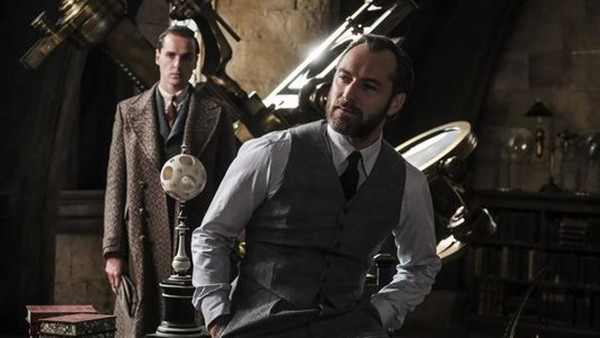
Though the first Fantastic Beasts movie wasn't great, it at least had a confident enough vision that it didn't feel the need to over-indulge on the Harry Potter fan service, serving as a solid enough base for future movies.
The sequel, The Crimes of Grindelwald, sadly lacked the same self-assuredness, with writer J.K. Rowling plunging deep into Potter lore for two-plus-hours of patronising - and arguably continuity-derailing - silliness.
While Jude Law deserves praise for his charming if shoehorned presence as a young Dumbledore, the entire Hogwarts section of the movie feels both desperate and pandering.
This is especially true with the appearance of a young Professor McGonagall (Fiona Glascott), while the decision to give Voldemort's pet snake Nagini (Claudia Kim) a human origin story is questionable at best.
But worst of all is the film's big twist, that Credence Barebone (Ezra Miller) is actually a secret Dumbledore brother, Aurelius, a reveal so head-smackingly convoluted it still has Potter fans debating just how precisely it contradicts established Potter lore.
Reviews were mixed and the movie's box office ultimately came in below expectations, which combined with its Johnny Depp-centric PR issues, prompted Warner Bros. to delay the third film by a year to do some behind-the-scenes re-jigging.
It'll be interesting to see whether or not The Crimes of Grindelwald's mediocrity broke the spell for fans, or whether they'll be lured back by a (hopefully) more compelling story and smarter approach to fan service.
5. Superman Returns
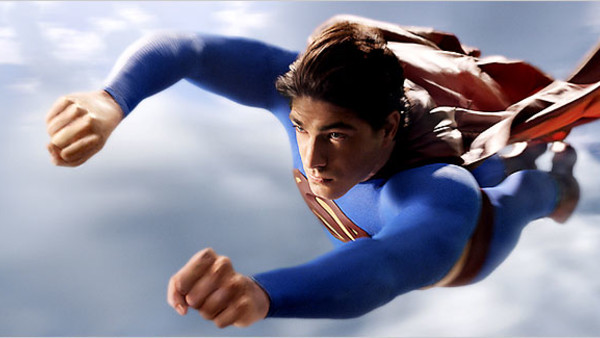
Nobody will come away from Bryan Singer's 2006 blockbuster Superman Returns disbelieving that the director is a huge fan of the 1978 Christopher Reeve-starring Superman, but his shameless reverence for that seminal superhero epic ultimately makes his own film feel like little more than a dew-eyed, big-budget fan fiction.
Though impressively mounted - especially during its terrific plane rescue sequence - Superman Returns ultimately feels like too much of a reprise of Superman '78, right down to rehashing Lex Luthor's (Kevin Spacey) unbearably goofy real estate scheme and following the basic spine narrative of that movie.
In many ways Returns is a prototypical example of the quasi-remake masquerading as a sequel that's so popular nowadays.
But it's so hopelessly infatuated with the Reeve version of this character, and so busy trying to replicate the style and tone of the late-70s that its more ambitious and daring elements - namely making Superman a deadbeat dad - end up clashing harshly.
Nobody was saying that Singer needed to make a grimdark, Man of Steel-esque Superman movie in order to succeed, but would it have killed him to, you know, actually come up with some more original material?
Fans of the '78 film felt it was a pale imitation of that, while younger audiences didn't connect with its quaint tone, resulting in box office disaster despite broadly positive reviews.
4. Alien: Covenant

Granted, the Alien franchise was boxed into a fan-serving corner as far back as Alien 3, which pissed off most of the fanbase after killing heroes Newt (Carrie Henn), Hicks (Michael Biehn) and Ripley (Sigourney Weaver), the former two off-screen no less.
Alien Resurrection infamously went full-tilt fan fiction by bringing Ripley back to life via cloning, but even more so than that film, the Alien vs. Predator movies or even Prometheus, Alien: Covenant was a soulless and pandering attempt to "give the fans what they want."
After many complained about the lack of xenomorphs in Prometheus, Ridley Scott violently swerved in the other direction, by literally nuking the Engineers out of the franchise and throwing a fleet of xenos at the screen in the film's sloppy third act.
"You want xenos? You got 'em," is basically Covenant's mission statement, and because that's not enough, Scott also implies that the aliens were created by evil android David (Michael Fassbender), the logic of which is massively dubious and just invites an avalanche of questions.
Alien is a classic example of a franchise that did better when it didn't really explain anything, but after Prometheus received flak for being too vague, Scott's over-correction with Covenant just turned a lot of fans off.
It didn't help that the movie's human characters had the collective IQ of a baked potato, either.
Covenant ended up grossing barely half of Prometheus' box office haul, seemingly putting the entire series on ice, even if Fox recently confirmed that they're exploring options for a new Alien film.
3. Spectre

Skyfall was a pitch perfect example of how a movie can tow the franchise line while also doing something different.
Director Sam Mendes expertly melded classic Bond tropes with a distinctly modern style and tone, which Mendes himself admits was inspired by Christopher Nolan's Dark Knight trilogy (and it shows).
But follow-up Spectre, also helmed by Mendes, disappointingly felt like a regression, a misguided attempt to restore some of the "classic" irony of the Roger Moore era to the franchise.
After Skyfall, this "old school" approach felt positively stodgy, especially its egregiously questionable approach to its female characters, its rather tepid use of a brilliantly-cast Dave Bautista as a classic-style henchman, and worst of all, its treatment of re-imagined Bond villain Blofeld (Christoph Waltz).
Despite Waltz's perfect casting as Bond's most iconic enemy, the script strained too hard to create a personal connection between him and Bond, and by the time Blofeld explains that he was the puppeteer behind all of Bond's prior run-ins, it's hard not to laugh at the contrived silliness of it all.
All Spectre had to do to be a good Bond film was follow the template set by Skyfall, but for some reason the decision was made to slide back into the creakier old habits of retro Bond, which in 2015 just wasn't a good look.
If older Bond fans want to re-live the classic Bond movies, they've got more than a dozen classic-era Bond movies to watch. Let modern Bond move with the times rather than cling desperately to the past.
2. Star Trek Into Darkness

J.J. Abrams gets plenty of flak for making Star Wars: The Force Awakens a transparent reprise of A New Hope, but that's nothing compared to his work on Star Trek Into Darkness a few years prior.
Though his 2009 Trek reboot was a major critical and commercial success, core Trek fans complained that it no longer felt like Star Trek, but rather a more generic and mainstream-skewing sci-fi action film.
Perhaps in an attempt to combat that, and certainly to curry favour with legacy fans, the sequel was shaped as a spiritual remake-of-sorts of 1982's Star Trek II: The Wrath of Khan, undeniably the consensus fan favourite Trek movie.
While not a beat-for-beat copy, it does see the Enterprise crew facing off against Khan (Benedict Cumberbatch), this time disguised in the movie's marketing and half of the movie itself as Commander John Harrison.
Except, Cumberbatch's Khan is neither a sharp reprise of the original character nor a clever reinvention: he bares so little resemblance to Ricardo Montalbán's original that slapping the Khan label on him feels itself like an act of cynical calculation.
The direct fan service ramps up significantly in the film's third act, with Spock's (Leonard Nimoy) sacrificial death in The Wrath of Khan being swapped out for Captain Kirk (Chris Pine), leading to the new Spock (Zachary Quinto) letting out a staggeringly lame-brained take on the classic William Shatner "Khaaan!" scream.
And let's not forget about the embarrassing scene where Carol Marcus (Alice Eve), strips down to her underwear for no discernible narrative reason, shot with an embarrassing gratuity by Abrams no less.
This is a movie that wanted to appeal to younger audiences while luring old Trek fans back into the fold, but for most, it just pissed them off more, insulting their intelligence with a laughably surface-level facsimile of the best Trek movie. No dice.
1. The Hobbit Trilogy

But there's no better example of runaway fan service than Peter Jackson's The Hobbit trilogy, which represents an attempt to milk fans of every last possible dollar under the guise of giving them more of what they "want."
As if splitting J.R.R. Tolkien's novel into three brutally long movies wasn't absurd enough, all three movies are guilty of paying excessive tribute to Jackson's Lord of the Rings films, by incorporating characters into The Hobbit who have no business being there.
The likes of Frodo (Elijah Wood), Saruman (Christopher Lee), Galadriel (Cate Blanchett) and especially Legolas (Orlando Bloom) are given outrageously perfunctory roles in The Hobbit movies despite not actually appearing in Tolkien's book, because Warner Bros. needed to hammer home that sweet, sweet branding.
Furthermore, Jackson expanded upon material included in the appendices of the Lord Of The Rings books, while even fabricating a dreadful love triangle subplot between Legolas, Kili (Aidan Turner) and Tauriel (Evangeline Lilly), the latter being a character created specifically for the films.
The result was a trilogy of films that, in all of their obvious ambition, tried too hard to be too much, when a smaller and more restrained canvas actually would've done better justice to the source material.
This is cinema's towering testament to the mess that can be created when Hollywood zeroes in on a cash cow. And in this case, audiences bit hook, line and sinker, as they collectively grossed just shy of $3 billion.