10 Movies That Tried Way Too Hard To Be Cool
Trying too hard...or not hard enough?

Movies are made for many reasons - to entertain, to inform and to provoke the audience's thoughts, and in the arena of big-budget Hollywood, generally a movie's aim is to make as much money as possible, usually through appealing characters, whip-smart dialogue and breathtaking action sequences. Being cool, basically.
The greatest "cool" movies of all time most surely include Pulp Fiction, Fight Club, Terminator 2, Escape from New York and so on - stylish films which also gave us great characters and memorable one-liners.
But of course, for every genuinely cool and edgy movie, there are literally dozens (if not hundreds) that tried and failed to evoke that same feeling.
By swinging so enthusiastically for the fences, audiences were instead left thinking that these films tried far too hard to hit the desired tone and aesthetic.
And so, we have these 10 films, all of which have their meritorious aspects - and a few of which are actually pretty decent movies - that nevertheless over-egged the pudding with their excessive style and self-conscious dialogues...
10. Sucker Punch
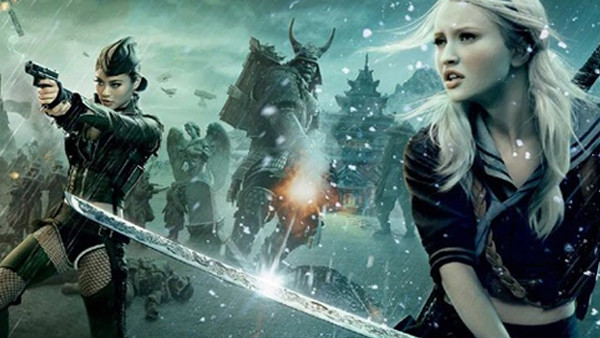
Zack Snyder is no stranger to making edgy, stylish movies that sharply divide audiences, though he's never tried harder to make a Cool Movie - or fallen flatter on his face - than with his 2011 fantasy-action flop Sucker Punch.
Jam-packed with sexy, scantily-clad, gun-totting young women who battle hordes of video game-esque CGI enemies, it is as though the film were dreamt up by a hormonal teenage boy. It is, in every sense, the adolescent male id in movie form.
And while Snyder himself claims that the film is in fact a self-aware commentary on the inherent sexism present in nerd culture, this doesn't quite vibe when the film so aggressively leers and slobbers over its focal women.
Between its slick action and dark narrative centered around sexual abuse, it's clear Snyder is trying to make a daring slice of blockbuster insanity, yet due to the forgettable set-pieces and muddled messaging, Sucker Punch is more baffling and concerning than it is genuinely creative and, yes, cool.
9. Only God Forgives

Nicolas Winding Refn is one of the most stylish and singular filmmakers working today, and also one of the most divisive.
Though Refn's Drive, by far his most successful film, was far more popular with critics than audiences, his follow-up Only God Forgives was polarising across the board, with no consensus on whether the Thailand-set crime thriller was a genuinely tantalising mood piece or a pile of pretentious tosh.
A molasses-slow movie in which Ryan Gosling speaks little and spends long passages staring off into the middle-distance, Only God Forgives is also awash in sledgehammer-subtle Freudian imagery, casual misogyny, and a whole host of brutal-yet-forgettable violence.
Does the film have any soul or feeling? Not really, and while the neon-soaked cinematography is undeniably gorgeous, this felt like Refn flipping the middle finger to anyone - basically everyone - who was just expecting him to make Drive 2: Thailand Edition.
It has its defenders, of course, though for many, it's a film so self-consciously hateful of its audience as to be incredibly obnoxious.
8. Mission: Impossible 2

Mission: Impossible 2 represented a major tonal and stylistic shift for the franchise, taking a sharp left-turn from Brian De Palma's grittier original - which nevertheless featured a CGI-slathered finale - and allowing action maestro John Woo to deliver one of the most hilariously nutty actioners of the early 2000s.
Woo of course made his name with his acclaimed Hong Kong action flicks starring Chow Yun-fat, such as A Better Tomorrow, The Killer, and Hard Boiled, usually working with small budgets which forced him to get creative.
But in Hollywood, Woo had money liberally thrown at him to execute every last testosterone-fuelled idea he could think of, no matter how silly.
M:I2 was actually Woo's fourth film in Hollywood but by far his most expensive, budgeted at a stonking $125 million, and the result was an almost inconceivably slick action sequel so over-the-top as to veer into self-parody.
This is a film where Ethan Hunt (Tom Cruise) and villain Sean Ambrose (Dougray Scott) leap off their motorcycles and catch one another in mid-air, for Christ's sake.
Between the howlingly excessive use of slow-motion, cartoonish set-pieces, Limp Bizkit-performed title track and a bevy of plot twists layered on top of other plot twists, it can't help but feel like a comically try-hard movie that's entirely emblematic of early 2000s blockbusters.
Thankfully the subsequent sequels scaled things back somewhat, and even in their more outlandish moments have opted for a less exuberant filmmaking style.
7. Juno

Jason Reitman's Oscar-winning coming-of-age drama is certainly not a bad movie, but it is one that split audiences right down the middle.
For some, Diablo Cody's script - which won the Best Original Screenplay Oscar - provided a charmingly offbeat spin on familiar material, while to others, its self-conscious quirkiness was just too navel-gazing and cutesy.
And though Reitman's film is terrifically acted - especially by Elliot Page - the flowery script often gets in the way of the real dramatic meat, as for every witticism that comes out of the title character's mouth, there's usually an irritating or smugly self-satisfied one to follow.
Every note of the soundtrack, played on acoustic guitar of course, feels enormously conceited in order to accentuate the low-fi indie film vibe, and Hollywood largely fell for it.
Again, a fine enough film, but its relatability is ultimately impacted by Cody's heightened dialogue and just how hard it's trying to be a unique movie about teenage pregnancy.
6. Daredevil
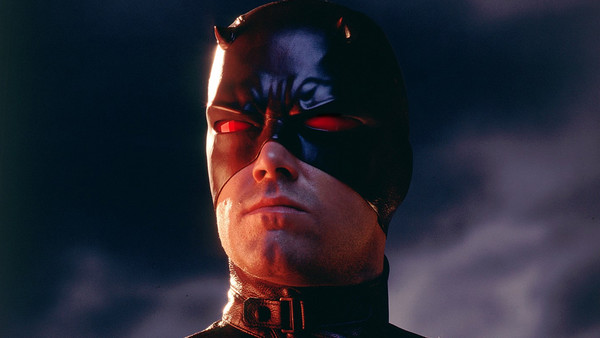
2003's Ben Affleck-starring Daredevil isn't just a bad movie, it's an embarrassing one, because like so many other early-2000s superhero movies - looking at you, Catwoman - it prefaces style over substance.
This is a movie full of complex CGI-assisted shots, hackjob editing, goofy one-liners and, as evidenced by the cringe-worthy use of Evanescence's hit "Bring Me to Life" during Elektra's (Jennifer Garner) hype montage, hilariously outdated pop-metal.
Though the R-rated Director's Cut does restore a lot of the more interesting material and is an altogether better film, there's no escaping Daredevil's loud desperation to be cutting edge and contemporary, which ironically ended up dating it horribly within just a few short years.
5. Equilibrium

Of the many, many post-Matrix knock-offs released in the 2000s, there is none more memorable in its try-hardiness than Equilibrium, an attempt to take George Orwell's 1984 and cross-breed it with the Wachowskis' action aesthetic.
Though it's a relatively well-made film led by an entertainingly stoic Christian Bale, the film was marketed largely on the basis of its "gun kata" gimmick, a gun-centric martial arts style invented for the film...which ultimately turned out more silly than neat.
Seeing Bale effectively dance his way through gunfights with risibly over-the-top flips is practically the definition of an action movie trying too hard.
Given that successful action films tended to favour more gritty, "realistic" action in the years that followed - as in the Bourne franchise - Equilibrium was quickly forgotten about.
4. Halloween (2007)

You have to give Rob Zombie at least some begrudging credit for even attempting to remake John Carpenter's horror classic, and being brave enough to mount such a bold reimagining of the mythic horror icon Michael Myers.
Except, his Halloween wasn't good. At all.
Even ignoring the fact that most Halloween fans didn't really want Myers' backstory demystified, Zombie's grungy, white trash-infused tone and aesthetic were so, so wrong for the franchise.
Between the cringe-worthy vulgar dialogue and excessive nudity and gore, it felt like a fairly standard attempt to ugly-up the more restrained and suspenseful original film.
There's a clear vision here, for sure, but not one most fans of the franchise were actually interested in.
3. Smokin' Aces

There are so many Pulp Fiction knock-offs out there that it's practically a sub-genre unto itself - typically named "post-Tarantino" - yet precious few of them are actually any good.
Case in point, we have Joe Carnahan's 2006 ensemble action flick Smokin' Aces, a frantic and desperate attempt to evoke the same witty, bloody vibe of Tarantino's masterpiece.
Though the performances are solid throughout - especially Ryan Reynolds and Jeremy Piven - the prolonged dialogues (about subjects such as semen-stained jackets) aren't clever enough to justify their length or inclusion, while most of the bonkers action is covered with spasmodic camerawork and infuriating editing choices.
It's a film made to entertain edgelord teenagers, despite its R rating, while to anyone older, it's likely to come off as agonisingly over-affected.
2. Suicide Squad

To give writer-director David Ayer some minor credit, it sounds like his grittier vision of Suicide Squad was put through Warner Bros.' post-production mangle, as the end result was basically "what if the DCEU made a lame Guardians of the Galaxy knock-off?"
The final cut of the movie was thrown together by Trailer Park, the editing studio who also made the film's fantastic trailers, and represents a clear attempt to make as flashy and fast-paced a film as possible.
The opening sequence is more-or-less an exposition dump montage, moving hastily from one character to the next in the hope of keeping cash-rich teens interested enough to recommend it to their friends (which, with its $746.8 million final gross, they clearly did).
Yet most of the dialogue lacks the wit of James Gunn's movie, the incessant jukebox-style inclusion of pop music felt pandering at best or lazy at worst, and the nihilistic tone came across as totally insincere.
That's not to ignore Jared Leto's Joker, a character whose faux-cool style and personality embody everything that's wrong with the movie - over-designed and under-thought.
With Gunn himself set to start production on The Suicide Squad soon, hopefully he'll be able to smooth out the tonal edges and deliver a more confident and less patronising vision worthy of its comic book namesake.
1. Revolver

Guy Ritchie's 2005 crime thriller Revolver feels less like an actual Ritchie film than it does a young up-and-coming filmmaker trying (horribly) to imitate his well-trod style.
The whip-smart wise-crack dialogue Ritchie is best known for is substituted here for pretentious narration amid a puzzle-like narrative that immediately adds it to the pile of post-Tarantino forgettables.
It's not all bad - Jason Statham is good and there are some fun action beats - but the positives are largely drowned out by Ritchie's insufferable script, which clearly thinks it's way smarter and more provocative than it actually is.
What Ritchie believes to be cool and unique is just overly verbose and tiresomely convoluted. Hard pass.