10 Movies That Tricked You By Killing Main Characters Early
Every now and then, the movie just likes to screw with you.

On occasion, a film likes to toy with its audience. Major events occur suddenly and unexpectedly, throwing viewers off their guard. It's become somewhat of a staple of suspense and horror film to axe off a character we've become invested in early in the picture, leaving them on uncertain terrain where no one is truly feels at ease.
At its worst, this is entirely a gimmick. Even films such as Feast, a clear send-up of survival horror that didn't particularly have a well-drawn group of heroes, jokes about this by immediately and gruesomely offing a character officially known as "hero" right after he claims he's the only person who possesses the ability last the night.
So we know the game, and Hollywood knows we know the game, and by that point one would think the game is up. There's still the odd film, however, that manages to make a character's sudden departure not just a shock, but well-deserved and even somewhat rewarding. Here are the better examples through the years.
10. Life

Life was a little-liked 2017 sci-fi thriller about discovering the first evidence of life on Mars and learning that it's more Alien than E.T. Released to critical derision and audience shoulder-shrugging, it was seen as just another in a long line of Alien clones that would be forgotten in due time, despite a major cast headlined by Jake Gyllenhaal, Ryan Reynolds and up-and-comer Rebecca Ferguson.
The titular life begins as a small, seemingly containable sample to the excitement of the astronauts, but it becomes apparent early on that the creature has the ability to grow into a multi-cell organism; a hostile one at that.
The three leads didn't have any traits that solidified one over the other, but Reynolds' recent success in the Deadpool films and the years he spent living down Green Lantern made the audience imagine he'd at least make it to the late real.
Not so, as once the creature breaks free, he's the first mouth it shoves itself in, emerging from him spewing blood and having grown even larger. Not a flop or really a hit, it's middling sci/fi with a surprising downer ending.
9. Executive Decision
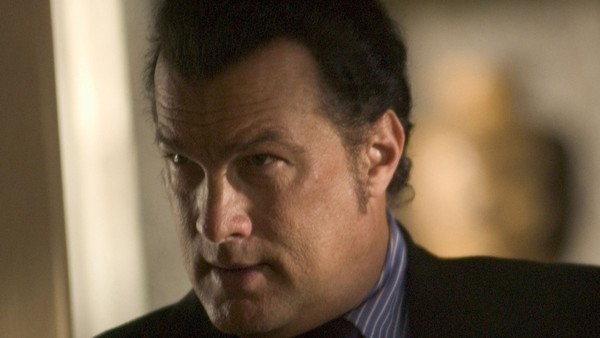
Executive Decision was one of a series of action films involving airplanes and terrorism in the 90s before September 11th had to go and ruin that set up. Air Force One, Con Air and even the Brosnan-era Bond films all enjoyed exploring the dangers of plane travel until that fateful day.
In Decision, terrorists take over a commercial flight that is headed over the Eastern Seaboard of the U.S., forcing the military to attempt to dock the moving plane with a stealth jet through an emergency hatch before a lethal poison is unleashed upon the general population.
Steven Seagal leads his team of marines and an unprepared Kurt Russell into the plane successfully, but ultimately sacrifices himself to secure the plane and his team. Seagal was an actual marketable name in 1996 (the 90s were a different time), so his sudden, early death was a genuine surprise to audiences.
Not to the cast and crew, however. According to cast member John Leguizamo, no one could stand working with him, and allegations of sexual harassment going back as far as Under Seige were starting to gain traction. Originally, Seagal's head was supposed to explode due to a loss in cabin pressure, but the actor held up production for days, refusing to shoot it because his fans wouldn't like it.
In retrospect, we really, really would have.
8. The Place Beyond The Pines

Derek Cianfrance is a quiet indie filmmaker you wouldn't necessarily expect anything shocking out of. Blunt and earnest, his films like Blue Valentine get uncomfortably personal with their subjects. The sexual explicitness of Blue Valentine is just as hard to watch as The Human Centipede, but for very different and very real reasons.
When 2012's The Place Beyond The Pines was released, audiences were primed for what appeared to be a solid heist picture with the always welcome Ryan Gosling as a motorcycle stuntman desperate to provide for his lover and her son by any means necessary. A bank robbery film with an emotional edge. What they didn't expect was a 2 1/2 hour epic that followed generations beyond the robbery.
Nor did they expect to see Gosling offed so unforgivingly. After making a desperate grab the cash he needs using his motorcycle, he's suddenly gunned down by a rookie police officer (Bradley Cooper), shot out of a three-story window to his death.
One would expect the story to end there, but instead it follows Cooper for another 15 years into the halls of politics, when his initial "heroic" action finally comes back to haunt him.
7. Psycho

Be it Gus Van Sant's failed shot-for-shot experimental remake or Alfred Hitchcock's 1960 original, Janet Leigh's now-infamous shower stabbing 40 minutes into the film was a game-changer. Opening on Leigh's Marion Crane as a real-estate secretary in Phoenix, we're intended to assume she's the protagonist, even after she makes the cardinal sin of stealing $40,000 from her boss and skipping down.
Tired, she makes the fateful stop at the Bates Motel, meeting the nervous but seemingly harmless Norman Bates. The two converse and we get to know Marion further, cementing her role as the likely protagonist with Norman's unseen, demanding mother clearly acting as her rival.
In 1960, these were the rules the movies set, and Hitchcock, always one to please a crowd, wouldn't dare break convention.
That is, until Marion takes a shower. It's as effective today as it was then if you don't know it's coming (which, lets face it, is a rarity), but when Norman's mother throws open the shower curtain and jabs in one of many wounds with a butcher knife in Marion's body, it was the first of many shocks in a film so filled with them that, at the time, it required a psychiatrists to explain the ending in the closing minutes.
6. Deep Blue Sea

Survival horror films demand a character that will lead the small group of trapped victims to safety, be it through thoughtful planning, heavy firepower or a combination of the two. In Renny Harlin's Deep Blue Sea, that character was multi-millionaire Samuel L. Jackson, visiting an underwater lab where scientists have been experimenting on sharks in hopes of finding a cure for Alzheimer's. Unfortunately, man played with God a little too much and the sharks got smarter and Michael Rappaport-hungry.
Thomas Jane is the rogue shark wrangler and, at first, he's a wild card, chances of survival being up to the winds of fate. LL Cool J was under contractual obligation to survive so it wouldn't frighten his children, but according to his theme song his hat was like a shark's fin, so he was fine either way.
That's why it's both funny and scary that, during the middle of a rousing speech about survival and laying out a strategy, one of the giant Mako sharks leaps from the water and devours Jackson, pulling him into the water.
Jackson's commentary is worth a listen on the DVD as well, as he spends most of it raving about a golf course near the set, then abruptly says, "Well, I'm dead," and leaves the recording studio.
5. G.I. Joe: Retaliation

Sometimes, actors will have had enough of a particular franchise and hopelessly mutter, "Just kill me already." The most famous instance of this is Harrison Ford, who seemed adamant that Han Solo die in Return of the Jedi, feeling his character had reached and surpassed his arc. It would be nearly 40 years before he finally had his wish fulfilled.
So don't weep for Channing Tatum, who led the G.I. Joes in the first film in the franchise as Duke. As opposed to his role in the cartoon and toy line, Duke starts his career as a rookie among other, more well-trained Joes despite calling himself a captain (this franchise lacked coherence). Duke manages to defeat the Cobra Commander (a surprisingly game Joseph Gordon Levitt) in the first film, only to be killed off in an airstrike early in retaliation and replaced by Dwayne Johnson's Roadblock.
The story behind the scenes is that Tatum never much cared to marry himself to the franchise and was concerned it would dirupt the schedule of a film he was more interested in - Steven Soderbergh's Magic Mike.
4. Alien

Without Alien, several aspects now common in horror couldn't exist. You certainly couldn't have a female protagonist go up against the big monster. It was unthought of. That's why it seemed like Tom Skerritt's Dallas, the captain of the ship, would end up going against the xenomorph in the climax.
Firstly, he was the captain, a role that automatically assumed authority. Secondly, he was a known actor, headlining Oscar winners like MASH and even showing up in Harold and Maude. Third, his name is Dallas, which is an action hero name.
But Ridley Scott wanted to shift paradigms - fitting for a movie essentially about mouth-rape. When he sent Dallas into the airshaft with a flamethrower to torch the monster, things started to feel off-kilter. He tracks it successfully, only to discover it's behind him, arms outstretched. His death is even more agonizing in the director's cut, where survivor girl Ripley (Sigorney Weaver) finds him still alive, incubating more offspring
The original script didn't even let Ripley off easy, calling for the alien to bite her head off, then mimic her voice to report it was ready to return home.
3. Godzilla

After a successful six-season run on AMC's Breaking Bad as milquetoast chemistry teacher-turned meth kingpin Walter White, Bryan Cranston's career looked like it was headed beyond the limits of television. The trailers for America's second attempt to reboot the Godzilla franchise heavily featured his character - a nuclear scientist who lost his wife in a meltdown years earlier - barking orders and warnings at superiors that something big, unstoppable and dangerous was about to emerge. He was clearly the headling the picture.
After the loss of his wife, he has become obsessed with the disaster and distant from his son (Aaron Taylor Johnson). They return to the would-be Chernobyl to discover that the radiation warnings are a hoax, the area is simply harbouring something much, much worse. He and Johnson are detained, and when it appears he may be humanity's last hope, Godzilla's nemesis destroys the walkway upon which Cranston is standing.
The film even gives the audience a glimmer of hope, letting him live long enough to make it into an evac chopper before succumbing to his wounds, leaving Johnson to take the reigns. As for Godzilla, he does what giant monsters in America do best: Destroys San Francisco.
2. Contagion

With an ensemble cast or disaster film, it's almost impossible to tell who will make it through the end. This trend can be traced back to the days of producer Irwin Allen, who always ensured some characters got their just deserts while innocent victims trapped in terrible situations were fair game. If the leading man died, it was often out of some heroic sacrifice.
Stephen Soderbergh - the director who keeps saying he's retiring before suddenly dropping another film without warning - took the same approach with Contagion. Led by a star-studded cast and a global setting, a new virus starts to violently spread, with the CDC and WHO desperate to find a vaccine.
It takes the disaster film - which is often set in a contained environment - and unleashed it worldwide. Years earlier, Wolfgang Petersen's Outbreak toyed with the same idea, but kept it within the safe, big Hollywood constraints. With a month of the virus spreading around the world, it was only a matter of time before one of the leads for contract and fatally succumb to the symptoms.
We just didn't know it'd be Gwyneth Paltrow, who opens the film with a trist with a former lover before returning home with what appears to be a common cold. Two days later, however, she's on an autopsy slab. A flashback later reveals she was actually Patient Zero.
1. The Blob
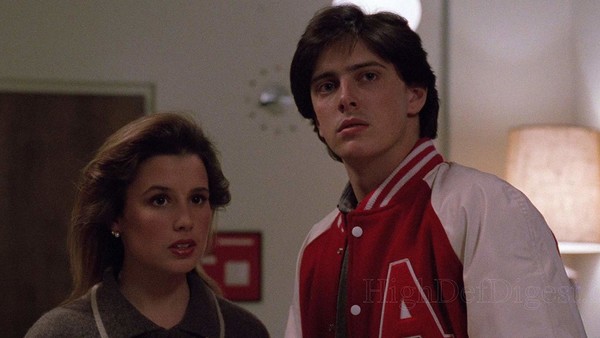
The Blob is director Chuck Russell's gory, exciting remake of a movie Steve McQueen probably forgot he made. After a meteor crashes in the woods, a strange, pinkish goo to infects the hand of a hobo, leading a group of teenagers to rush him to the hospital of a small, ski-resort town off-season. The teens couldn't be more cookie-cutter - with Donovan Leitch's (son of singer songwriter Donovan) good guy football player taking charge, Shawnee Smith's girl-next door being exactly that and Kevin "'I'm Not Matt" Dillon's bad boy refusing to play by the rules.
The movie doesn't either. Frank Darabont and Chuck Russel's script breaks a lot of conventions and rules that you rarely see in horror films, most notably offing a pre-teen in particularly gory fashion.
It also trades heroes early on. After the homelessman turns up half-devoured by the growing alien creature, Leitch runs to the phone to call for help, only to have the monster do a belly flop on him. We see him gruesomely digested, his arm pulled apart from what is covered in the purple film.
Dillon isn't a terribly interesting hero, but you have to admire the film for trying to switch up the game a little.