10 Movies That Spent Stupid Money On Pointless Things
What a waste.
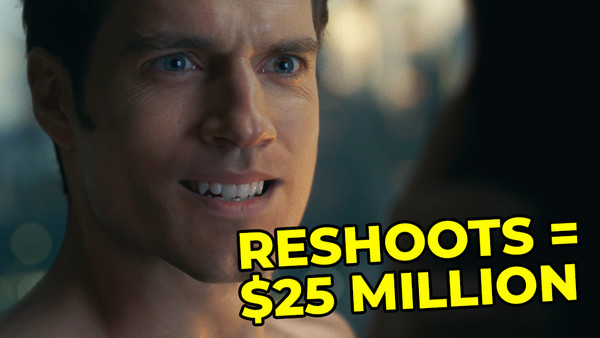
Filmmaking sure is an expensive business, and without smart producers and executives at the helm, it's incredibly easy for even good movies to run wildly over-budget.
Budgeting any film is a calculated risk: Marvel Studios knew that $356 million spent on Avengers: Endgame would pay off, and Netflix stumping up roughly $50 million to complete The Irishman's digital de-aging has resulted in rave reviews and Oscar hype.
But not every decision-maker in Hollywood is quite this smart or shrewd, as evidenced by these outrageously risky - and often, calamitous - examples of excessive spending.
From disgustingly expensive custom-built sets to elaborate set-pieces which weren't worth the money, misguided reshoots and literally writing the cast's drug habit into the film's budget, these projects all went totally off-the-rails financially.
A few of them were fortuitous enough to succeed at the box office regardless, but for the most part, these films cratered commercially, underlining the fact that nobody in charge knew where to draw the line and cut their losses...
10. Waterworld's Gigantic, Floating Atoll Set ($22 Million)

Kevin Costner's 1995 star vehicle Waterworld is one of the most infamous box office flops of all time, produced for an absurd $175 million largely as a result of producer-star Costner's hubris following his Best Picture-winning 1990 epic Dances with Wolves.
A colossal $22 million - more than 10% of the film's entire budget - was spent assembling the gigantic, quarter-mile-long main atoll set, which weighed 1000 tons and used up all the available steel materials in Hawaii.
Costs were further heightened by a lack of lavatories on the facility, requiring extra shooting time to be wasted transporting crew members back to the mainland to do their business and then return to the atoll set. Further expenses were incurred when a hurricane temporarily collapsed the set.
Waterworld went on to gross just $264.2 million worldwide, a mere $30 million more than the movie's combined production and marketing budget. Yikes.
On the flip side, the state of Hawaii got $35 million injected into its economy as a result of the film shooting there, so it wasn't all bad for everyone involved.
9. Superman Returns' Alternate Opening Sequence ($10 Million)

A $10 million chunk of the $223 million price tag for Bryan Singer's commercially disappointing Superman Returns was a result of Singer shooting an opening sequence for the movie which he ultimately decided he didn't like.
The lavish six-minute sequence depicted Superman (Brandon Routh) visiting the ruins of Krypton, and it's clear that most if not all of the post-production work was completed, because the scene looks more-or-less finished.
Though Singer seemingly hasn't commented on exactly why the scene was cut, it's easy to appreciate that its sheer strangeness clashes with the warmer throwback style of the rest of the film, and it was hardly the most energising way to get things started.
Why Singer was unable to appreciate this in pre-production before a cool $10 mil had been spunked on it, though, is anyone's guess.
8. A Knight's Tale's Replica Of The London Eye, Used For ONE Shot ($500,000)

This Heath Ledger-starring guilty pleasure proved a modest box office success in 2001, grossing $117.5 million against a $65 million budget.
But that return might've seemed a little more princely had the production not thrown money away wily-nily on bizarre fancies, like this most peculiar, ludicrously expensive sight gag.
In the film's third act, keep an eye out for the above establishing shot, where you might notice the faint presence of the London Eye in the periphery, a whole 600-ish years before it was actually constructed - and 500 years before the first Ferris wheel was ever built, no less.
While you'd be forgiven for assuming this was a simple digital creation that probably didn't cost too much time or money, believe it or not, it was actually a practical prop built and erected for the shot at a blinding cost of $500,000.
That's almost 1% of the movie's entire budget for a shot the lasts maybe five seconds? Amazing(ly bad business sense).
7. Green Lantern's "Improved" CGI ($9 Million)

Martin Campbell's infamously awful Ryan Reynolds-starring Green Lantern movie cost an astonishing $200 million...and only ended up grossing a mere $219.3 million worldwide.
But just two months before the superhero tentpole was due to hit cinemas, Warner Bros. added an extra $9 million to the budget to bolster the film's visual effects, following an overwhelmingly negative fan response to the wonky VFX present in trailers.
Ultimately it was a total waste of money, because one of the most consistent complaints about the final film was how rough the CGI looked despite the massive budget, especially the ill-advised decision to give Reynolds' Hal Jordan an entirely CG costume.
There isn't really any way to make a faithful Green Lantern movie without a Titanic-sized budget, but the entire design philosophy behind the movie was so, so wrong.
This needed a shrewd combination of practical and CGI elements, rather than the headache-inducing blur of garish VFX which were clearly rushed to meet a set-in-stone summer release date.
6. Speed 2: Cruise Control's Practical Climax ($25 Million)

Speed 2: Cruise Control is undeniably one of the worst sequels to a great movie ever, and with a budget estimated to be as high as $160 million, it cost many, many times more than the comparatively indie-sized, $30 million original.
The film's climax involves a tanker crashing into a quaint coastal town, and due to director Jan de Bont's decision to shoot the scene practically, it ended up costing an insane $25 million - just $5 million less than the entire first film.
The town set alone cost $5 million to build and had to be re-built after a hurricane destroyed it, while filming the actual collision required diesel engines to propel a 270-ton replica boat through the city on a track which was 1000 feet long and built 60 feet underwater.
Though most of the ship was a physical prop in the final scene, one-third of it was created digitally for practicality's sake, adding further costs to the ballooning budget.
Given that this scene lasts just five minutes, it's been estimated that a single second of filming cost a mind-melting $83,000. All this for a sequence that, ultimately, wasn't nearly as tense or memorable as any single set-piece from the original movie. Oof.
5. Varsity Blues' Use Of AC/DC's "Thunderstruck" ($500,000)
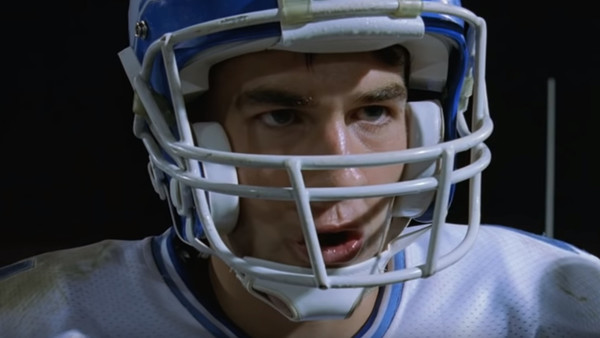
It's no secret that musicians can command high prices to license their most iconic pop licks in movies, but even so, the $500,000 that 1999 sports drama Varsity Blues paid to use AC/DC's classic rock tune "Thunderstruck" is absolutely absurd.
The anthem is featured during one of the film's glossy American football sequences, which lasts around two minutes, and when the movie’s music supervisor Thomas Golubic heard how much the band was asking, he claimed he was "horrified."
But the production had enough money left in the kitty to pay the band their fee rather than seek out alternatives, which is all the more amusing given that the film's total production budget was just $16 million.
Given that any generic rock song would've fit the scene just fine, and the sequence is really only remembered due to the hilarious Not Another Teen Movie parody of it, it's hard to view it as money well spent.
But at the same time, the film came in under-budget and was a solid commercial success, so it's on the lower-end of silly Hollywood spending.
4. Swordfish Flew A Bus Over Los Angeles For Real ($15 Million)
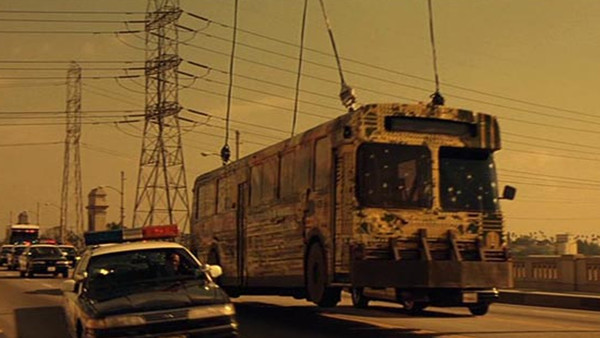
In the entertainingly dumb 2001 thriller Swordfish, the third act sees the hacker villains take their bus full of hostages, hoist it into the sky with the help of a helicopter, swing it through the Los Angeles sky and then dump it on top of a skyscraper for safe keeping.
Warner Bros. incredibly agreed to pay $15 million for the three-and-a-half-minute sequence, a significant chunk of which was achieved practically.
Director Dominic Sena had an actual bus physically hoisted through the L.A. streets, while interior shots of the bus and hostages, as well as the marquee shot of the bus being dumped on the roof, were shot with green screen and set extensions respectively.
And while that commitment to practicality is impressive, it's not really reflected in the final scene itself, because the scene is so full of ugly digital effects in-between the practical shots that most of the audience will likely assuming it was all achieved with CGI.
The film's jaundiced aesthetic makes everything look artificial, so spending almost 15% of the $102 million budget on a scene few audiences would truly appreciate was clearly a huge mistake.
It's a rare case where doing most of the heavy lifting in post would've been the smarter decision, especially as the film was ultimately a box office bust.
3. Sahara's Deleted Plane Crash Sequence ($2 Million)

Don't feel bad if you don't remember Breck Eisner's $160 million 2005 dud Sahara, an epic action-adventure caper that, despite starring Matthew McConaughey and Penelope Cruz, came and went without a trace upon release, grossing just $119.3 million worldwide.
The film's bloated budget is the stuff of Hollywood legend, with the production paying out $237,386 in bribes and "gratuities" to the Moroccan locals, while a committee of 10 screenwriters were paid a total of $3.8 million, and most hilariously of all, $2 million was spent filming a plane crash sequence which was ultimately cut from the film.
Eisner later said of the scene, "In the context of the movie, it didn’t work," and while $2 million out of $160 million might ultimately seem like a drop in the ocean, it speaks to the general fiscal irresponsibility of everyone in a position of authority on the movie.
2. Justice League's Terrible Reshoots ($25 Million)

Sahara's over-spending is pure child's play, however, compared to the most infamously troubled blockbuster of recent times: Justice League.
With Warner Bros. panicking following the acidic response to both Batman v Superman and Suicide Squad, they ordered reshoots to re-shape Justice League's tone as more optimistic, resulting in two months of stretched-out reshoots with Joss Whedon drafted in to replace an indisposed Zack Snyder.
Reshoots on even gigantic movies rarely exceed $10 million, but in this case they swelled to an unthinkable $25 million for numerous reasons.
The primary factors were the actors' busy schedules which prolonged the reshoots, and the infamous Henry Cavill mustache debacle, which saw his lip-bush (badly) removed in post-production at the extra cost of several million dollars.
The film's final production budget was estimated to be around $300 million, and so its $657.9 million worldwide box office cume was deemed a gigantic disappointment by WB brass.
The irony, of course, is that the PR negativity surrounding Whedon's bland final result and Cavill's uncanny CGI face likely turned many audiences away.
Had WB stuck the course with Snyder's bolder, probably messier cut and just given us a Superman with some damn facial hair, they would've saved $25 million and probably made more money, too.
1. The Blues Brothers' Cocaine Budget & Private Bar

Though John Landis' 1980 classic musical comedy The Blues Brothers was a considerable commercial success, grossing $115.2 million against a $30 million price tag, that was despite extremely questionable spending during the film's production.
Landis and Universal came to blows early as he hired the legendary likes of James Brown, Ray Charles and Aretha Franklin to perform in the film at great cost, and even after shooting started, a budget still hadn't been finalised.
Scheduling, meanwhile, went totally off the rails and location wrap dates were missed by several weeks.
The original $17.5 million budget continually expanded during production and almost doubled by the time shooting wrapped, unaided by the literal allocation of a cocaine budget for the film's exhausting night shoots.
Though star John Belushi was a noted cocaine addict - and sadly died of a drug overdose less than two years after the film was released - according to Dan Aykroyd most of the cast and crew were dabbing the white stuff simply in order to stay awake.
Given that Universal couldn't be seen to be literally funding drug use, the film's books will never reflect how much was actually spent on coke, but it was clearly a lot.
Worse still, the production had a private bar built on-set for the cast and crew at considerable expense, which they stocked with bar staff who also doubled as drug dealers.
That the production wasn't shut down is a pure miracle, and that the final film is genuinely great even more so.