10 Movies That Seriously Don't Deserve Their Critical Acclaim

Sometimes the critics get a little too excited for their own good.
For the most part, movie critics tend to be on the money when it comes to judging great movies - visit Rotten Tomatoes and take a look at the top films of any given year and it's hard to find any real stinkers thrown into the mix. But sometimes critics can't see the wood for the trees and end up singing the praise of movies that really don't deserve their accolades. There are certain kinds of films which are more prone than others to this dynamic, with historical dramas and biopics among the main offenders, as if the critic feels that denigrating the movie is somehow disrespecting the subject matter at the film's core. At other times it's as if the arrival of a half-decent movie in the midst of a sea of mindless and predictable Hollywood fodder clouds their judgement - thankful that finally something worth watching has come along, they overrate the film's effectiveness and significance for lack of something genuinely impressive to write about. In their eagerness to discuss the next best thing on release - particularly when said movie is overhyped - their ability to judge a film's real worth often becomes impaired. And that, inevitably leads to avalanches of praise for films that seriously aren't worth being considered among the greatest ever...

10. Titanic

It's hard to imagine that, before Titanic was released, a number of prominent Hollywood insiders were certain that James Cameron's epic would be a huge flop. Of course, Titanic was a huge box office smash, leading critics to gush over the "tender love story" and describe the film as "profoundly human in its sources and longings." The truth, which few reviewers at the time seemed willing to acknowledge, is that there was nothing profound about the tacked on love story - centred around the hackneyed, overdone concept of love transcending social barriers - while secondary characters were reduced to crude, cartoonish stereotypes. On top of that, a few eagle-eyed film buffs realised that many of the scenes in Titanic looked awfully familiar, and upon comparison with other classic Titanic-related movies such as A Night To Remember noted that they appeared to be nearly shot for shot reworkings, adding a whiff of plagiarism to an already questionably cliched movie...

9. The Imitation Game

Critics lauded this "prestige biopic" the moment it came out, describing it as a "thoughtful and bewildering" drama in which "nearly every moment is infused with importance." Unfortunately, the truth is that The Imitation Game's handling of Turing's homosexuality was woefully underdeveloped - given how central this is supposed to be to his story - so the emotional thrust of the film's subtext is almost entirely lacking. There's something ironic about a movie that deals with the once-taboo subject matter of homosexuality itself failing to be remotely transgressive or challenging. Perhaps worse still, Cumberbatch's portrait of a bumbling, socially inept individual simply doesn't reflect the Turing many knew in real life. If you're going to praise a movie for its accuracy - as many critics did - at least make sure it actually gets things right in the first place.

8. Amadeus

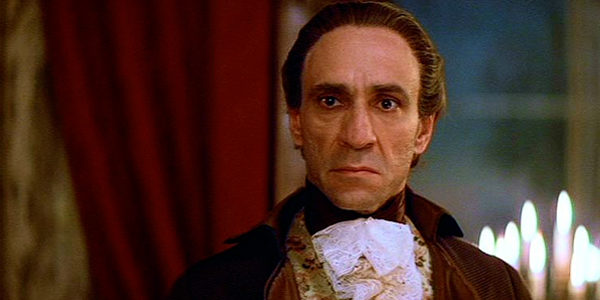
Biopics of musicians are among the most popular of the genre. That which has earned perhaps more praise than all the others put together remains Milos Forman's 1984 film about Wolfgang Amadeus Mozart, Amadeus, a sprawling film which uses aging composer Salieri (F Murray Abraham) as a framing device to reflect on Mozart's life. Forman's sheer craftsmanship is to be admired, but few critics pointed out the film's glaring problem - Tom Hulce. Getting an American to play a Vienesse composer was hardly surprising, but how critics watched Amadeus without contemplating how completely inappropriate his acting was is something else. Hulce's portrayal of Mozart as little more than a clown in a performance laid bare Milos Foreman's real intentions - to create a glossy piece of light-weight entertainment. It certainly succeeds on this level, but the suggestion that it offers real insight into the nature of genius sits at odds with Hulce's absurdist antics.

7. Edge Of Tomorrow

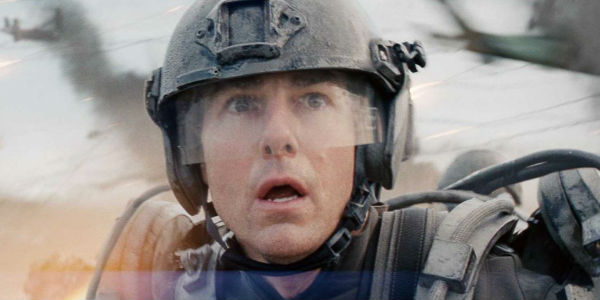
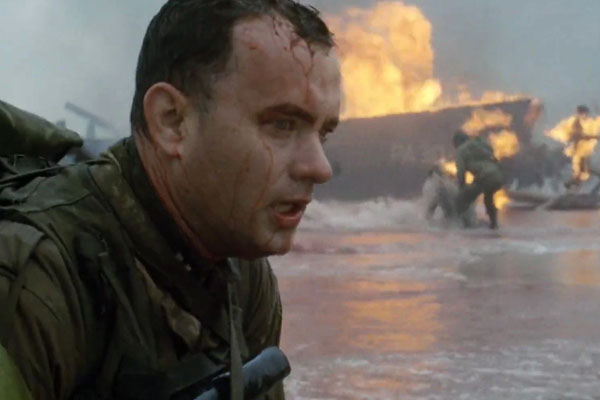
While Edge Of Tomorrow certainly wasn't a bad film, more than a few critics overloaded their reviews with hyperbole and exaggeration. "The smartest blockbuster of the season," said one reviewer, while others joined in the chorus describing Edge of Tomorrow as "intellectual" and "an exhilarating mix of Verhoeven-esque sci-fi subversion". The premise, in which Tom Cruise relives the same day over and over until he figures out a way to defeat the alien invaders, might be a cool riff on Groundhog Day, but it hardly stretched science fiction to its limits. There's very little else in Edge Of Tomorrow audiences haven't seen a thousand times before, and while Doug Liman's direction is exciting, the beach landing(s) are almost carbon copies of Spielberg's Saving Private Ryan. Edge Of Tomorrow is entertaining, but a "model of cinematic craftsmanship" it sure isn't. Throw in a plot which develops more and more holes as it progresses and a by-the-numbers performance from Tom Cruise and the result is more familiar than refreshing.

6. The King's Speech

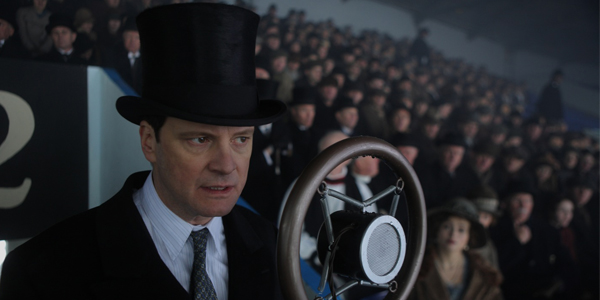
If you want to make sure the critics lap up the latest ode to the monarchy and ensure the sympathy of audiences, playing on the central royal's speech impediment is as good a tactic as any - and it worked. Critic after critic described The King's Speech as "inspiring", "intimate", "uplifting" and other assorted platitudes, while few took the time to question the authenticity of the events depicted. The King's Speech tells the story of King George VI's (Colin Firth) battle to overcome a speech impediment with the help of a therapist (Geoffrey Rush). As fine as this personal story is, the political backdrop concerning the rise of fascism completely avoids the elephant in the room: Edward VIII (Guy Pearce) - presented as little more than a bit of a fool he was in fact an ardent admirer of Hitler and fascism, a central point which, had it been included would have added considerable weight to the movie. The most often-cited scene in The King's Speech comes when George's therapist encourages him to swear profusely, which some would say controversially led to the film being granted an R rating. A far braver - and more challenging - move would have been to openly discuss the British establishment's dalliance with fascism.

5. Saving Private Ryan

The brief summary for Saving Private Ryan on Rotten Tomatoes describes Steven Spielberg's mammoth war epic as "unflinchingly realistic". Presumably this doesn't include the fact that the entire premise of the movie - that a band of soldiers would be sent to relieve one man of his duty after his other brothers died in combat - is on the face of it utterly absurd. It's the kind of sentimentality that Spielberg indulges in on a regular basis, although for the most part this isn't as out of place as it is here. In Saving Private Ryan it comes across as a crude device to give the film mass appeal: Spielberg needs his idealistic heroes - however at odds with the faceless nature of war this may be (something Malick understood far better with his World War 2 movie The Thin Red Line) - and for the most part the American GIs are as one-dimensionally good as the Germans are bad. Saving Private Ryan isn't completely lacking in nuance and the critics were right when they marveled at the technical achievements on display, but to label this as one of the greatest war movies is something of a stretch - it's a great action film, but movies like Come And See, Ivan's Childhood and Apocalyse Now are just a few of the many superior war movies out there.

4. Selma

As with The King's Speech, Selma stands as another prestige biopic which was lauded with words like "inspirational", "outstanding", "impressive" and "unforgettable". After watching the film you'd be forgiven for thinking the "un" at the beginning of that final word of praise was a typo. The performances in Selma are certainly up to scratch, with David Oyelowo getting the voice and mannerisms of Martin Luther King Jnr as accurate as possible. But few critics were willing to point out that Ava DuVernay's direction was for the most part flat and uninspiring, with few scenes managing to give the film a personality of its own. It's a familiar problem when making a film about larger than life historical figures - they tend to become caricatures of their public persona rather than complex beings with human traits. Perhaps it was the sombre nature of the subject matter which led critics to overlook the lumbering narrative and lacklustre imagery, but a subject as serious as the Civil Rights Movement deserves a film with considerably greater emotional heft than the one Selma provides.

3. The Departed

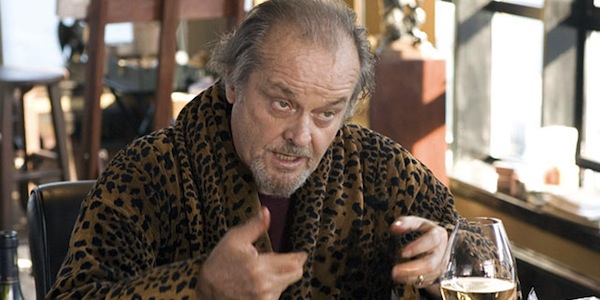
A common response to The Departed's Best Film win at the Academy Awards was to note how many superior films Martin Scorsese has made that were far more deserving of an Oscar. As enjoyable as the film is, it doesn't hold a candle to Scorsese's greatest achievements. Nor, indeed, does it live up to the same standards as the film on which it is based. The Hong Kong thriller Infernal Affairs is an altogether leaner movie which packs a bigger and better punch, whereas The Departed throws in convoluted plot elements which make it more bloated than necessary. Neither Matt Damon nor Leonardo DiCaprio are at their finest, while Jack Nicholson steals his scenes - but not in a good way, as if Scorsese was afraid to reign in his antics. Critical comparisons with Michael Mann's excellent heat seemed to sum up the knee-jerk reaction that The Departed must be some kind of masterpiece - a more honest appraisal is that it's a well acted, well directed crime thriller which doesn't go anywhere countless other films have gone before and is a middling work in Scorsese's filmography.

2. Lincoln

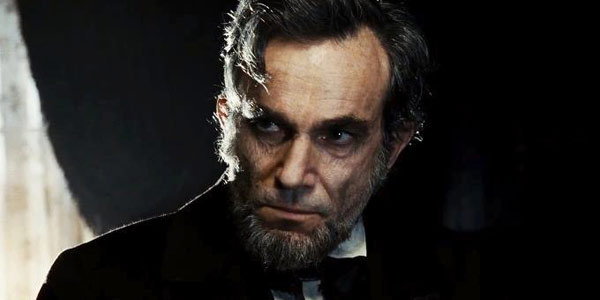
Like Martin Scorsese, Steven Spielberg often gets a free pass to direct an average-at-best movie and have it praised left, right and centre by the critics. The most egregious example of this in Spielberg's case is Lincoln, his long-winded biopic of America's favourite president. A number of critics probably didn't need to actually watch Lincoln to judge it the best film of the year - a biopic directed by Spielberg and starring the great Daniel Day Lewis in an iconic role was bound to be truly amazing. Right? In truth, Spielberg somehow managed to make one of the most fascinating periods in American history a sleep-inducing slog from one exposition-heavy scene to another. Like Selma, there's a sense that critics don't want to lambast the film out of fear of being seen to lack respect for the historical events being (often inaccurately) depicted. But in depicting Lincoln with near-total reverence Spielberg strips away his humanity and replaces it with a history book icon - and we all know how tedious they can be.

1. Zero Dark Thirty

After winning an Academy Award for Best Picture for her unofficial US military recruitment video The Hurt Locker, director Katheryn Bigelow's follow up film Zero Dark Thirty took a stab at depicting on film the lead up to the assassination of Osama Bin Laden, complete with endlessly annoying shaky cam and a thick topping of propaganda. If critics should have been taken to task for overlooking the pro-war sentiments at the heart of The Hurt Locker, with Zero Dark Thirty it was the film's portrayal of torture as an effective method to gain information which should have raised eyebrows. Bigelow's movie not only implies that torture does work, but that it was instrumental in leading to the capture of Osama bin Laden. Indeed, there was a considerable amount of controversy when it emerged that Bigelow had worked closely with agents from the CIA to create this impression, even as a report from the Senate Intelligence Committee found that "coercive techniques" did not lead to actionable intelligence. It's easy to dismiss this with "it's only a movie", but when that movie serves as propaganda for a deliberate deception critics should be ready to hold filmmakers to account. Just as American Sniper was lambasted for attempting to justify the killing of women and children, Zero Dark Thirty's shortcomings should have been pointed out - it was a far cry from a "compelling historical document worthy of praise." Do you agree that the movies on this list didn't deserve their critical acclaim? Let us know in the comments.

Contributor
Contributor

Andrew Dilks hasn't written a bio just yet, but if they had... it would appear here.