10 Movies That Dedicated Incredible Sequences To Their Actors
John Travolta gets the coolest comeback ever.

There are great scenes, and then there are great scenes.
Sometimes iconic movie moments emerge from great storytelling or incredible action, and sometimes filmmakers go the extra mile to provide their actors with a platform to showcase their skills.
These 10 movies all carved out scenes devoted to actors strutting their stuff, be it in the form of singing, dancing, putting themselves in harm's way or, you know, maybe actually just acting.
But in each case, the director went above and beyond to ensure the performer was given centre-stage to do their thing, and audiences were left stunned and maybe even charmed as a result.
Most actors would kill to have grandstanding scenes like this: they're the moments where careers are made and even saved, and occasionally where Oscars are won. They're enough to make you remember why you loved an actor so much in the first place.
And above all else, none of these films would quite be the same without these unforgettable moments...
10. Inglorious Basterds - Christoph Waltz

Quentin Tarantino is an absolute master of giving his actors a stage to showcase their very specific talents, and it proved all the more effective in Inglourious Basterds as English-language audiences hadn't yet become acquainted with the brilliant Christoph Waltz.
The movie's nerve-shredding opening sequence, in which SS Colonel Hans Landa (Waltz) interrogates a French dairy farmer (Denis Ménochet) about the whereabouts of Jewish woman Shosanna Dreyfus (Mélanie Laurent) and her family, is effectively built around Waltz's mastery of language.
Despite being a German actor playing a German character, Waltz spends the first 5 minutes of the scene speaking in French, and after exhausting his conversational français, opts to switch to English for the remainder of the agonisingly prolonged sequence.
Ironically, Waltz is actually fluent in French in real life, in addition to obviously speaking German and English.
This scene alone pretty much earned Waltz his much-deserved Best Supporting Actor Oscar, and because speaking three languages isn't impressive enough, the actor even speaks some totally convincing Italian later in the movie despite not being fluent in the language.
It's fair to say that Waltz's multi-lingual abilities are put on display throughout the film, but no more impressively than in that stomach-knotting first scene.
9. The Lord Of The Rings: Return Of The King - Billy Boyd
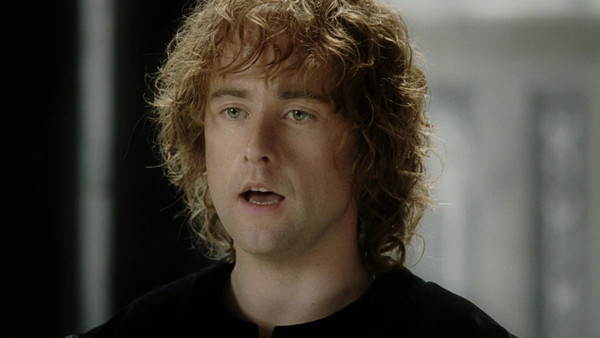
For the most part, Peter Jackson's Lord of the Rings trilogy stripped away the songs present in J.R.R. Tolkien's legendary source material, but Jackson made one major - and very, very wise - exception after the film's crew hit the town and ended up at a karaoke bar.
Billy Boyd, who plays kindly Hobbit Pippin in the franchise, opted to belt out a spirited rendition of Tom Jones' hit "Delilah" at the bar, causing producers Fran Walsh and Philippa Boyens to agree to let Boyd sing in the actual movie.
Boyd had two days to write the tune, combining elements of Tokien's song "A Walking Song" from The Fellowship of the Ring with his own work, to create "The Edge of Night", a haunting tune which Pippin sings to Denethor (John Noble) in Return of the King.
The spectacular results speak for themselves, and had Boyd not shown off his chops in that karaoke bar, this scene presumably wouldn't exist.
8. Mission: Impossible - Fallout - Tom Cruise

Over the course of the last three Mission: Impossible movies, it's fair to say that the spy tentpole franchise has effectively evolved to become a stunt showcase built around Tom Cruise's willingness to put himself in harm's way.
The fourth film, Ghost Protocol, tethered him to the side of the Burj Khalifa for our sweaty-palmed entertainment, while the sequel Rogue Nation had him cling to the side of a plane and spend an impossible amount of time breathing underwater, before the latest instalment decisively one-upped all of this.
Mission: Impossible - Fallout concludes with a breathtaking sequence in which Ethan Hunt (Cruise) hijacks a chopper in order to chase villain August Walker (Henry Cavill) through the skies, and in a virtually unprecedented feat of an actor taking the stunt-work into their own hands, Cruise did the overwhelming majority of it himself.
Cruise not only climbed a rope to reach the helicopter himself - with tethering, of course - but actually spent three months logging 2,000 hours of helicopter training in order to pilot the vehicle without a double or a green screen.
Director Christopher McQuarrie and stunt co-ordinator Wade Eastwood conceived the sequence with Cruise's unique penchant for death-defying behaviour in mind, and the result is one of the most impressive feats of practical stunt work in blockbuster history.
That's without even getting into the fact that Cruise also trained for over a year for the movie's riveting HALO jump sequence, which he performed a staggering 106 times in order to secure the perfect take.
7. Full Metal Jacket - R. Lee Ermey

R. Lee Ermey was originally hired to work on Stanley Kubrick's classic war movie as a technical adviser for the role of Gunnery Sergeant Hartman, initially intended to be played by actor Tim Colceri.
But Ermey ended up playing Hartman himself after lobbying for the role and demonstrating to a sceptical Kubrick that he had the intimidating qualities necessary for the role.
Ermey, a former U.S. Marine Drill Instructor, chewed out a group of Royal Marines auditioning for the movie with an improvised tirade, proving beyond any doubt to Kubrick that he was right for the part.
Ermey was hired, while Colceri received the smaller role of the outspoken helicopter door gunner.
Following Ermey winning the role, it was re-written and expanded to accommodate the actor's specific talents - that is, spitting acid-tongued put-downs better than anyone - incorporating a 250-page transcript of Hartman's insults while also allowing Ermey to improvise roughly 50% of his dialogue.
Full Metal Jacket's lengthy boot camp sequence is one of cinema's all-time greats, and it's almost entirely because of Ermey.
It's safe to say that without the actor having such a spellbinding effect on Kubrick, the scene wouldn't have turned out as iconic or as riveting as it ultimately did.
6. Magic Mike - Channing Tatum
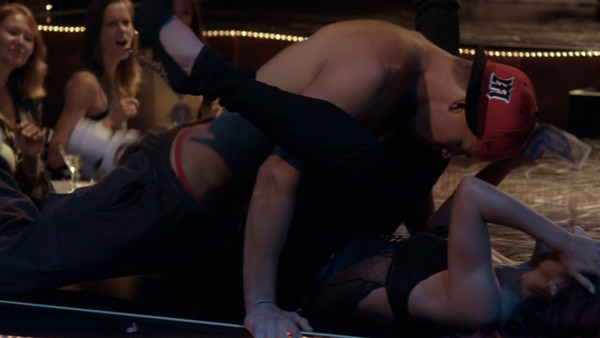
Steven Soderbergh's unexpectedly enthralling Magic Mike turned out to be far more than the vapid stripper drama many were expecting, and though the film is packed with entertaining performances, the film's existence largely came about thanks to Channing Tatum's first career prior to acting.
In the early 2000s, a young Tatum spent eight months in Florida working as a stripper under the name "Chan Crawford", with his experiences serving as the inspiration for Reid Carolin's script.
And so, of course, Tatum was the only choice to play the title role, and given his real-life aptitude for putting on a strip show, he got the chance to show off his absurd athleticism during several stripping sequences throughout the film.
Unquestionably the most iconic scene sees Tatum stripping to Ginuwine's hit track "Pony" while kitted out in a white tank top and red baseball cap, which was recalled in the film's own sequel.
And if that's not enough, Tatum's wife (at the time) Jenna Dewan even performed her own lap dance version of the sequence on her hubby on an episode of Lip Sync Battle.
It's easy to imagine how Magic Mike would've been a different and decidedly less convincing movie without Tatum's presence. If nothing else, those stripping sequences wouldn't boast quite the level of physicality and persuasiveness that they do.
5. Death Proof - Zoë Bell

Quentin Tarantino's Death Proof may generally be accepted to be the worst of his movies, but it features an undeniably spectacular sequence in its finale, and one primarily intended to foreground stuntwoman-turned-actress Zoë Bell, who has appeared in all of the director's films since Kill Bill (where she was Uma Thurman's stunt double).
Bell actually plays herself in Death Proof, and executes an incredible prolonged stunt during the film's climactic car chase, hanging off the hood of a car with only two belts for safety, in a game her "character" calls Ship's Mast.
Once the murderous Stuntman Mike (Kurt Russell) shows up and starts ramming the car, however, Bell loses her grip on the belts and is forced to cling to the vehicle with all her might as it hurtles along at high-speed.
It's a stunning set-piece achieved entirely practically by Bell, and clearly a sequence Tarantino conceptualised after appreciating Bell's hard work on the Kill Bill movies.
4. The Great Escape - Steve McQueen
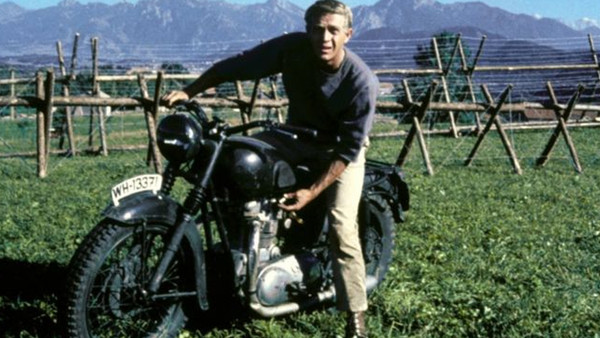
The Great Escape is a classic war movie packed with iconic and unforgettable moments, but surely none more so than the incredible motorcycle chase sequence, in which Captain Hilts (Steve McQueen) commanders said vehicle and makes a daring attempt to escape the Nazis...before inevitably being recaptured.
The set-piece only exists because of McQueen, who was a motorcycle enthusiast and insisted that his character get to ride one during the movie.
Furthermore, McQueen's aptitude at riding motorcycles allowed him to perform much of the chase himself, even doubling as a German guard at one point because, as legend tells it, only Steve McQueen was capable of keeping up with Steve McQueen.
The unforgettable barbed wire jump was admittedly performed by a stuntman for insurance reasons, but a huge portion of the chase was nevertheless carried out by the actor himself at his own insistence.
McQueen had a reputation throughout his career for insisting upon vehicular chases that placed him in the middle of the action.
In Bullitt he also performed much of his own stunt driving, ensuring to sit as close to the car window as possible (without a seatbelt, no less), to ensure audiences could see it was actually him driving.
3. Blade Runner - Daryl Hannah

Daryl Hannah's audition for the role of replicant Pris in Blade Runner impressed Ridley Scott so much that he totally re-conceived her climactic fight with protagonist Deckard (Harrison Ford) as a result.
The scene originally took place in a gym, and saw Pris and Deckard attacking each other with weights, but Hannah, who has been a skilled gymnast since childhood, asked Scott if she could incorporate her gymnastics into the fight.
Hannah then demonstrated her gymnastic abilities to the director, and after repeating it during an elaborate three-day audition, she won the part.
This aspect of the character helped differentiate Hannah from the other actresses trying out for the role, and Scott subsequently re-tooled the scene to cater to her athleticism.
The resulting scene is both terrifically tense and extremely unsettling, watching Pris attack Deckard and then finally expire after he shoots her in the back mid-flip. That's all down to Hannah and what she brought to the table.
2. Pulp Fiction - John Travolta

And for our final Quentin Tarantino entry, we have Pulp Fiction, which built one of its most famous sequences around star John Travolta.
The scene in which Vincent Vega (Travolta) and Mia Wallace (Uma Thurman) head to the 50s-style diner named Jack Rabbit Slims is ultimately a reflection of Travolta's career highs and lows, before serving him up the ultimate comeback.
Between the restaurant's 50s throwback style and Mia Wallace making a reference to catching "cooties", the parallels to Travolta's own 50s-set Grease are undeniable.
As a result, the diner feels like a summation of Travolta's biggest career success, even as he's struggled to move past it in the decades since - hence that "wax museum with a pulse" line as Vincent observes all the legendary Hollywood icons scattered around the restaurant.
There are also many references to Travolta's other early successes scattered throughout the scene.
For starters, Mia's character on "Fox Force Five" telling a joke at the end of every episode is a clear nod to the Travolta-starring hit TV show Welcome Back, Kotter, where Travolta's character would tell an old-timey joke in each episode. And Mia referring to Vincent as a "cowboy", is similarly tipping the hat to him playing the lead role in the hit 1980 movie Urban Cowboy.
This is all topped off by the climactic dance sequence, where Vincent and Mia strut their stuff and get a trophy for their efforts.
This is clearly a callback to Travolta commanding the dance floor in Saturday Night Fever, and the nostalgia-fuelled dance-off almost single-handedly helped revive the actor's flagging mid-90s career.
Presenting audiences with all this wistful pining for the actor's glory days before literally handing him the opportunity to charm his way back into fans' hearts was a masterstroke on Tarantino's part.
Given that the set cost a staggering $150,000 to build - by far the most expensive for the film - clearly it meant a lot to the director.
1. Hairspray - Michelle Pfeiffer
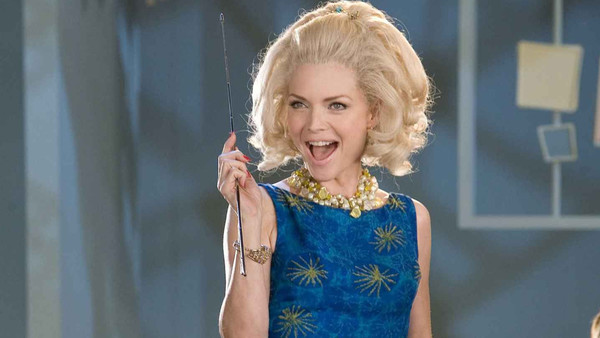
Because John Travolta isn't the only actor who got the chance to wow audiences with their dance skills, Michelle Pfeiffer was also afforded the opportunity in the surprisingly great 2007 Hairspray remake.
Pfeiffer plays the villainous Velma Von Tussle in the musical, with her performance being most fondly remembered for the outstanding "(The Legend of) Miss Baltimore Crabs" song-and-dance number.
The sequence has Pfeiffer sing, dance and twirl a baton all at the same time, and was designed by director Adam Shankman to show off Pfeiffer's show-stopping potential that he felt she hadn't demonstrated before.
Many other actors were also cast in the film primarily to play against type and show off their little-known singing and dancing talents - including Christopher Walken - but it's ultimately Pfeiffer who just barely managed to steal the show away from a fatsuit-wearing John Travolta (who played the protagonist's mother, Edna).
After spending several years on Hollywood's sidelines, Pfeiffer's career received a firm revival off the back of her work here, reminding everyone that, of course, she's still got it.