10 Movies That Altered Your Perception of Horrible People

It's simple - movies need villains. That's how it's been since the very beginnings of the medium. Film has your attention only for a couple of hours or so; in that time, characters are drawn with pretty broad strokes in the majority of stories. So it's rare for a film to convey a deeper insight into its horrible characters. Screen villainy lets us see the worst in people, but it's not often we get a change in perspective of on-screen baddies. As an audience, we're usually expected to judge the wicked solely by their actions. Instead, what follows is a list of films where characters are unmistakably horrid in their own ways, but within their story, there's the glimmer of something deeper - a moment of insight that casts a little more light on them. If a film manages to change your perspective of a horrible character, it's a fairly uncommon accomplishment. Often, it's the combination of skilful direction, carefully considered performance and precise writing. Here's my list of favourite villainous epiphanies - as usual, I've applied a couple of rules: No superhero films (whose story arcs are increasingly reliant on complicated villains), and no Orson Welles flicks (that would be too easy).

10. As Good As It Gets
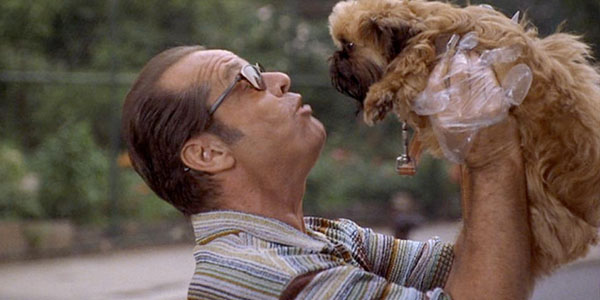
Afflicted with Obsessive-Compulsive Disorder issues, bigoted writer Melvin Udall (Jack Nicholson) gets thrown in a spin when he gets lumbered with his gay neighbour's dog, also to find out his favourite waitress, Carol, is leaving her job. Udall has to have breakfast a certain way, every day - her departure means it's impossible for him to have his morning meal. The movie follows the usual blueprint for a romantic comedy, right down to the unlikely, mis-matched leads. There's even a road trip along the way. In less capable hands, this would be standard TV movie fare. What elevates proceedings is how the script works against the conventions for ironic payoff (in one scene, Melvin pays for a specialist to check the health of Carol's young boy; what seems a redemptive act of compassion on the part of Melvin turns out to simply be a means to an end, so that Carol gets back to work cooking his breakfast every morning). We shouldn't care about Udall's plight at all. He's a successful writer in spite of his afflictions, and although he's ended up painting himself into a corner, that corner happens to be on a pretty exclusive side of Manhattan. In the opening scenes, we get to see first-hand just how selfish and mean-spirited Melvin is, leaving little room for positive personality traits. It's testament to director/co-screenwriter James L. Brooks (most famous as producer on The Simpsons) and his ability to weave an engaging story from so little, let alone have us feel something close to compassion for Udall. Even if we fail to feel sorry for him by the end of the film, we've at least had enough insight to see how imprisoned Udall has become, thanks to his OCD tendencies.

9. A Room For Romeo Brass

A Room For Romeo Brass was an early film for director Shane Meadows. It's a great, mostly overlooked British drama, perhaps most notable for introducing Paddy Considine (here, he's mesmerising in his first screen role as Morell). Like all of Meadows' output, Romeo Brass has an authentic, docu-realist style, following a tentative friendship between two boys living on the same housing estate in Nottinghamshire. Considine plays a local misfit who gets inadvertently befriended by the two boys. He's much older than them, but there's a naive innocence about him. On the surface, he's curiously oafish and idiotic, but over time we get to see a more malevolent, sinister undercurrent to his behaviour. An attempt to woo Romeo's elder sister goes badly for Morell, who begins to turn on the boys... As an examination of male posturing and peer pressure, the film scores highly. Morell's bullying is made all the more creepy by how it does it - quietly, up close, so nobody else can hear - reeking of menace, he's fuelled by a self-loathing reminiscent of De Niro in Taxi Driver or Raging Bull. We're given insight into the bored, empty life of a marginal man, crushed by his own inadequacies. Sometimes, people are alone for a reason - Morell illustrates the potential cost of letting a misfit into your world.

8. Star Wars: The Phantom Menace
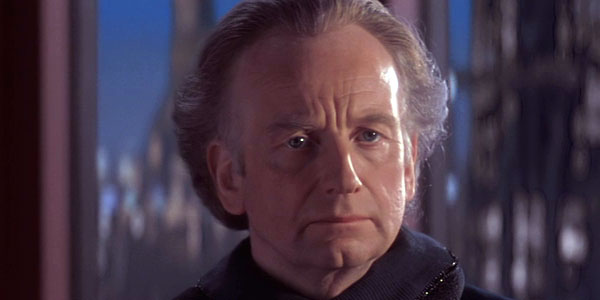
Almost always, a genre picture will be ruined by too much exposition when it comes to the bad guys. Sometimes, you really need the villain to be two-dimensional. The less we know, the more that character remains in shadow. A good example of this can be found in No Country For Old Men, where a hired killer moves like a spirit through the film; there's so little to hang on that character, he begins to take on almost supernatural properties. Not so with Star Wars - at least, not now, thanks to those pesky prequels made years after the original trilogy. The ruler of the Galactic Empire was Emperor Palpatine, who didn't even appear properly until the third film, where he looked eerie and shrivelled, hidden under a heavy black cloak and hood. With lightning bursting from his fingertips, he was formidable. Now George Lucas has given us the prequel movies, we get to see how it all started. In The Phantom Menace, Palpatine is introduced as nothing more than a civil servant, a bureaucratic bean-counter who'd toadied his way up the Imperial career ladder. It's rather like finding out Sauron from Lord of the Rings used to muck out the stables at Rivendell. Palpatine's previously grim countenance is gone - now, he looks like someone who runs a fishing tackle shop. These humble beginnings serve only to diminish and dilute the mysteries that make some villains so effective in the first place. The rule for space opera Sci Fi must surely be 'keep it simple'.

7. Pulp Fiction

Quentin Tarantino never fails to deliver interesting characters. His carefully constructed narratives allow for texture and richness to creep in, colouring his cast with insightful details. In many ways, his characters become more interesting when on the wrong side of the law. Much is written of Tarantino's crackling dialogue, but the devil really is in the details - take Vincent Vega (John Travolta) in Pulp Fiction: there's lots of glimpses into his world-view, thanks to his rambling details concerning European burgers, foot massages or prestige milkshakes - but we also get to see his private heroin ritual, his food preferences ('Bacon tastes gooood. Pork chops taste gooood'), even what he reads on the toilet (it's Modesty Blaise if you really have to know). Other players demonstrate hidden depths.Thanks to a clever dream sequence, Butch (Bruce Willis) reveals a subconscious, pathological need to put himself into harms way. Vincent's partner-in-crime, Jules, has a life-changing moment of clarity. Mia Wallace (Uma Thurman) confesses her earlier life as a failed actress in an uncommissioned TV show, as well as a gossipy, childlike sense of mischief. Behind the scenes, Mia's husband lurks like a faceless shadow; he's a vicious kingpin with a reach that touches every character, but a scene exposing Marcellus in the most vulnerable terms singles him out as pick of the bunch for the purposes of this list. Seen briefly from behind, Marcellus has his trousers around his ankles; he's tied up and has been subjected to a brutal rape by a pair of rednecks. Butch is the unlikely rescuer, having previously ripped off Marcellus, then attempted to kill him. But as we learned, Butch is a because-of-the-principles kind of guy. He's not going to leave Marcellus like that. A brief, glorious and bloody act of vengeance follows. One of the rednecks is still alive - but he won't be for long. Butch wants to leave Marcellus to it, but there's some unfinished business between them. Thankfully, hubris gets the better of Marcellus. He's going to let Butch go, with a couple of conditions. 'Don't tell nobody about this,' demands the humiliated Marcellus. 'This shit is between me, you, and Mr. Soon-To-Be-Living-The-Rest-Of-His-Shortass-Life-In-Agonizing-Pain Rapist here. It ain't nobody else's business.' 'Deal,' says Butch. And who wouldn't?

6. Goodfellas

Exploring the highs and lows of New York's Italian Mafioso, Martin Scorsese's film is a blistering adaptation of the book Wiseguy by Nicholas Pileggi, itself an account of real-life blue-collar hoodlums in New York during the 60s and 70s. Ray Liotta plays Henry Hill, a local kid destined for big things with the neighbourhood toughs. Working his way up from petty crime to major burglary, Hill is taken under the wing of two mentors: the slick Jimmy Conway (Robert De Niro), and the thuggish, explosive Tommy DeVito. This murderous duo eventually have Henry complicit in the murder and disposal of a fellow crime figure - an act punishable by death inside the rules of the Mob. Eventually, Henry is forced to do a stretch after getting caught and sent to prison. Inside, he forms a drug dealing connection - one he will maintain upon release, flying in the face of the rules that specifically prohibit the trafficking of drugs within their clan (mob bosses, we are told, get hard time for handling the goods). Ultimately, Henry's interests fly in the face of Mob concerns and when Jimmy starts killing off his own men (a lucrative heist turns him paranoid), the net begins to tighten around the criminals. Henry gets horribly addicted to the product he's shifting. His private life implodes as the FBI hover overhead in helicopters. Loyalties shift as Henry turns informant, setting out to expose his former lackeys. Goodfellas serves to prove a truism in the old adage that there's no honour amongst thieves. The shifting nature of Henry's relationship with Jimmy and Tommy sees those who were once allies become like sharks, circling in before the kill. The conniving, conspiratorial behaviour on display perfectly captures the isolating experience of the moment when you realise your friend is actually your enemy.

5. One Flew Over The Cuckoo's Nest

Milos Forman's seminal movie cemented Jack Nicholson's reputation for playing edgy, electric characters. In the six years that span 1969 to 1975 (the year of this film's release), Nicholson had starred in Easy Rider, Five Easy Pieces, The Last Detail and Chinatown. Taken as a whole, all five performances probably encapsulate everything about thats great about Jack; all those nuances and affectations that made him so unique. But it's here that Jack does perhaps his finest work. He's playing McMurphy, a serial offender with assault convictions who seems destined for a life behind bars. In an attempt to get out of prison work, McMurphy feigns madness - only for the plan to backfire, sending him into the care of a high security mental institution. Once incarcerated, McMurphy witnesses (and is subject to) the hardline rules set out by Nurse Ratched, a woman who skillfully manipulates the shortcomings of the patients, cementing her authority on the ward. Forman's patient eye catches Nicholson's naturalistic performance with such clarity. McMurphy continually runs against Ratched's regime; they are each polar opposite of the other, so what plays out is a war of wills between the chaotic, leftfield inmate and the strict, to-the-letter superior. It's pretty obvious that things aren't going to go well. However you take what follows, there's no denying McMurphy is an arrogant, life-loving joker. The humourless Ratched becomes a truly horrible person in the face of this.Yet - in spite of her unforgivable actions - we get a creepy insight into the narrow-minded application of order, thanks to Louise Fletcher's excellent performance. Her world is challenged by the very existence of McMurphy within it; what makes events so chilling is just how far she's prepared to go in order to maintain her control.

4. Psycho

Alfred Hitchcock thoroughly embraced the teachings of Freud when he adapted Robert Bloch's story of Norman Bates, a quiet young man running the family motel on behalf of his domineering, geriatric mother. Hitchcock constructs his film with immaculate precision. Time has robbed the movie's power to shock when heroine Marion Crane gets killed so early in the film, robbing us of a central character - we all know about that shower scene, and the fate about to befall her. What's amazing is how the film still manages to pull the same trick, even after repeated viewings: we end up rooting for Norman - even when we still believe he's simply cleaning up after Mother. The defining moment is when Norman disposes of Marion's car, including the stolen money she'd carried with her to the Bates Motel. The fact that Norman isn't even aware of the money makes it all the more enjoyable. He pushes the car into a swamp, where it begins to sink... then stops, still protruding out of the mire. Norman watches with bated breath - as do we - and then the car sinks completely. And we wanted it to sink as much as Norman did. Norman's suffocating relationship with his mother becomes his comeuppance. The final astonishing twist is legendary, worthy of Poe and destined to be remembered for decades to come. By compartmentalising Norman's behaviour between levels of the house, then exploring his relationship with Mother, Hitchcock painstakingly deconstructs a serial killer, showing us the inner workings of a damaged mind.

3. Tyrannosaur

Paddy Considine clearly has insight into the mind of the bully. Earlier, he'd made this list as an actor in Shane Meadows' A Room For Romeo Brass. For the same director, he'd played a disturbed squaddie taking revenge on a gang of petty drug dealers for the torment they caused his mentally challenged kid brother (Dead Man€™s Shoes). With Tyrannosaur, Considine gets on the other side of the camera, his first time in the director's chair. He's working from his own screenplay too, and the result is an intensely powerful movie about an unlikely bond between a violent drunk and a Christian woman who volunteers in a charity shop. In the film, we see Joseph, a bitter, resentful man fuelled by violent, self-destructive behaviour. Recovering from a beating in the street, Joseph takes shelter in Hanna's shop, where an uneasy friendship begins. Secrets are revealed between the two, resulting in devastating consequences for both of them. Rarely does a film dare to show such an unflinching representation of ugliness in people. Joseph could not start this story under more difficult circumstances; when we first meet him, he's just kicked a dog so badly it will die before the morning. This is a man who is from the outset beyond redemption in most people's eyes. Hannah has her own story. She's the victim of ongoing, sustained spousal abuse, increasing in severity over time. She has faith from which she draws strength, but it is wavering. Time is running out for Hannah. Olivia Coleman is the moral centre of this film and she delivers a breathtaking performance in her role. Through her, we learn more about Joseph (an equally mesmerising Peter Mullan) and, in turn, we begin to understand the terrible rage that burns within him. Finally, we're left with the feeling that if there's hope for someone as doomed as Joseph, there's hope for us all.

2. Downfall

Downfall is told from the point-of-view of Traudi Junge, Hitler's personal secretary, revealing the last two weeks in the life of both Adolf and his innermost circle. Set almost entirely in his private bunker in Berlin, it starts on the day of Hitler's 56th birthday. Just miles away, Russian forces bear down as the might of the German Reich crumbles to dust. In the relative safety of his fortified retreat, Adolf still believes his forces will summon the necessary resolve to turn the tide of the war around. Generals encamped beside him look to each other with nervous eyes. The next few days fail to justify Hitler's optimism. Vitriolic rage - so vividly directed for years to the rest of the world - now gets applied internally, the finger of blame pointing to the commanders surrounding him. As reality finally sets in, even Adolf has to concede the unthinkable and admit defeat. Once accepted, Hitler and his most loyal companions and their families enter a suicide pact. Quietly, they begin their final preparations... Bruno Ganz delivers an uncanny portrayal of Hitler. There will probably never be a closer, more authentic recreation of what happened in those closing days of the war - but the portrayal of Hitler here also gives us a unique emotional insight into the mind of a madman. In doing so, the film deconstructs the 20th Century's biggest monster, revealing a flawed and broken man. As noted earlier, this kind of reveal usually works to a film's detriment - but here, it exposes one individual, singled out by fate to enable unprecedented evil, a vital cog in a bigger ideological machine.

1. Sunset Blvd.

When washed-up writer Joe Gillis (William Holden) accidentally stumbles across a decaying mansion off Sunset Boulevard, fate throws him into the path of forgotten silent-era queen Norma Desmond (Gloria Swanson). As soon as Norma hears his line of work, she insists he writes her screenplay idea - one that will mark her return to the screen - and, she insists, her adoring fans. Sniffing out a swift buck and pinning her for a loon, Joe soon moves in and it doesn't take long for him to assume the role of gigalo. Matters get complicated when Joe meets Betty, a staff writer for one of the big studios in Hollywood - enraging Norma's jealousy. Max - Norma's trusty servant and personal driver - turns out to be her former screen director and later, her husband. He's still very much in love with her, but assumes a role of servitude so as to preserve her sense of self-importance. These days, we'd say Norma was suffering from a form of Narcissistic Personality Disorder. The Greeks tell us that Narcissus fell in love with his own reflection; what this film does so deftly is to show the terrible cost of self-love. A Narcissist is beguiled by an impression of self, not of the actual person; it's an idealised, fantasy version. Real life seldom matches up and when conflict arises, matters begin to fall apart. There's a point in the movie where Norma gets Max to drive her to the studio, so she can meet with her old pal Cecile B. DeMille (played by himself). He's humouring Norma, just like everyone old enough to remember her, but she's deluded into thinking she's still the hot ticket. The film ends in tragedy, but by the time Norma Desmond makes her famous descent of the stairs ('All right, Mr. DeMille - I'm ready for my close-up!'), we understand the delusion that's driven her to murder. Sunset Blvd. captures the pernicious nature of film and success. It also demonstrates the dangers of self-delusion and seclusion - don't we all feel a bit sorry for Norma? It's Swanson's towering performance that puts Sunset Blvd. at the top of my list, forever encapsulating cinema's ability to dissect the most horrible people.

 
Posted On: 
Contributor
Contributor

Ian Terry is a designer, writer and artist living somewhere in the leafy outskirts of North London. He'd previously worked in the games business, from humble 8-bit beginnings on to PC and console titles. Ian is the author of two novels and is currently employed as a writer for the designer menswear industry. Since the age of ten, he's been strangely preoccupied with the movies and enjoys writing about them.