10 Movies Based On True Stories (That Were Total Lies)
You'll never look at "Based on a true story" the same way again.
Everyone loves movies that are based on a true story, because it means you can say things like: "What a great movie... and it's based on a true story!" For some reason, we human beings like it when we know that things have happened in real life at some point - if said "true story" ended in a happy way, it helps us to inject a little hope into our lives; if it ended in a bad way, well... we've all got a morbid fascination with the sick and perverse, too, right?
Hollywood has made hundreds of movies "based on true stories," of course, many of which are fairly accurate in their depiction of actual events - enough to justify having a "based on a true story" tag at the beginning, anyway. Take 12 Years A Slave, for example, which - for all intents and purposes - was an admirable attempt to convey the events outlined in Solomon Northup's diary with little artistic or creative embellishment made. It's about as "true" as we can probably expect.
Sometimes, though, certain movies being sold as "true stories" aren't true at all. In fact, they're the complete opposite, and have presumably been branded as such in the hope that people will come out of the theatre saying things like - you guessed it - "What a great movie... and it's based on a true story!" Which, in turn, is supposed to inspire other people to go and check it out, 'cause aren't true stories amazing?
What's really amazing is how much filmmakers get away with this...
10. Fargo
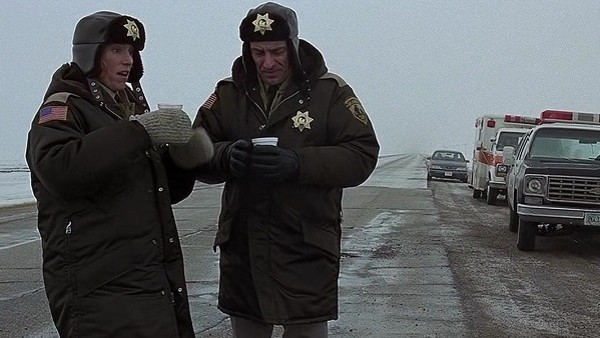
Here's one that's just downright ridiculous.... and downright hilarious, too. It's also the only inclusion on our list that justifies its existence as a "true story" because the filmmakers knew exactly what they were doing when they branded it as such.
So stick Fargo into your DVD player and you'll find that the movie opens with a black screen and a title card which reads: "This is a true story. The events depicted in this film took place in Minnesota in 1987. At the request of the survivors, the names have been changed." And yet Fargo is entirely fictional from start to finish.
So why did the Coens do this? What was the point? Quite simply, they decided that if they set the movie up as a true story from the very beginning, then the audience would be more likely to be believe some of its more outlandish events instead of writing them off as too ridiculous. In director Joel Coen's own words: "If an audience believes that something's based on a real event, it gives you permission to do things they might otherwise not accept."
The truth is that Fargo's plot exists as a sort of hodgepodge of various real life crimes that took place in North Dakota.
9. The Strangers

The Strangers is veritable proof that you can slap a "based on a true story" tag on literally any movie and get away with it, even if the true story in question is so weak that the association makes little to no sense.
If you've seen The Strangers, you'll know that it's a home invasion movie about a group of masked nutcases who... well, invade a home. The movie opens with a disclaimer that says: "This story was inspired by true events." Okay, you say to yourself... that sounds somewhat feasible. That is until you find out what said "true events" actually were.
Who better to explain than the director, Bryan Bertino, who also wrote the movie's script? "As a kid, I lived in a house on a street in the middle of nowhere," he recalled. "One night, while our parents were out, somebody knocked on the front door and my little sister answered it. At the door were some people asking for somebody who didn't live there. We later found out that these people were knocking on doors on the area and, if no one was home, breaking into the houses."
That's it? Somebody knocked on Bertino's door and didn't even rob the house, and those are the "true events" in which this movie about killers was based upon? You've got to be f**king kidding!
8. The Pursuit Of Happyness

The Pursuit of Happyness is a fuzzy little movie that pretty much everyone on the planet likes, starring Will Smith and his son, Jaden, back before we ever realised that Will Smith wanted to make Jaden into a star - you know, when the little fella was actually cute.
In the movie, Smith plays a down-on-his-luck father who will stop at nothing to give his son the life he deserves. After solving a Rubik's cube super quickly, he finds himself in the running for a prestigious job, and the movie chronicles his attempts to win the position in a way that makes you want to cry.
The Pursuit of Happyness is supposed to be based on a true story, and it sort of is, but not entirely in the vein its depicted in the movie, which - firstly - makes Smith's character, Will Gardener, a nice guy. In real life, he was actually a bit of a douche - he wasn't anywhere near as attentive to his son as he is in the movie, and was supposedly absent and unaware of his whereabouts for a long time whilst he was out to get that prestigious job. The kid wasn't with born from his wife, either, but his mistress. Gardener had also been arrested for parking ticket violations, and had reportedly beat his wife on several occassions.
Worst of all: that Rubik's cube thing? Nope.
7. Open Water

Open Water sought to make itself more terrifying by ensuring that the marketing played up to the fact that it was a "true story." What's wrong with that, you wonder? Not a lot, except for the fact that the "true story" is literally just "two people get eaten by sharks," which nobody is sure actually even happened. And given that the movie is purporting to be based on that idea, given that it's a movie about people being eaten by sharks, it seems a little lackluster to advertise your picture on "something that may have happened, uh, probably at some point. Yeah."
Which is to say, Open Water tells the chilling story of two scuba divas, Tom and Eileen Lonergan, who are left behind on a scuba diving trip, and are forced to float and cry in the ocean until sharks eat them. The problem is that nobody knows that these two people were actually eaten by sharks - the only thing we do know is that their camera was found in a shark. So there's just as much likelihood that the pair drowned, in actuality, and yet... the movie claims to be a "true story."
But the point and main hook of the movie - eaten by sharks - isn't even true!
6. Flight

Even if you haven't seen Flight, you know that it's that movie with Denzel Washington where he flies the plane upside down and it's really awesome, right? Right. It's also a movie "inspired by true events," which in Hollywood basically means that absolutely nothing in the movie resembles anything that happened in real life at all.
The screenwriter, John Gatins, took inspiration from the 2000 crash of Alaska Airlines Flight 261, and he's cited the incident as the basis for the movie's plot. Of course, there are some notable differences. In the movie, to avoid crashing, Denzel Washington's pilot character, Whip Whittaker - totally fictional, mind - must fly a commercial aircraft upside down in order to stabilise it. This sets in motion the plot for the rest of the movie, in which it turns out that he was intoxicated at the time of the crash.
When that plane crashes down, though, only six people are killed. In real life, Alaska Airlines Flight 261 crashed when the pilot attempted - and failed - to fly the plane upside down. Nobody survived the incident - not the pilot, not a single passenger. Of course, that would have made for a rather depressing and pretty pointless film, so we kind of understand.
5. The Perfect Storm
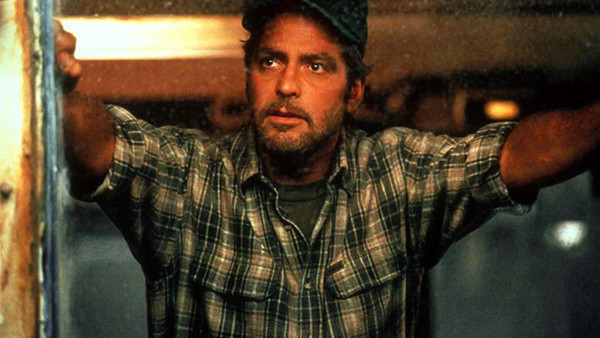
Nobody really talks about The Perfect Storm anymore, almost as if it wasn't very good or something. The movie, which starred George Clooney, Mark Wahlberg, Diane Lane, and John C. Reilly, tells the "true story" of the crew of the Andrea Gail, a fishing boat that got caught in a massive storm in 1991, nicknamed "the Perfect Storm," and never returned.
The names of the real life people who died were used for the characters in the film, as if the Hollywood filmmakers were saying: "This is so legitimate that we're gonna even use the real freakin' names!" In the movie, then, down on his luck and financially impaired Billy Tyne (that's Clooney) convinces a ragtag crew to join him on a fishing trip, until they eventually come into contact with the "Perfect Storm" of the title. It doesn't end well.
A relatively simple story, of course, and one where you expect a little creative license, given that all the people who were involved were killed. The problem is that this "true story" is actually made up of tons of different "true stories" collected in the book of the same name by Sebastian Junger. The only thing the movie actually depicts about the Andrea Gail that is definitely true, however, is the fact that it went out to sea and didn't come back - almost all of the "incidents" that are depicted in the picture happened to other fisherman entirely. Um...
4. A Beautiful Mind

A Beautiful Mind is a movie about a really smart Russell Crowe. Playing a man named John Forbes Nash - in a film that purports to be "based on a true story"- who spends his time working on governing dynamics and also having really weird hallucinations about cracking codes for the government (among other, even weirder things). He eventually goes mad until he finally gets help and learns to ignore all the not normal stuff going on in his "beautiful mind."
Or that's what happens in the movie, at least, 'cause it sure didn't go down that way in real life.
The biggest difference between actual reality and director Ron Howard's telling of Nash's interesting life story is the fact that he never had hallucinations. Given that these hallucinations make up a fairly large portion of the movie, then, it seems a little underhanded to rely so heavily on a conceit with no actual basis. Nash did experience voices in his head, but that's all he experienced - voices. He wasn't spending his days imagining up Paul Bettany or Ed Harris, nor did his wife stick by his side like she does in the film - they divorced in 1963.
3. Hidalgo
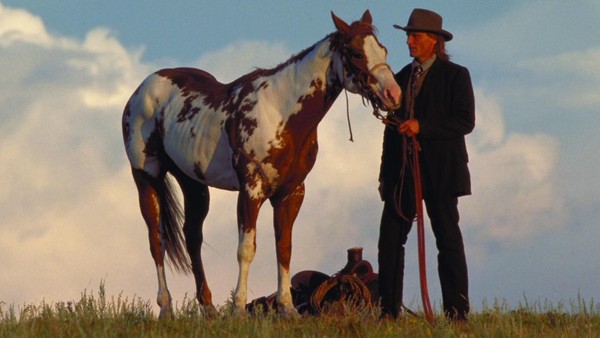
Hidalgo, "based on a true story," features a cowboy hat-wearing Viggo Mortensen as Frank Hopkins, an American distance rider who became legendary for his exploits in the late 19th century. The movie (did we mention it's "based on a true story"?) is named after his horse, Hidalgo, a fine steed if ever there was one.
The film highlights the adventures of Hopkins as he ventures to the Middle East and races against pure-blooded race horses, gets involved in a few scraps, and generally has a good old time living life on the edge. What a guy! The movie also makes the claim that Hopkins is of half Indian descent, and this is where the whole "true story" stuff begins to fall apart.
Heavily marketed on the fact that Hidalgo was, indeed, factual, historians took particular offence at amount of conjecture inherent to this film. The legitimacy over Hopkins' ancestry has been disputed - he was likely thought to be a con man. But perhaps worst of all, the central race in the movie - which sees him travelling 3,000 miles across the Arabian desert - probably never even happened. That's right: the main plot never happened.
2. The Texas Chainsaw Massacre

The Texas Chainsaw Massacre is without a doubt one of the best and most influential horror movies of all-time, one made even more intriguing due to the fact that it was based on a true story... you know, of that time when a bunch of kids ended up being chainsawed to death by a leatherfaced maniac out in the middle of nowhere.
Or so the filmmakers wanted you to think when they marketed The Texas Chainsaw Massacre as a true story, which it totally isn't at all. Loosely inspired by some bad stuff serial killer Ed Gein did, the plot is actually totally fictional. Director Tobe Hooper made a conscious decision to brand The Texas Chainsaw Massacre "true" because he thought it would bring more people into the theatres to see it... he wasn't wrong; it made $30 million dollars on a tiny budget of just $300,000.
The disclaimer at the beginning of the film - "The film you are about to see is true" - was also apparently Hooper's way of reacting to the Watergate scandal, which is a little incident you may or may not have heard of from the '70s. The blatant lie was supposed to represent his personal feelings of disillusionment.
1. Braveheart

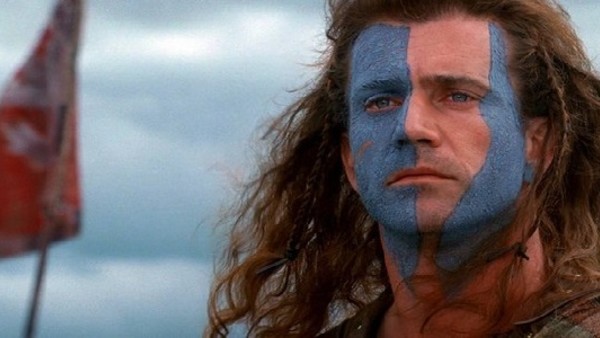
Where to start? Mel Gibson's actually brilliant biopic of one William Wallace, a freedom fighter who rallied his people against the evil English in 13th century Scotland, Braveheart has about as much respect for history as you have for whatever Amanda Bynes is up to right now (let's face it: it's probably not very good, is it?).
Screenwriter Randall Wallace has admitted to a few creative flourishes with regards to his screenplay, but come on, Randall: you pretty much invented a fictional world on par with the likes of Middle-Earth with this one, didn't you? Come on, you did.
Which is to say, "based on a true story" is a real stretch, given that almost everything that might have happened in reality has been manipulated into something that definitely didn't. So whereas the general - and we do mean general - outline of the story, which has Wallace leading his people against the English - is accurate, there are hundreds of "uh, really?" moments scattered throughout, guaranteed to irk dedicated history buffs.
Primae noctis? Never existed. Kilts? Not worn in the 13th century. The Battle of Stirling? Actually took place on a tiny little bridge. And guess what? Isabelle of France never actually even met William Wallace in real life, let alone romanced him, and Robert the Bruce never betrayed him, either. We could go on but c'mon, you've got things to do today.
-
Like this article? Let us know in the comments section below.