10 Movies That Almost Destroyed The Superhero Genre

Could Green Lantern have ended comic book movies?
Before X-Men revitalised the genre in 2000, it was assumed only the very biggest superheroes could work on the big screen. How silly we used to be; now, with a total box office gross in the tens of billions of dollars, the superhero genre has become the dominant force in modern blockbuster movies. Each year boasts multiple tentpole releases featuring spandexed do-gooders, with the genre showing no signs of slowing; in 2014 alone four of the ten highest grossing films of the year have been based on superhero comics. Being so successful, there's naturally plenty of people out there just waiting to see the whole thing collapse in on itself; each marginal waver in quality or audience attendance is heralded as the end of the fad (a fad that's lasted fourteen years and counting). Although the public's love of supers will of course eventually dissipate, that dark day is certainly a long way off; if anything they're getting more popular. Not that there's not been the chance of it all ending. Over the past few decades there have been several films that quite easily could have spelled the end of the genre; terrible movies and box office flops that, had some fortunate circumstances not got in the way, could have stopped anymore superhero flicks getting made. Here are ten of those movies.

10. Superman IV: The Quest For Peace (1987)
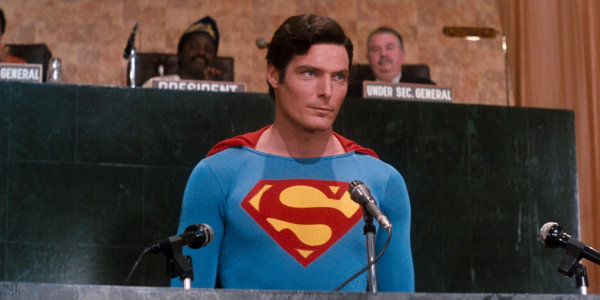
After two good entries, the Superman series took a downwards turn. The third film repurposed the series as a comedy and the fourth turned it into bargain bin fodder. The Quest For Peace suffered from two things; it had a budget a fraction of the previous installments and the story was heavily compromised by Christopher Reeve's obsession with an anti-nuclear message. The film was a total disaster, an embarrassing mess that hardly anyone actually turned out to see. In fact, it was so bad it kept the series off the silver screen for almost two years; there were countless attempts to restart the franchise, with sequels, prequels and flat-out reboots all banded about, but none stuck. For one series to go bad now wouldn't on its own spell doom for a whole genre, but as in 1987 Superman was the only superhero who'd successfully worked on screen there was serious questions as to whether Richard Donner's original had been a one-off. What saved it: Batman. Two years later the other of D.C.'s big two was given the blockbuster treatment and the genre was lent a new lease of life (at least for a decade or so).

9. Daredevil (2003)

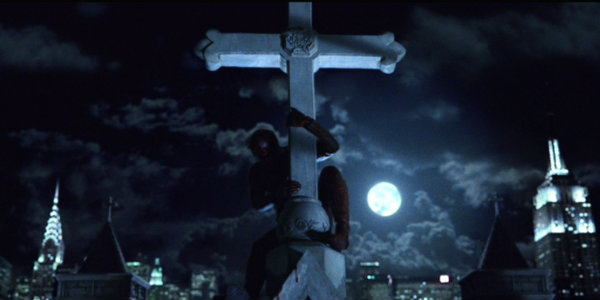
Spider-Man's been done and you've made X-Men, what's next? The odd answer to that question was Daredevil; in 2003 20th Century Fox decided to turn the adventures of the Man Without Fear in a big blockbuster. Matt Murdoch is an interesting hero in many ways. A blind lawyer who has developed super-senses and fights crime once the sun goes down offers plenty of opportunity for a creative film. And while Mark Steven Johnson tried, his take didn't stand out; fiery calling cards, CGI cityscapes and seeing someone in the rain just didn't cut it. The film's reputation is so low that even though it came out a decade before it was key fuel in the hatred of Ben Affleck being cast as Batman. The problem with Daredevil is that he was an unproven hero. He may have got a boost from an extended cameo in the Spider-Man cartoon, but to the majority of audiences he was new character, making him the first unproven hero of the emergent new age of the genre. And when he didn't excel the question of whether an unknown character could work at all was raised. What saved him: The youth of the genre meant it was just viewed as a misstep.

8. Howard The Duck (1986)

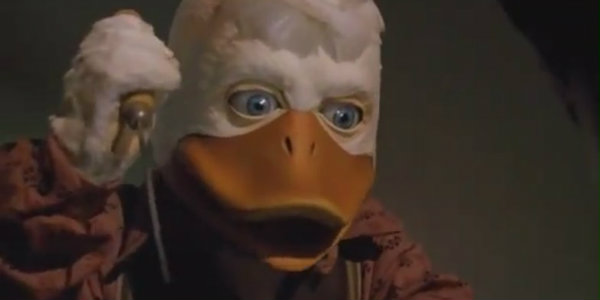
Marvel are now a cinematic powerhouse. The dominant force in superhero cinema, their Cinematic Universe has provided the blue-print for blockbusters in general. This year they even turned Guardians Of The Galaxy, a property even die-hard comic fans hadn't heard of, into a film with so much swagger it become one of the summer's biggest hits. The customary post-credit scene even paid reference to how far they'd come, featuring a cameo from Howard The Duck. Star of his own movie in 1986 that was, for a time, Marvel's most high-profile release, he's not the best love character. Howard is a brilliantly subversive comic book character, but in the hands of producer George Lucas his feature outing lost all its bite and replaced it with a bunch of duck puns. An underground comic book with little fanbase, few in the audience got this was wildly unfaithful adaptation, blaming the very concept of the character. And with comic books yet to have their dark renaissance (Watchmen was a few months away), it served as a cautionary tale about the whole process of adapting panels to frames. What saved it: The film skewed closer to sci-fi so escaped being associated with the usual men in spandex.

7. X-Men: The Last Stand (2006)

X-Men was the film that created the modern superhero genre. Treating the material seriously and adding, gasp, subtext to proceedings, Bryan Singer's film showed everyone that these sort of characters could work on screen without requiring a large pinch of salt. The third film in the series, The Last Stand, saw Singer leave and the budget almost double (literally). Fox were clearly going all in with the genre now, but with raised stakes comes increased gamble. A gamble Fox certainly didn't rake in from; the film underperformed. The central problem was with Singer's replacement, Brett Ratner, who didn't have the same understanding of the material and delivered something that not only annoyed fans, but was so sloppily made general audiences weren't too hot on it either. The Last Stand isn't the worst superhero movie ever, but as part of the franchise that brought the genre to dominance its failure raised the question of whether superheroes had run out of steam. For a brief period in the mid-naughties it did appear that way; this was part of a duo of threequels that almost spelled the end of the genre. What saved it: The Dark Knight and Iron Man. That summer of 2008 proved crucial in reinvigorating superheroes.

6. Ghost Rider (2007)

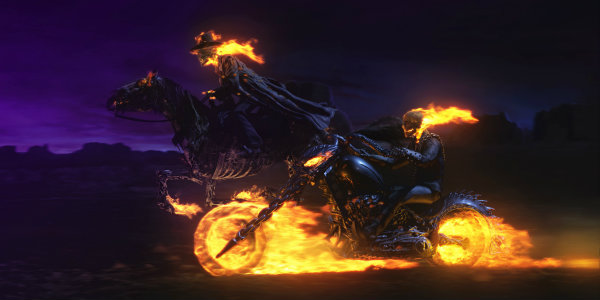
As the genre grew it was only a matter of time before we got something like Ghost Rider. As the books on which they were based had long viewed as being "for kids", superhero movies had been rather light, completely ignoring some of the darker sides of comics. And we're not talking about what D.C. misreads as dark - grey colour palette and brooding actors. We mean deals with the devil and fiery violence. Featuring some of Nicolas Cage's best overacting (that is before the sequel, Spirit Of Vengeance), Ghost Rider is less a proper adult superhero film and more something to get teenage boys screaming "awesome". There's some real potential to the idea of a stuntman who sells his soul to the devil and must do his bidding, but it's clearly something the director of Daredevil wasn't up to; this was another failure from a unknown hero. Coupled with the increasing failures of the big franchises this made it look like superheroes had little elsewhere to go. Although we know things didn't end, Ghost Rider did still have a rather negative effect on the genre; it made 'adult' (or rather, non-family) superhero movies be viewed as unviable projects, something Watchmen, which bombed at the box office, seemed to prove. What save it: Iron Man showed unknowns could work, although we're yet to see non-PG-13 films work in a proper way.

5. Steel (1997)

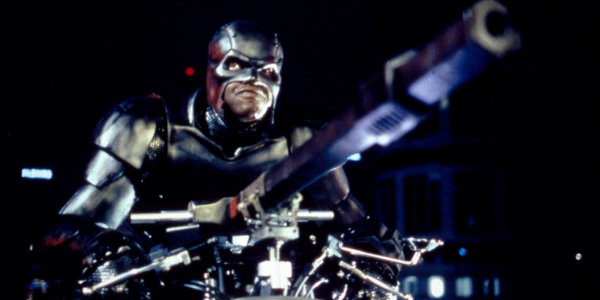
Introduced as part of the ridiculous Death Of Superman comic arc, his origin is flat-out bonkers; he's an engineer saved by Superman who, after the Man of Steel's death, made a metal suit in honour of Kal-El to fight the gangs of Metropolis. Following those events Steel became his own standalone character who still exists in the comics today. The film version of the character was intended to be a spin-off of a big screen version of the Death arc. But even after that project failed, Steel continued, becoming a stand-alone movie (to terrible results). Played by basketball player Shaq, the character of John Henry Irons felt completely one-dimensional, which is fitting given how one-note the whole thing is, indiscernible from most crummy nineties action flicks. The film was an utter disaster upon release, making just over a million dollars (it cost sixteen times that) and being universally panned. If proof was needed that unknown heroes wouldn't work on film, this could have stood as a strong argument. What saved it: The same year as Steel, Blade, another movie that unfaithfully adaptation of an obscure comic book, came out, drawing much of the bad attention away.

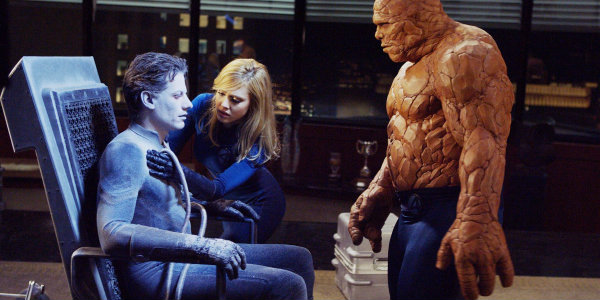
4. Fantastic Four (2005)

The Fantastic Four are a milestone in comic book history. The first new characters created by Stan Lee and Jack Kirby, they signalled the start of Marvel's rise to be a key player in the medium. On film, however, they're legacy is less favourable. Accidentally serving as a throwback to the pre-X-Men days, their feature film outing, with its rubber costumes and flimsy grasp of characterisation, showed the genre starting to stagnate; with much stock around release put into the legacy of the Fantastic Four in print, that the finished film ended up so bad suggested a lack of forward momentum on behalf of comic book movies as a whole. This was one of the most phoned in entries in the genre thus far, which given the prestigious source wasn't too good. You can mess up Daredevil, but cocking up Fantastic Four is worrying. This, and the even worse sequel, have marred their reputation, seemingly permanently; in a world of X-Men and Avengers they feel like an outdated team. What saved it: The box office. Making three times its budget Fox weren't too fussed about the quality.

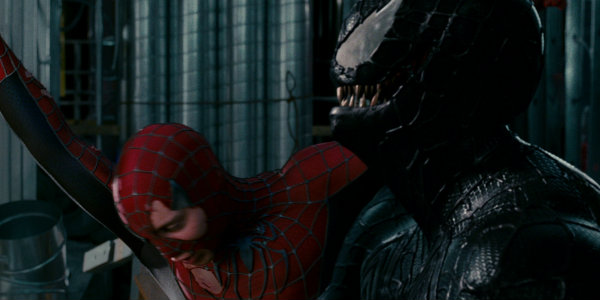
3. Spider-Man 3 (2007)

If X-Men: The Last Stand created cracks in the superhero genre, Spider-Man 3 turned them into giant rifts full of superfluous villains. The two dominant franchises that acted as poster boys of the resurrected genre were now spiralling into mediocrity with box office takings not matching predictions. Could the superhero bubble have burst? Spider-Man 3 has multitude of well-documented flaws, most of which stem from being the third film is a series that felt it needed to keep getting bigger. Everything, from the number villains, scale of action and dorkiness of Peter struggling with his powers, are all amped up to obnoxious levels. After Sam Raimi had worked so much magic with the first two, seeing him buckle under studio demands and his own bad ideas was a sad sight. The fallout from Spider-Man 3 can still be felt in the franchise (although thanks to successes elsewhere it's not had a detriment on the rest of the genre); Sony haven't been able to get the character to work since, forced to release lacklustre installments lest they lose the rights. What saved it: As we've already said, Iron Man and The Dark Knight injected new life into superheroes only a year later. Had they not turned up the genre would probably have petered out.

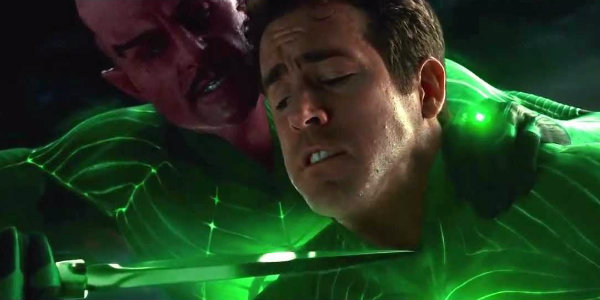
2. Green Lantern (2011)

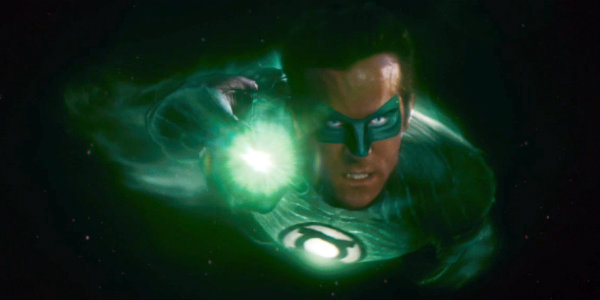
The full repercussions of Green Lantern's flop are still not abundantly clear. Originally set to be the first step in giving D.C. a Cinematic Universe to rival Marvel's, its failure led to them scrapping the character and put the Justice League even further behind the Avengers. With the company now rushing into a vast mythology with little set up (or care) there's a distinct possibility this flop could mark the start of their utter cinematic failure. Boasting a dense mythology and a host of new alien characters, Green Lantern was certainly a hard sell, but its real problems turned out to be more fundamental; it was messy, boring movie. Even though the whole ring, power, oath stuff was new to audiences, they'd have been happy to go along for the ride had it been presented in a remotely entertaining way. Instead the Ryan Reynolds fronted movie marked the first moment D.C. really faltered. Well, since the number one entry on this list. What saved it: With Marvel releasing The Avengers a year later it was clear some people understood how to go forward. D.C. could still implode though.

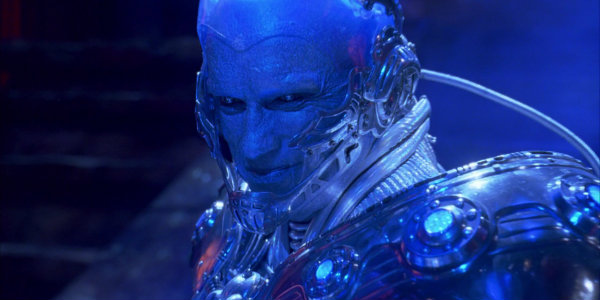
1. Batman And Robin (1997)

Warner Bros. were so certain they were onto a sure thing with Batman And Robin that a sequel, Batman Triumphant, was already in production before the fourth film in the series premiered. That plan was quickly scrapped when Joel Schumacher's film, his second Batman, ended up being one of the most widely derided movies in cinema history. On a basic level Batman And Robin failed because its heart was in completely the wrong place. Treating the comics as an optional piece of the mythology, the main motivation behind production was creating as many toys as possible; everything was designed with marketability in mind. At this point superheroes were little more than a subset of sci-fi/fantasy, but with the likes of Steel also getting their own movies it was clear studios were keen to expand. But when audiences' favourite hero can fail so drastically the whole thing was questioned. At this point both Superman and Batman had ended up ruined in four films apiece, making the prospects of any more superhero movies getting green-lit increasingly unlikely. What saved it: A complete restart. Instead of being bloated and over-the-top, the genre returned small with Blade, then slowly grew with X-Men and Spider-Man. Batman eventually made it back to our screens, but only after a complete revamp by Christopher Nolan. How long do you think the superhero genre will last? Which upcoming movie could be the last straw? Let is know in the comments will last.

Contributor
Contributor

Film Editor (2014-2016). Loves The Usual Suspects. Hates Transformers 2. Everything else lies somewhere in the middle. Once met the Chuckle Brothers.