10 Movie Sequels That Were Barely Linked To The Originals
 Sequels are a funny thing; generally speaking they are incredibly unpredictable, but there are some easily noticeable trends for success. A sequel should almost always be made in the hands of the cast that made the first, with some relation to either the scriptwriter, the director, or at the very least the same producer If not, that's when work spirals out of control, and a sequel is almost unidentifiable to its predecessor. Often, sequels are primarily a way of cashing in, with little appreciation for the fans who made the first film successful, and in the context of this list, that statement's totally true. We've had some truly fantastic film series and trilogies throughout cinema history, but...they won't be appearing here, because consistency is almost always a sign of quality when it comes to sequels. Let's trek through the bizarre world of sequel mistakes and how these 10 films became barely noticeable in comparison to the films that sparked their creation...
10. Star Wars Episode I: The Phantom Menace (1999)
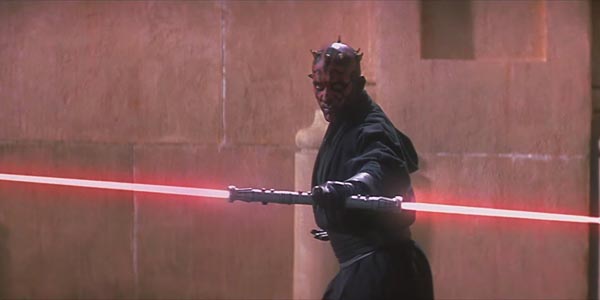 Wait, wait, hold on a second, let me explain this one. Contextually, Star Wars: The Phantom Menace appears as the only film on this list that isn't completely awful. Episode 1 strayed from the formula the initial trilogy had established in order to show a different side to Lucas' world and properly establish the story at the very beginning of the Star Wars legacy. Episodes 4 through 6 mostly take place in space, and on spacecraft, constantly moving in their choice of scenery and setting. In addition, combat, war, and espionage are alawys on the forefronts of the narrative. However, Episode 1 offers a much more mild approach and is more focused on the politics of the universe during peacetime, and establishing the mood and tone for films to come. The Phantom Menace takes place almost entirely on Naboo, with a brief excursion to Coruscant and is generally quite grounded in its settings as per the plot dictates. Many criticisms come from the film's fascination with Anakin as a boy, and the whole pod racing sub-plot that was relatively dull for audiences to watch, not to mention wholly irrelevant in the grand scheme of things. The change in pace that made The Phantom Menace feel wholly different to the original trilogy wasn't necessarily negative, just different. Then again, I guess a calm before the storm was a reasonable approach. Nevertheless, Episode 1: The Phantom Menace is a shining masterpiece compared to the scaling ladder of increasingly unbearable sequels on this list...
9. Superman IV: The Quest for Peace (1987)
 The original Superman film series created the initial formula for the superhero genre, and is the first commercial instance of the genre on the big screen on any major scale, sans the Batman TV motion picture. The first and second Superman films were received incredibly well, both critically and commercially, with particular attention to Christopher Reeve's depiction as the last son of Krypton, and Gene Hackman's ever-scheming Lex Luthor. However, after the critically acclaimed appearance of General Zod in Superman II, things quickly went downhill. After the negative reception Superman III received, the rights to Superman on the big screen were sold to Cannon Films. They had little faith in the film, and produced Superman IV: The Quest For Peace on a measly budget of $15 million, while the film's subject matter would paint Superman IV as an unfitting entry into the series. Most of the elements are still there, but the whole scale of everything, the sets, extras etc, are all significantly pared down due to the minimalist budget, making the film very visually dull compared to the earlier installments. In addition, the film's subject matter was heavily related to that of nuclear war, as Lex Luthor uses technology to create a nuclear powered clone of Superman known as Nuclear Man, who threatens to cause a nuclear apocalypse. A lot of the film is kind of pseudo-political, and more ridiculous than usual, with some heavily scaled-back production values during the film's essential action scenes making it quite dull and full of filler. While not completely different, Superman IV: The Quest for Peace offered a minimal, imperfect experience compared to the earlier, action-packed Superman films.
8. Speed 2: Cruise Control (1997)
 Speed (1994) is a film that helped define the action genre, being likened to Dirty Harry, Die Hard, and Lethal Weapon as films that made the genre truly exciting. The film starred Keanu Reeves, and Sandra Bullock in a truly tense thrill-ride that a was master class of how to create a compelling, high-concept action scenario, whilst actually making audiences care about the characters. A lot of the inherent tension from Speed comes in the form of its very simple central premise. A bus is rigged with a bomb which will explode if the bus slows to under 50mph, and it's up to Police Officer Jack Traven to save everyone on board. Thus, when it came to the sequel, it would inevitably have audiences expecting two major things to return; the film's heart-pounding premise, and Keanu Reeves. So, Jan De Bont adapted the second plot for Speed 2: Cruise Control from a dream he had, resulting in a luxury cruise boat that was programmed to crash into an oil rig. Who would rise to solve this deadly conundrum? Annie (Bullock) reprises her role from the first film, yet Keanu was replaced by the incredibly amateur Jason Patric as Annie's new boyfriend. This left the film devoid of its primary character as well as any real tension, and Jason Patric's performance was considered almost comical, leaving audiences watching a film that had little to do with its legitimate predecessor.
7. American Psycho 2: All American Girl (2002)
 Right, now this one really takes the cake. Mary Harron's adaptation of Brad Easton Ellis' acclaimed novel American Psycho (2000) was met with relatively mixed reviews, but ultimately it was accepted as a cult hit, particularly notable for Christian Bale's fantastically surreal performance as Patrick Bateman. Whether you loved it or hated it, you couldn't deny American Psycho's gravitas and shocking originality ("TRY GETTING A RESERVATION AT DORCIA NOW, YOU F***ING STUPID B***ARD!"). Ahem. So, how did they follow up? Well, in 2002 Lions Gate noticed American Psycho's success and sought to replicate it with a sequel. They couldn't make American Psycho without Patrick Bateman, could they? Well, no. But, he was in it for a total of five minutes, and not played by Christian Bale. Sigh. Thus, we're introduced to a young girl who kills Patrick Bateman with an ice pick, and soon takes the reins in his psychotic and murderous tendencies with a plan to murder her college classmates in an attempt to get a teaching assistant position under a criminology professor. That's it? Yep, that's it. So, why does American Psycho 2 differ so vastly from the original? It was based on a rejected script known as 'The Girl Who Wouldn't Die' and was altered to have some very slight relations to the original (and I mean slight). So, the plot is entirely irrelevant, and the film didn't star Christian Bale; his character was killed off in the opening scene, and the original author and director had nothing to do with it. So um, who took up the film's starring role as Rachael Newman? Mila Kunis. Wow! What a great idea! You know, Jackie from That's 70's Show? Let's make her a murderer! Who? You know, Meg from Family Guy! Sigh.
6. Book of Shadows: Blair Witch 2 (2000)
 The Blair Witch Project. A controversial piece of film-making that established the found footage genre, and paved the way for films like Cloverfield. It showed that you needn't a big budget or flashy effects to be scary - you can simply allow the audience's own imagination to create the horror inside their own head, with some sound narrative construction and atmosphere. The Blair Witch Project is one of the most successful independent films of all time, and so obviously it wouldn't be left alone, with a sequel to cash in on the film's brilliance being released the next year. So, Book of Shadows: Blair Witch 2. The reason this film barely relates to the original is because the first one didn't really show you anything other than the reactions of the crew. It left you to your own machinations, which created suspense, tension, and fear. In the sequel, they couldn't really make a carbon copy of the original; they had to up-scale somehow. Unfortunately, their idea of 'up-scale' was to have the characters be processed by spirits, as they proceeded to commit horrible acts, whilst completely unaware of the events themselves. In addition, rough handheld cinematography is nowhere to be seen. So, the film completely abandons the atmosphere, the delicate touches, and instead it directly shows us what happens, which immediately eliminates any ideas of subtlety or brilliance. From indie hit to blundering teen horror in one fell swoop.
5. Psycho 2 (1982)
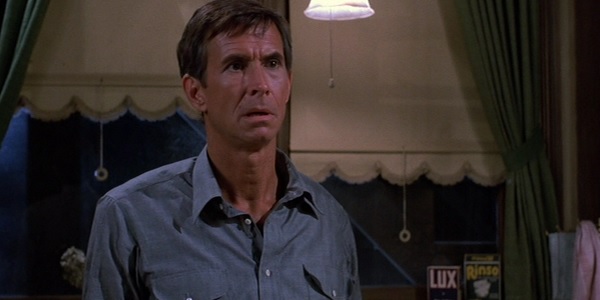 Alfred Hitchcock's Psycho (1960) was one of the defining films of its generation, and was quite a milestone in filmmaking. Hitchcock's sheer affinity for suspense and tension made the film a gripping, and unavoidably unnerving experience. However, 22 years later, a sequel was commissioned long from the context of the Hitchcockian thriller. The story shows Norman Bates released from the mental institution as an apparently mentally healthy man. While it certainly seems to be of the same ilk at first, several differences define it as a completely different film from its predecessor. One of the immediate similarities is the return of Anthony Perkins as the incredibly damaged Norman Bates, but that's pretty much it. The inherent problem in Psycho 2's composition is that there's just no suspense. Bates is crazy as we all know, and at the beginning of the film when he claims to be normal, we can guarantee by the end he'll be just as insane as he was before. In addition, Norman is actually the central protagonist now, which is really weird. We're almost meant to empathise with him, regardless of his killing ways. The big clincher is, without a defining mind behind a film like Psycho 2 who knows the ins and outs of the thriller genre, it just falls flat and isn't noticeably linked to the original. The twists aren't clever, they're just moronic and absurd. Not only is the notion that he'd ever be released as a well person ridiculous, it also completely defiles Psycho's original plot. It turns out 'Mother' wasn't 'Mother' after all, she was actually Norman's auntie who adopted him at birth from her sister. Well, isn't that stupid? Oh, and his real mother's insane too! Dandy! Wow, now I feel really sorry for Norman. The series would continue to spiral out of control and tarnish the nature of original with several other sequels that leave the legacy of Psycho mostly buried (until 2013's Bates Motel of course).
4. S. Darko (2009)
 Richard Kelly's Donnie Darko (2001) was an apocalyptic and bizarre teen drama that managed to be quintessentially different, yet still garner both mainstream and cult appeal in its strong reception. Jake Gyllenhaal starred as the eponymous teenage loner with antisocial tendencies, and the power to see a surreal time-predicting rabbit known as Frank. As days passed, the world ticked down to its apparent apocalypse, but it wasn't the world coming to a close, only Donnie Darko. Donnie Darko isn't exactly the most likely candidate for a sequel; it was a low budget cult movie that didn't earn much at the box office, so clearly the cash cow motive isn't really there. S.Darko director Chris Fisher claimed he only wanted to create a similarly bizarre, and liminal other-world experience just like Richard Kelly had. The film follows sister of Donny, Samantha Darko, as played by Daveigh Chase both times. She begins to sleepwalk as strange occurrences happen, with time travel being the primary element of the plot, in conjunction with a very badly explained occurrence with meteors? Fans of Donnie Darko should leave this one be, as apart from Daveigh Chase, the films have literally nothing in common. One is a fundamentally fresh and original cult indie film, while the sequel is poor writing and directing hoping to thrive on the former's coattails.
3. Ace Ventura Jr: Pet Detective (2009)
 Some films are so overpowered by a certain actor through the means of screen presence that the film very much becomes about them, as opposed to its narrative or themes. Jim Carrey is one of those actors, his goofy disposition, eccentric facial expressions and improvised scenes have made many a remarkable comedy, such as Liar Liar, or Ace Venture: Pet Detective (1994). Ace Ventura and its sequel did notoriously well at the box office, became cult hits among the public, and gave Jim Carrey's career a heavy push. So, what happened a full 15 years later when a second sequel was commissioned straight to DVD? Well, shortly put, Ace Venture Jr: Pet Detective happened. Like many films on this list, the main character is killed off. Isn't that a bit extreme for a comedy film? Ace Ventura Junior addresses the original Ace's whereabouts with a passing remark that he went missing in action in Bermuda, and was presumed dead. Uhhhh!? Isn't that kind of dark? I think it was meant to be funny, oddly enough. So, without Jim Carrey, who was basically the entire film, we're left with an obnoxiously bad child actor with a bunch of rehashed jokes from the older film, with minimum production values, resulting in a complete waste of time. From cult comedy hit to worse-than-comically-bad money-grab.
2. Highlander 2: The Quickening (1991)
 Highlander (1986) was quite a bumpy film that took some time for audiences to appreciate as it gradually bloomed into a cult hit. The film spawned numerous sequels, TV shows, and gave Christopher Lambert some acclaimed stardom, whilst also making Sean Connery's career semi-relevant since he retired the mantle of James Bond. After seeing the appreciation for Highlander rise since its release, surprise surprise, a sequel was in the works, one known as Highlander 2: The Quickening (1991). The problem is, Highlander rounded off the quickening with the death of Kurgan, and offered a pretty streamlined series of events that couldn't really be progressed as MacLoed had already claimed the prize. Regardless, Highlander 2 takes place in a futuristic continuity, as well as the very distant past, with some scenes also being based in 1999. Highlander: The Quickening is barely linked because it entirely defiles the film's original canon, whilst adding in a bunch of completely unnecessary science fiction elements, like the nonsense concerning the o-zone layer that shouldn't be relevant at all considering the subject matter of the first film. Oh, and they're aliens now. From Planet Zeist. That's why they're immortal. Right. In addition to completely altering and arguably ruining the narrative canon of the first film, The Quickening failed to provide more of the medieval setting and continuity that many fans of the original loved. In addition, Sean Connery reprised his role as Juan Sánchez Villa-Lobos Ramírez when his character should have been long dead. Everyone's beloved villain The Kurgan, as portrayed by Clancy Brown, was meanwhile nowhere to be seen. Highlander 2: The Quickening is a sloppy, incoherent mess of a film, widely regarded as one of the worst of all time, that completely failed to uphold, or build upon the themes and ideals established in the original.
1. Son of the Mask (2005)
 I'm feeling deja vu now, possibly because my entry here is pretty much the exact same scenario as the Ace Ventura entry. There seems to be an ongoing trend with Jim Carrey not wanting to star in sequels, as he once stated he saw no challenge in portraying the same character twice. Yet, studios go ahead and green-light them in an attempt to profit from the popularity of the original. As wacky and immature as The Mask (1994) was, the comic book adaptation was incredibly humorous and is one of the reasons Carrey became such a dominant name in comedy for several decades. Unlike the original, Stanley Ipkiss is nowhere to be seen, and the only significant storyline tether is that of Loki's mask and the powers it can bestow. Stanley threw the mask in the river, and in Son of the Mask, cartoonist Tim Avery stumbles upon it, as the mask wreaks havoc as per usual. Jamie Kennedy's performance as Tim is tragically unfunny, and killed the concept before it even had a change to breathe. In addition, the only real idea they add to the concept is that he conceives a child whilst wearing the mask, and the baby receives a portion of Loki's powers as a result. I don't even want to question the science/magic behind that. Son of the Mask was a tragic flop that failed to relate yo or recapture any element of The Mask except for it's 'wacky' hijinx which turn out to be not that funny without Jim. I guess it's a shame Carrey didn't take the $10 million he was offered shortly after the original to stop this from ever happening.