10 Movie Sequels That Didn't Go The Way They Should Have
Did they even watch the previous film?

"This isn't going to go the way you think," Luke Skywalker tells Rey midway through Star Wars: The Last Jedi, a line of dialogue that sums up the gist of the movie. Rian Johnson's contribution to the iconic space saga belongs to a category of sequels that subverted the audience's expectations by flying in the face of series conventions.
Some fans will tell you this was controversial, but most critics rightly hailed The Last Jedi as one of the most unpredictable films of 2017. It was by no means the first sequel to turn out like nobody expected, and when other franchise fodder has attempted this, the results haven't always been so inspired.
When filmmakers get bold and daring and deviate from the established norm, they run the risk of incurring a fan backlash. In the case of Star Wars Episode VIII, this was unfairly the case, though in other instances it was completely justified.
There are sequels that leave you wondering if the creative team knew what the previous movie stood for, or even bothered to watch it at all, like this lot, for instance.
10. RoboCop 3

No film satirised the 1980s as effectively as Paul Verhoeven's science fiction masterpiece RoboCop, a film which pulled no punches while deconstructing the decade amid a hails of bullet and a storm of bloodshed.
Its sequel RoboCop 2 was inferior in every respect, but at least attempted to emulate its predecessor's use of social commentary and graphic violence, unlike the third instalment, which reigned it all in to pander to a family audience.
In the original, Alex Murphy is a tragic protagonist who battles against the odds to reclaim a shred of his humanity, which is the greatest victory anyone could have hoped for in the movie's twisted, dystopian world. But in RoboCop 3, he's your cliche good guy and the stakes he fights for are no higher than property rights.
Although the threequel was an unmitigated disaster in every possible way, it did prove one thing: RoboCop simply doesn't work when reduced to a family-friendly hero.
Peter Weller dodged a bullet when scheduling commitments prevented him from reprising the lead role for a third time.
9. Halloween III

Halloween III: Season of the Witch isn't a bad movie; far from it, but as a relic leftover from John Carpenter and Debra Hill's scrapped plans to turn the series into an anthology, it will always be the black sheep of the franchise.
The third entry in the iconic horror series must be judged on its own merits: there's a solid performance by Tom Atkins at its core and some genuinely shocking moments amid all of the oddity, yet it's easy to see why the movie is so overlooked.
Halloween fans, generally speaking, want one thing: Michael Myers by the barrelful, so when a sequel came along based on killer masks rather than a masked killer, it's understandable that many of the diehards were miffed.
It's worth reiterated that Halloween III is a decent movie which offers thoroughly original scares, but in hindsight, it should never have been released under the Halloween moniker since the series went on to resurrect Myers. Its association with Haddonfield's resident psycho has done it more harm than good over the years.
8. Book Of Shadows: Blair Witch 2

The Blair Witch Project will always be the movie which popularised the found footage craze in the horror genre. Not everyone will thank it for that, especially those who left the cinema with motion sickness, but it's an achievement nevertheless.
Sequel Book of Shadows was a polished offering that did nothing to build on the DIY feats of the original and it put the series on the fast track to generic horror cliche.
Not only was a studio sequel the wrong direction to take Blair Witch in, the follow-up was devoid of suspense and packed with boring characters. What's more, it only muddied some of the mysteries the first film presented, rather than solving them.
The Paranormal Activity franchise has enjoyed great success sticking to its guns and attempting to build on the low-budget chills of the original. This could have been the case with Blair Witch if the sequel had resisted Hollywoodisation.
7. Rambo: First Blood Part II

First Blood is a damning indictment of armed conflict, the terrible toll it takes on people and the way society often fails them. Rambo's debut is essentially a pacifist movie, but the sequel flies in the face of everything it stood for.
While Sly Stallone's damaged war vet spends much of the first film hiding from the police, actively fighting to avoid spilling so much as a drop of his tormentors' blood, the second movie is almost an extended montage of wanton destruction.
In First Blood Part II, Rambo returns to Vietnam (despite the first movie leading us to believe he'd die before being hauled off their again) and almost singlehandedly wins the war for the US, reeling off more bullets than a Call of Duty protagonist along the way. The entire thing could be set to Team America's America: F**k Yeah! song.
There are fans who believe Rambo should have died at the end of First Blood, like he does in David Morrell's novel, but at the very least, the message behind the sequel shouldn't have directly contradicted the ethos of the first film.
6. More American Graffiti

Every time George Lucas comes up with a winning idea, he goes and spoils it with an inferior prequel, sequel or special edition, and American Graffiti is no exception.
Nostalgia is the lifeblood of his 1973 coming-of-age classic, but its sequel replaced that with only darkness and melancholy, ending up a critical and commercial failure.
The first movie left its cast in a warm and fuzzy place, bathing in post-World War II optimism, while More American Graffiti brought tragedy and hardship to their lives, products of the Vietnam War era and social unrest which followed.
In fairness to Lucas, it wasn't all his own handiwork. He worked closely with writer-director Bill L. Norton in an executive producer capacity, editing the movie's script, offering creative guidance, and even manning the camera for some scenes.
But the end result couldn't have been further away from the original American Graffiti, not just in tone, but in format too. This was an anthology offering that failed miserably in its attempts to meaningfully build on each characters' story arc.
5. Batman Forever

The tonal shift that Joel Schumacher brought to the Batman movie franchise when he boarded it in the mid-1990s is well documented. A dark vision that was a great fit for the character underpinned the Tim Burton films, but a family-friendly farce lay ahead.
Burton had intended to remain at the Bat-helm and reportedly planned to cast Robin Williams as the Riddler and team him up with Billy Dee Williams's fully-transformed Two-Face in a threequel that would no doubt have been as mature and gritty as the first two instalments. Warner Bros had other ideas.
Although Batman Returns was a hit, the studio was keen to tap into the lucrative family market and felt Schumacher was the man for that. A haul of $336.5 million at the box office and through-the-roof merchandise sales suggests it was mission accomplished, but this commercial success came at the expense of Bats' credibility.
Complex villains made way for pantomime takes on Riddler and Two-Face, and the mature tone was replaced by the campy thrills of the Adam West era.
In hindsight, everyone from the fans to Warner Bros studio executives would agree that Burton should have been retained for at least one more sequel, giving him the chance to cap off a trilogy of dark Batman films, but at least Christopher Nolan was on hand to repair the damage of Schumacher's tenure further down the line.
4. The Texas Chainsaw Massacre 2

The late Tobe Hooper delivered a nuanced horror masterpiece when he made The Texas Chainsaw Massacre, a movie that was surprisingly light on blood and even more surprisingly rich in cutting social commentary.
Fans and critics were eager for more of the same by the time the film's sequel buzzed onto the scene, but the director threw them a horror-comedy curveball. The result was a tonal mess, and while it had some saving graces, it was a far cry from the follow-up it could have been considering Hooper was at the helm.
A joyously over-the-top performance by the Dennis Hopper and some excellent gore effects by Tom Savini weren't quite enough to save The Texas Chainsaw Massacre 2 upon release, though it has since gained a cult following.
It's also fair to say the movie has aged better than you might expect as a satire on '80s excess, but Hooper didn't even come close to capturing the subtle terror and social resonance he conjured so effortlessly the first time around.
3. Speed 2: Cruise Control

Say what you will about the original Speed, but it at least lives up to its name.
That's more than anyone can say about the follow-up, Speed 2: Cruise Control, which takes place on a boat incapable of travelling more than a few knots per hour.
Perhaps the title was supposed to be ironic, or maybe somebody at the studio mistakenly believed the Cruise Control pun was so good that they had to use it at all costs. In any case, Speed 2 is a fine example of how not to do a sequel.
Not only is the film devoid of everything that worked the first time around - including the chemistry between Sandra Bullock and Keanu Reeves, since the latter declined to reprise his role - everything from the dialogue to the characterisation was painfully underwritten, and the action sequences failed to generate any excitement.
There would have been a place for Speed as a one-off joyride, but the studio's insistence on cramming the formula into a scenario it was poorly suited to slammed the breaks on any future franchise plans they may have had.
2. Indiana Jones And The Kingdom Of The Crystal Skull

Thanks to The Kingdom of the Crystal Skull, we have a comprehensive list of things that simply don't work in an Indiana Jones movie, and they include aliens, Shia LaBeouf, CGI monkey and nuke-proof refrigerators.
Crystal Skull needed to be something truly special to justify a 19-year wait, and while it was never going to live up to such hype, the least it could have done is treated one of the most iconic heroes of all time with the respect he deserved.
The fridge-nuking scene alone was enough to reduce Indy to a parody of his former self, and having spacemen serve as the movie's McGuffin was too radical a departure from the series' traditions for some fans to stomach.
As for how Steven Spielberg and George Lucas should have made Indiana Jones 4, perhaps it's more a case of they shouldn't. The Last Crusade's final shot, in which Indy and his father ride off into the sunset, was beyond perfect.
Reports suggest Indy 5 will take the whip-cracking archaeologist back to his roots, but that might be difficult considering his roots are fleeing from boulders at high speed and battering Nazis, and Harrison Ford will be 77 by the time it comes out.
1. Rocky V
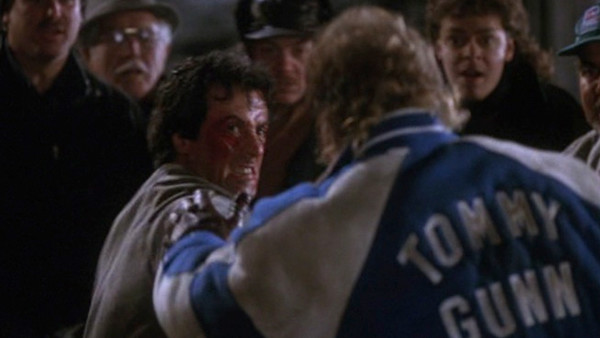
The original Rocky is an undisputed classic, a powerful underdog story and a masterclass in indie filmmaking. The first three sequels are watchable, enjoyable and daft in equal measure, but many fans would agree they can live without Rocky V.
The fifth entry in the series was a failed, contrived attempt to take the series back to its street-level roots, a film Sly Stallone once admitted he made purely out of greed. After the over-the-top thrills of the fourth film, there was scope for more Rocky, but this ill-advised attempt to recapture the original's working class grit wasn't the way to go.
It's for the best that Stallone chose to revive the character further down the line, first for Rocky Balboa and later for the excellent Creed, because Rocky V was far from a satisfactory endgame for the former heavyweight champ.
Nothing about Tommy Gunn made him a worthy final adversary for Balboa and the ending, which was originally supposed to kill the protagonist off, felt like a low-key fade-out compared to the epic conclusions of the previous films.
When watching the Rocky series in chronological order, skipping the fifth chapter is recommended as the only thing it contributes is the continuity error that arises when his son suddenly goes from nine years old to his teenage years in the space of days.