10 Movie Scenes Changed At The Very Last Minute
Imagine changing a film when it's ALREADY in cinemas...
As anyone who's ever worked on a film - or indeed literally ANY creative endeavour - will already be aware, visions change all the time. By the time a film-maker emerged from the editing booth, the film they're working on can be completely unrecognisable from what it was initially intended to be. Sometimes that's because scenes conceived on paper just don't work as well on film, sometimes it's just different preferences... Sometimes studios intervene.
The strangest - and both most chaotic and probably most brave - changes are those that come right at the end of things. When sweeping transformations happen on the fly and scenes that were marked up as the supposedly final version end up being changed fundamentally. That's not always for the better, obviously, but it's quite shocking to see how many important movie scenes were pretty much bolted on at the last minute.
Honourable Mention
Bruce's Phone Number - Bruce Almighty
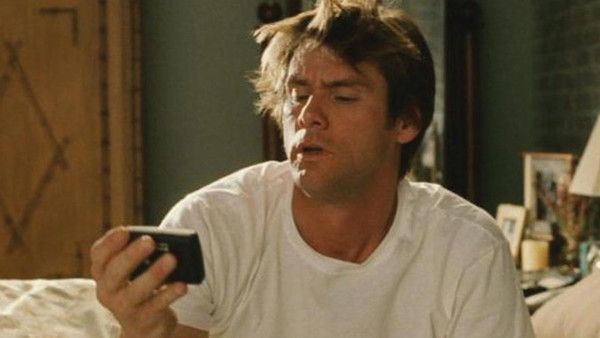
This wasn't so much a creative change last minute as one made necessary by someone not diligently checking up on a small detail in a movie that could quite easily have ruined a normal person's life.
In Bruce Almighty, God contacts Bruce using a real phone number - 776-2323 - rather than the fictional 555 numbers films generally use, which inevitably led to people genuinely ringing the same number wanting to talk to God. Because, of course, Bruce Almighty was famously a documentary. Incredibly, of the three people with the real number, one was a man who worked in a North Carolina church who was called Bruce.
The issue meant that Universal had to retrospectively change the number digitally to a 555 number for the home release.
10. John McClane Meets Hans Gruber - Die Hard

While it's one of Die Hard's best moments - at least for Hans Gruber, since it shows his adaptability - the first meeting between John McClane and Gruber wasn't supposed to happen at all. They would have remained two morally opposing forces split until the finale.
In the original script, the scene in which McClane comes across one of the terrorists and is briefly convinced that he's a victim was written for Theo. He wouldn't have had to put on an accent, since the tech specialist was played as an American by Clarence Gilyard and McClane would have worked out he was a terrorist somehow and killed him.
But, the producers were keen to get McClane and Gruber to meet earlier than the end and when they worked out that Alan Rickman was able to do an American accent, they hastily rewrote the scene to replace Theo, which is why he ends up being the only terrorist to definitely survive and to never actually meet McClane at any point.
The change was only possible when director John McTiernan worked out he could shoot the death of Tagakei from an angle where Willis couldn't actually see Gruber pull the trigger to make sure McClane wouldn't be able to recognise Bill Clay as his nemesis.
9. Arwen Doesn't Fight At Helm's Deep - The Lord Of The Rings: The Two Towers

There are a number of famously "missing" scenes from Lord Of The Rings, and one of the most infamous is the involvement of Arwen at The Battle Of Helm’s Deep.
The original plan would have seen Arwen showing up at the key battle in a major divergence from the source novels and it was said to be a hangover from the original spec script that Peter Jackson's team sent to studios, which had Arwen and Aragorn's relationship a lot more central to the plot.
Liv Tyler apparently spent a lot of time training with a sword and on horseback - though rumour has it she didn't take to the swordplay so well - but ultimately Jackson realised that it wasn't working and instead wrote in the flashbacks establishing their relationship instead. As Liv Tyler so correctly put it “You don’t have to put a sword in [Arwen’s] hands to make her strong" and the fighting would have been a betrayal of Arwen's quiet bravery.
Peter Jackson has talked about the scenes and there is actually still evidence of her in the background of several shots as an indication of how late the edit came...
8. Rose Wakes Up To Her Family's Racism - Get Out

Considering how tightly Get out is written, you'd think that it was intricately plotted out for years. It's a twisty, brilliantly scripted affair that lands a killer punch at the end and it's all so devilishly planned that watching it back again is pretty much necessary to fully appreciate it, but one key scene was only added right at the last minute.
Director Jordan Peele spoke to The Hollywood Reporter in the wake of the film's release about some of the on-set tweaks that happened and one small one completely changed how the twist plays out.
During the dinner scene with the Armitage family, the original script included Chris (Daniel Kaluuya) confronting Rose (Allison Williams) on how racist her family is and insisting he wants to leave. But when it came to rehearsals, Peele realized that Rose convincing him to stay would give away that something was up with her. So instead he rewrote the scene under the pretence that Rose was waking up to the racism and made her be the one to express a desire to leave, forcing in a subtext of Chris having to accept that level of racism, rather ingeniously.
When you watch it back now, it's the key scene in making the twist about Rose work so well and it's great that Peele saw it.
7. The Lightsaber Mistake Caught In The Edit - Star Wars: Revenge Of The Sith
Given how long George Lucas had to plan the Prequel Trilogy and how much tinkering he did with the Original Trilogy, you'd have thought that he would have had absolutely everything mapped out to the most minute details. After all, all he was actually doing was laying out the groundwork for a story he'd already told, filling in gaps for the audience that he had already filled in lore himself.
So the fact that he almost left out one of the most important scenes in the entire Prequel Trilogy is a little mind-boggling, but that's precisely what happened.
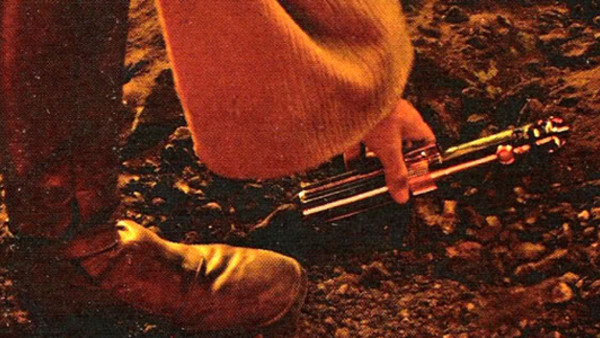
In A New Hope, we discover that Luke's lightsaber belonged to his father and obviously it transpired that it was Darth Vader's and Obi-Wan had come into possession of it. It wasn't until the end of Revenge Of The Sith that Kenobi defeated Anakin and "helped" his transition into Darth Vader and then took his lightsaber. Only Lucas apparently forgot to even film the key scene of Kenobi retrieving the weapon and it was only in the editing room that he even noticed, prompting a hasty post-production reshoot to get it.
6. The Ending Went From Downer To Upper - Clerks
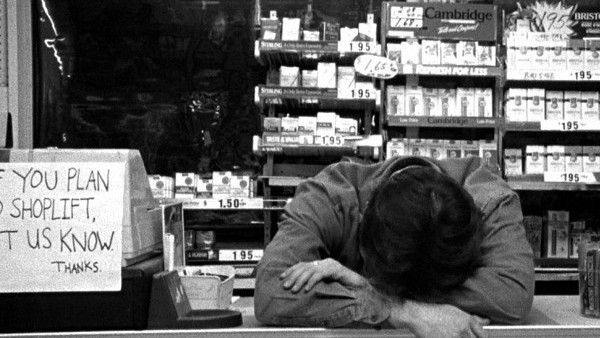
Clerks may look like it's little more than a mumblecore reflection on the McJobs Generation, stumbling miserably through life, sustained by their friendships and the currency of human interaction but otherwise thoroughly pissed off. But it's a lot more complex than that because it's a love letter to cinema, in a way.
Kevin Smith has expressed subsequently that Clerks was his answer to Spike Lee's Do The Right Thing and he took that agenda to the extreme by having it not only play out across a single day but to also end in tragedy. Which is why in the original ending, which was still in place during the first public screening at the Independent Feature Film Market, it ended with a customer entering the store as Dante was about to close up, then shooting Dante dead and robbing the till. Cheerful and not the worst comment on the ennui of that type of existence.
But Brian O'Halloran hated the ending, naturally, and Smith's mentor - John Pierson - suggested cutting the scene and ending on the more positive note that preceded the horror. It was the right choice and if he hadn't, we wouldn't have had a sequel, so it counts doubly.
5. Han Solo ISN'T A Gentleman - Solo

George Lucas may not be Mr Star Wars any more - at least not in any sort of active role - since Disney gave him more money than anyone in the entire world could ever spend, but that doesn't mean his influence is completely removed from what's been released since the takeover.
In the wake of a troubled production for Solo, which saw Phil Lord and Christoper Miller replaced (because they were too much like Han Solo, pretty much) and Ron Howard given control, Lucas actually added something to the film too.
Howard told Vanity Fair that Lucas actively changed a scene when he turned up on set in a small but defining way that spoke to how much he understood his own characters. When Han and Qi'ra hook up in Lando's closet of wondrous cloaks, the original version of the scene saw Han hang her cape up as he undressed her, real gentleman-like. Only that's not Han and Lucas expressed as much, confirming that the real Han wouldn't bother to hang it up.
It might not seem like a huge thing, but in hindsight it would have been a betrayal of the character.
4. Fester Wasn't An Imposter - The Addams Family
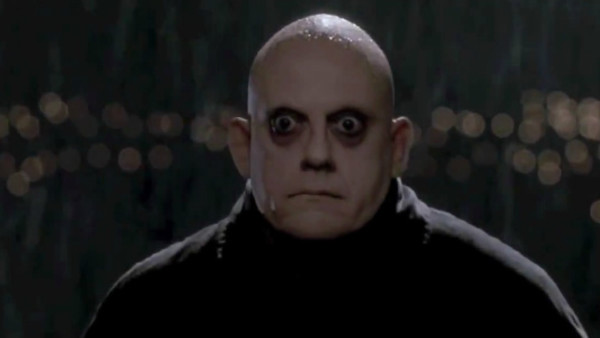
The Addams Family is pretty clever when you think about it, because the twist at the end of its central deception plot - which is based on the idea of an impostor called Gordon taking Uncle Fester's place to steal the family fortune - is itself based on a deception of Gordon.
From the outside, it appears that Fester has been duped into believing that he is really Gordon after losing his memory and his "mother" is using his true history to deceive him and his real family into robbing their vault. But then Fester's memory is accidentally restored by a strike of lightning and he is firmly welcomed back into the family.
Somewhat remarkably, the original plan was to have Gordon NOT be Fester and just be adopted into the family because he fit in so well (which is a pretty mean way to suggest that the original Fester was entirely replaceable). It was only changed when the entire cast - ironically not including Christopher Lloyd - objected and appointed Christina Ricci as the person best suited to convince Barry Sonnenfeld to change it.
3. The T-Rex's Hero Shot - Jurassic Park
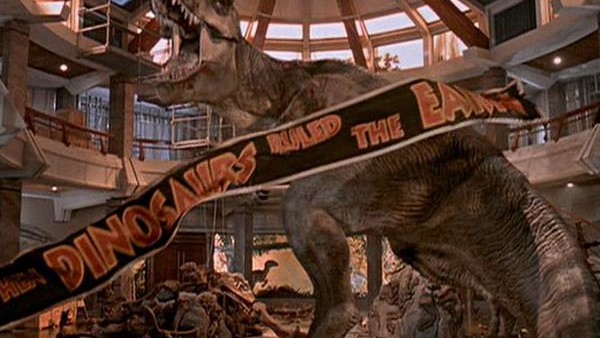
The end of Jurassic Park might be one of the greatest understated heel/face turns in modern cinematic history, because it turns what amounts to the main monster of a monster movie into the saviour of the heroes.
As the human survivors are trapped in the Visitors' Centre and surrounded on all sides by Raptors - revealed to be the real villains - the T-Rex that we'd seen terrorising the cast up to that point miraculously appears out of nowhere and kills the Raptors as they're about to strike. Call it Deus Rex Machina (particularly because it wasn't clear for ages how the massive creature even managed to get indoors).
The original ending would have seen the humans simply outsmarting the Raptors, which would have been a disservice to the same creatures we'd JUST seen master door handles, but because Steven Spielberg believed the ending of the T'Rex's story needed to be stronger, he retooled the ending. To brilliant effect, it has to be said.
2. Vader's Horror Movie Moment - Rogue One

Some people may have a problem with the way Darth Vader is presented at the end of Rogue One, but you can't deny the impact his one big scene in the film had or how well it helped amplify his mythology as an incredible threat. After we'd seen Anakin's devolution into the masked monster in Revenge Of The Sith, we all needed a little more bridgework to Vader being the fully formed badass he was in A New Hope, so it was a smart scene to have.
And to think, the scene almost never made it into the film. Had it been left to credited director Gareth Edwards, it wouldn't have even been filmed, but when he was replaced at the last minute by Tony Gilroy, the film was recut and key scenes were added in reshoots.
That final moment for Vader was probably the most famous last minute addition and according to Edwards, the entire scene was only conceived, shot and added to the final cut at the editing stage, just FOUR MONTHS before release. Talk about last minute!
Originally, the ending would have had Princess Leia's frankly creepy cameo, but the Vader part wouldn't have been there at all.
1. The Ambiguous Ending That Almost Never Was - The Shining

One of the most compelling movie questions of all time concerns what the ending of The Shining really means. That one lingering shot of Jack Nicholson beaming out of a photograph of the Overlook marked 1921 - an impossibility, by normal qualifiers - is easily one of the most famous final shots ever, chiefly because of its vague magic.
And yet, that was once not the final shot of the movie. In fact, it only became as important after the film was shipped to cinemas, which has to be some sort of record on the latest changes made to a release.
As originally conceived, the ending would have included a full epilogue set in a hospital, which Kubrick wrote as a means to reassure the audience that Wendy and Danny would be okay. He had a soft spot for them, according to his co-writer Diane Johnson, and determined that the audience would want to know that everything was back to normal.
But then, out of the blue, Kubrick had a change of heart after it had already premiered in LA and New York, deciding that the ending didn't work and insisted that all theatre projectionists cut the epilogue out and mail it back to Warner Bros, where they were almost all destroyed.