10 Movie Moments That Pissed Off The Fanboys In 2014

Think there's no worse fanboys than Batman ones? Try Jesus ones.

As unfortunate a development as it is, the term fanboy is now synonymous with the worst aspects of fanaticism: close-mindedness, stubborn refusal to accept anything new and a tendency to react without any sense of restraint or appropriate scaling. They are the Batman fans who endlessly bash Marvel-centric articles online without reading them, the ones who leap on criticism of Twilight, who defend the indefensible simply because of some imagined sanctity that exists only for them. Instead of it being a term of affection, inferring only love and appreciation, to be a fanboy is to be part of an entirely isolated sub-culture where reasonable and reasoned criticism goes to die. The funny thing is though, that no matter how you want to paint the humble fanboy, they're often right about the problems with the properties and franchises they love. They might not express it in the right way, nor engage with debate particularly well, but they know what they're talking about, and targeting them is often a smart way to ensure your movie makes a lot of money. Ignoring them, or inciting their rage, on the other hand is a good way to get bombarded with expletive laden "rebuttals" that question not only your parentage, but also the quality and size of your genitals. And boy did the fanboys get angry in 2014...


10. Michael Bay Teaches Splinter How To Fight

Michael Bay got his punches in early against everyone's childhood, suggesting that he might be turning the mutants into aliens, which basically caused the entire fanbase of people who hadn't even the slightest interest in reviving their passion for Turtles up until that point to explode in a shower of Turtle-powered rage. The outrage apparently caused a rethink - including a surprisingly self-referential joke about aliens in the film - but it didn't stop the grand meddler changing enough to annoy pretty much anyone who once owned a Turtles action figure. Aside from the atrocities committed by the script, pretty much the worst transgression in the rethought origin story was the fact that Splinter apparently managed to learn the art of Ninjutsu from a book that someone had helpfully flushed down the toilet. Ignoring that last bit because nobody wants to read thousands of words picking apart just how stupid it is, the idea that anyone - let alone a rat - could learn a martial art without even seeing it performed by a master is beyond ludicrous. They would have been better off just saying the old rat was a bloody wizard.

9. Robocop Was Sanitised

The original Robocop was a cult gem precisely because it was so committed to shocking, provoking and making the audience wince; it was an action film with one foot solidly planted in exploitation films. While it was far slicker, the genetic similarities are hard to resist, and that is partly why audiences responded to it's gloriously self-conscious trashiness. But from the moment the new Robocop was announced, it was inevitable that something was going to be lost in what Robocop had always meant; traded off for some unwelcome modern slickness that would feel like putting Mad Max in a tuxedo. But quite how sanitised the film would become was an unknown quantity and it was assumed by some - the hopeless idealists - that some sense of the spirit of the original would be upheld. Instead the film ignored those careless hopes and embraced the potentially bigger financial draw of the PG-13 rating: which is pretty much like releasing Nightmare On Elm Street without Freddy Krueger. Inevitably older fans were disgusted, and the studio ended up with a big loss on their hands when the new audiences they craved reacted with apathy and ambivalence.

8. Tauriel (Again)

If anyone was going to be allowed to mess with Tolkien's vision for Middle Earth - or at least "reinterpret" it in a way that made it more viable as a movie adaptation - it was probably always going to be Peter Jackson. The director is a dyed-in-the-wool fan, an expert through not only proximity but also because he has consciously drenched himself in the lore and the mystique of the fantasy world, and he didn't do too bad a job adapting the Lord Of The Rings. So when it came time to develop The Hobbit - a sparse, childish book in comparison to its elder sibling - Jackson's expertise and creative vision were welcomed: even the idea of bringing in new characters and new story-threads wasn't that much of a problem (probably because even ardent fans would concede The Hobbit actually needed it). The problem was, Jackson brought in his new characters (or extended the presence of bit-part players) but then got a bit distracted and sort of just forgot about them, so by the end of the trilogy they were relegated to passengers. That was particularly true of Tauriel, who went from Orc-ass-kicking action heroine to misty-eyed love interest who did very little other than watch things happen to other people. She wasn't a bad introduction, even though fans initially responded somewhat poorly, but the final insult that she was under-used (and thus inherently superfluous) was enough to inspire rage in even reasonable minds.

7. Rhino

Surely The Amazing Spider-Man 2 wasn't going to suffer from the same issues as Sam Raimi's Spider-Man 3 with too many villains, not enough restraint and wrong-headed casting? When Paul Giamatti was confirmed as Rhino, everyone was intrigued: he's a real actor after all, experienced in indie, classical styles and important film-making. He would no doubt bring a thespian edge to his performance as the hulking mutant and maybe he wouldn't be the disaster that other extreme villains had been in other properties. Wouldn't he? Well, no. Giamatti decided to channel the method of far inferior actors and turned Rhino into a bumbling, idiotic oaf: a Russian henchman who literally gets his pants pulled down, and the worst of it was that the actor seemed - perversely and without any irony at all - to be enjoying himself. So instead of a risky casting making a difficult character shine, he actually ended up turning Rhino into an even more clownish figure who book-ended the film with little more than unnecessary comic relief.

6. Noah€™s Reinvented Story

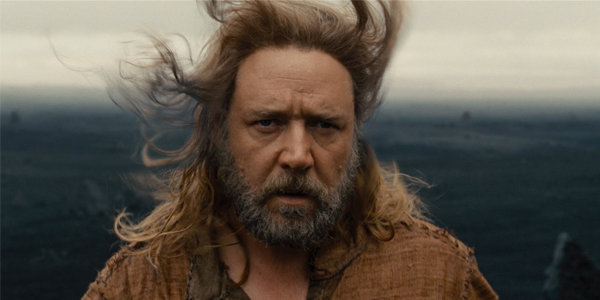
Whatever you do, never, EVER piss off the Jesus fanboys. They're the worst. You get the sense that not too many of the super religious types would have been really interested in going to see a secular telling of one of their most famous stories, because of all of the blasphemy and the heresy for the sake of cinema thrills, but it would appear that they were irresistibly drawn like moths to the flame. And inevitably, rather than accepting the film as an entertaining take on a familiar story, the Bible fans did what every fanboy who champions the sanctity of the source does and criticised all of the changes. And of course, because the Bible is held as testament, some of the more religiously devout reviews read like the ravings of a lunatic to more secular eyes: arguing that Noah's kids weren't supposed to be young in "real life" and criticising the magical elements of the plot because they didn't match with the other magical elements of the Bible, is a bit like criticising the Harry Potter franchise for its unrealistic portrayal of unicorns. The film wasn't great, but criticising it from a theological stand-point is folly. Which is about as redundant a moral lesson as ever conceivable given the inevitably reaction.

5. The Fat Bat Symbol

When Ben Affleck was announced as Batman, Bat-fans had a lot on their plates to angrily blog about: how could this charlatan actor fill the Bat-boots vacated by Christian Bale - a man with an unblemished career of movie making (as long as you ignored Newsies, and Reign Of Fire and Terminator Salvation...)? How dare they?! But then things got even worse when the first glimpse of the Bat-suit was unveiled: "the ears are too short", "why does he look so sad?" and mostly "what in Gotham is up with that Bat-symbol?!" Just as emo Batman became an extensively memed image, some fans with different priorities pointed out that Batman's new chest icon featured what could only be described as a morbidly obese bat, undermining the image of the sleek, ninja-like hero. And as if one body image issue wasn't enough...

4. Fatzilla

Considering that Hollywood had pretty much closed the book on Godzilla after finding out that Matthew Broderick definitely isn't leading man material in an action movie, the fact that any fans would pick fault with the chance to see another big screen outing for the Toho legend seems a bit ungrateful, but such is fandom. Perhaps struggling to cast off the ominous memories of that Roland Emmerich travesty that saw the monster reinvented as a bad tempered iguana intent on smushing mankind for no real fathomable reason, fans reacted angrily when the first reveal of Gareth Edwards' new monster appeared to have packed on the pounds. They took the suggestion of obesity as an indication that the film was going to be another betrayal of the source, and while the reality was entirely different (and the film excellent), murmurs of "Fatzilla" could still be heard in dark cinema rooms across the world. Proof, if ever it were needed that you can't win no matter how you "reinvent" a classically adored character.

3. Jurassic World€™s Talking Raptor Hint

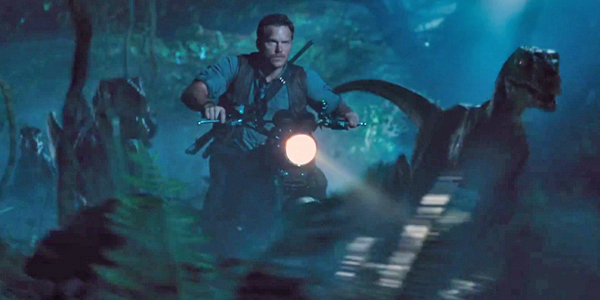
After Jurassic Park 3 derailed the franchise, the chance to see a new sequel was considered slim: after all, how on Earth could any director overcome the image of Sam Neill "communicating" with raptors by blowing into a fake dino-voice box and SOMEHOW managing to get the right words for "do not eat us, we are simply odd looking raptors"? But when the sequel was eventually announced, fans were clearly willing to give it a chance to erase the sins of the past; or at least that was the case right up until the first big trailer landed. Not only was it accused of showing too many dinosaurs (or trying for too much fan-bait more pertinently), there was also a suggestion that not only had they not avoided past problems, but that they had picked them up and were running with them. First there was the use of genetically engineered dinosaurs - similar to an abandoned sequel pitch that would have introduced humanoid dino-soldiers and inspired the most comically reductive concept art of all time - and then there was the hint that Chris Pratt's hero would be some sort of dinosaur whisperer, leading his own team of raptor-friends as a rapid response team. Have they learned nothing?!

2. The New Shredder

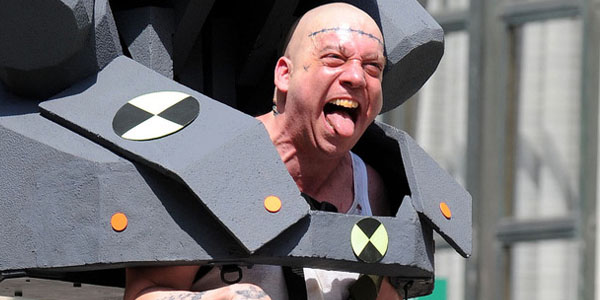
One of the chief problems with Michael Bay's new "vision" for the childhood favourite villain was also one of the easiest to spot; he wasn't so much a shredder as a bloody Swiss army knife. His suit was impractical, unwieldy and over-powered: a showy allegory for the whole film, which missed its mark rather spectacularly, but which will inevitably inspire a franchise that will make Bay's production company even more unfeasibly rich. The look of the suit wasn't the only issue however: first off, the man inside it must have been about 90 years old given the timeline of the film, and yet he was able to leap about like a sprightly teenager showing off. And then there's the fact that his adaptation to the suit was as improbable as a rat's ability to learn ninjutsu from a book: most grandfathers struggle to send a text message, but without so much as a cursory glance at the instructions, Shredder was able to master his new suit's many functions effortlessly and immediately. Silly. And finally, the villain - who should be considered a Darth Vader-like figure - was relegated to playing a glorified henchman, having to oversee menial tasks like pressing the buttons to release deadly poisons over the city (which would have killed him since the console was basically at ground zero). Bay wrongly believed that mystique was more important than substance and it further hurt his film's standing with real fans.

1. Sony Pulls The Interview Plug

Was it an all elaborate hoax and marketing ploy? Possibly, but whether it was intended subterfuge or not, the decision to make a mountain out of the mole-hill of a not-very-good-at-all movie was a big commercial win for Sony. And that's despite the fact that it was almost their worst idea on any number of levels. First off, the creative choice to portray (and slay) North Korea's notoriously volatile supreme leader Kim Jong Un as a figure of fun (in the same vein as his father's portrayal in Team America) was enough to incite the anger of all of his definitely-not-coerced fanboys in his home land. That alone was silly, given the country's new nuclear abilities and the way they apparently deal with agitants, but then by bending to the will of the hackers (terrorists in other words) Sony managed to annoy the patriotic America fanboys they were trying to protect from becoming collateral damage. Regular cinema goers were outraged at the censorship, suggesting that Sony were setting a dangerous precedent, and the result was a banner-waving, tub-thumping display of not only patriotism but of commitment to creative freedom, as the studio was lumped in as a villain of the piece themselves. Inevitably they caved and made the film available, but their reputation remains somewhat in tatters. Which other fanboy-inciting moments from 2014 also deserve to be on this list? Share your thoughts below in the comments thread.

Contributor
Contributor

WhatCulture's former COO, veteran writer and editor.