10 Movie Franchises That Surprisingly Got Better
Ethan Hunt's come a long way.

Conventional Hollywood wisdom says that movie franchises don't get better - instead, they take a creative first movie and run it into the ground with lazy sequels until the box office gravy dries up.
But of course, that's not always the case, with many series capable of at least maintaining a fairly consistent level of quality, while more rarely, a franchise might even pull off a surprising uptick.
Now, it didn't shock anyone that the Harry Potter series got better as the actors grew up and became better actors, nor that Revenge of the Sith was a better Star Wars movie than The Phantom Menace, because the only way was up, right?
And so, those movies do not make this list. These 10 franchises, meanwhile, all enjoyed a noticeable rise in quality that came most unexpected, either due to the tawdry quality of the early entries, or more rarely, that the original movies were so damn good it didn't seem possible to top them.
It takes a ton of care and a healthy dash of good luck to reinvigorate a movie series mid-stride, but these all pulled it off, serving as a reminder that any franchise, no matter how desperate, has the potential to save itself one day.
Except Hellraiser. That thing's screwed, like, permanently...
10. The Fast & The Furious

Back when the Fast and the Furious franchise launched in 2001, nobody could've ever expected it to become a mammoth, billion-dollar pop-culture phenomenon, let alone one which also ended up critically acclaimed.
The original movie was a shamelessly cheesy vehicular action flick that touted an endearingly trashy charm.
The first three sequels that followed, however, were wildly divergent in quality, switching-out cast members at the drop of a hat and making it tough for a larger audience to get truly invested in the franchise.
But everything changed with 2011's Fast Five, which downplayed the niche petrolhead larks and re-shaped the series into a broader heist blockbuster, complete with the added presence of Dwayne "Franchise Viagra" Johnson.
The series has enjoyed a major critical and commercial uptick ever since, reliably serving up entertainingly daft banter between its huge ensemble and knowingly ridiculous, deliciously crafted set-pieces.
No major tentpole franchise has pivoted away from mediocrity quite this impressively, and even with the series about to diverge into spin-off territory with its ninth movie, Hobbs & Shaw, it doesn't seem remotely out of gas yet.
9. Transformers

Expectations weren't exactly high when Paramount tapped Michael Bay of all people to helm the Transformers franchise, and though the original 2007 movie wasn't bad, it nevertheless felt like an overly juvenile, clumsy attempt to appeal to hormonal teenagers above all else.
The sequels got progressively worse, with the first three follow-ups turning in absurd profits almost inversely proportional to their critical responses. Audiences finally grew out of Bay's shtick with the fifth film, The Last Knight, which scored the lowest box office of the series.
Something clearly needed to change, and so the studio opted to proceed with a smaller-scale Bumblebee-starring spin-off, while hiring Travis Knight (Kubo & the Two Strings) to direct.
This resulted in Bumblebee receiving the only Fresh critical rating of the franchise, being praised for its family-friendly tone, less chaotic direction and more faithful approach to the Transformers themselves.
Better still, its mighty 92% Tomatometer is higher than the scores of the previous four movies combined.
Though Bumblebee did turn out to be the lowest-grossing film in the series, its decidedly lower $135 million budget nevertheless allowed it to multiply its price tag three-fold.
Paramount recently confirmed development of a sequel, which will hopefully prove that Bumblebee's success wasn't a one off for Bay's beleaguered series.
8. Child's Play

The original 1988 Child's Play isn't great, but it is a solidly fun, kitschy B-movie that kick-started an unexpected horror empire revolving around a killer doll, albeit one which quickly slid into a pattern of forgettable and ill-conceived cash-grab sequels.
The series has always been marked by its inconsistency, and after the awfulness of Child's Play 3 - which saw Chucky (Brad Dourif) stalking a group of kids at a military academy - the series at least showed some slivers of invention in 2000's meta-comedy Bride of Chucky, flaws and all.
But 2004's Seed of Chucky tipped the balance too far into silliness, and its mediocre box office performance killed the series' theatrical prospects.
Almost a decade later, however, the franchise was resurrected on VOD with Curse of Chucky, and despite the low expectations associated with that release model - typically reserved for over-the-hill series with nothing left to say - it ended up scoring the best reviews of the franchise to date.
2017's seventh film, Cult of Chucky, scored almost identical reviews and went over swimmingly with a fanbase who had presumed the series dead just a few short years prior.
Though it remains to be seen how the upcoming reboot and planned TV series will turn out, the last two movies have granted a major reversal of fortunes for a series that seemed well past its sell-by date.
7. The Marvel Cinematic Universe

Now to be clear, the Marvel Cinematic Universe has never been bad, but it's also fair to say that its origins were, at least by contemporary standards, rather quaint and straight-forward.
Back in 2008, it was impossible to imagine how impressively the franchise would grow, not only in terms of scale, budget and sheer ensemble power, but also the ambition and daring of the stories and characters given the blockbuster treatment.
If the early days of the series hedged their bets on Iron Man, The Hulk, Thor and Captain America, Marvel Studios' growing confidence eventually allowed them to tackle more out-there projects like Guardians of the Galaxy, Ant-Man, Doctor Strange, Thor: Ragnarok, Black Panther and a glut of increasingly stacked tentpole team-ups.
The finale of Avengers: Endgame represents the culmination of more than a decade of cinematic evolution, and it's a testament to a patient, well thought-out approach on the part of producer Kevin Feige.
If the series peaked with the terrifically entertaining original Iron Man and the team-up movies all ended up being a bit messy, would anyone have been that surprised?
But instead, the MCU has gone from strength to boundary-pushing strength, and that uptick in quality is visible even within many of the series' own sub-franchises itself, namely Captain America, Thor and The Avengers.
6. The Dollars Trilogy

There's no denying the brilliance of Sergio Leone's epic, Clint Eastwood-starring western trilogy, though it's undeniable that the series also had a slightly tainted beginning.
1964's A Fistful of Dollars, ludicrously entertaining though it is, cribbed shamelessly from Akira Kurosawa's 1961 classic Yojimbo, resulting in a lawsuit which allegedly caused 15% of the film's profit over $100,000 to go to Toho, the studio who financed Yojimbo.
Leone thankfully avoided any such controversy with his sequel, For a Few Dollars More, which upped the scale and found in El Indio (Gian Maria Volonté) one of cinema's all-time most savage (and savagely entertaining) villains.
But the franchise's pièce de résistance was yet to come, with the trilogy-capping, three-hour The Good, the Bad and the Ugly.
Reuniting Eastwood with Lee Van Cleef and throwing Eli Wallach in the mix for good measure, the result is a virtually faultless embodiment of the spaghetti western, and one of the most purely entertaining films ever made.
All the movies are good-to-great, of course, but after the roughness of Leone lifting from a fellow master filmmaker - and initially refusing to own up to the fact - he delivered two increasingly thrilling movies that elevated the genre beyond what anyone could've reasonably expected.
5. Blade Runner

The original Blade Runner is such a monument of the sci-fi genre, such a high-point for Hollywood's fusion of thrills and thoughtfulness, that fans quite rightly expected its belated sequel, Blade Runner 2049, to be a solid, respectful addendum to the original story and nothing more.
Fans and critics were shocked, then, when Denis Villeneuve's visually jaw-dropping epic was released to rave reviews, with many deeming the film flat-out better than the original.
And they're right - the plot and characters are far more interesting, it's got a less problematic approach to women and dispenses with the original's goofiness (there's no backflipping Daryl Hannah, for one).
Basically, it's a more compelling and visually robust iteration on its predecessor, and achieves the rarest of things by improving upon a solid gold (if certainly flawed) masterwork.
While Blade Runner can only barely qualify as a franchise and it's highly unlikely we'll ever see a third movie, pretty much nobody expected the sequel to top the original, even with the inscrutable Villeneuve at the helm.
4. Universal Soldier
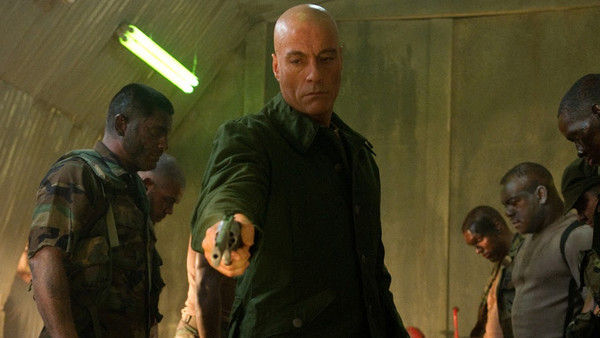
Though 1992's Jean-Claude Van Damme-starring actioner Universal Soldier is an undeniable cult classic, few would call it a genuinely good movie: it's charmingly stupid and a fun "switch your brain off" romp.
Despite the film's box office success, a sequel wasn't hastily assembled, and production company Carolco went bankrupt in 1995.
The rights to the IP were eventually sold, though, and two TV movies were released in 1998 without the involvement of Van Damme or co-star Dolph Lundgren. Unsurprisingly, both films were panned by the fanbase.
The series returned to cinemas with 1999's Universal Soldier: The Return, which with a budget roughly double that of the original, hoped to reinvigorate the franchise's theatrical potential. But because casting wrestler Bill Goldberg opposite Van Damme was never going to be a good idea, the film flopped with, well, everyone.
The franchise then went dormant for a decade before it was resurrected on home video, with Universal Soldier: Regeneration, which brought Van Damme and Lundgren back into the fold and opted to ignore every prior movie beyond the original.
With fans having a baseline of gutter trash to draw their expectations from, it was a genuine surprise that the movie turned out pretty well, scoring the best reviews of the series to date (that is to say, still very mixed).
And while Regeneration could've been a mere fluke, 2012's follow-up Universal Soldier: Day of Reckoning topped it yet again, very nearly creeping into Fresh territory on the Tomatometer and actually getting a limited theatrical release.
It certainly helped that in addition to Van Damme and Lundgren, the film also starred martial arts maestro Scott Adkins, and the directorial style took on an unexpectedly surreal, even horrific tenor.
A reboot is currently in the works, but given the series' tawdry origins and dumpster fire of a follow-through, it's impressive that it was salvaged from the trash heap so many years later.
3. The Before Trilogy

Richard Linklater's irresistible 1995 romantic drama Before Sunrise was one of the most evocative and unforgettable films of the 1990s, but it could so easily have been a single, standalone film about two youngsters, Jesse (Ethan Hawke) and Celine (Julie Delpy), falling in love over the course of a single night.
Linklater dared to try his luck with a sequel nine years later, and miraculously enough, Before Sunset was even better, offering up a deeply romantic and visually stunning meditation on growing up and the compromises that come with simply living life.
And while the film's brilliant cliffhanger ending could've been the final word on the pair, Linklater picked up their story yet again another nine years later with 2013's Before Midnight, which re-examined their relationship through the lens of middle-age existential ennui.
With its darker and more challenging pallor, the threequel took the emotional resonance of the series to new heights, allowing Hawke and Delpy to deliver arguably the finest performances of their careers in the process.
Obviously, the series has always been great, but Linklater set such a high standard for himself from the outset that few could've anticipated he'd manage to up himself so consistently.
Whether or not a fourth film abounds in 2022, the constant uptick here is staggering.
2. Mission: Impossible

What a wild ride the Mission: Impossible series has been.
1996's Brian De Palma-directed film was a solidly enjoyable spy romp, yet 2000's John Woo-helmed follow-up proved wildly divisive, effectively putting the series on an extended hiatus until 2006, when J.J. Abrams delivered a smoother, less-ridiculous threequel.
This is generally regarded as the point at which the series began its irreversible climb towards genre mastery.
2011's fourth film, Ghost Protocol, saw Brad Bird elevate the series to new heights (literally), with a greater focus on ingenious gadgets, palm-sweating stunt work (much of it carried out by Tom Cruise) and a terrifically charming ensemble cast.
And then Christopher McQuarrie joined the director's chair for the fifth film, Rogue Nation, again amping up the ambition of the set-pieces while finally lending the series a female mainstay in femme fatale Ilsa Faust (Rebecca Ferguson).
But just last year, the series once again set a new high for itself, with Mission: Impossible - Fallout, a film so staggeringly well-realised and brilliantly acted that many deemed it the greatest action film since Mad Max: Fury Road (and they're not really wrong).
It's a fascinating journey for a series that started out so simple (relatively speaking), and after some early speed bumps, has managed to master the art of upstaging itself every time.
It's tough to imagine how the seventh film can top Fallout, but didn't we all say that about Rogue Nation?
1. Jackass

When a Jackass movie was first announced, there wasn't really much of an expectation that it'd be anything more than a slightly ruder, feature-length version of the hit MTV show.
And in the case of the first two movies, released in 2002 and 2006 respectively, that was basically on the money.
The first film received mixed-positive notices while blowing up the box office, but the sequel skewed more positive while also generating more profit.
In 2010, the Jackass crew reunited for one more go-around, Jackass 3D, which reinvented the series' formula with extensive, hilarious and shamelessly lewd use of 3D cameras.
If you saw the film in all of its 3D glory, you'll likely never forget the sight of Steve-O being catapulted into the air while inside a portaloo filled with poo.
3D surely wasn't designed with this in mind, but it was certainly a dementedly creative way to top the film's previous goofball shenanigans.
And it paid off dividends, with Jackass 3D landing the best reviews of the series and also grossing more than both prior films combined.