10 Movie Endings That Left A Sour Taste In Your Mouth
Those uncomfortable finales that made your palate bitter.
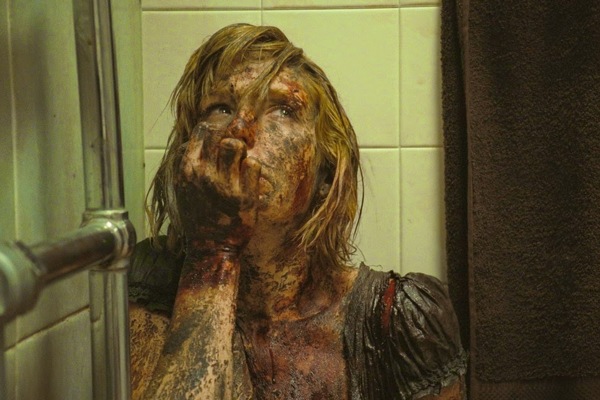
Plenty of films choose to end on sad, depressing or downbeat notes, but an ending that sends you home with a sour taste in your mouth... well, that's a different beast entirely.
A truly sour ending has the power to linger on and on, of course, stuck to your palate for days, weeks, months or years afterwards. You don't often forget them.
Here are 10 such endings, all of which - for a number of unnerving reasons - inspired a foul taste...
10. The Diner - The Lobster
It's not really all that surprising that The Lobster has a sour ending, given that it was written and directed by Yorgos Lanthimos, a filmmaker who specialises in leaving you cold.
This vasty weird absurdist black comedy, The Lobster, has Colin Farrell as a singleton named David who checks into a hotel and has 45 days to find a partner - or be condemned to life as an animal (in this case, the lobster of the title). Eventually, he runs away and joins a group of rebels living in the woods, before finally falling in love with Rachel Weisz.
After Weisz's character is blinded, the pair flee into a dystopian City, where the film culminates on a scene that sees David in a diner toilet, preparing to blind himself with a table knife. It's deeply disturbing and awkward, mainly because we don't get to witness him actually going through with it (although it is heavily suggested that he will and does).
It's an uncomfortable way to end the film, but the most disconcerting thing about it stems from the fact that David's reasoning is never mentioned; he just decides to blind himself, presumably as a means of reconnecting with Weisz' character after they've started to drift apart. And yet doing the deed in a diner toilet - and with a table knife, no less - highlights the sad extent that a person will go to in order to feel connected to somebody.
It's that cruel realisation that gives the The Lobster's ending an abrasive edge.
9. "I'm So Sorry..." - Buried
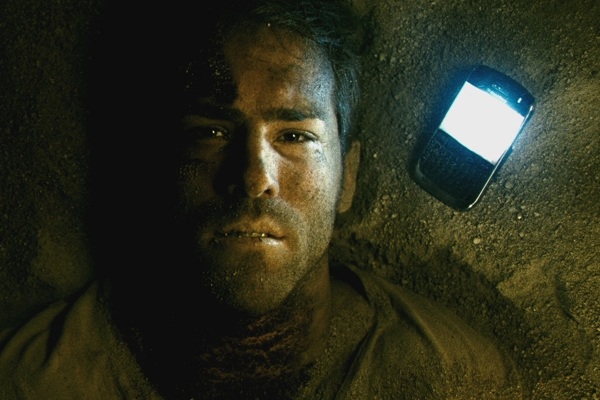
Buried is a film made memorable because - for the entire length of its 95-minute runtime - it stars Ryan Reynolds in a coffin, buried alive.
The events of the film transpire as follows: Reynolds' character, Paul, a truck driver working in Iraq, awakens to discover that he's been buried alive and that the people responsible are demanding a ransom of $5 million. Not the sort of situation you want to wake up to find yourself in, that's for sure. All he has is a Zippo lighter and a cell phone. Despite various attempts to discover his location, however, Paul's luck eventually runs out. Gulp!
Just when you think Paul will be rescued, then, the film takes a jarring turn: his saviours have dug up the wrong coffin, it turns out. "I'm sorry, Paul," comes a voice over the phone, "I'm so sorry." At which point, the coffin begins to fill with sand and Paul starts to suffocate. Buried then cuts to black, as you - the movie-goer - struggle to comprehend his fate.
As far as movie endings go, this isn't one you're likely to forget. But it's also one that leaves you feeling kind of traumatised, purely because it feels so heartless. You invest all this time in Paul's plight, after all, and are led to believe - up until the final moments, no less - that he'll make it. Then it's made clear that Paul is done for, and it dawns upon you: you've just watched a man live out the last 95 minutes of his life. If that ain't sour, then what is?
8. The Lamia Calls - Drag Me To Hell
For the most part, Sam Raimi's Drag Me to Hell is a hilariously old school throwback to B-movie horror. That is, until its ending, which was brutally cold - and totally unexpected.
The premise driving Drag Me to Hell concerns Alison Lohman's Christine Brown, a bank worker who - one day - winds up being cursed by an old Gypsy woman after refusing to give her a loan. Christine is subsequently terrorised by a malevolent spirit called "the Lamia," all whilst she attempts to stop it from dragging her to Hell in three days' time.
Most people sitting down to this horror flick probably expected Christine to make it through the film alive, but Raimi throws in a curve ball at the end and the film culminates on a scene in which Christine - having failed to reverse the curse - is dragged into Hell by a fiery demon as her boyfriend, played by Justin Long, watches on in total bewilderment.
All in all, and given the somewhat schlocky nature of the film, this plays out as such a mean-spirited and distressing finale - especially since Christine is painted as an innocent victim for the length of the movie; it's not like she's a horrible person. In fact, she is courteous, sweet and lovely (not to mention she initially tried to give the Gypsy woman the loan). And then the poor girl goes to hell, in what is essentially a comedy? It's awful!
7. The End Of All Things - Melancholia

Well, it's not really all that surprising that a film about the end of the world - written and directed by Danish provocateur Lars von Trier, no less - leaves a sour taste, is it?
Melancholia is just about the most melancholic film ever made, and takes place at a wedding reception out in the country, where Kirsten Dunst's Justine, the Bride of the occasion, slowly comes to realise that the end of the world is coming when a planet - named "Melancholia," of course - soon collides with Earth (despite the fact that her husband, played by Alexander Skarsgard, keeps telling her that it won't happen).
The film ultimately concludes with a rather beautiful sequence, in which Justine, her sister and her nephew hide inside a teepee as Melancholia hits the Earth, killing everyone.
Despite the fact that Justine adopts a relatively calm attitude as the apocalypse weighs in, this is still the sort of ending that leaves you stuck in a bout of quiet disorientation. Lars von Trier clearly goes out of his way to make the end of all things weirdly hypnotic, a neat antidote to the way the apocalypse is usually depicted in most Hollywood films, but at the same time Justine's apathy makes for an uneasy mood.
We knew how it would end, of course; we're shown the collision at the start of the picture. When it actually happens, though, it's difficult to accept, a result, perhaps, of it all feeling strangely real - and who, really, wants to be made to feel like the world is ending?
6. Who Are The Real Cannibals? - Cannibal Holocaust
As one of the most controversial movies of all-time, it'd be near on impossible to come away from exploitation classic Cannibal Holocaust without feeling uneasy.
Presented in the "found footage" film style, Cannibal Holocaust chronicles the expedition of a group of American filmmakers who set out into the jungles of South America in an attempt to shoot footage of a local tribe. Of course, the group get way more than they bargained for when they realise that said tribe are hungry cannibals. And so begins a series of seriously horrifying incidents - all of which have the potential to scar you for life.
The film ends with Professor Monroe, the guy who managed to "locate" the footage and bring it back to the United States, showing several television executives some truly disturbing footage in order to convince them not to air the documentary. Unsettled beyond measure, they agree to destroy it all, as Monroe ponders "who the real cannibals are."
Few films leave a sour taste like this one; you might wish you'd never seen it afterwards, in fact, and the reason for that stems - mostly - from the tone. Whilst the ending itself does cement Cannibal Holocaust as a truly sour film, the entire picture is like celluloid poison: if you want to be made uncomfortable, watch this, what with its animal killings, gratuitously violence scenes (that still look horrific today) and overall feeling that it could be real.
Not many films cling to such a exploitative vibe, and the end (with the footage movie-goers just sat through being destroyed) epitomises that - this film is so sour, you'll be sick.
5. The Nightmare - Deliverance

Deliverance chronicles a canoe trip to the Georgia backcountry gone totally and utterly wrong, as four friends from the city - Lewis (Burt Reynolds), Ed (Jon Voight), Drew (Ronny Cox) and Bobby (Ned Beatty) - encounter a couple of hillbillies with sinister intentions. Bobby is raped, which inspires Lewis to take action: he kills one of the hillbillies, which leads to disaster when the men attempt to make it to the end of the river in their canoes.
Drew dies; Lewis is severely injured; Bobby is too distraught to act. It's up to Ed to get his friends home in one piece, and he's forced to kill and then lie about what happened in the process. The ending of the film is capped with a nasty stinger, as Ed - back in his own bed - awakens from a nightmare in which a hillbilly's hand rises eerily from a lake.
It's a very, very unsettlingly end to a film that already embraced a relentless tone of anxiousness from start to finish - after everything that Ed has been through, we are made to feel like co-conspirators in his crimes. We understand why he did what he did, and also - to an extent - why he chose to lie about it to the police. But like Deliverance's protagonist, movie-goers are left with a sense of guilt - a fear that the secret isn't quite buried.
4. The False Smile - Oldboy
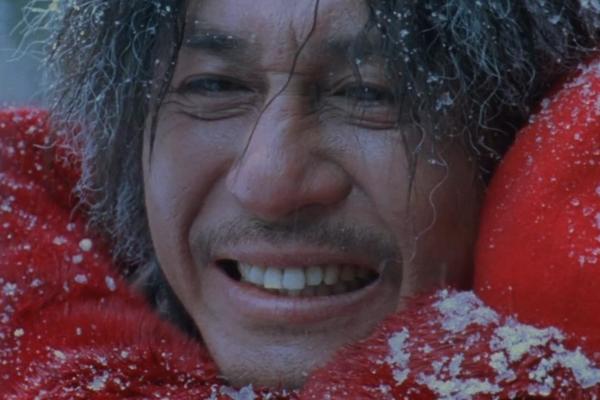
One of the most famous films to come out of South Korea, Oldboy is a bold and disturbing motion picture experience with an ending that'll rattle your senses.
The story centres on a man named Oh Dae-su who is captured and imprisoned inside a small room for 15 years. After this period, he's suddenly let out, and so he sets about on a mission to discover who locked him up. Eventually he discovers that the person behind his imprisonment is an old school friend named Lee Woo-jin, a man whose sister was driven to suicide because Oh Dae-su once spread rumours about their incesteous relationship.
The ending of the film is sour, to say the least: Oh-Dae-su realises that he's been tricked by Lee Woo-jin into a sexual relationship with his own estranged daughter. Lee Woo-jin then commits suicide, and Oh Dae-Su attempts hypnosis to erase memories of what he has done. When he meets his daughter in the final scene, though, his initial smile slowly collapses into one of pain - suggesting that the hypnosis hasn't actually worked.
The thought that Oh Dae-Su might have have to spend the rest of his life pretending - or trying to forget - about what happened is an uneasy thought, whilst the film's central revelation of incest can't help but inflict a sour mood upon the audience; it's a taboo subject that is rarely broached in cinema, after all, and watching a man trying to come to terms with what he's done - both to others and unto himself - makes for painful viewing.
3. The Bathroom - Eden Lake
Eden Lake came as part of a brief wave of British films that were dubbed "hoodie horrors," and it's one of the best films of this obscure little sub-genre.
The film itself is tonally uncomfortable from start to finish, as a couple, Jenny and Steve - played by Kelly Reilly and Michael Fassbender - head off into the woods for a weekend getaway, only to find themselves targeted by local youths (the leader of which, Brett, is played by the great Jack O'Connell). Eventually, a series of nasty encounters results in Steve being killed, and thus Jenny flees in order to survive.
Then comes the chilling and brutal ending, which earned Eden Lake a place on this list. After escaping the woods, Jenny - now a murderer herself, having purposely run over one of the youths during her escape - drives to a nearby town, where she crashes and then awakens to find herself inside - of all places - Brett's house. At this point, Brett's father - hearing his son's story - murders poor Jenny in the toilet to cover up the entire incident.
Eden Lake, therefore, winds up being another one of those films in which you sat and rooted for the protagonist, only for them to wind up being swept under the carpet. It's the idea that nobody will ever get to the bottom of Jenny's death that makes it so sour; that, in all likelihood, Brett is going to get away with the terrible things that he did in the film. Worst still, the idea Brett's father is willing to kill somebody to cover the mess up is chilling.
2. The Knife - Funny Games

Michael Haneke's anti-film, Funny Games, embraces one of the nastiest endings in all of cinema and ensures movie-goers with a sour taste that might very well last a lifetime.
Haneke's meta-movie, which essentially punishes its audience for actually sitting down to watch it, concerns two serial killers who turn up at a family home one day and ask to borrow some eggs. Before long, they've taken the family hostage, however, and from that point on the director sets out to deconstruct the relationship between movie-goers and movie violence, whilst subverting each and every genre convention and expectation in sight.
It's the ending that ensures that sour taste, however: after escaping from her captors, the only surviving member of the family, Anna, is taken on board a boat. Haneke, the trickster that he is, shows a close-up of a knife, manipulating us into believing that Anna will grab it and kill her captors. Nope: they casually toss it overboard and drown Anna, only for the film to end with them heading towards a new house to repeat the cycle.
Haneke does all this on purpose, of course - Funny Games is a picture that thrives on its ability to play the audience. But even knowing his agenda doesn't make the ending of Funny Games any less shocking or disturbing to watch; the director wants you to come away from his film soured, yes, but seeing that knife and then watching it fly into the lake is so frustrating that you begin to feel genuine hatred for the man who wrote the scene.
1. The Quadruple Murder - The Tribe
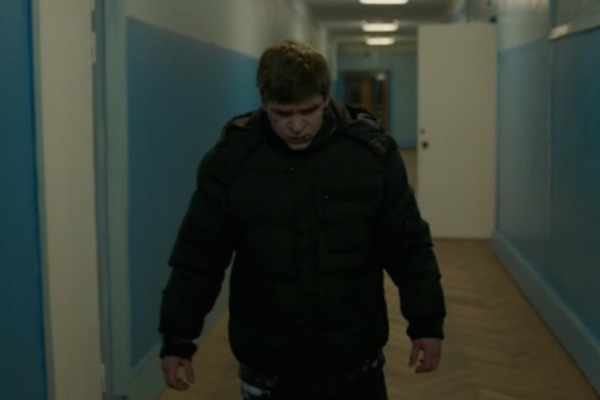
Ukrainian film The Tribe is one of most disturbing films in recent memory, notable for the fact that all the characters in the picture are deaf and there's no spoken dialogue.
The plot concerns a young man named Serhiy who enrolls at a boarding school for the deaf - everyone who attends and works at the school is deaf and communicates with sign language (which isn't subtitled). Before long, Serhiy is caught up with a ferocious gang and is roped into helping in their criminal activities, one of which involves pimping out two female students to truck drivers. Eventually he's betrayed and decides to take revenge.
The ending of The Tribe, then, contains the most horrifying part of the picture; after being beaten and left for dead, Serhiy enters the rooms where his assailants are sleeping and, one by one, kills them all by crushing their dressing tables on top of them. He literally goes from room to room, methodically murdering them in succession. Of course, nobody hears what's happening, which makes it all the more eerie to witness.
It's incredibly hard to get this ending out of your head as a result, and so the sour taste persists for weeks (a feeling echoed by Guardian film critic Peter Bradshaw). In this case, the taste comes down to the fact that the sequence is so realistically rendered; as a human being, it's impossible not to feel utterly disillusioned having watched such a horrific act of violence take place - especially when it's done so slowly, in such an unpredictable way. Like this article? What do you make of these endings? Did they leave a sour taste in your mouth? Let us know all your thoughts on the matter in the comments section below.