10 Movie Characters Who Died Breaking Their Own Rules
They played themselves.
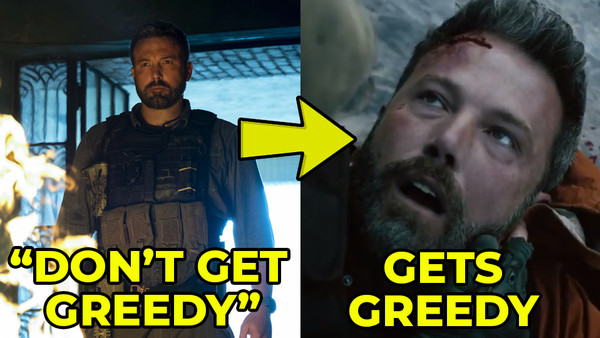
Movies are all governed by rules, be it the simplicity of human beings actually behaving like human beings, or the magical mechanics of big-budget blockbusters.
These rules ensure that the audience understands the boundaries of what can and can't happen in a given movie world, but where characters are concerned, filmmakers will often intentionally break the established rules for dramatic effect.
While none of these 10 movies violated the inherent logic of their stories, each did nevertheless feature characters who betrayed their own internal belief systems and eventually paid the ultimate price for it.
Whether consciously or not, these 10 characters all went against their prevailing ethos, driven by greed, heroism, or good old-fashioned stupidity, and ended up on a morgue slab as a result.
Though in some cases the results were frustrating or indicative of lazy writing, at their best these paradoxical characters were strengthened as a result of their failure to commit fully to their own moral code...
10. Neil McCauley - Heat

The Rule: "Don't let yourself get attached to anything you are not willing to walk out on in 30 seconds flat if you feel the heat around the corner."
Michael Mann's masterful crime thriller Heat sees bank robber protagonist Neil McCauley (Robert De Niro) live by this single rule, to not be weighed down by anything that might impede a quick getaway if necessary.
Except, McCauley ultimately betrays his very own maxim at the end of the movie. As he heads to the airport to flee with his haul, he learns of turncoat Waingro's (Kevin Gage) location and instead decides to seek revenge on him.
Though McCauley does indeed kill Waingro, but also ends up chased by LAPD Lieutenant Hanna (Al Pacino), who guns him down before he can resume his escape.
That's some delicious dramatic irony right there - despite his own preaching throughout the movie, McCauley couldn't let go of his own emotional baggage and paid a deathly price for it.
9. Lee Abbot - A Quiet Place

The Rule: Don't make a sound.
John Krasinski's terrific sci-fi horror film A Quiet Place revolves around an alien invasion on Earth, whereby the extraterrestrial entities hunt by sound, forcing the remaining humans to live silently in order to survive.
And while this is strictly enforced by Lee Abbot (Krasinski) throughout the movie as he tries to keep what remains of his own family alive, he ends up having to break this rigid rule in order to save his kids near the end of the film.
With one of the monsters closing in on two of his children, Lee makes the decision to sacrifice himself, shouting loudly enough to attract the alien to him, resulting in him being brutally slaughtered by the creature.
You can argue that Lee could've tried different tactics to distract the monster, but given the urgency of the situation, breaking his own code in an act of heroic self-sacrifice certainly made sense - and most importantly, it worked.
8. Rory Adams - Life

The Rule: Don't break quarantine. Ever.
Daniel Espinosa's sci-fi horror Life is an intriguing yet deeply frustrating film, largely due to the characters' willingess to enthusastically grab the idiot ball and run with it.
This is felt no more palpably than through the character of engineer Rory Adams (Ryan Reynolds), who flouts basic quarantine procedure in an attempt to save his colleague Hugh (Ariyon Bakare) from being attacked by the alien entity known as Calvin.
And while Rory does indeed get Hugh to safety, it's at the expense of his own life. But worse than that, in death Rory provides crucial nourishment to Calvin, which devours his insides, allowing it to grow larger and effectively continue its rampage for the rest of the movie.
This rampage includes the deaths of most of the crew and allows Calvin to eventually make it to Earth, where the film ends with the implication that Calvin is going to continue to feed and grow larger.
Though Life does feature a frequently exasperated quarantine officer, Dr. Miranda North (Rebecca Ferguson), it goes without saying that Rory would've been fully briefed on quarantine procedure before the mission began.
Furthermore, given the rigorous psychological testing anyone sent on this life-seeking mission would be put through, it's a major betrayal of not only scientific protocol but also human behaviour that Rory let his emotions overcome the cold, hard logic of leaving Calvin sealed in isolation.
At least in Ridley Scott's Alien, the quarantine is overridden by malevolent android Ash (Ian Holm), a double agent with a secret vested interest in keeping the alien alive, yet here it's just hyper-emotional idiocy at work.
7. Marco (AKA The "Don't Hesitate" Guy) - Die Hard
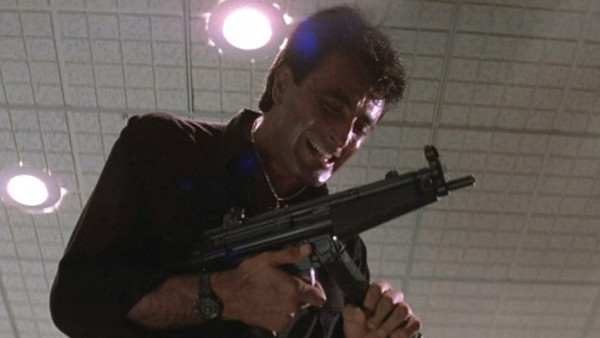
The Rule: "Next time you have a chance to kill someone, don't hesitate."
And now for a minor character whose refusal to heed his own advice got him brutally murdered - albeit in hilarious fashion. Die Hard of course sees NYPD cop John McClane (Bruce Willis) facing off against a fleet of armed terrorists inside a gigantic skyscraper on Christmas Eve.
Terrorist Hans Gruber (Alan Rickman) typically get his mostly anonymous goons to do the dirty work, repeatedly ordering his Eurotrash mooks to hunt McClane down and kill him.
In one instance, McClane is cornered by Marco (Lorenzo Caccialanza), a deliciously smug terrorist who wastes time taunting McClane by firing blindly at him, before running out of ammo and urging McClane not to hesitate when he has the chance to kill someone.
Just as Marco finishes reloading his clip, McClane unloads numerous bullets into him, killing him. And of course, never one to resist a cracking one-liner, John adds, "Thanks for the advice."
If Marco had been a little more professional and actually practised what he preached, the movie could've been over in 55 minutes flat.
6. Tom Davis - Triple Frontier
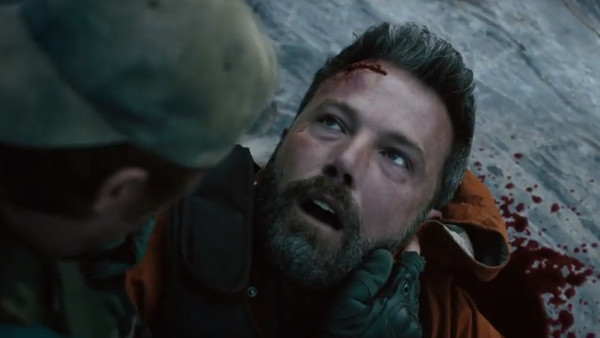
The Rule: Don't get greedy.
Netflix's crime thriller Triple Frontier follows a team of former Delta Force soldiers who reunite to assassinate a South American crime lord and steal his money.
By far the most reluctant and cautious member of the team is Tom "Redfly" Davis (Ben Affleck), yet due to his own money woes and how desperately he misses the action of his former life, he's ultimately convinced to come along.
He has a few conditions, though, namely that they stick to a strict schedule and exit the crime lord's compound at a set time no matter how much money they have.
Except, when they discover far more money hidden within the walls of the compound than they expected, Tom is blinded by greed and insists that the team are OK to exceed their schedule in order to load more money into their van.
This has the knock-on effect of causing their escape helicopter to struggle with the weight of the extra cash, eventually resulting in it crashing into nearby farm land, where Tom is "forced" to shoot an angry villager in the head.
This comes back to be his undoing later in the movie, then, when one of the locals gets the drop on him and shoots him in the head.
Had they left with the money within the original timeframe, the chopper wouldn't have been over-loaded, they wouldn't have crashed, Tom wouldn't have killed the farmer, and in turn not been shot in revenge.
Despite its issues, the film does a solid job conveying Tom's utter desperation to escape his humdrum life as a real estate agent, so his "turn" certainly feels believable character-wise.
5. The T-850 - Terminator 3: Rise Of The Machines

The Rule: Terminate John Connor.
Mid-way through the third Terminator movie, the benevolent T-850 (Arnold Schwarzenegger) is defeated and corrupted by the evil T-X (Kristanna Loken). With its programming now altered, the T-850's new mission is to murder John Connor (Nick Stahl) rather than protect him.
The T-850 quickly attempts to kill John, except John is able, with a baffling amount of ease, to convince the T-850 to override its new programming by highlighting the "contradiction" between its old and new directives. The T-850 then betrays its active (murderous) programming and goes into standby mode.
Even ignoring the complete absurdity of the T-X's override being cancelled out with a few easy words, the T-850 breaking its new coded rules leads to it eventually returning in the third act to rescue John and Kate (Claire Danes) from the T-X, sacrificing itself by detonating its unstable fuel cell in the vicinity of the T-X.
You can argue that the T-850 was simply reverting to its prior "rules" or programming to protect John, but considering that the T-850 had to clearly be re-programmed by the resistance in the future in order to override its original, factory-set Skynet programming, it doesn't really track.
Had the Terminator stayed true to its prime directives, John Connor would've been dead meat and the machine would've still been "alive" at the end of the movie.
Quite ironically, a similar narrative is actually explored in the recent timeline-annihilating sequel Terminator: Dark Fate.
4. Spock - Star Trek II: The Wrath Of Khan

The Rule: Logic prevails at any cost.
Spock (Leonard Nimoy) is one of the most legendary characters in all of sci-fi, best known for his typically emotionless, highly logical approach to problem-solving, much to the chagrin of the more impulsive - and yes, human - Captain Kirk (William Shatner).
This appears to pay off quite spectacularly in the magnificent sequel Star Trek II: The Wrath of Khan, where Spock iconically sacrifices himself at the end of the film to save the Enterprise from a radiation leak, insisting that it's the "logical" option.
Except, it really isn't. It's clearly stated that the Reliant, the ship hijacked by Khan (Ricardo Montalbán), needs to charge up the Genesis Device before Khan can use it to wreak havoc on the universe.
What was stopping the Enterprise from firing on the Reliant during the charging process and destroying the Genesis Device? It's certainly a good deal more logical than fleeing, and in turn having Spock lay down his life to save the day.
You can argue that Spock was at least capable of being resurrected, and so him being the one to make the sacrifice made more sense than any other member of the Enterprise, but everyone could've been spared a ton of mourning, heartache, and hassle if Spock simply suggested they fire a torpedo at the Reliant instead.
3. Harry Waters - In Bruges

The Rule: No killing kids.
Martin McDonagh's delicious black comedy In Bruges follows Ray (Colin Farrell), an assassin who accidentally kills a young boy while carrying out a hit.
His boss is the impatient, quick-tempered Harry Waters (Ralph Fiennes), who near the end of the movie explains to Ray's mentor Ken (Brendan Gleeson) just how much of a "faux pas" killing children is in their line of work.
He tells him, "If I had killed a little kid, accidentally or otherwise, I wouldn't have thought twice. I'd have killed myself on the f**king spot."
This comes home to roost in gloriously funny fashion at the end of the movie, when Harry shows up in Bruges and attempts to kill Ray. However, one of his stray bullets ends up killing Jimmy (Jordan Prentice), a dwarf actor wearing a schoolboy costume for the role he's currently shooting.
Harry, believing himself to have accidentally killed a child - who, for some reason, is wandering around chilly night-time Bruge in a school uniform - immediately shoots himself in the head per his earlier declaration.
While Harry technically didn't break his "no killing kids" edict, in his own mind he had enough evidence to believe he did, and at least followed through with his promise to fall on his own sword.
2. Emperor Palpatine - Star Wars: Episode VI - Return of the Jedi

The Rule: The Rule of Two.
Star Wars' famous "Rule of Two" is a Sith philosophy which dictates that only two Sith Lords should exist at any one time - one master and one apprentice.
And despite how stringently Emperor Palpatine (Ian McDiarmid) appears to adhere to Sith dogma throughout the Star Wars saga, he actively betrays it to his own eventual undoing.
While the exact particulars of the Rule of Two are ambiguous at best - and some fans see it more as a guideline than an out-and-out demand - the Emperor nevertheless facilitates by his own demise by so dangerously juggling Darth Vader (David Prowse) and Luke Skywalker (Mark Hamill) as his potential apprentices.
After all, Vader has clear aspirations to do away with the Emperor entirely and rule the galaxy with his son Luke, and it hardly requires a mastermind-level intellect for Palpatine to deduce the possibility of Vader and Luke, whether good or evil, teaming up to kill him.
By having two duelling prospects in play at once, the Emperor sealed his own fate - being lobbed down a shaft by Vader and "killed."
His spirit was technically resurrected in The Rise of Skywalker, of course - as a shambling zombie approximation of Palpatine, really - but that's a whole other ball of headache-inducing wax.
1. Darwin - X-Men: First Class

The Rule: Adapt to withstand enemy attacks.
Unquestionably one of the most under-served characters in the entire X-Men movie saga is Darwin (Edi Gathegi), a minor character in X-Men: First Class with the ability to evolve reactively according to whatever conditions he encounters.
It's an awesome power and one which blatantly implied that Darwin would both be extremely difficult to kill and also be sticking around for the long haul.
Except, the very essence of Darwin's power set was quickly cancelled out, then, when villain Sebastian Shaw (Kevin Bacon) showed up mid-film and forced one of Havok's (Lucas Till) energy blasts into him, bafflingly causing his adaptive abilities to fail, turning him into a pile of ash.
Given that the comics show Darwin to be an incredibly powerful and potentially immortal mutant, this total non-event of a death felt like a direct contradiction of the established "rules" for him and everything fans loved about Darwin in the first place. Terrible.