10 Most Insanely Perfectionist Film Directors
Making films isn't easy.
Film is unique among many art forms in that it is a very collaborative kind of art. A wonderful film requires an immense number of talents, temperaments and personalities to mesh and work together well; from make-up artists to cinematographers to producers.
Or, of course, if you buy auteur theory, it really just requires one person: the director. While there is certainly a lot of truth to Francois Truffaut's idea that the director is ultimately the author of the film, some directors take this primacy a bit too far.
These directors see the film as their own singular and perfect vision and view other people as a mere tool for accomplishing this mission. Their methods are extensive, exhaustive and often eccentric. They burn down sets the size of small towns for the sake of seconds worth of screen time, they get involved in brawls with their actors and screaming matches with their cinematographers and they put themselves in their crew members in the jaws of death, hoping the grim reaper doesn't bite down because the shot they can get staring out of his mouth is perfect.
Many of the directors listed here have made some of my very favourite films of all time and their meticulous, obsessive and combative way of working has been an important part of producing such perfection. It also happens to be terrifying and hilarious in equal measure.
10. Ilya Khrzhanovsky Recreated Stalinist Russia On A Movie Set
https://www.youtube.com/watch?v=smxrLqTZziYIt’s easy to liken directors to little dictators of their own cinematic world- barking orders and marching around hoping to make other people conform to their idea of what the movie should be. However, some directors take it a little further to organising matching costumes and giving their crew a mission statement- occasionally a director turns a movie set into a gulag.
This is precisely what happened on the set of Russia director Ilya Khrzhanovsky’s (director of Four) movie Dau. Dau tells the story of Soviet physicist Lev Landau and Khrzhanovsky hoped to recreate the isolation and paranoia of Landau’s Soviet Russia on the director’s set.
Khrzhanovsky enforced a regime whereby crew members were only allowed to dress in Stalin-era clothes, eat Stalin-era food and were even paid in Soviet money. The set was to be referred to as “the Institute” at all times with all reference to modern technology such as cgi or cell phones prompting a fine deducted from the crew's pay.
The director encouraged people to spy on their fellow crew members and report any infraction on the rules, mimicking the betrayal and paranoia of Soviet life. Shooting of the film lasted three years and Khrzhanovsky effectively took over the entire Ukrainian town of Kharkov to construct his enormous and totalitarian set. Production of the film began in 2006 and it is still unreleased as of 2015.
9. Werner Herzog Built A 320-ton Boat....Then Hauled It Over A Mountain
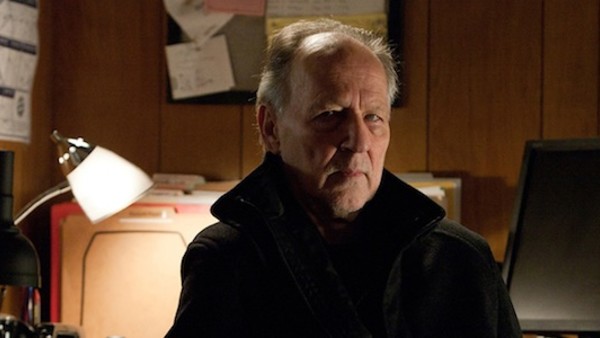
Werner Herzog is probably the most influential figure in modern documentary film-making next to Errol Morris and Michael Moore. While Herzog’s directorial abilities are legend the mad methods he has used to create celluloid greatness are not quite so well known.
In 1982 Herzog made Fitzcarraldo, which won him the Best Director award at Cannes. Fitzcarraldo tells the story of an Irishman known as Brian Fitzgerald who, in his quest to build an opera-house in a small Peruvian town, must move an enormous steamship from one side of a mountain to the other.
1982 was the cinematic age of Star Wars and Blade Runner, full of special effects. Surely Herzog’s transportation of his gargantuan boat would be accomplished by a similar kind of cinematic magic, possibly involving matte painting, cgi or dwarves in costumes? Well not quite.
Herzog instead decided to haul the steamship over a mountain for real with the help of indigenous people . Although Herzog succeeded and the result was an acclaimed film, hauling a 320-ton steamboat of your own construction over a mountain takes its toll and after a production marred by snake-bite induced amputations and sets burning down because of feuds with native peoples, Herzog decided to retire to his quiet mansion in Germany and…no, wait, he spent the next few years filming in the Sahara desert, the Australian outback and among communist militias in Nicaragua.
8. David Fincher Shoots Up To 50 Takes Of Each Scene
889108Anyone working in the film industry realises that sometimes it takes a while to get something right. Cinematic perfection can sometimes require a few different takes of a scene in order to work on screen. Sometimes a scene can take maybe 4 or 5 takes to get just right.
Of course, for David Fincher (director of fantastic thrillers such as Fight Club, Seven and Gone Girl), 5 takes is cinematic chump change. For his latest tour-de-force Gone Girl Fincher averaged about 50 takes per scene.
Fincher’s rationale is that forcing actor’s to revisit a scene over and over again sucks out any sense of pretence or falseness until what’s left is a real human sincerity, even if the only sincere emotion is murderous rage directed at David Fincher.
Fincher believes that his repetition of scenes allow actors to pick apart the underlying motions and emotions that underscore any conversation and really bring out the full range of expression and interaction that the script only hints at on paper.
Gone Girl’s average of 50 takes per scene is up on Fincher’s previous average of 27 and this precedent indicates that by the time his 15th feature film is released the film is expected to take Fincher somewhere around 3 centuries to complete.
7. Stanley Kubrick Kept Insanely Detailed Notes

Stanley Kubrick is easily among the most renowned of directions of all time and he has left a definite imprint on the modern cinematic landscape with classics like 2001: A Space Odyssey, the Shining and Full Metal Jacket.
Kubrick accomplished these masterpieces through a single minded and devoted obsession to each cinematic project. One of the most fascinating illustrations of Kubrick’s cinematic micro-management came in the form of the 2008 documentary “Kubrick’s Boxes”.
Presented by British documentarian Jon Ronson the film explores the warehouse worth of boxes containing film notes left by Stanley Kubrick in his home following his death in 1999. The boxes contained enormous amounts of notes and research for Kubrick’s film, from over 30,000 photos of the back alleys and lush apartments of London for Eyes Wide Shut to detailed notes on individual costumes in Full Metal Jacket. Kubrick was the very embodiment of auteur theory, somebody who carefully designed every single minuscule portion of his cinematic vision and luckily for us Kubrick’s obsessiveness resulted in celluloid genius.
6. Alfred Hitchcock Abused His Actors For Perfection And Suspense

The portly, demanding Hitchcock has become the basis of most people’s image of ‘film director’. His ingeniously crafted suspense films, from classics like Psycho to more obscure experiments like Rope, have inspired generations of filmmakers including the influential French New Wave. Hitchcock delicately crafted his suspense like a guitar player plucking his strings precisely, building tension until the air explodes with sensation and surprise.
Naturally this took a great deal of careful organisation and Hitchcock became renowned for his perfectionism and the lengths to which he would go to obtain perfect shots.
This is perhaps most glaring in 1948’s Rope which takes place in real time and is edited together to look as though it consists of one single continuous take. This method made use of very long takes, some over 10 minutes in length which Hitchcock made actor’s repeat in their entirety until he was satisfied with the results.
Hitchcock also became infamous for abusing his actors in order to produce authentic performances with his abuse of Tippi Hedren on the set of Birds being as a legendary as the film itself.
5. Wes Anderson's Micro-managed Quirky Charm
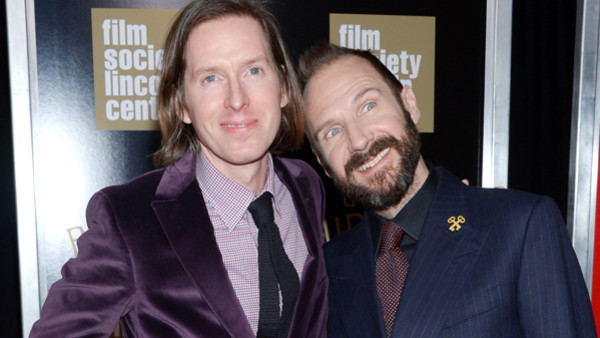
Wes Anderson has evolved from a quirky, obscure crafter of cult films to a beloved mainstream favourite of idiosyncratic filmmaking. The recent Grand Budapest Hotel cemented his position as a darling of the mainstream but his distinctive style and carefully crafted shots and sets have always made for a fascinating feast of film.
It should come as no surprise that the incredibly detailed pastel paradise of Wes Anderson is one that requires an enormous degree of effort and obsession to create and maintain. The Grand Budapest Hotel was a project that took almost a decade to realise from Anderson’s original conception of it. Anderson makes animated storyboards from each of his films before shooting begins, thus allowing him to get an idea of how the entire film will look in action before the camera is even rolling.
Anderson spends more time thinking about costumes and set design than possibly any other director working in Hollywood right now and each of his characters have distinctive clothing that broadcasts something of their ideas about the world and about themselves.
Anderson’s obsession with even the tiniest details of his films turn out pieces of art that seem like only small slivers of amazing detailed and fully realised worlds, which will continue to draw us in for years to come.
4. Akira Kurosawa Brought The Specter Of Death To His Historical Epics

Akira Kurosawa is probably the best known Japanese director of all time and a man who has left an indelible mark on the cinema of his home island as well as the world.
While Kurosawa is a towering figure of cinema many will recognise him first for his enormous influence on giants of Western film like Sergio Leone and George Lucas, both of whom were immensely inspired by Kurosawa’s work. Kurosawa’s films were often Japanese historical epics, portraying a violent and fractured Japan in works such as Yojimbo and Seven Samurai.
However the fact that Kurosawa’s on-set nickname ‘Tenno’ translates to ‘Emperor’, you should have some idea of the feats accomplished and risks taken by Kurosawa in order to leave such a mark on the cinematic world.
For example in 1957’s Throne of Blood Kurosawa’s used real arrows for a scene in which Toshiro Mifune’s character is executed, leading to the terrified actor dodging actual death on set.
To make the period seem authentic Kurosawa would go about constructing massive sets, plopping down an enormous castle on Mount Fuji for 1985’s Ran which was then burned to the ground for the sake of a single scene. Kurosawa would construct elaborate sets like he was playing the Sims and some, such as the enormous shantytown in ‘Red Beard’ were used for only one or two shots.
3. Roy Andersson Makes Bleak And Beautiful Paintings
https://www.youtube.com/watch?v=2bM4fMHptucRoy Andersson is a Swedish director who has a strong cult following and his recent film ‘A Pigeon Sat on a Branch Reflecting on Existence’ (not quite as catchy as ‘Speed’, I know) has earned him even more acclaim.
His films are fascinating and understated. His shots are almost exclusively static and haunting, his sets done up like carefully laid out paintings. Where other directors seek to thrill with dynamism and wild camera movements, Andersson excites us with long, eerie shots that have you picking out every detail in the landscape as the psyche of various characters disentangle into the still scene.
Anderson composes each of his scenes like a Renaissance painting and prefers to work entirely with amateur actors who he feels give an authentic performance. His films are some of the most uncompromising art you can imagine, totally dictated by a strange and fascinating sensibility, with no surrender to commercialism.
And how did this anti-consumerist artistic renegade make the money to make these films? Why a decades long career in advertising that’s how!
2. James Cameron's Obsession With Water Nearly Led To Drowning

Even if his schedule for the next half a century seems to consist entirely of sequels to Avatar, one mustn’t forget that James Cameron is a mater of cinematic spectacle. Cameron made the adrenaline injections of Aliens and Terminator 2 and he accomplished these thrill rides through a kind of dedication that edged close to psychopathy.
Cameron’s fascination with the depths of the ocean has been obvious since Titanic, where he actually recreated a scale model of the historic ship including period-accurate interior. However the point where Cameron’s search for submarine authenticity caused a clash with his crew members came in 1989's The Abyss.
The underwater thriller was filmed with crew members regularly spending hours 30 feet underwater, many of them catching sinus infections and losing their hair because of chlorine levels. Due to long periods spent underwater the crew often had to regularly refill their cumbersome diving helmets with oxygen. The pitfalls of filming for up to 19 hours a day in an abandoned nuclear plant filled with 10 million gallons of water quickly took their toll and led to two almost-drownings.
In the end Cameron’s quest for underwater authenticity led to critical and commercial apathy although the underwater effects explored in the Abyss would let Cameron explore a lot of the technicalities that would prove useful in the blockbuster hit Titanic
1. David O'Russell Has Fistfights And Screaming Matches With His Stars

Directors can be demanding and very difficult people by their very nature. Sometimes tensions can arise on set. But there is “difficult to work with” and then there’s David O’Russell. O’Russell is legendary in Hollywood for his uncompromising stylistic sensibility and his bust ups on set.
O’Russell’s directorial style tends towards an improvisational, on the fly method, which eschews organised arrangements of shots and instead O’Russell shoots ideas as they come to him, teasing them out for hours on end.
On the production of the Gulf War heist film Three Kings this method of shooting as well as David O’Russell’s techniques of encouraging actors (lots of violent screaming), led to an atmosphere of immense tension on set. This tension finally spilled over in the form of a fist fight with George Clooney, an item I didn’t know until now needed a place on my bucket list.
O’Russell’s confidence in his own vision has regularly resulted in heated disputes with his actors and crew members and even other directors. After learning that the star of his film I Heart Huckabees, Jude Law, was planning to leave to star in Christopher Nolan’s The Prestige, O’Russell tracked Nolan down at a party and put him in a headlock until Nolan agreed to let Law stay.