10 Most Bromantic Movies Of All Time

It's guy love, between two guys...
As everyone knows, cinema is largely male-centric. From early shorts like The Great Train Robbery (1903) or A Trip to the Moon (1902), to the biggest superhero films of this current summer, males have and continue to dominate movie screens across the world. One common storyline in this male dominated medium are tales which revolve around close male friendships. Now, the content of these stories can fall across a broad spectrum, but those where the men involved express any affection for one another are often referred to in pop culture as being "bromantic" in nature. Now, more often than not, films featuring a male friendship do not consider the topic seriously. Typically, the best case scenario is that these relationships appear as comedic relief. At worst they often suggest something insidious or inflammatory, such as the accusations of "gay panic" often directed at the bromantic films of Judd Apatow. Still, there are films littered throughout history that feature a little male bonding, and that aren't solely preoccupied with cracking jokes at the relationship's expense. These films do several things: the friendship is one of substance; it's treated with respect; and finally it possesses a legitimate thematic importance. These are the films that this list will concern itself with, bromantic films where men make each others' lives better.

10. Midnight Cowboy - Joe Buck & Ratso Rizzo
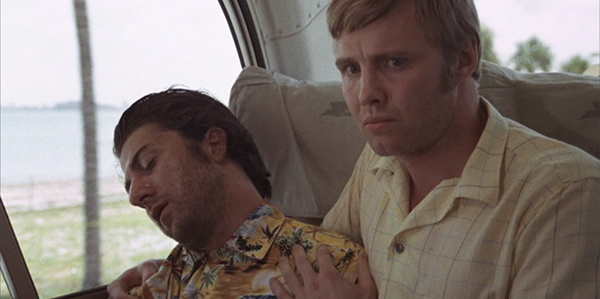
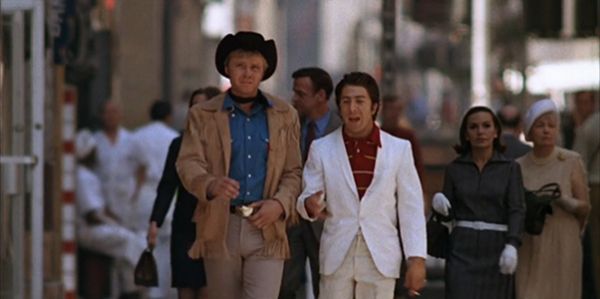
The lyrics, "Everyone's talking at me; I don't hear a word they're saying," forms the refrain of Midnight Cowboy's killer opening song, while also serving as a great introduction to its central character, played by Jon Voight. In this iconic, Oscar-winning film, Voight plays a young man named Joe Buck, who dresses in the outrageous garb of a cowboy and dreams of making his way as a stud in New York City. This idea is clearly half-cocked, but of course, as Harry Nilsson's song aptly describes, Voight's Buck can't hear other people's opinions. Nothing can dissuade him from what he feels will be an idyllic life in the Big Apple. Yet, once the hayseed arrives in late 60s Manhattan, he finds himself exploited, lonely and at the brink of impoverishment. The only thing that saves him from complete despondency is a chance encounter with a g rimy, diminutive and loudmouthed hustler named Ratso Rizzo (played by Dustin Hoffman in a watershed performance). What's great about these two characters - not to mention the film as a whole - is that their relationship begins and evolves naturally. At first, these two men can barely stand each other; there is very little in the way of trust between them. This changes dramatically over the course of the story, with both Ratso and Joe coming to rely on one another as the squalor in which they live becomes more and more overwhelming. It's a bleak, powerful film, and one only occasionally warmed by the electrifying chemistry between the two leads, who create one of cinema's most memorable friendships.

9. The Lord Of The Rings Franchise - The Fellowship Of The Ring
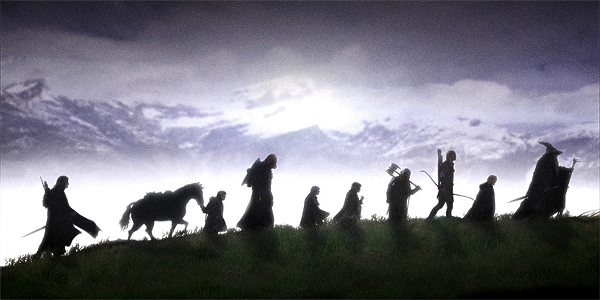
The Lord of the Rings is not a franchise known for its female characters. Oh sure, Liv Tyler's elven princess Arwen shows up to give the Nazgul a good dunking in the river at one point, and Miranda Otto's Eowyn distinguishes herself in a huge way by taking down the Witch-king during the Battle of Pelennor Fields. However, mainly the women of the series exist only on the periphery of the story, with the comradery between The Fellowship of the Ring placed front and center. Thankfully however, this facet of the series works beautifully, and helps sustain the franchise even at its most tiresome moments. Nearly every member of the Fellowship has an affecting moment or two together. From the father-figure dynamic that Ian McKellen's Gandalf exudes towards Frodo, to the competitive ribbing of Legolas and Gimli, to the intense and loving relationship of Frodo and Sam, the Fellowship functions to ensure the emotional stability of its members as much as it does the physical. This multifaceted look at male relationships, and how these bonds provide hope in the darkest of times, is what will remain valuable about this series of films. It will continue to draw people, even after the trilogy's much lauded visuals effects begin to age.

8. Rocky III - Rocky Balboa & Apollo Creed
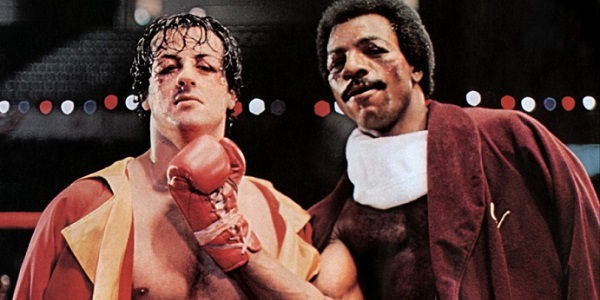
The word tempestuous best describes the relationship between the Italian Stallion and Apollo Creed. Over the course of four films the two bruisers go from being sworn enemies, to bitter rivals, to finally friends and allies. There is even a small regression at one point during the fourth film, where Apollo seems to carry some resentment for Rocky after he attempts to talk Apollo out of having an exhibition match with Dolph Lundgren's fearsome Ivan Drago. Throughout all of this however, there is one consistent attribute of the relationship between the two men. To put it simply: they push each other to the very limits of their abilities and beyond. This is the mark of great friendship, which becomes the most explicit in Rocky III, where Apollo begins training Rocky after the death of Mickey. Through the grueling training regimen devised by Apollo, Rocky is able to once again capture "the eye of the tiger," and defeat Clubber Lang (Mr. T) who had brutalized him earlier in the story. Still, in order to get him there, Apollo has to dole out tough love on more than one occasion, most notably when he bellows at Rocky that, "There is no tomorrow!" when the Stallion begins to falter during his training. Of course, like all great friendships, this gruffness is rooted in genuine love and an honest desire to see Rocky succeed. This is a huge change from the Apollo we see in the first film - who is all ego. This arc is communicated beautifully at the end of the film, where Apollo says to a victorious Rocky: "I'm proud of you. It takes a hell of a man to change."

7. Sherlock Holmes - Sherlock Holmes & Dr. John Watson
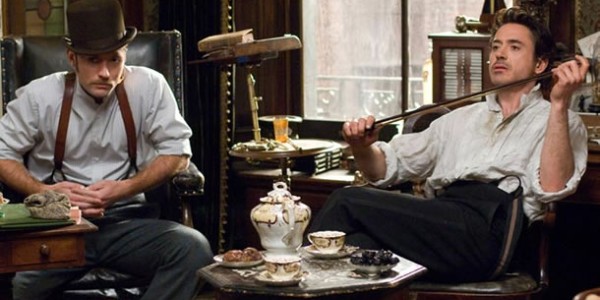
Whatever the medium, the bond between Dr. John Watson and Sherlock Holmes has always been a powerful aspect of the stories about the famous detective. And yet, the friendship between these two sleuths has perhaps never been quite so overtly bromantic as it is in Guy Ritchie's 2009 adaptation Sherlock Holmes, and his 2011 sequel, Sherlock Holmes: A Game of Shadows. Played expertly by Jude Law and Robert Downey Jr., Watson and Holmes are irreverently reimagined in this updated take on Sir Arthur Conan Doyle's legendary world. Not only are the two iconic characters transformed into formidable brawlers, who like to throw fists first and ask questions later, but they also bicker for long stretches like the most married of couples. The more blatantly romantic of the two is of course Downey Jr.'s Holmes, who blusters, clucks and makes a number of comments that almost push the relationship into ambiguous waters. This dialogue is mainly included for laughs, but despite this comedic edge, Ritchie's film never seeks to demean the friendship between the two men. What's clear is that underneath their constant fighting Holmes and Watson would do anything for each other. This is displayed for example in how Holmes goes to great lengths to check in on Watson when he is in the infirmary, or how Watson (much to his own chagrin) continually comes to Holmes aid, whatever the circumstances.

6. Swingers - Mike & Trent

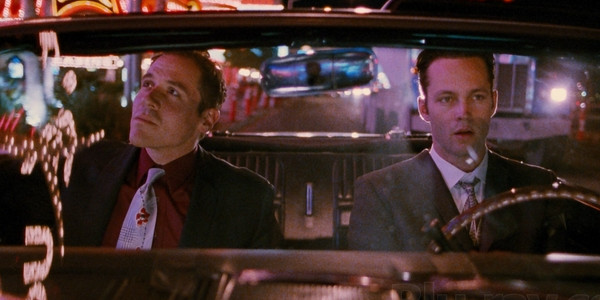
With its hip, neon-infused vibe, and faux-cool dialect ("You're so money baby,") Swingers is a movie which celebrates LA, cocktails and male comradery. Written by a then unknown Jon Favreau and directed by Doug Liman (pre-Bourne), Swingers is a tiny indie which possesses a huge heart. While all of the male dynamics in the story have an affecting quality, without question the most bromantic pairing exists between the film's two lead characters: Mike (played by Favreau), and Trent, played by a never better Vince Vaughn. Their relationship forms of the core of Swingers story, which focuses on Trent's attempts to acculturate Mike to LA's club scene, while the latter grieves for a recently failed romantic relationship. Now, despite both of these characters being positioned as protagonists, they both also display abrasive qualities from time to time. Mike is endlessly petulant throughout Swingers, while Trent's rampaging machismo becomes wearisome at certain points. Still, there is an innate likability to these two men, and this is especially true in the way the film depicts their friendship, which is both humorous and compassionate.

5. Righteous Kill - Turk & Rooster

Righteous Kill is a horrible movie; there's very little else to say about it. Helmed by Jon Avett - who also directed Al Pacino in the equally awful 88 Minutes the year before - the film features the second collaboration (at least where they share scenes) between Robert De Niro and Al Pacino, with the first being the glorious 1995 crime film Heat. With nearly everything in this movie coming off as repugnant, particularly a head-spinning sex scene between an ancient De Niro and a nubile Carla Gugino, its hard to imagine Righteous Kill being a great bromantic film which affirms male friendships. This feels particularly true when one examines the story, which depicts two geriatric detectives investigating a vigilante killer, and contains one of the more obnoxious, cliched twists in recent memory. Despite these marring factors, there are small, visceral thrills to be found in seeing De Niro and Pacino share the screen together. This probably has more to do with their iconic statuses in cinematic history than anything regarding their characters. Still, their presence augments the interplay between Turk and Rooster. Despite the film's derivative script, one can sense a mutual respect crackling between the two of them, and their characters' dynamic feels realistically rooted in a copious amount of shared experience. This lends select scenes from the film startling albeit brief moments of pathos.

4. Butch Cassidy And The Sundance Kid
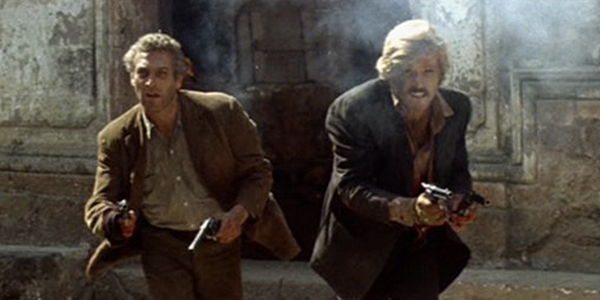
This entry to the list is a complete no-brainer, as anyone who has ever seen 1969's Butch Cassidy and the Sundance Kid knows how powerful the relationship is between the titular dynamic duo. The two men's endearing, consistent and occasionally hilarious closeness is apparent from the very beginning, established in Butch's interplay with Sundance directly before he has to defend his title as leader of the "Hole in the Wall Gang." From that point the connection between the two wily outlaws only becomes more absorbing. The audience spends basically the entire movie with the men, following them as they desperately attempt to elude relentless lawman Joe Lefors, or when they have a brief reprieve with Sundance's lover Etta Place, who is played here by the luminous Katherine Ross. Nearly every scene featuring the pair has a memorable quality to it, such as where Sundance finally bellows at Butch Cassidy that he can't swim right before they are set to leap off a cliff into a river. Of course, nothing is more emblematic of the two men or their friendship than the final scene, where they go down together, guns blazing.

3. Fight Club - Tyler Durden & The Narrator
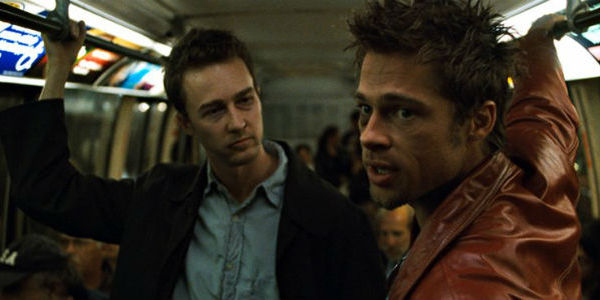
Fight Club is a film about many things: blind devotion to materialism; the modern world's neutering of masculine identities; and the Jungian shadow self are just a few of its themes. However, perhaps more than anything else Fight Club circles the concept of male solidarity, which is encapsulated in the relationship between Brad Pitt's anarchistic Tyler Durden, and Edward Norton's initially nebbish and perpetually unnamed narrator. While not the most verbally expressive relationship, the duo at the heart of Fight Club is intensely bromantic. This dynamic is largely displayed through their behavior towards one another, which is co-dependent and (at least at first) remarkably exclusive. Through this relationship Norton's narrator finds the inspiration to ascend out of his self-created malaise, and morph from being what Tyler disparagingly refers to as "Ikea Boy," into the personification of the Nietzschean œbermensch. Of course, like a lot of close and intense friendships, the relationship between Tyler and the Narrator also has a destructive side, which the film lays bare in its shocking twist ending. Still, this turn of events doesn't take away from the film's communicative and darkly funny look at the male psyche at the end of the 20th Century.

2. Bang The Drum Slowly - Henry Wiggin & Bruce Pearson
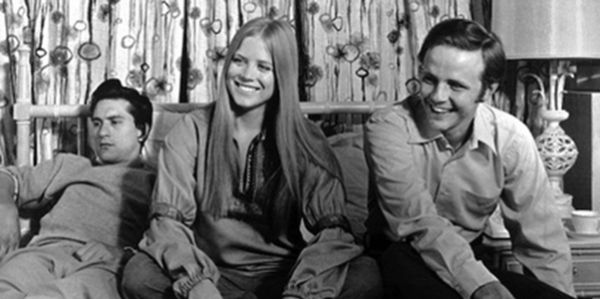
When most people think of Robert De Niro's auspicious beginnings, they immediately evoke Mean Streets or maybe his late-60s work with Brian De Palma. However, one early entry to his filmography to this day feels a tad overlooked. That film is the sports drama Bang the Drum Slowly, where De Niro plays loveable albeit dim-witted catcher Bruce Pearson, a man dying of Hodgkin's lymphoma. While the film is set in the world of professional baseball, Bang the Drum Slowly is very much devoted to the powerful, enduring friendship that Pearson has with his team's pitcher Henry Wiggin, who is played with subtle efficacy by Michael Moriarty. The two men are teammates in both the literal and figurative sense of the word, with Moriarty's Henry helping the rather feckless Pearson weather both the harsh cruelty of those around him, and the destructive and ultimately fatal nature of his disease. While the film features a strong script and terrific acting from all involved (Vincent Gardenia picked up his second Oscar nomination here), Bang the Drum Slowly is most memorable in the way that it evokes the sustaining and healing nature of a close human bond.

1. Sideways - Jack & Miles

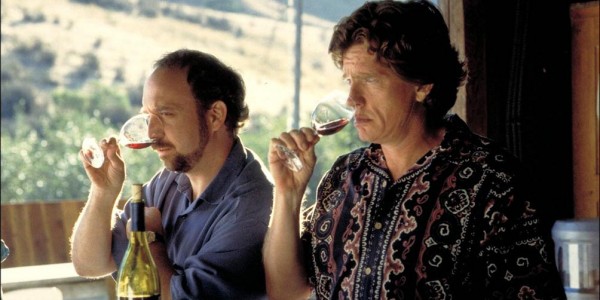
Similar to many of the bromantic relationships depicted in this list, the friendship between Miles and Jack (the central characters from Alexander Payne's sublime film Sideways) is a complicated one, running the gamut from strained and abrasive to warm and touching. As penned by Payne and his writing partner Jim Taylor, Miles (Paul Giamatti) and his best friend Jack (an Oscar-nominated Thomas Haden Church) possess more than their fair share of disagreeable traits. Miles is suffering from major depression, appears to be a borderline alcoholic, and struggles to find enjoyment out of anything or anyone. Jack is far more extroverted and fun-loving, but also appears indifferent to the destruction he leaves in his wake. What is remarkable though is that Payne, Taylor, in addition to Giamatti and Church, are able to keep an audience invested in the story of these two men. You continue to root for them to succeed, despite their general unpleasantness. This perhaps makes sense due to how - despite the continual silliness the characters get into - they remain recognizable for what they are: flawed human beings. This feels especially true regarding their friendship, which continues to persevere despite each man's chronic, self-sabotaging behavior. Who can't relate to having a friend stuck in what seems to be an eternal cycle of despondency? Who hasn't had a friend who is a bit of an animal in their relations to the opposite sex? Sideways intuitive grasp on the complexities of the human experience make it a great film. But its decision to feature a deep, emotionally-charged male friendship at the heart of its world makes it a great final addition to this particular list. Do you agree with this list? What films do you feel feature a great, bromantic relationship? Let us know in the comments section below!

Contributor
Contributor

Adam Mohrbacher has been afflicted with an obession for film since his earliest memories. In addition to his work with WhatCulture, Adam has been a contributor with Filmophilia.com, FilmMonthly.com and Examiner.com. You can also check out his personal blog here: adammohrbacher@wordpress.com. A devoted fan of all film genres and styles, Adam gets equally giddy over the sensitive, existential musings of Ingmar Bergman, and the brawny brilliance of Arnold Schwartzenegger. He loves fish tacos and misses the work of Heath Ledger and Jack Lemmon on a daily basis.