10 More Movies That Had The Balls To Do It Better (& WANTED YOU TO KNOW)
These movies weren't quiet about the fact that they knocked it out of the damn park.
Sometimes it just isn't enough for a film to improve upon previous iterations of the subject matter - sometimes the filmmakers just needs to rub it in a little, and ensure that audiences are aware of just how far things have come.
In these instances the filmmakers have clearly worked hard to outdo what came before, and whether it's done playfully or out of genuine sour grapes, these movies all pointedly illustrated that they were going above and beyond to do better.
And so, as a sequel to our previous article on the very subject, here are 10 more movies that had the balls to do it better, and y'know what? They wanted you to know it, too.
While it's a tricky line to walk and a filmmaker risks coming off as smug or egotistical if they get this calculation wrong, in the case of these 10 movies, each was able to back it up with their stellar execution.
Whether the inspiration holds up or not, these movies did it better and couldn't resist making that fact abundantly clear in the most blatant way possible...
10. Robin Hood: Men in Tights

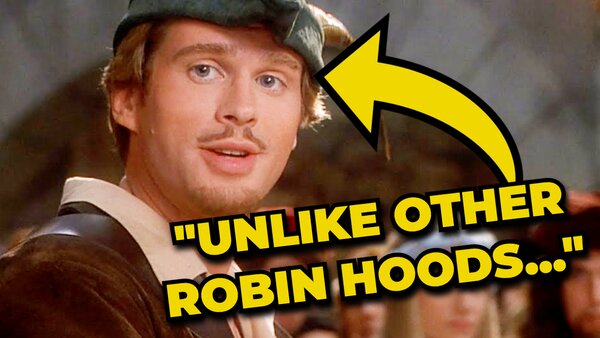
Robin Hood: Men in Tights may be a parody of Robin Hood, but that didn't prevent it from throwing the gauntlet down at the feet of Hollywood's previous big-budget adaptation.
Mel Brooks' cult classic comedy is very clearly a response first and foremost to the Kevin Costner-starring Robin Hood: Prince of Thieves released two years prior, which saw Costner widely mocked for his lack of an attempt at an English accent.
Costner even went on to win a Worst Actor Razzie for his performance in the film, and so of course, Brooks couldn't resist the urge to fire a patriot arrow at this wide open target.
Half-way through the movie, when Robin (Cary Elwes) confronts Prince John (Richard Lewis) about his unfair taxes, John asks why the citizens would follow Robin, to which Robin replies, "Because, unlike some other Robin Hoods, I can speak with an English accent."
As he says it, Elwes smugly turns to the camera, hilariously breaking the fourth wall and nodding to anyone who sat through Costner's woeful non-accent in Prince of Thieves.
Despite the film being a spoof, Elwes is still a genuinely brilliant Robin Hood, and to make the joke hit even harder, Elwes was reportedly offered the Prince of Thieves role before Costner came aboard, though turned it down because he found the script "too contrived."
9. X-Men: Days of Future Past

X-Men: Days of Future Past was one of the first major movies to rather cleverly use time travel as an in-universe device to erase unpopular elements of the franchise.
In particular, fans loathed the fact that the third movie, X-Men: The Last Stand, unceremoniously killed off numerous beloved superheroes, namely Professor X (Patrick Stewart), Cyclops (James Marsden), and Jean Grey (Famke Janssen).
And so, Days of Future Past made an industrious effort to undo these deaths in a way that didn't seem like a continuity-undermining retcon, by having most of it happen by way of timey-wimey shenanigans.
First off, though The Last Stand's post-credits scene suggested a convoluted means through which Xavier could be resurrected in his twin brother's body, Days of Future Past skips past explaining this altogether and seemingly accepts that most fans would simply appreciate having him back.
The time travel comes into play for Cyclops and Jean, though, who are revealed to be alive in the new 2023 timeline at the end of the movie, where the events of The Last Stand as we know them didn't happen.
This was basically an impressively elegant way for the filmmakers to tell the audience, "Don't worry, we got this," emphatically wiping The Last Stand from the slate yet without breaking the fourth wall.
8. Godzilla: Final Wars
In our previous article we talked about how 2001's Godzilla, Mothra and King Ghidorah: Giant Monsters All-Out Attack made fun of 1998's American Godzilla movie, effectively canonising the notion that the hideously redesigned creature featured in that film wasn't really Godzilla at all. Phew.
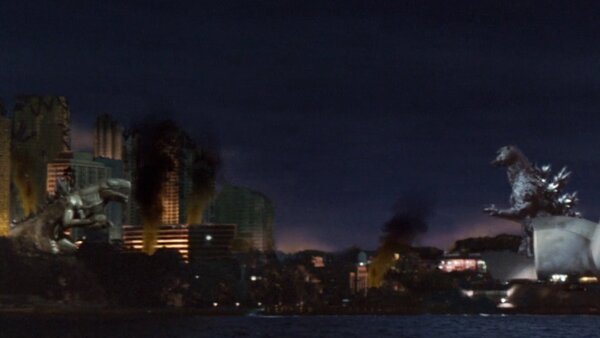
Godzilla creator Toho didn't stop there, though. In their 2004 film Godzilla: Final Wars, Zilla shows up once again to do battle with the real Godzilla in Australia.
But seemingly in an attempt to finally close the book on the whole Zilla debacle and prove beyond any doubt who the real deal is, this is less a battle than a curb stomp.
The "fight," if you can even call it that, lasts for all of about 15 seconds, with Godzilla using his tail to fling Zilla into the Sydney Opera House, before obliterating them with their atomic breath.
Toho made Zilla look like a total jobber with an urgency which suggests they had a serious chip on their shoulder about it. And to rub salt in the wound, he's subsequently referred to as a "useless tuna-eating lizard." Ouch.
7. Dredd

1995's Sylvester Stallone-starring Judge Dredd movie was raked over the coals by fans for one reason above all others - the decision to have Dredd (Stallone) remove his helmet for most of the movie.
Even though it's a core tenet of the character's depiction in the comics that he almost never takes his helmet off - both for protection's sake and to project an image of being a faceless representative of The Law - Hollywood simply wasn't prepared to cover up Stallone's mug for most of a two-hour blockbuster.
But the filmmakers behind 2012's Dredd reboot made a point to immediately assure fans that the mistake wouldn't be repeated, with Karl Urban indeed remaining fully under the helmet for the entirety of the movie's runtime.
Ignoring the fact that Dredd is a better movie than its predecessor in basically every quantifiable way, its commitment to never once showing Urban's face was an emphatic statement of "we're doing it right this time."
6. Pinocchio (2019)
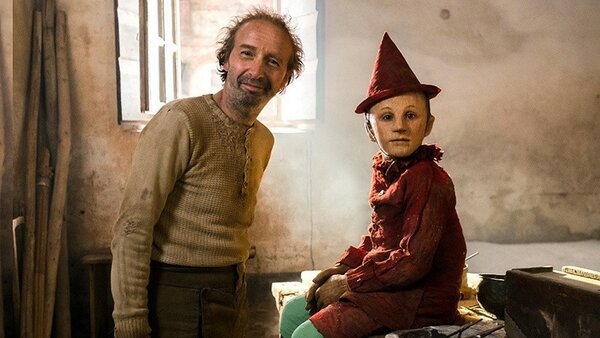
Matteo Garrone's 2019 live-action Pinocchio film marked an attempt to deliver a grittier, more "realistic" take on the classic story, and while one might be tempted to immediately compare it to Disney's 1940 animated version, Garrone clearly aimed his sights elsewhere.
The 2019 film made the rather curious decision to cast Oscar-winning actor Roberto Benigni in the role of Geppetto - an odd choice given that Benigni himself played Pinocchio in an infamous, Razzie-winning 2002 live-action movie which torpedoed his career overnight.
But bringing Benigni back to play Geppetto in a new Pinocchio almost 20 years later was a calculated move on Garrone's part, audaciously drawing attention to the previous live-action film through association, while ensuring that audiences familiar with Benigni's Pinocchio viewed his Geppetto through an entirely different lens.
Couple this with the film's generally far more successful and well-crafted attempt at a live-action Pinocchio story, and this one was justifiably confident that it wouldn't be making the same mistakes as its 2002 predecessor.
In addition to receiving critical acclaim, Pinocchio 2019 also landed two well-earned Oscar nominations - for Best Costume Design and Best Makeup and Hairstyling.
5. Evil Dead II
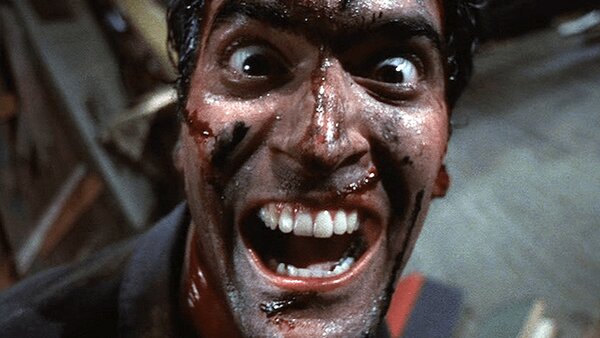
While Evil Dead II is technically a sequel, in its bones it basically feels like Sam Raimi's do-over of the original concept, with Ash (Bruce Campbell) once again battling demons in a cabin setting.
It's more or less the same thing but with almost 10 times the budget, allowing for stronger production values and more insane set-pieces. Basically, Evil Dead II is a groovier rendition of the original low-budget version.
That is to say, while the first Evil Dead is a more serious-minded affair, Evil Dead II ratchets up the insane camp to basically unimaginable levels, Raimi wearing his love of slapstick comedy - namely the Three Stooges - on his sleeve throughout.
The overwhelming fan consensus is that Evil Dead II outdid the original, much as we all love it, in just about every possible way.
It's certainly ballsy for a sequel to repeat the same concept again so shamelessly, but the execution is so utterly bonkers that Raimi easily got away with it.
4. Better Man

Better Man is basically two hours of director Michael Gracey reminding audiences of just how boring most musical biopics are, and demonstrating that there are more creative and interesting avenues to go.
After all, this biopic of Robbie Williams boldly opts to portray the singer as an anthropomorphic chimp - a peculiar yet surprisingly effective conceit which reflects Williams' own negative self-image as "unevolved."
It was nothing if not a daring swing that could've backfired spectacularly, and yet it lends the film a cheekiness which feels wholly of a piece with who Williams is as a performer, generating an anarchic energy which couldn't be much further from generic musical biopics like Bohemian Rhapsody.
Though Better Man ultimately wasn't a box office success, critics went gaga for it and one suspects that time will absolutely be kind to it, the film standing out as a rarest of true originals in one of cinema's most tired subgenres.
The challenge here to future filmmakers producing movies based on musicians seemed to be, "Do better."
3. Nosferatu
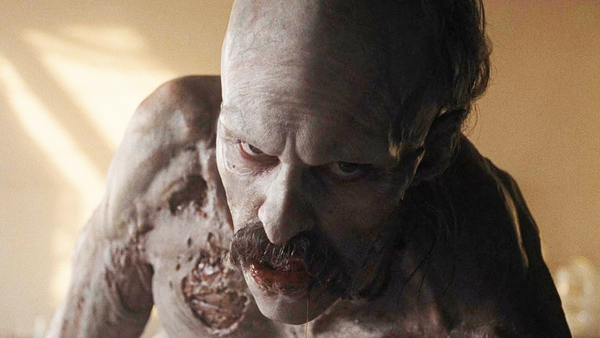
It takes some serious balls to even attempt to outdo 1922's iconic horror masterpiece Nosferatu, but Robert Eggers is no regular filmmaker, and this remake was a passion project which he spent the better part of a decade developing.
Eggers certainly used a century's worth of progress - both technological and social - to deliver what feels like the truly definitive rendition of this story, inspired by Bram Stoker's Dracula as Nosferatu is.
For starters, Eggers made the striking decision to give Nosferatu (Bill Skarsgård) a large, bushy moustache, which works in stark contrast to the character's more immediately monstrous appearance in the 1922 film.
Here the mustache reminds us that Nosferatu is effectively an undead nobleman, ensuring there's an ever-visible tether to his humanity. It's a choice which some audiences found unintentionally comical, but it absolutely works.
Beyond this, Eggers also amped up the violence to levels that the original film simply couldn't, and best of all, it offered a more feminist reading of the story, granting Ellen Hutter (Lily-Rose Depp) more agency throughout.
Eggers basically did the thing few thought possible - he confidently remade one of the most iconic horror films of all time and decisively improved upon it.
2. Barbie

In the case of Barbie, Greta Gerwig's blockbuster take on the iconic doll wasn't trying to outdo a previous adaptation but basically show manufacturer Mattel that the character could be depicted in a more creative and forward-thinking way.
The Barbie movie presents Barbie (Margot Robbie) as a more well-rounded and fleshed-out character, culminating in a hilarious closing gag where she visits the gynecologist, seemingly poking fun at the doll's lack of genitals and sending a message to young girls that their bodies are nothing to be ashamed of.
Hell, Barbie even goes further than this, depicting Mattel as something of a soulless mega-corp that wants to quite literally put Barbie in a box and keep her "in her place."
That Mattel gave the sign-off for this is frankly flabbergasting, but if one wants to get cynical about it, they likely appreciated that a well-executed, self-deprecating Barbie movie would do wonders for their flagging brand - and that it certainly did.
1. The Ugly Stepsister
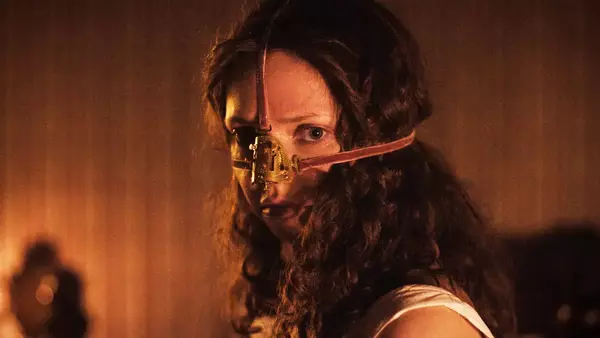
And finally we have the most recent entry on this list, The Ugly Stepsister.
Emilie Blichfeldt's sublime body horror film is a gnarly reworking of the Cinderella fairy tale - a rebuke to the more sanitised Disney adaptations of the story, instead drawing influence from Aschenputtel, the darker version penned by the Brothers Grimm in 1812.
Now, a bleaker, nastier Cinderella story isn't inherently better, but The Ugly Stepsister offers up a far more nuanced depiction of all the central characters, especially downtrodden stepsister Elvira (Lea Myren) and the film's iteration of Cinderella, Agnes (Thea Sofie Loch Næss).
The real triumph here is how the movie focuses on society's tendency to pit women against one another, competing to be more beautiful and chase resources which, in this case, are the marital hand of a man.
It's hardly surprising that Disney's animated and live-action Cinderella adaptations had little interest in exploring such themes, but for anyone keen to dig into a richer, grimier, more grounded take on the material, The Ugly Stepsister leaves all other Cinderella movies in the dust.