10 More Insane Rules Movies Weren't Allowed To Break
These movies were all made under some deeply bizarre conditions.

Even those lucky filmmakers who are given free(ish) rein to make their movies are still bound by a set of rules within which their work must be completed, and it's fair to say that most films are made with considerably greater restrictions than that.
Typically these demands from the studio or producers are logical and make sense from a business perspective - maybe the director needs to secure a PG-13 rating or keep the runtime under 2.5 hours, for instance.
And then there are those times where movies are produced with a specific rule in mind that, to the outside observer, seems really quite bizarre.
And so, as a sequel to our previous article on the very subject, here are 10 more insane rules that movies just weren't allowed to break.
Whether imposed by the higher-ups or even the director themselves, these movies were all created with one rule in place that governed basically the entire production.
From hard-and-fast mandates about the lore to maddening product placement agreements, and content restrictions of the era, these rules all seem absolutely wild in retrospect, regardless of whether they ultimately panned out...
10. Only Deadpool Can Break The Fourth Wall - Deadpool & Wolverine

Last year's Deadpool & Wolverine marked the official debut of Ryan Reynolds' fourth wall-breaking motormouth in the Marvel Cinematic Universe, and despite some sceptical expectations to the contrary, he indeed rocked up in fully R-rated glory.
Many also wondered precisely how Deadpool would be integrated into the MCU given his tendency to address the audience with meta quips and gags - something the MCU is decidedly not known for.
And as director Shawn Levy revealed in an interview shortly before the film's release, himself, Reynolds, the screenwriters, and producer Kevin Feige agreed on a system whereby Deadpool would be the only character capable of breaking the fourth wall.
The purpose of this was to preserve Deadpool's stature as the only unreliable narrator, while ensuring that everyone else without this ability could be taken as seriously as possible and not reduced to a mere gag. From that perspective, it totally makes sense.
Hugh Jackman even initially suggested that Wolverine also break the fourth wall during the movie, only for the idea to be swiftly shot down as Reynolds explained the system to him.
It's fair to assume that this rule will remain in place for any future MCU films Deadpool appears in - most likely at least one of the two upcoming Avengers movies.
9. Not Using MLK's Real Speeches - Selma
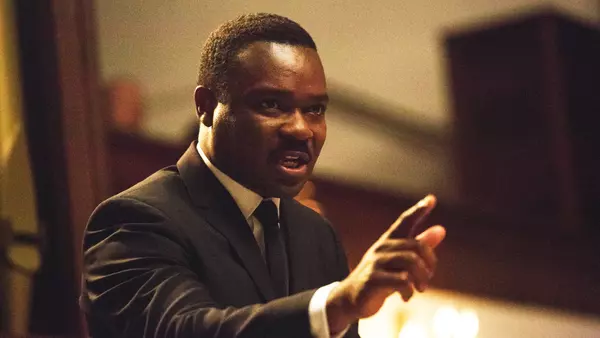
It goes without saying that any biopic of Martin Luther King, Jr. (David Oyelowo) would want to re-enact the legendary activist's most iconic speeches, and yet, Ava DuVernay's 2014 film Selma was faced with quite the unexpected restriction.
In 2009, King's estate licensed his speeches to DreamWorks and Warner Bros. for an unspecified project to be produced by Steven Spielberg.
Even though said project never came to fruition, the Selma producers were unable to reach an agreement with DreamWorks and Warner Bros., and so DuVernay was forced to rewrite King's speeches for the film.
DuVernay ultimately spent hours listening to King's speeches to identify patterns in his rhetoric which could serve as the building blocks for new speeches inspired by the spirit of his real ones.
And while it seems slightly maddening that speeches made in public with major historical merit can be held hostage in such a way, DuVernay nevertheless did a stellar job of conveying the tone and power of King's words in an adjacent fashion.
8. Godzilla Can't Eat People - Godzilla Minus One
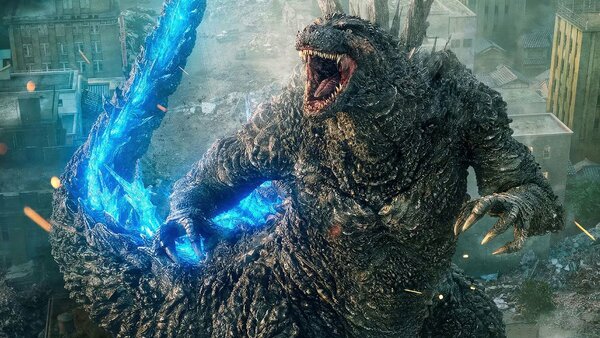
Last year Toho, the Japanese studio behind Godzilla, revealed a new set of rules which govern all Godzilla movies from 2024 onward, including the recent Godzilla x Kong: The New Empire and Godzilla Minus One.
One of the more obvious rules was that Godzilla can't die - though presumably he can be mortally wounded, as long as he is shown starting to regenerate by film's end - but more intriguingly, Toho has also mandated that Godzilla can't eat people.
The wording actually says that Godzilla can't "prey" upon humans, and given that he generally has little regard for human safety in Godzilla Minus One in particular, it's a fair interpretation that Toho is actually referring to the notion of Godzilla hunting humans for food.
And while the kneejerk reaction is to question why this even needs to be a written rule at all, in the context of Godzilla's legacy and audience expectations it does seem fair enough.
After all, nobody's watching a Godzilla movie to see him chug down a skyscraper full of office workers like a pack of Skittles, as fun as that honestly sounds.
7. Peter Parker Can't Use Google - The Amazing Spider-Man

When The Amazing Spider-Man was released back in 2012, many fans poked fun at the fact that Peter Parker (Andrew Garfield) used Microsoft's unpopular search engine Bing rather than Google like, y'know, just about everyone else in the Western world.
This was of course because Microsoft paid the production to feature Bing, resulting in several scenes where the web-slinger is shown researching information using it.
To many, it just didn't track that a person as smart as Peter would be using an objectively inferior search engine when Google is right there.
But of course, Peter was contractually prohibited from using Google because it would cause a conflict of interest with the Bing product placement and open the production up to a legal challenge from Microsoft.
However, Sony evidently took the mockery to heart, as by the time The Amazing Spider-Man 2 rolled around two years later and Bing had failed to make much of a dent globally, Peter jumped ship to Google.
6. No Scenes Of "Excess Passion" - It Happened One Night
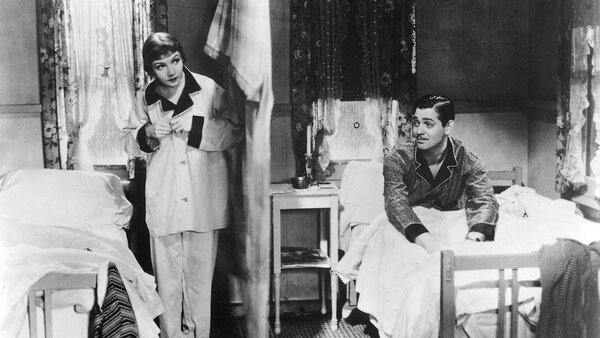
1934's iconic romantic comedy It Happened One Night was released a few short months before the MPPDA began strictly enforcing the Hays Code - a set of self-censorship guidelines in an attempt to cut down on "objectionable" content in Hollywood movies.
Though It Happened One Night was produced and released before the Code came into effect, director Frank Capra nevertheless appreciated that adhering to its rulings would allow his film to be far more commercially successful, and so he did.
The Code had specific guidelines about filmmakers avoiding depictions of sexuality and, as they put it, "excess passion," yet with Capra's movie revolving around the charged romance between Clark Gable and Claudette Colbert's characters, he found himself in something of a bind.
As the two leads spend much of the film in isolation together, Capra came up with a clever compromise.
When they sleep in the same room for the first time, Gable's protagonist Peter hangs a blanket over a clothesline, creating a barrier between him and Colbert's Ellie.
At film's end this blanket falls to the floor, emphatically implying that the sexual union between the two finally happens even while showing nothing that could be considered even remotely racy, adhering to the Code's rules in the process.
5. The Turtles Can Barely Use Their Weapons - Teenage Mutant Ninja Turtles II: The Secret of the Ooze

1990's live-action Teenage Mutant Ninja Turtles movie received considerable backlash for its violence, resulting in the film being edited in the UK to remove nunchucks and other weapons for fear that it would serve as a negative influence on impressionable young viewers.
And so when Teenage Mutant Ninja Turtles II: The Secret of the Ooze was in development, the decision was made to drastically tone down the violence and give the film a sillier, overall more cartoonish tone that was deemed "more appropriate" for children.
As a result, the Turtles are barely seen using weapons throughout Turtles II, with a far greater emphasis on hand-to-hand combat instead.
The curtailed approach to weaponry is evident from an early scene where Michelangelo (Robbie Rist) uses sausage links instead of nunchucks to battle some foes.
Somewhat hilariously, though, this still ended up being cut from the UK release because the BBFC ruled that kids wouldn't be able to tell the difference between sausages and actual nunchucks.
4. It MUST Feature A Giant Mechanical Spider - Wild Wild West

When the Will Smith-starring Western blockbuster Wild Wild West was in development, producer Jon Peters insisted upon one thing - the film must feature a giant mechanical spider.
As it turns out, Peters had a basically fetishistic obsession with inserting a huge spider into one of the films he produced throughout the 1990s.
As Kevin Smith famously revealed many years ago, when he was hired to write Tim Burton's scrapped Nicolas Cage-starring Superman movie Superman Lives, producer Peters demanded that the third act have the Man of Steel fight a huge spider.
When Superman Lives fell through in 1998, Peters promptly recycled the idea in steampunk fashion for Wild Wild West, where a mechanical spider was villain Dr. Arliss Loveless' (Kenneth Branagh) superweapon.
In Peters' mild defense, the spider still holds up pretty well from a VFX perspective and is hardly one of the overpowering problems with the movie, even if his obsession with such a goofy idea is really quite odd.
3. No "Un-Biblical" Behaviour - The King of Kings (1927)
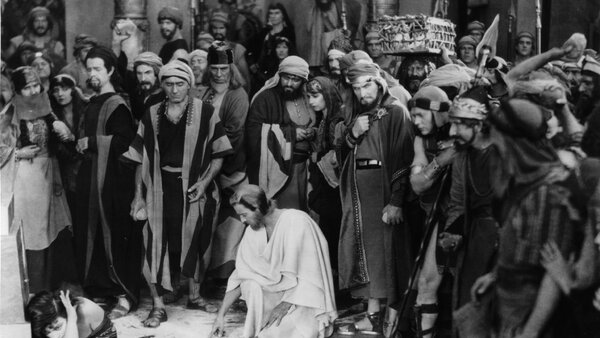
Cecil B. DeMille's 1927 biblical epic The King of Kings went to extreme lengths to ensure that it wouldn't suffer any negative PR blowback as a result of the conduct of its main cast.
DeMille infamously had stars H.B. Warner and Dorothy Cumming - who played Jesus and Mary respectively - sign agreements to ensure they wouldn't do anything to compromise the film's public image.
This included avoiding "un-biblical" activities during shooting, such as going to ball games or nightclubs, playing cards, swimming, or even riding in convertible cars.
Beyond this, DeMille also demanded that the pair couldn't star in any other films that might compromise their "holy" screen roles for an entire five-year period.
Worst of all, DeMille also attempted to prevent Cumming from divorcing her husband Frank Elliott during and after production for fear that it would upset Christian audiences, though in this case his demand was ultimately ignored.
To call these rules extreme is quite the understatement, and certainly not something any filmmaker could get away with asking of talent today.
2. No Eyebrow Movement - Nosferatu (2024)

During the lead up to the release of Robert Eggers' superb reimagining of Nosferatu, star Nicholas Hoult revealed that Eggers had one very peculiar rule for the entire cast - don't move those eyebrows.
Hoult arrived to shoot his role in the horror film and soon discovered to his surprise that Eggers hates it when actors move their eyebrows during takes. Eggers himself has elaborated on his rationale, saying:
"I don't like actors to move their eyebrows... [Be]cause you just waste a lot of energy and the actor doesn't seem as focused and doesn't seem as committed."
However, there's probably an argument to be made that if an actor has to spend time and energy focusing on their eyebrows, they're probably not going to have their attention fully dialled in to performing the scene itself.
Still, it's tough to argue with the end result given Eggers' track record, even if few watching Nosferatu have likely noticed the lack of eyebrow acrobatics.
1. Art Can't Explicitly Kill Children On-Screen - Terrifier 3

On paper it sure seems like the Terrifier franchise is all about breaking the established rules and tossing good taste to the wind, but even this gore-happy series has its limits.
In an interview shortly after the release of last year's smash hit Terrifier 3, filmmaker Damien Leone revealed that there was one line he simply couldn't bring himself to cross - explicitly showing Art the Clown (David Howard Thornton) killing children on screen.
Leone certainly gets extremely close to this line, though, given that the film opens with the implication that Art butchers a young girl, and later in the movie he sets off bombs at a mall which very clearly kill a number of kids.
Leone's distinction is that there's a measure of disconnection in these acts - we never see Art directly murdering a child with his bare hands, such as stabbing or shooting them.
The director ultimately felt that he'd risk alienating most of the audience by explicitly showing Art killing a kid, and that he'd simply be deigning to cheap shock value in that case.