10 More Horror Movie Remakes That Were Instantly Forgotten
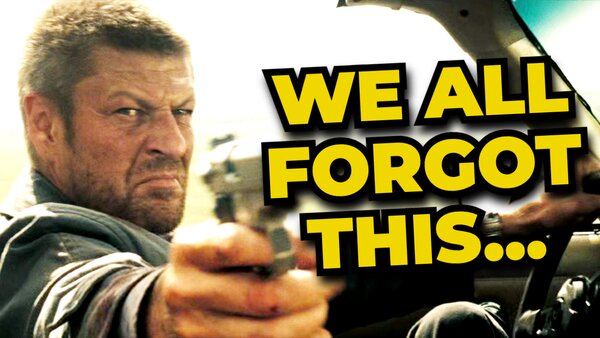
A Sean Bean Hitcher remake sounds like a cool idea on paper, but in practice, it's pretty bad.
Even though horror franchises pump out sequels like there's no tomorrow, it's only a matter of time before the creative well runs dry. Rather than closing up shop, a studio may try to revitalise a scary IP with a remake, as opposed to doing something reasonable, like, you know, making something new.
Even if the reimagining is dreadful, making a massive profit is possible if the property has a fervent fanbase. The remakes of Halloween and Friday the 13th weren't great, but they earned more than the originals. 2010's Nightmare on Elm Street paled in comparison to Wes Craven's classic, but brought in more money than any other entry in the franchise.
Of course, not every horror revision performs well (and we're not talking about films like The Haunted Mansion or the recent I Know What You Did Last Summer). We're looking at iterations that performed so poorly, you probably forgot they even existed.
We've looked at this subject before, but we've managed to find another 10 Horror Movie Remakes That Were Instantly Forgotten. Even if you absolutely love the original film, it's probably not worth your time seeking out these forgettable do-overs...
10. Flatliners (2017)

In Joel Schumacher's sci-fi thriller, Flatliners, a group of medical students flatline for several minutes before being resuscitated, hoping to get a glimpse of the afterlife. When the group start suffering from petrifying hallucinations, they realise they soon might be dead for good.
Remakes get a bad rap, but redoing Flatliners was a welcome idea, since there were plenty of ways to expand on its provocative concept. On top of that, the 2017 incarnation looked promising due to its solid cast, which included Elliot Page, Diego Luna, and Kiersey Clemons. (The original star, Kiefer Sutherland, was nice enough to cameo.)
But rather than utilising new ideas, the remake recycles everything about the original. What's worse is that it seems to amplify the flaws of its predecessor. Although 1990's Flatliners had underdeveloped characters, the characterisation this time around is practically non-existent. The first movie had pacing issues, but this version is a slog to get through since every forced conflict is needlessly dragged out.
Schumacher's Flatliners is far from perfect, but it's a masterpiece compared to this dreary schlock. Despite making a minuscule profit, 2017's Flatliners is mostly forgotten, as it should be.
9. The Hitcher (2007)

There's no doubt Rutger Hauer's most defining performance was Roy Batty in Blade Runner. However, the Dutch star's most terrifying role has to be the homicidal drifter, Jack Ryder, in 1986's The Hitcher.
Despite being evil incarnate, Hauer found humanity in the demented hitchhiker, which made it all the more terrifying when he shanks police officers and tears an innocent woman in half. Hauer's performance was so perfect, it seemed impossible to find anyone who could embody the role as well.
But due to Sean Bean's knack for playing bad guys, it seemed like a match made in heaven when he was cast as Jack in the 2007 remake.
But as is often the case with modern remakes, this Hitcher didn't seem to understand what made the original special since it cuts down on the subtlety and instead focuses on flashy violence and tasteless gore. Though Sean Bean is intimidating, he comes across like a generic slasher villain rather than the embodiment of malevolence that Hauer brought to the screen decades prior.
Due to the mundane chase sequences and lack of character development, it's apparent why this Hitcher isn't remembered fondly... or at all.
8. Cabin Fever (2016)

Long before Hostel, Thanksgiving, or (sigh) Borderlands, Eli Roth made his directorial debut with 2002's Cabin Fever. The skin-crawling splatterfest follows a group of college students vacationing in the woods, oblivious that a flesh-eating virus has infected the locals and wildlife.
Cabin Fever wasn't a showstopper but it managed to stand out for its nightmare-inducing imagery (especially the leg-shaving scene). Although Roth didn't return for the sequel or prequel, he agreed to co-write the 2016 remake.
Sadly, this version doesn't work for a number of reasons. The script is almost word-for-word the same, so there's zero surprises for anyone familiar with the original. Although the first Cabin Fever had moments of levity, this one plays out like a straight horror. There's nothing wrong with this decision in theory, but it makes the comedic dialogue from the original script sound awkward and stilted.
Though the practical effects in the 2002 movie led to many gross-out moments, most of them are replaced with CGI this time around, which looks fake.
Considering it earned less than $40,000 at the box office, 2016's Cabin Fever is proof that not every horror deserves to be remade.
7. The Stepfather (2009)

The original Stepfather centres around a psychopath called Jerry Blake who dreams of settling down. If anything is imperfect about his family, Jerry kills them all, and tries again and again until he finds the right fit.
The Stepfather didn't make much money but has since developed a cult-following. Due to its newfound popularity, it wasn't a surprise when it received a remake in 2009, with Dylan Walsh playing the lead role.
Unfortunately, it's obvious this version will not hit the same way straight off the bat. Although 2009's Stepfather recreates the jaw-dropping prologue of the original, the gore is heavily sanitised, with the film overall lacking the brutal violence that made its predecessor stand out.
The remake strips away much of the psychological nuance of its progenitor and instead opts for a standard teen thriller format. The titular villain isn't as interesting since he lacks the charm and internal conflict that made the initial character so unsettling.
Worst of all, it's not frightening in the slightest, since all the slow-building tension is swapped out for loud sound effects and ineffective jump scares.
6. Salem's Lot (2024)

Being the most recent entry on our list, Gary Lauberman's Salem's Lot should be fresh in our minds. However, the latest adaptation of Stephen King's novel is so formulaic, it's challenging to remember a single thing about it.
Like the 1979 version, this supernatural horror opens with writer Ben Mears returning to his childhood home for inspiration, unaware that it's been taken over by vampires. Unlike the 1979 version directed by horror legend Tobe Hooper, the remake discards slow-burn gothic horror for heavy action and cheap CGI. Sequences that are intended to be frightening come across as campy due to poor set-up and delivery.
Due to the book's length, you'd expect this adaptation to remove a few unneeded elements. But the filmmakers try to include everything, cramming swathes of the novel. As a result, major plot points are rushed, which dilutes the impact of key moments and character beats.
Warner Bros. probably knew they had a dud on their hands, since Salem's Lot lay in limbo years after filming wrapped.
5. Cube (2021)
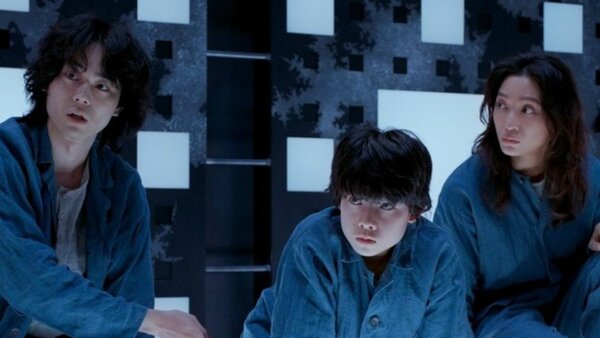
Like Vincenzo Natali's Cube, the 2021 Japanese remake kicks off with several strangers awakening inside a gargantuan labyrinth with no clear exit. Finding a means of escape is easier said than done since many of the rooms contain lethal booby traps.
Although the first Cube's sequel and prequel were subpar, it was refreshing to see the property get revisited since there were still many ways to explore the fascinating premise. Better still, this version of Cube wasn't imitating its predecessor since it had a different story structure, new character conflicts, and unique traps.
Which is why it was painful to learn 2021's Cube was the worst entry in the franchise by a mile. The characters aren't complex, which results in zero atmosphere and underwhelming confrontations. As a result, you don't care whether anyone lives or dies, dissolving the impact of the traps. In the initial version, you could never tell what was going to happen next. But this time, it's painfully predictable, depleting any potential tension.
4. Day Of The Dead (2008) & Day of the Dead: Bloodline (2017)
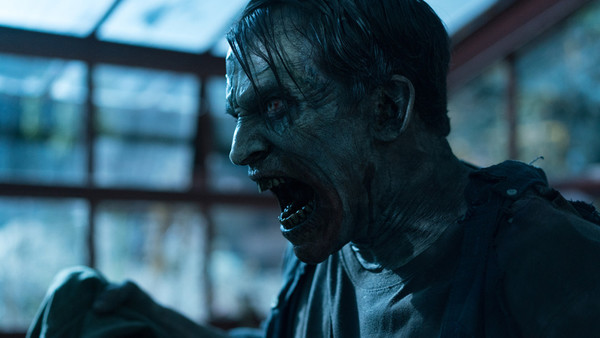
It's easy to assume 2008's Day of the Dead and Day of the Dead: Bloodline aren't official remakes of George A. Romero's Day of the Dead. After all, the later instalments are set in a town while the original zombie flick took place in a military complex.
However, Romero gave his seal of approval to both films, so they're officially part of the Dead franchise. 2008's Day of the Dead also stars Ving Rhames, who previously starred in the 2004 remake of Dawn of the Dead.
With all that said, it's strange why Romero gave these properties the thumbs up since they're both unbearably awful. Even though 1985's Day of the Dead is considered the weakest of the trilogy, it has plenty of fun characters, memorable sequences, and iconic deaths.
But these duds are so forgettable, the biggest zombie-lovers probably didn't realise they came out. The first remake is riddled with so much cliched dialogue and inconsistent storytelling, you'd never believe Romero signed off on it.
In Bloodline's defence, it tries something different, since it revolves around an intelligent zombie, which was only touched upon in the first Day of the Dead.
Even though this is a creative idea, it doesn't make up for illogical character choices, poor acting, and predictable writing.
3. Poltergeist (2015)
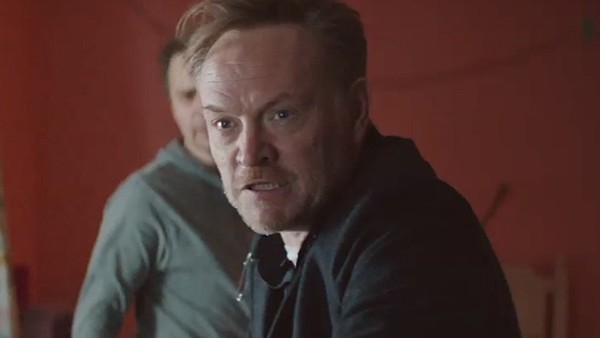
Although nobody expected the 2015 remake to have the same impact as the original Poltergeist, Gil Kenan's iteration didn't come close. While 1982's film - directed by Tobe Hooper - skilfully blended supernatural horror with suburban satire, the remake felt more like a hollow rehash.
Iconic moments from the original, like the clown toy and the "they're here" line, are redone but fall flat, since they feel like a checkbox on a remake to-do list. Instead of relying on practical effects or any noteworthy filmmaking, this mess of a movie leans heavily into generic CGI and telegraphed jump scares. (Sure, Hooper's Poltergeist also had jump-scares, but they actually made you jump.)
Another major shortcoming in this unnecessary remake is the character development, or lack thereof. The original classic spent time fleshing out the ensemble, making it scarier when they were in danger. Disappointingly, the reimagining failed to establish any real emotional investment in the family, despite the fact that the capable cast includes Sam Rockwell and Jared Harris.
In hindsight, 2015's Poltergeist was doomed to fail, since it copied the bare bones of the original rather than capturing its spirit.
2. Children of the Corn (2009 + 2020)

It's baffling why studios are keen to repeatedly adapt Children of the Corn for the 40+ years, considering how badly the end products often turn out.
But there must be something special about Stephen King's short story, as it's spawned a myriad of sequels, prequels, and reimaginings. However, the later entries kind of bleed together, so horror veterans may be oblivious to the fact that Children of the Corn has been rebooted not once, but twice.
The 2009 iteration is more faithful to the source material, since it incorporates the story's nihilistic tone, the depressing ending, and King's dialogue. The 2020 version is a modern retelling and focuses on a new villain instead of the iconic antagonist from the original, Isaac.
Despite adapting the story in drastically different ways, both remakes are equally atrocious. 2009's Children of the Corn is let down by its nonexistent budget, wooden acting, and repetitive scenes. 2020's Children of the Corn, on the other hand, strayed too far from King's themes, and instead crowbarred in unsubtle social commentary.
The original Children of the Corn is by no means a classic, but it's far better than either of these recent attempts at adapting King's work.
1. Nosferatu (2023)
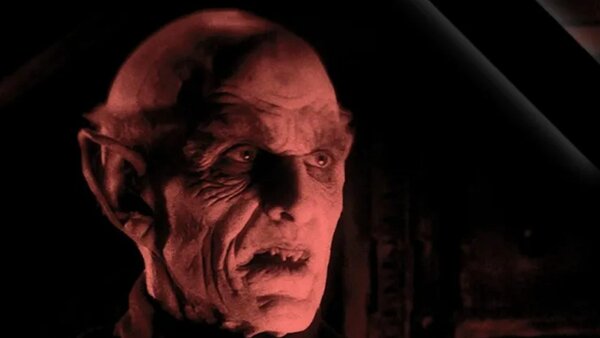
Although Robert Eggers' Nosferatu is one of the most widely known horror remakes in recent memory, that's not what we're talking about here. One year prior, an obscure revision of 1922's Nosferatu: A Symphony of Horror was released.
Directed by David Lee Fisher, the 2023 iteration emulates the original by incorporating the black-and-white style, even utilising sepia to depict the night sequences. The only other colour used is red, often to emphasise violence.
Although it sounds like the creators had their hearts in the right place, this bloodsucking flick sucks in the worst way. It's basically a shot-for-shot remake of the original which, as we all know from Gus Van Sant's version of Psycho, is a terrible idea.
Most of the acting is hammy, making it impossible to take the scary moments seriously. Nearly every shot contains distracting green-screen or special effects that look like they were put together on Microsoft Paint in five minutes.
Doug Jones is solid as Count Orlok, but his performance isn't enough to salvage a well-intentioned but poorly constructed remake.