10 More Horror Films That Tried Something Different (And Failed)
Trying to be clever backfired big time.

It's hard to accept but horror can be extremely formulaic. After watching your fair share of creepy flicks, you can set your watch to when a jump scare is coming or predict who's the next person to bite the dust.
Though the medium tries to keep things interesting with sequels, prequels, reboots, and reimaginings, it can be difficult to track down a scary movie that doesn't feel like a rehash of countless superior stories. But every once in a while, a horror goes in a new and bold direction, leaving a massive impression on the populace. These films are often praised for subverting expectations or giving the audience something they've never seen before.
With that said, a horror isn't necessarily good just because it goes against the grain. As established in the previous 10 Horror Films That Tried Something Different (And Failed), the film in question may still be downright terrible. Some features try so hard to defy expectations, they don't focus on basic concepts like characterisation or plot. Even when a premise should work, the movie could be let down by other factors.
Although the genre should push itself and embrace innovation, the following ten entries probably would've turned out better if they stuck to tried-and-tested ideas.
10. Urban Legends: Bloody Mary

The original Urban Legend revolves around a group of high-schoolers who are terrorised by a serial killer who implements urban legends into their murder spree. Although follow-up Urban Legends: Final Cut maintained the same set-up, the third entry mixed things up by doing away with the whodunnit formula.
In threequel Urban Legends: Bloody Mary, three friends perform an incantation at a house party, causing them to summon a murderous ghost. Now, exploring the supernatural was a smart way to potentially rejuvenate the IP - there are plenty of urban legends involving vengeful spirits, so Bloody Mary could have a lot of fun with this idea - but it just didn't work.
The titular ghost incorporates urban legends into her kills, but none of them are paranormal in nature. Also, some of the deaths don't connect with the concept at all. For example, how is being stabbed with a broken bottle an urban legend? More importantly, why is Mary obsessed with urban legends in the first place?
Though Urban Legends: Bloody Mary is unscary, predictable, and badly written, the way it misuses its premise is its biggest fumble. Though Urban Legends: Final Cut was awful, it feels like a masterpiece compared to this dud.
9. Buffy The Vampire Slayer
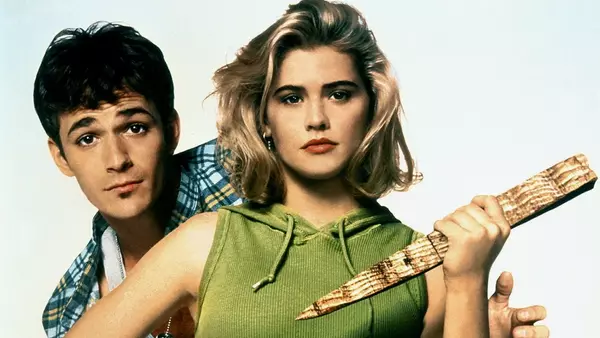
The film iteration of Buffy the Vampire Slayer is a perfect example of a great concept being executed poorly. We know the idea was solid since it was successfully adapted into one of the most beloved television dramas of the '90s yond. However, the 1992 movie sucked big time (which is pretty fitting).
Like the TV series, the horror-comedy film follows cheerleader Buffy Summers, who discovers she's destined to protect the world from vampires. At the time, monster hunters in supernatural stories were regularly depicted as warriors or men of science like Abraham Van Helsing. Because of this, it was refreshing to see Buffy the Vampire Slayer modernise this trope in such a creative way.
Sadly, though, it didn't come together.
To be fair, Buffy the Vampire Slayer has an impressive cast - including Donald Sutherland, Stephen Root, Paul Reubens, Hillary Swank, Thomas Jane, David Arquette, and Rutger Hauer, and even a minuscule role for a pre-fame Ben Affleck - but due to the poor pacing, stereotypical characters, and unimpressive plot, not even the talented ensemble can save this mess.
The TV show is a blast, but there's nothing to sink your teeth into here.
8. Slumber Party Massacre II

During the 1980s, the slasher subgenre exploded in popularity thanks to films like Halloween and Friday the 13th. Of course, the majority of these copycats got lost in the shuffle, including The Slumber Party Massacre.
In this cheesy 1982 horror, a bunch of teens find themselves being tormented by Russ, a psychopath who slays his victims with a power drill. Despite the poor reviews, The Slumber Party Massacre made enough money to spawn a sequel.
Though the original was as derivative as they come, Slumber Party Massacre II makes a strong case for being the most bonkers slasher sequel ever. While Russ met his maker in the previous instalment, the follow-up begins with him being reborn as a singing greaser, armed with an electric guitar that's been fashioned into a power drill.
As hard as it is to believe, that's not the weirdest part of Slumber Party Massacre II, as Russ has been inexplicably endowed with Freddy Krueger-like powers that allow him to attack his victims in their dreams. Not only that, his murder spree is now accompanied with all-singing, all-dancing musical numbers.
Slumber Party Massacre II is a total mess from beginning to end, but nobody can accuse the maligned sequel of playing it safe.
7. Dracula A.D. 1972

During the 1950s, Hammer Film Productions started remaking classic frightfests, including The Mummy and Frankenstein, which successfully reinvigorated the creature feature sub-genre. But if any Hammer film deserves to be singled out, it's Horror of Dracula, starring Christopher Lee as the vampiric count. So, when Horror of Dracula made a sizeable profit, it was no surprise when the studio franchised the hell out of it.
Watching Lee as Dracula tearing through Transylvania was entertaining at first, but it wasn't long before it felt like the sequels were being cranked out for a quick buck. As a result, it was reassuring to learn the sixth entry would try something different by plonking the Prince of Darkness in the modern day.
However, Dracula A.D. 1972 barely commits to its premise. Though the time period is clear, most of Dracula's scenes take place in his Gothic castle. For this reason, there's no feeling of the story taking place during the 1970s while watching these sequences (except when funk music is played during the final battle).
Also, it's unintentionally hilarious to see an intense moment involving Dracula followed by a sequence in a disco or a jazz show. If there was more focus on the titular bloodsucker terrorising the modern world, Dracula A.D. 1972 could've turned out much better.
6. Victor Frankenstein

Frankenstein has been adapted to the big screen countless times, compelling filmmakers to try and put a different spin on Mary Shelley's novel.
Over the years, the Creature has been portrayed as a lost soul, a diabolical villain, a vigilante, a superhero, and a hooker. And just when it looked like there was no other way to adapt the sci-fi horror, Paul McGuigan released Victor Frankenstein, which focused on the mad doctor's eccentric sidekick, Igor, played by Daniel Radcliffe.
Though Victor's partner in crime was called Fritz in the 1931 Boris Karloff film, it wasn't long before a crazed hunchback called Igor became synonymous with the story. However, Victor Frankenstein doesn't do much with its concept.
Firstly, Igor feels like a troubled man rather than a demented maniac. It's nice how the filmmakers attempted to humanise the character, but it doesn't change the fact this incarnation of Igor isn't interesting. He also doesn't have his distinctive look for long since Victor corrects Igor's hump moments after meeting him. Without his traditional characterisation or physical appearance, Radcliffe's character doesn't resemble Igor. Instead, he comes across as... some guy.
With that in mind, it's a wonder why the creators were keen on an Igor-oriented story when they did everything in their power to strip away his defining attributes.
5. Rings
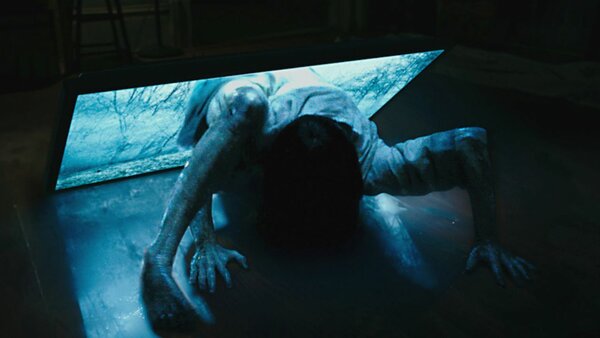
Although the American version of Ring was successful, the sequel didn't have the same luck, causing the spooky saga to go dormant. Over a decade later, Hollywood thought it was time to give the spine-tingling property a revisit.
Though it can be frustrating when a reboot tweaks key elements to the source material, this is one example where changing things up could've been beneficial. Since the original centred around a cursed video tape, the next instalment could update the lore to stay relevant in the modern era. After all, when is the last time you saw somebody watching a VHS? But not only does 2017's Rings illogically maintain the killer tape concept, it makes massive changes that are stupid or non-sensical.
Rather than leaving Samara's origins vague and mysterious, Rings gave the well-dwelling spirit an elaborate backstory that's needlessly complicated and boring. Also, Samara is now trying to pass her curse onto her victims so they will become the new killer ghost, which was never her MO before.
Weirdest of all, Samara now has the ability to summon cicadas, which makes her come across as a C-list supervillain rather than a nightmare-inducing spectre.
4. Doom

One of the most important aspects when it comes to adapting a video game is understanding the source material. Now, a lot of video games have messy storylines that are difficult to condense into a two-hour flick. However, Doom shouldn't have that problem since the plot couldn't be more straightforward, as id Software's influential shooter centres around a marine who battles demons. That's it.
So, what did the 2005 film adaptation do? It got rid of the demons.
Rather than facing off against the forces of Hell, our hero must contend with infected humans. Though each game concludes with the marine battling a gargantuan monstrosity, the movie's big bad is a zombified soldier played by Dwayne Johnson. Granted, the Rock looks intimidating, but not so much when compared to classic Doom foes like the Cyberdemon or the Icon of Sin.
Though most of the infected resemble their video game counterparts, it's bewildering why the writers thought the fanbase would be onboard with this pointless departure. To the movie's credit, it went above and beyond to create a first-person shooting style for the third act. But apart from that, nothing else about this dumpster fire captured the spirit of Doom.
3. Halloween III: Season Of The Witch

It's hard now to imagine Michael Myers not being a part of Halloween, considering he's been the central antagonist in a dozen entries, but when Michael allegedly died in Halloween II, it looked like the Shape was gone for good.
Though the knife-wielding sociopath is renowned for surviving the impossible, this trope hadn't been set up by that point. As a result, Halloween II seemed to spell the end, not just for Michael Myers, but the whole franchise.
Of course, when Halloween II earned ten times its budget, the studio churned out a follow-up, and with Michael no longer in the picture (for now), it was decided to rejig Halloween into a horror anthology series.
In Halloween III: Season of the Witch, the residents of a California town discover a cult is brainwashing children with masks imbued with the enchanted rocks of Stonehenge. Although this premise is... interesting, to say the least, few people were on board with it since it was such a heavy departure from its predecessors.
In Season of the Witch's defence, it could've worked as a standalone movie away from the Halloween name. However, having killer masks, rituals, witchcraft, and freakin' robots in a Halloween sequel is extremely jarring.
Due to fan backlash, Michael Myers was brought back in Halloween 4, and the brand reverted back to its classic slasher style.
2. Omen IV: The Awakening
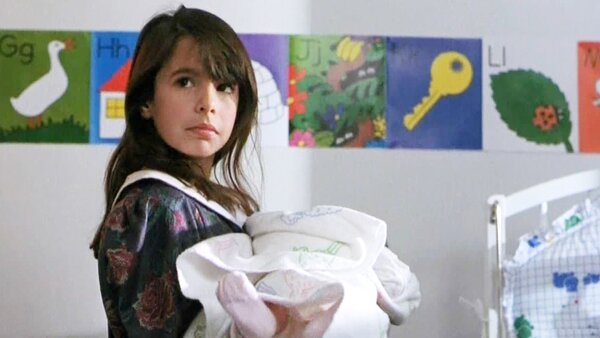
We live in a world where horror franchises continue even after the supposed "last" instalment. In fact, Friday the 13th kept going after two so-called final chapters. And The Omen III: The Final Conflict was no different.
That threequel concludes with Damien Thorne being defeated by the forces of good, seemingly putting an end to the Antichrist's plans for world domination. Despite the fact Damien's story had drawn to a close, another sequel, Omen IV: The Awakening, was put together that focused on Damien's daughter, Delia York.
Now, there's nothing wrong with having somebody besides Damien serve as the Antichrist, but what made Damien so sinister in the original was how innocent he appeared, almost like he was oblivious to his true and malevolent purpose. But this time around, all subtlety is thrown out the window since Delia acts like a raging sociopath the moment she's born. The story also becomes unnecessarily convoluted when it's revealed Delia's embryonic twin had been implanted into her stepmother and is destined to become the new Antichrist.
The Awakening had an open ending, but it's easy to see why a direct follow-up never materialised.
1. Jaws 3-D

Even though Jaws was supposed to a one-and-done, plans changed when the summer blockbuster became the highest grossing movie of all time. Knowing there was more money to be made, another one was of course quickly slapped together.
Jaws 2 made a big splash at theatres but was criticised for being lazy and lacking the finesse of Steven Spielberg's iconic shark slasher. As such, the studio realised they needed to do something drastic to ensure their little moneymaker stayed afloat.
Rather than emphasising character conflicts, world-building, or atmosphere, the third Jaws focused on a gimmick. More specifically, a 3-D gimmick.
Though many horrors have utilised this stunt, it was embarrassing to see a sequel to a classic film resort to such a cheap tactic. But that's not all, as when Jaws 3-D was released, audience members were given Polaroid 3-D glasses for the full experience. However, these glasses are hard to come by nowadays, meaning modern viewers have to watch this garbage without them. And since certain scenes were designed to be in 3-D, many sequences look incredibly fake and wonky.
What's worse is the camera lingers on these shots for ages, allowing the audience to admire the 3-D effect... despite the fact they're not in 3-D.
Although Jaws 3-D has a myriad of problems, this pointless stunt is the worst aspect of the movie hands down.