10 Midnight Movies You Need To Watch

Do you remember doing the Time Warp?

When American cinemas began midnight programming in the 1970s, they typically scheduled films that were either too weird for the mainstream or so bad they really were worth watching. In those pre-internet, pre-VCR days, a midnight movie was something illicit, a chance to watch something you might never see again. Matinee screenings might€™ve featured Charlton Heston saving a stricken airliner or surviving a Los Angeles earthquake, but the night belonged to El Topo, Alejandro Jodorowsky€™s weird Western, and Night Of The Living Dead, which ushered in the era of grim, downbeat horror pictures. Decades later, despite the competition from home entertainment, the midnight movie was alive and well and playing at the Alamo Drafthouse in Austin, Texas, where James Nguyen€™s Birdemic was revelling in its newly-acquired status as one of the worst films ever made. The movie proved so popular during its limited theatrical run that a sequel, Birdemic 2: The Resurrection, was released in April 2013. The illicit had given way to the joy of a good train wreck. Whether you€™re watching a guilty pleasure or a bizarre cult item, though, midnight movies are a communal experience. In an era of YouTube and Netflix, we need them more than ever so if you€™re interested in below-the-radar cinema, here€™s where you start.


10. The Tingler (1959)

If you€™ve never seen The Tingler on the big screen, with the €œPercepto€ gimmick recreated for a modern audience, you haven€™t lived. When first shown, random seats were rigged with war surplus motors, causing them to vibrate at key moments during the film and (in theory) make the viewer scream. You see, Dr Warren Chapin (Vincent Price) is convinced that €œthere€™s something inside every frightened person that€™s as solid as steel.€ Using his cheating wife as a guinea pig, he discovers The Tingler, the organism that attaches to the spine in moments of terror and can only be released by screaming. If someone died unable to scream, their body would contain a perfect Tingler specimen€. Enter theatre-owner Martha Higgins (Judith Evelyn) and her louse of a spouse Ollie (Philip Coolidge). Martha, being a deaf mute, cannot scream. She also faints at the sight of blood and Ollie, unbeknownst to the Doc, is planning to do away with her. Can you see where this is going? In the film€™s most famous sequence, the screen goes blank while Price tells the audience, €œDo not panic€.but scream! Scream for your lives! The Tingler is loose in this theatre! Keep screaming!€

9. The Room (2003)

Viewed with an enthusiastic audience, The Room is some kind of classic, a jaw-on-the-floor experience whose mindboggling awfulness is attributable to writer/director/star Tommy Wiseau, the only thespian ever to bring down the house with the line €œHi, Mark.€ Looking like a genetic experiment that sampled DNA from Willem Dafoe and a lizard, Wiseau has all the charm and grace of a street-corner drug dealer. When not delivering soap opera dialogue in his impenetrable East European accent, he€™s constantly chuckling apropos of nothing, even while listening to a story about domestic abuse. And he€™s the romantic lead in The Room, a vanity project Wiseau financed himself after failing to sell it as a novel, a play or a script. You can see why: it€™s Wiseau€™s love letter to himself, with characters constantly remarking how wonderful he is (even the florist says, €œYou€™re my favourite customer.€) Cast and crew were constantly quitting or being fired, so characters are introduced only to disappear moments later, leaving gaping holes in the narrative. In one scene, a character responds to her mother€™s cancer diagnosis by telling her that €œthey€™re curing people every day€ and the topic is never broached again. Strange doesn€™t begin to cover it.

8. Big Meat Eater (1982)

Canadian science-fiction is a narrow genre at best, but even harder to find are those films featuring music numbers, cannibalism, toy robot aliens, a zombie mayor and a hero that owns a butcher€™s shop. Spoofing everything from Plan 9 From Outer Space to more earnest Canadian productions, Chris Windsor€™s sole directorial effort not only pre-dates Peter Jackson€™s Bad Taste but makes you wish he could€™ve gone on to a similar career. The €œplot€ involves a group of wind-up toy aliens who reanimate the dead so that they can steal Balonium, the revolutionary fuel source that has inexplicably formed in a local butcher€™s septic tank, but Windsor also throws in a dance number (€œBaghdad Boogie€) set in a boiler room, a Michael Caine-ish geek who€™s building a spaceship in his bedroom, and an immigrant family whose daughter keeps getting attacked by monsters. Inception, this is not.

7. Reefer Madness (1936)

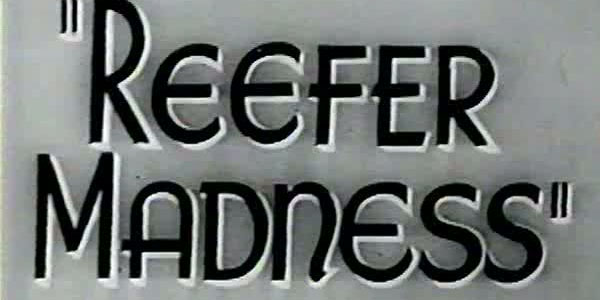
Funded by individuals determined to save America€™s youth from the soul-destroying effects of Marijuana (€œthe REAL public enemy number one!€), yet who had no idea of what actually took place at pot parties, Reefer Madness is unshakeable in its belief that a single puff of the devil's weed will send any Shakespeare-loving student down the path of murder, attempted rape and frenzied piano solos. According to the opening text crawl, Marijuana is a €œviolent narcotic€ whose use leads to €œincurable insanity€ and €œacts of shocking violence€, such as killing your entire family with an axe. No joke €“ that€™s exactly what a character says at one point. Unsuccessful on its initial release, Reefer was resurrected as a midnight movie when a public domain print was discovered in the Library of Congress in the early 70s, becoming a hit with potheads and attracting a lawsuit from distributor Dwain Esper, who wanted his cut from a movie he claimed to have created for the good of his country. The case was thrown out of court.

6. Troll 2 (1992)

The popularity of this bizarre trainwreck, which features not a single troll, owes a great deal to the efforts of NY comedy troupe Upright Citizens Brigade, whose screenings made it a smash on the midnight movie circuit. Not bad for a picture sneaked out on VHS three years after being shot, whose cast claimed not to understand the script or, due to a post-production title change, even know of its release. Lensed in Utah under the title Goblins, Troll 2 is your typical movie about vegetarian dwarves in rubber masks and burlap sacks that lure unsuspecting families to the town of €œNilbog€ and devour them once they€™ve been turned into vegetable matter by consuming green gloop. The only people that can save the Waits family are young Josh (Michael Paul Stephenson) and his dead Grandpa (Robert Ormsby), who can freeze time, cause objects to move and appear as a disembodied head but can€™t manifest himself in the correct room. In the most memorable sequence, Josh has to devise a split-second plan for preventing his family from eating the contaminated food, which he does by urinating on the table to the understandable surprise of his father, who delivers the immortal line: €œYou can€™t p*ss on hospitality €“ I won€™t allow it!€ Watch it on a double bill with Best Worst Movie, Stephenson€™s documentary about the film.

5. Basket Case (1982)

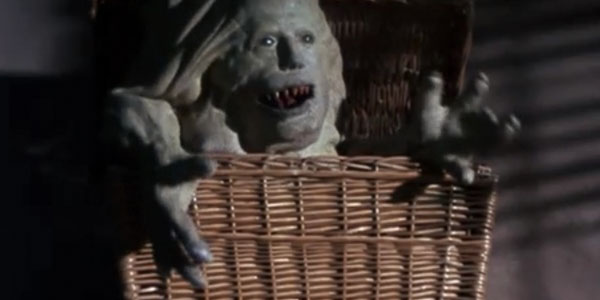
Dedicated to Herschell Gordon Lewis, Frank Henenlotter€™s $35,000 debut is as cheap and tasteless as its pedigree would suggest, but less ineptly made. Disarmingly inventive, and shot on the sleaziest locations possible, Basket Case brings to mind the early films of John Waters, whose 70s Baltimore was as scuzzy-looking as Henenlotter€™s New York City. Described by Duane Bradley (Kevin Van Hentenryck) as looking like a squashed octopus, Belial is in fact his Siamese twin, who he carries around in a wicker basket to the understandable puzzlement of strangers. Separated against their wishes, Belial survives being unceremoniously disposed of in a trash bag to convince Duane to take revenge against the doctors responsible as well as their father, who Belial personally despatches with a circular saw. When the movie played 42nd Street, Henenlotter was thrilled to see stills from his picture adorning a garish plywood archway, full of spattered blood, even though the caption (€œHis brother is a deformed twin!€) gave the plot away. By Henenlotter€™s own (somewhat harsh) admission, nobody enjoys Basket Case because it€™s great filmmaking but because it€™s a fun time. Considering its pedigree, how could it not be?

4. Plan 9 From Outer Space (1959)

With its amateurish performances, dime store effects and absurdly quotable dialogue (€œInspector Clay€™s dead €“ murdered - and somebody€™s responsible!€), Plan 9 is the gold standard of cinematic ineptitude, the Citizen Kane of €œBad€ movies etc. etc. It€™s also terrific fun when seen with a crowd. Like all great entertainment, this baffling tale of pompous aliens, zombie wrestlers and stock footage just wants to give you a fun time, but it€™s even better when enjoyed with a receptive audience. In a cruel twist of irony, Ed Wood€™s signature film was becoming a midnight favourite just as its creator was losing out to alcoholism and his creditors. Its popularity brought it to the attention of Harry and Michael Medved, whose book The Golden Turkey Awards named it €œThe Worst Film Of All Time€, beginning an interest in the filmmaker€™s oeuvre that led to a string of books and documentaries as well as, eventually, a Tim Burton-helmed biopic. Wood saw none of it. He died on the morning of December 10, 1978, 3 days after being evicted from his tiny Hollywood apartment.

3. Pink Flamingos (1972)

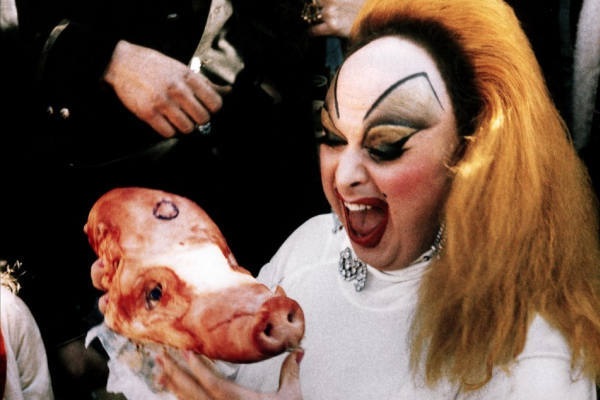
It€™s apt that Pink Flamingos opens on a shot of a trailer home because it sets the tone for what we€™re about to watch. Over the next 90 minutes, folks, prepare yourself for drag queen Divine bestowing upon his/her son €œa gift that only a mother can give€ (fellatio), a party montage that includes a guest contracting his sphincter in close-up, a kidnapped hitch-hiker being impregnated with a sperm-filled pipette and, of course, Divine€™s devouring of a canine€™s bowel movement, set to How Much is That Doggy in the Window? Tying it all together is Divine€™s determination to retain the tabloid-bestowed title of €œfilthiest person alive€ in the face of challenges from €œtwo jealous perverts who hate Divine more than anything in the world.€ The Marbles, played by David Lochary and Mink Stole, run a €œbaby ring€, selling the offspring of abductees to lesbian couples and ploughing the profits into porn stores and heroin operations that target inner city elementary schools. But they can€™t compete with a cross-dressing trailer resident who keeps his/her mentally ill mother in a playpen, allows her delinquent son to rape a woman sent to spy on them and is willing to break into their home and perform indescribable acts on their furniture. And that€™s before Divine resolves to move to Boise, Idaho, sleep in gas station lavatories and start €œdressing like a dyke.€

2. Pieces (1982)

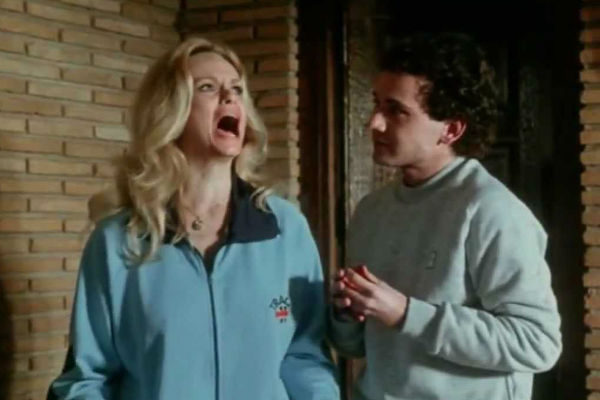
There€™s only one way to appreciate this gonzo slasher, and that€™s with an enthusiastic crowd. A movie that thinks €˜subtlety€™ and €˜nuance€™ are towns in the Midwest, Pieces throws in everything for the sake of an entertaining show and lets nothing €“ not the bad dubbing, the horrific acting or the outrageous plot €“ stand in its way. On a New England campus, nobody notices a co-ed being hacked up with a chainsaw on the front lawn in broad daylight, so the Dean brings in Keystone Kops Christopher George and Frank Brana, who spend the rest of the movie wondering what use a heavy breathing maniac could have for the limbs he steals from his victims. In a film with no shortage of unintentional laughs, special mention must be made of the sequence where a co-ed gets into a lift with a black-garbed, heavy breathing psychopath, who she doesn€™t realise is carrying a chainsaw until he revs it up.

1. The Rocky Horror Picture Show (1975)
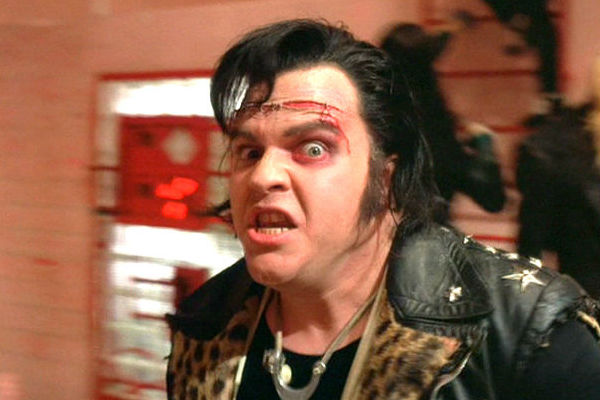
Based on the successful British fringe musical, The Rocky Horror Picture Show€™s mix of sex and rock n roll was never going to appeal to matinee audiences accustomed to watching Chuck Heston save the day, and the movie bombed on its initial release. As a midnight attraction, though, it had everything: the songs encouraged audience participation, the dialogue was tailor-made to be quoted aloud and fancy dress aficionados could arrive wearing the costume of their favourite character. The film challenged the passive nature of moviegoing, which is what midnight cinema is all about. You didn€™t have to be a fan of the genre that was being sent up, know that Charles Gray€™s character was a parody of 1950s True Life crime shorts or even understand the references in the opening song (€œScience Fiction Double Feature€) to have a good time. Audiences got it, and have been responding enthusiastically ever since.

Contributor

Ian Watson is the author of 'Midnight Movie Madness', a 600+ page guide to "bad" movies from 'Reefer Madness' to 'Poultrygeist: Night of the Chicken Dead.'