10 Mega-Successful Blockbusters Everyone Expected To Fail

An unexpected success...
There is an unfathomable amount of money resting on movies. Studios throw money at films like currency is going out of fashion and hope what their assembled crew produces will be enticing enough for us to help them make the money back. And wouldn't you know it, sometimes they end up losing out. Sometimes they can sink so much into a film that the only possible outcome is that it will, well, sink. Kevin Costner vehicle Waterworld is the epitome of this over spending. Its $264 million box office may have covered the then-outrageous $172 million budget, but barely scratched the surface of the film's marketing, which included everything from the usual posters and trailers to three theme park rides. The film actually isn't terrible, but on that budget it would have had to have beaten the biggest film of the year (Die Hard: With A Vengeance, fact fans) at the box office by a fair margin to break even. It certainly didn't help that long before release the public was well aware of these facts; as with last year's The Lone Ranger, Waterworld was a flop before it even entered cinemas. We here in the audience always like to call when filmmakers have a massive box office bomb on their hands, although we're not always right. Today we bring ten films people expected to cash and burn but ended up becoming making a tidy profit and getting some good reception to boot.

10. Pirates Of The Caribbean: The Curse Of The Black Pearl

We've had movies based on toys (both good and bad), boardgames (bad), video games (all bad) and even greatest hits albums (let's call that one a guilty pleasure), but the strangest has to be one based off of a theme park ride. Pirates Of The Caribbean looks like exemplar cynical filmmaking; have a big blockbuster whose auxiliary purpose is to push the production company's theme park. Except neither director Gore Verbinski or producer Jerry Bruckheimer viewed it as anything more than a swabuckling adventure. In fact, Disney head Michael Eisner even went as far as to ask Verbinski to tone down the more theme-park-ridey elements of the film. Certain parts of the ride found their way into action set pieces in the film, sure, but they're mostly completely different beasts (until the ride was redesigned to feature characters from the film). On top of actually turning a bad idea into a fun film, what really helped make the film into the surprise hit of 2003 was the casting of Jack Sparrow. Disney's decision to go with Johnny Depp (over the originally considered Matthew McConaughey) led to one of the most iconic blockbuster characters of all time (and the actor's first Academy Award nomination). So much effort was put into a film so many dismissed as a cash grab. With a fifth entry on the horizon that marks the return of Orlando Bloom and Kiera Knightly to the franchise, its clear fatigue has set in, but that shouldn't rob the original of its surprise novelty.

9. Inception

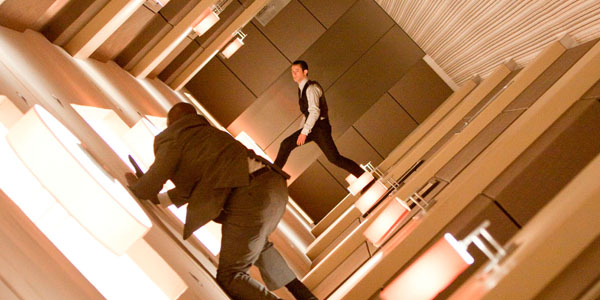
There's a reason the majority of big budget movies all tend to be sequels, remakes or in some other way related to an existing property. To the studios movies are an investment, so naturally they'll stake their hundreds of millions of dollars on a safe bet. And, unfortunately, audiences do tend to gravitate towards existing franchises. How else do you explain Pacific Rim only just breaking even while Godzilla sits on a nice cushion of profit? Following The Dark Knight's massive success in all corners, Warner Bros. decided to do something rather surprising. Christopher Nolan had provided them with one mega-hit and a couple of nicely profitable diversions (The Prestige and Batman Begins both did relatively respectable numbers), so they rewarded him with a $160 million budget and total free reign to make his long gestating passion project, the dream-bending Inception. With a director with the track record of Nolan (quieten down Dark Knight Rises haters) nobody expected Inception to flat-out suck, although there was a chance it could fall into self indulgence like the later films of other big name directions (Jackson's King Kong, Lucas' prequels, Burton's Alice In Wonderland). But even if the film was a home run (it was), there was still the massive question of box office success. Clearly the quality of the film drew people back for more, although when the film raked in of $800 million you can bet even Warner were surprised.

8. 21 Jump Street

The trick to a successful remake is to take something highly regarded, nostalgic or otherwise, and do something new with it. And that's why so many cack-handed attempts fail. They normally end up being a bland retreading with modern tropes of something originally good (see Total Recall, Platinum Dunes slew of horror resurrections) or a fresh take on something nobody actually cares about (The Lone Ranger was last relevant in the sixties). So when it was announced Columbia were remaking a teen comedy TV series notable only for giving Johnny Depp a rise to fame you can bet all eyes were ready to roll. How could this end up anywhere other than the online equivalent of the bargain bin? You get Phil Lord and Christopher Miller, that's what you do. The men who managed to turn both Cloudy With A Chance Of Meatballs and The LEGO Movie into rampant successes that parents were almost dragging their kids to see took the reins of the reboot. Shaking in all their silly, out there humour, along with the inspired casting of Channing Tatum playing it funny, the duo made 21 Jump Street a genuine surprise for a remake; it was something original. And we all loved it.

7. Star Wars

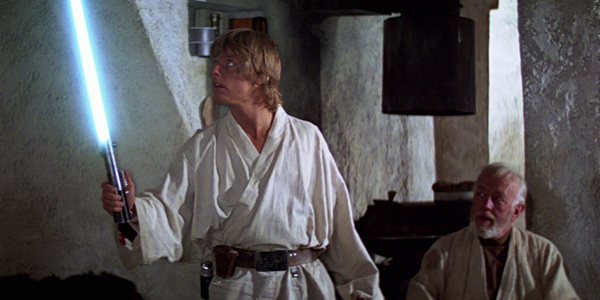
In a unique turn in this list, not even the filmmakers thought this would end well. Before embarking on his revolutionary space fantasy George Lucas had been carving out a respectable career as a key member of new Hollywood. A close friend of Francis Ford Coppola and the rest of New Hollywood, he'd found major success with American Graffiti; his throwback to 1950s Americana had garnered him his first Oscar nomination. Now he was putting a lot of his own money into a sprawling passion project that required costly, untested special effects Given this was decades before the popularisation of the Internet and that much of the invested money had been the director's, the public and distributor 20th Century Fox weren't too bothered if it did bomb; there wasn't much at stake for them. For Lucas it would prove to be career defining. Legend has it that he and Spielberg even had a bet on whose 1977 sci-fi, Star Wars or Close Encounters Of The Third Kind respectively, would be the bigger flop (both he and Steven thought their own film had little merit). From his standpoint, Lucas' apprehension makes a lot of sense. Sci-fi wasn't a dominant force in cash-raking cinema and the production had been dogged with issues, ranging from your usual delays to sandstorms on set, all the time pushing the budget up. Of course, to everyone's surprise it not only grabbed audience's attention, leading to images of queues literally snaking around the block, but completely revolutionised the way movies were made. Not bad for an expected flop.

6. Iron Man

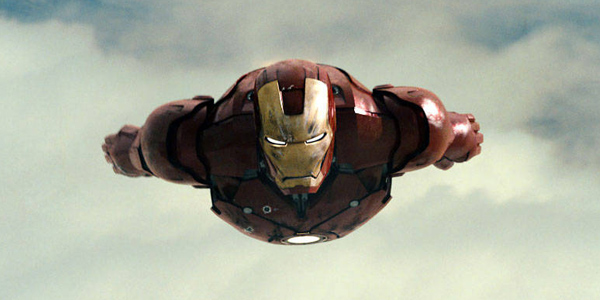
This year the latest Spider-Man movie lost out at the box office to a continuity-heavy X-Men and a Captain America sequel. Ten years ago, when Spider-Man 2 hit it was only bested by two family friendly sequels (Shrek 2 and Harry Potter 3). What happened? When did full-on geek-outs and second tier superheroes become such bankable stars? The place to look is the summer of 2008, where two of the genre's most influential films made their debut: The Dark Knight and Iron Man. But while the realistic The Dark Knight was a near-certain success pretty much from conception, Iron Man was a massive gamble. Nigh-on impossible to comprehend from our current standpoint, but before Jon Favreau's mega-franchise starter, Tony Stark was firmly on Marvel's B-List, while the company behind it was just taking their first steps into the movie making landscape. Having spent the first half of the naughties selling off their most profitable characters (Spider-Man, X-Men, Fantastic Four, Daredevil etc.), Marvel's move into making movies meant they had a lesser known roster to pick from. In the climate of bankable stars (let's not forget Downey Jr. was very out there casting), it's easy to see how big a gamble Iron Man was; making a high-budget, big-screen version of the character was such a risk it makes turning obscure Guardians Of The Galaxy into a massive summer blockbuster feel a safe bet.

5. The Harry Potter Series

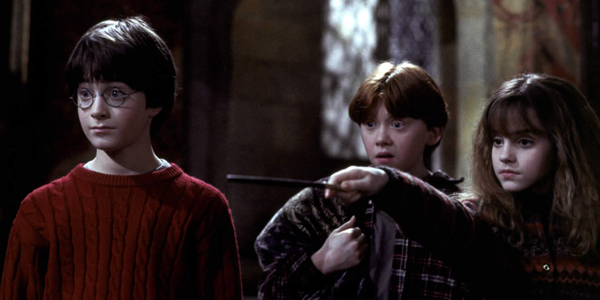
Although the series has no totally brilliant entry (Alfonso CuarĂ³n's Prisoner Of Azkaban came close), Harry Potter is certainly greater than the sum of its parts. Some entries skew too far from the respective book's wider themes or story (Half-Blood Prince all but axes Voldemort's origins) while the decision to split the final book in two gave an ending unsuitable for all but die-hard fans, but all in all it's a true success of blockbuster storytelling (and British filmmaking). There's no out-and-out bad flick in the series and to be able to tell such a comprehensive story on film is no mean feat. Although while there's clearly a lot of talent on show, a lot of the franchise's success is down to luck. When the project was in its infancy Warner Bros. were initially planning to do the films as CGI. Why? Well because of the growing child actors of course. Chris Columbus wasn't Richard Linklater; he couldn't just let the kids grow and release the film some time after a la Boyhood. To do the live-action franchise right required essentially doing a major movie a year and banking all the central cast going through puberty at roughly a similar rate. And while the series stumbled on the former early on, Warner managed to keep it so Harry, Ron, Hermione et al never looked out of place at school. That would have really messed up the series.

4. Avatar

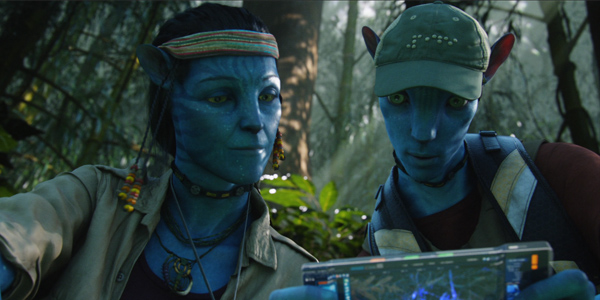
After becoming king of the world (cringe) with Titanic, James Cameron found himself with free reign to do whatever the hell he wanted with as much money as he wanted. And what did he do? Continue to feed his obsession with the deep ocean with a string of IMAX documentaries. Erm... OK? When he finally returned to feature filmmaking he decided to bring his long gestating passion project to life (ignoring that Titanic had been his long gestating passion project). A sci-fi epic with the blood of all his previous work running through its veins, it was on a scale never before touched on by the director and only willed into existence thanks to the increasing prominence of motion-capture; the original script, written in 1994 had been impractical at the time. On the one hand Avatar was exactly what audiences conventionally love - big sci-fi with action placed ahead of the genre's traditional meditations. But on the other, with an unknown lead and a heavy reliance on an alien culture, Avatar was a hard sell that faced a Waterworld-level battle to break through into profit. A battle it won spectacularly, sticking in cinemas right up until the DVD release. Although the bubble of total adoration of the film has long since popped, it's revered reputation still remains; the poster for Avatar boasted it was from the director of Titanic; the poster for the rerelease of Titanic a couple of years boasted it was from the director of Avatar.

3. The Hobbit

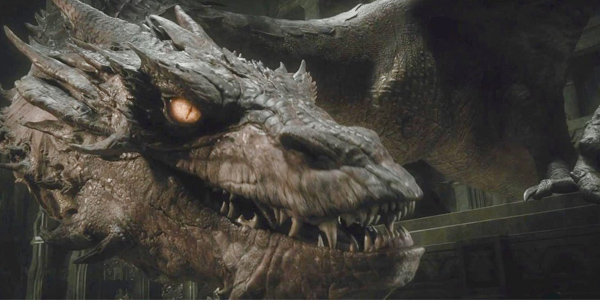
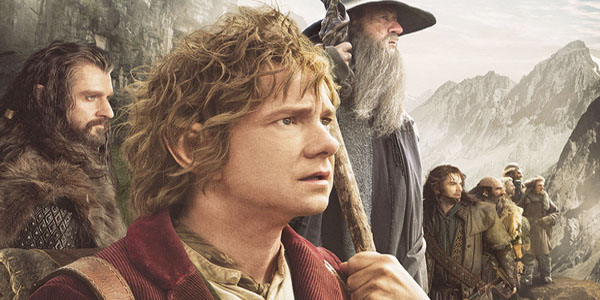
Quite typical of Peter Jackson, the production of The Hobbit has been a rather open affair, with the film's shift in director (Guillermo Del Toro was originally going to helm the prequel) and move from one to two to three movies being delivered to fans blow-by-blow. But while that certainly served to get a lot of die-hard fan's stoked, for others it led to some major alarm bells going off. It's been discussed ad nauseum whether the decision to split a book smaller than any of The Lord Of The Rings into a trilogy was a smart move. Maybe the current consensus (some good filmmaking amongst a narrative stretched a little too far) will change once The Battle Of The Five Armies arrives, but for now at worst The Hobbit is regarded as average films that are far from the Star Wars prequel stinker we feared. But even if you're not wholly convinced there's no denying the financial success of the movies, proving wrong those who thought audiences wouldn't part with their cash for a third of a full experience; both An Unexpected Journey and The Desolation Of Smaug have grossed more than the first two Rings flicks (albeit with inflation and that 3D surcharge).

2. The Avengers

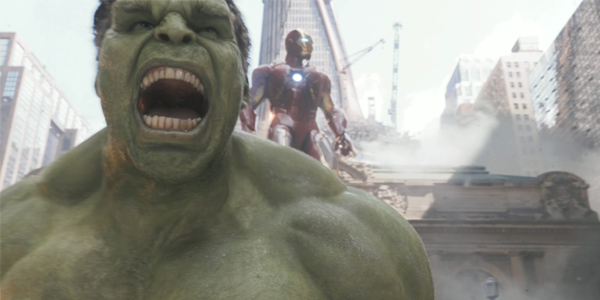
If Iron Man was Marvel testing the waters with their extensive, if completely un-mainstream, back-catalogue, The Avengers was them going all in. Ensemble movies are hard. Cross-over movies are nigh-on impossible. And Marvel were trying it with a bunch of characters audiences were only just getting acquainted with. It wasn't that it couldn't be good. It's just there were so many opportunities for it to go wrong. For fans the big question was whether they'd be able to pull it off convincingly. The quality of superhero movies varied wildly and the young studio didn't have the perfect track record, while the geek-friendly director choice Joss Whedon was totally unproven in feature films (Serenity was far from mainstream blockbuster). The Avengers couldn't just put the characters all on screen together and just be done with it. And on the financial side the box office predictions were hard to gauge. Following the disappointing Iron Man 2 the box office takings for the series had been decreasing - still in profit, but not the levels of the original Iron Man. With the ever-present question of the superhero bubble bursting looming large, could the slew of unfamiliar characters be beginning to wear audiences down? The ultimate success when the film arrived was two-fold. The company had given their characters enough time to enter the popular consciousness, while the simple fun of the film meant people kept coming back for more. In a year when the sequel to The Dark Knight was arriving The Avengers flew, leaped and hammer-jumped ahead of the competition.

1. Titanic

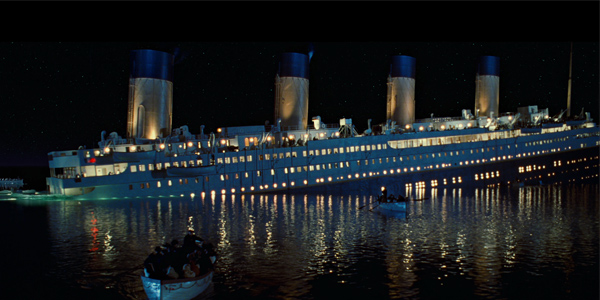
People didn't just expect Titanic to fail; they wanted it to as well. Long before the film hit critics and audiences had their jokes about James Cameron's three-hour epic ready and waiting. This was a director who had made his name in sci-fi, constructing a period romance that had become the most expensive film ever made (for the time) that we all already knew the end to. With blanket coverage of the moviemaking process just coming into prominence with the Internet, Titanic's journey was scrutinised no end. Stretched shooting schedules, delays in post-production and two studios pooling their funding just to get the thing finished had this pegged as a disaster to rival Waterworld or Cleopatra (a film notorious for haemorrhaging money). With retrospect it all feels rather silly, not only given how the film ended up being received, but because of the level of earnest with which Cameron approached the project. Born from his obsession with the infamous sinking, there's an attention to historical detail in the film that, despite the totally fictional A-story, makes this as factually accurate an account of the sinking as the much-touted A Night To Remember. As the December 1997 release approached positive word from test screenings seeped through, but many of the film's critics remained sceptical, particularly of its financial prospects. The simple fact was that for Titanic to make back its budget it would need to be an unprecedented success, maybe even the biggest movie of all time. It was. Did any other movies surprise you when they didn't sink like a stone? Which upcoming movies do you expect to bomb spectacularly? Discuss everything to do with cinematic flops down in the comments section below.

Contributor
Contributor

Film Editor (2014-2016). Loves The Usual Suspects. Hates Transformers 2. Everything else lies somewhere in the middle. Once met the Chuckle Brothers.