10 Interstellar Script Changes That Drastically Changed The Film

What the first draft reveals about the film's development.

http://www.dailymotion.com/video/x2a0dbc_10-interstellar-script-changes-that-completely-altered-the-film_shortfilms Interstellar is the most obliquely Christopher Nolan movie ever made. After over a decade building up his distinct style, the deep space epic sees him put any studio concerns behind him and deliver something unabashedly him. No wonder it's proven so divisive. That makes it all the more surprising that the film was originally intended to be directed by Steven Spielberg. Back in 2008, Jonathan Nolan, Chris' brother, developed a screenplay for the famed director, which sat in development hell for years after Spielberg jumped ship. It was only when The Dark Knight Rises was finished that the Nolan brothers decided to work together once again. Jonah's first draft for Interstellar has been available online for years now, but with the finished film finally released we can now properly see the development of the project. In a very broad sense the plots of the two versions are similar (Earth is hid with famine and they try to use a wormhole to find a new home), but in an operational manner there's a lot of variations that will no doubt lead to detractors claiming the earlier take would have been better. Overall the story is more tightly resolved in the released movie, with the focus more strictly on the future of humanity and, particularly, love. It seems like Christopher Nolan, a director often described as being emotionally cold, has actually taken a Spielberg movie and upped the sentimentality. Who'd have thought that was possible? The first draft provides some greater explanations of some elements that end up in the finished film - we actually see the creation of wormhole and learn Cooper's farm is in the Republic of Texas - but today we're going to look at the seismic changes that would have made the film a very different experience.


10. Murph Is A Boy
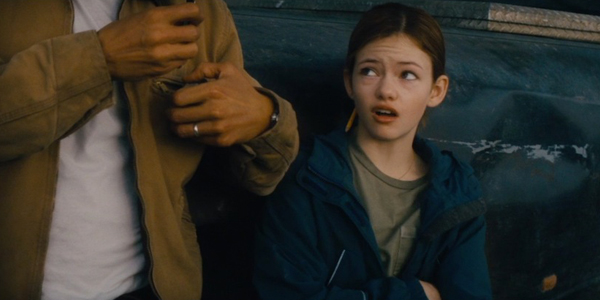
Let's get one of the biggest differences between the first draft and the finished film out of the way first - Murph was originally going to be a boy. Seriously. In general terms male Murph plays a similar role in the story - he likewise figures out the solution to the gravity conundrum thanks to some of his father's time meddling - but the gender switch has a massive impact on the relationship between Cooper and his child, which is the whole emotional crux of the film. Making Murph a girl is a strong decision that gives us a look at a dynamic we don't see explored too deeply in blockbuster cinema. The young boy is much more fitting of Spielberg, and with this written only a few years after he'd had a father-daughter relationship central to his adaptation of The War Of The Worlds, it's not surprising his film would eschew that idea. The switch probably occurred due to where Nolan is in his life, with the relationship he has with his daughter, Flora, playing strongly on his mind. The film even had the fake production title of Flora's Letter, which is pretty explicit. Clearly he liked the Murphy's Law reference too much to change the name to something more feminine, however.

9. A Space Probe Sends Cooper To NASA
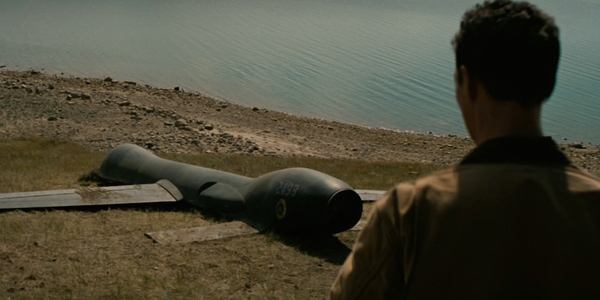
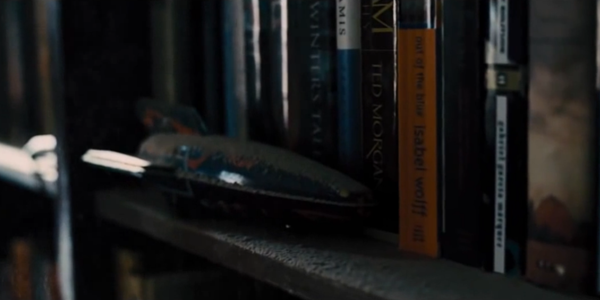
The story of Interstellar really kicks off when Cooper mysteriously finds his way to a secret NASA facility. This occurs in all versions of the story, but the first draft did it in a very different way. One night he is notified about a crashed probe and, having once been an engineer, takes it for research. He discovers a photograph of an ice planet and, through a rudimentary screaming mechanism - the probe emits a loud noise that only decreases if it is carried in the direction of the base - it leads Cooper to NASA. Instead of sending astronauts into the wormhole, they've been using probes, of which this is the first to return with positive readings for water and oxygen. The mission here is to verify this world is suitable for human life - there's no Plan A/Plan B confusion here. It transpires that the probe has been sent knowingly by a future Cooper and data it contains is used by Murph to solve the whole gravity issue (there'll be more on that later), making this the sole form of explicit time-travel communication. That's right - there's none of Murphy's ghost stuff. This would have probably sat easier with many viewers, with the Cooper-influenced origin less blatant and the whole bookshelf-love-ghost stuff exorcised, but it's generally the same plot beat, just presented in a very different way.

8. The Gravity Beings Are Actual Aliens
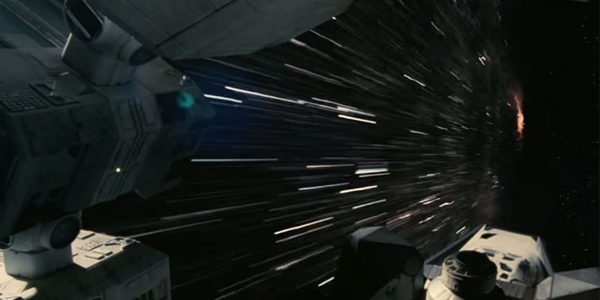
Like in the finished film, the wormhole has appeared in a very convenient manner, leading to NASA assuming this is some alien-influenced event a la 2001: A Space Odyssey. And in the first draft this assumption is correct - the strange fifth-dimensional beings who are able to manipulate time and gravity are indeed extra-terrestrial. This has the effect of actually pushing Interstellar closer to 2001, rather than being a more distinct piece. Their physical state is ambiguous as in Kubrick's film, with their actions adding to a similar sense of overwhelming unease; humanity is really out of its depth. When the crew head through the wormhole, we get a much better look at these gravity beings. They actively distort our heroes' three dimensions, contorting them painlessly into various shapes, making for a particular bonkers idea that would no doubt have been pretty visually arresting. As these beings aren't future humans trying to protect their species, there's scope for a different motive to all this space-bending, which we'll look at later.

7. There€™s Another Type Of Alien On The Ice Planet
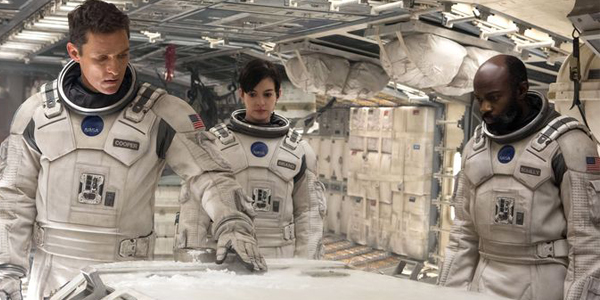
With the probe that Cooper found providing a definitive focus to the mission (which is the first manned NASA expedition through the wormhole), the ambiguity of which planet is a potential host for humanity is removed; when entering this new galaxy, which features two black holes and a neutron star, the ice planet is their only goal. When they land, the crew realise that neutron star has the nasty side effect of bombarding the planet's surface with radiation every twenty hours. And, with sunrise imminent, this leads to a frantic attempt to try and find shelter. They reach a giant cave that has the oxygen and water the probe previously discovered, which also serves as the home for a shape-morphing alien species, another race of extra-terrestrials. They appear docile absorbing the star's radiation and saving Cooper and co. So, on top of the highly-evolved gravity beings, we also have these radiation-feeding things. The crew take some of this species when it becomes apparent a third black hole will destroy the planet in a couple of centuries, but that's not the only thing that goes down on the planet...

6. There€™s Also A Deserted Chinese Colony On The Ice Planet
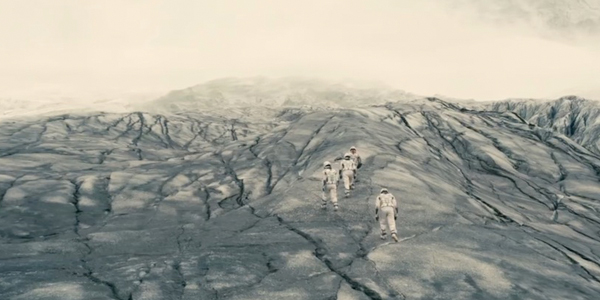
There's not just shape-shifting aliens on the ice planet. Once landed there, Cooper discovers the remains of a colony set up by Chinese explorers who ventured through the black hole years earlier (clearly the Earth isn't united in the famine), the inhabitants of which all appear to have been killed by the neutron star's radiation. Then, after finding refuge in the cave, they discover a much bigger colony, ran by the robots from the Chinese mission who've continued working despite their creators being killed. The approach of the black hole has led to the development of a device that can manipulate gravity, with the aim of it diverting the impending doom. CASE suggests that instead of using it to protect the planet barely habitable for humans, they take the device and return it to Earth to get people off the planet in a global exodus. The Chinese robots don't take kindly to the interruption, leading to a violent reaction. From here things follow a similar narrative drive to the Dr. Mann subplot, with one of the robots uploading their programming into CASE, who, when the crew is back on the main ship, goes crazy and sends the whole mission into jeopardy.

5. The Robots Are Humanoid

One thing that many of Interstellar's detractors have praised en masse is the design of the film's robots. Reminiscent of the monolith from 2001, they're incredibly novel in the way they move and stand out as one of this future's most interesting elements. This wouldn't have been the case in the first draft; in the original plan they're basically humanoid. The personalities of TARS and CASE are still memorable, but they're much less visually distinct (at least in how they're described), closer to, say, David from Prometheus. Without having the finished version to miss, this wouldn't have been much of an issue, but from our standpoint it seems a little uncreative. In terms of plot the robots get slightly more to do, highlighting the film's less human-obsessed focus. While CASE has a more ignominious end, taken over by a crazed Chinese android, TARS feels more important from the off; ejected early on in the mission, he comes back in the finale to fill a similar role as he does in Nolan's film, but it's surprisingly more believable (we'll get to that, don't worry).

4. The Characters Travel 250 Years Into The Future
Although things have been pretty different - the crew have some alien samples and it was a robot that went crazy - the general narrative drive has been similar between the first draft and the finished film thus far. That's all about to change. When first entering the new galaxy the Endurance went close to the central black holes, already sending the crew 50 years ahead of Earth. CASE's rampage sends the ship once again close to them, seeing centuries pass by in minutes; the crew witness the ice planet destroyed by the minor black hole and, by the time they escape their gravitational pull, over 250 years has passed. The emotional impact of this is two-fold. Not only will Murph and Tom have long since passed away, making their recordings the only way Cooper will ever see them again, but it's likely humanity has already gone extinct - due to the blight there was little hope of man seeing out the rest of the century. This leaves the three astronauts on the Endurance forced to face that they're the very last of their species. We don't get any cutaways to what's going on back home, so are as in the dark as Cooper.

3. The Crew Leaves Space And Time Through Another Wormhole
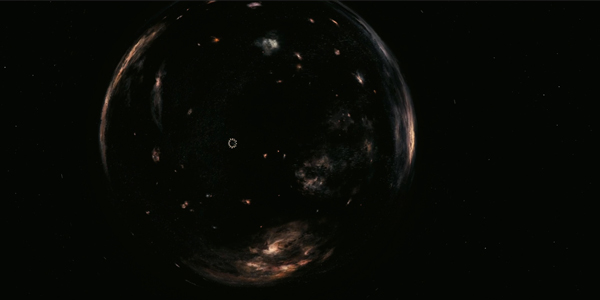
With literally no hope for humanity, the astronauts decide to explore the galaxy, heading for a location described by the Chinese as the "treasure". In terms of narrative this functions the same as the singularity, but what is shown in the first draft is even more abstract. The "treasure" is in fact a second wormhole, which takes the whole crew out of space and time entirely. The gravity beings shepherd the ship to a sort of terminus of the universe; there's an infinite number of different wormholes, along with an incredibly high-tech space station. When docking, TARS greets them, revealing he's been on the station (which was built by the Chinese over 4000 years ago in their) for 300 years, developing a way to get humanity off Earth. The wormholes lead to various points in space and time. Cooper and Doyle are obsessed with returning to Earth in the past, attempting to use TARS' new-found information to avert the species' extinction. Dr. Brand (who in this draft is Coop's lover), driven by human curiosity and sceptical of changing the past, decides to stay and find a new world for humanity. Similar to how he finds in the film itself that it's impossible to alter a timeline, Cooper realises that Doyle's mission is doomed to failure; he discovers the exact same probe that started his whole journey and concludes that the ship that carries it destined for destruction. He uploads the image of the ice planet and the key to the formula of the gravity device into the probe (hoping it'll be decoded in the past) before escaping the ship. All this is so similar to what goes on in the singularity, but it never leaves the logic of the film, giving a more in-tone finale.

2. The Gravity Beings€™ Plan Is To Save A Different Species

With the probe sent back, ready to lead Cooper to NASA and, as is subsequently revealed, provide Murph with the information needed to get the population off Earth, his mission is over. He travels back to Earth in what can be crudely construed as his present; 300 years or so after he left. The Earth he lands on is near frozen and completely devoid of life. Coming face-to-face with icy remnants of his former life, he accepts his, and the wider species', end, releasing the alien from the ice planet, which we subsequently see thrives on the new Earth. And as he lets the life slowly leave him in the freezing landscape, Cooper learns the blood-curdling twist; the gravity beings weren't trying to save us. They were manipulating humanity to get them to save the strange alien. They didn't care about us at all. Now that would have everyone talking after the film.

1. The Ending Sees Cooper Leave For Adventure With TARS
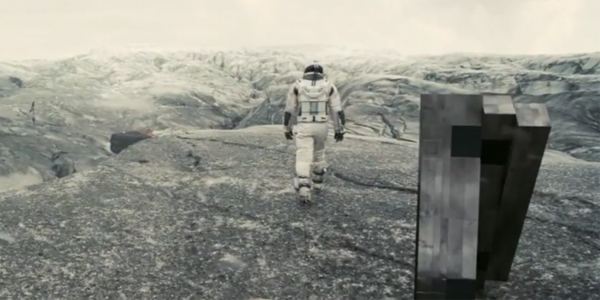
Of course, things don't end up in such a downbeat manner; this is still a blockbuster after all. Cooper is saved and taken for medical attention on the Cooper Station, where meets up with one of his descendants (although not Murph), just as in the finished film. He then takes TARS and heads off back through the wormhole and into the vastness of space. Now that all sounds very familiar, but it's motivated from an entirely different emotional place. In the first draft it's in a fit of spontaneity, with one of humanity's greatest explorers bored by a mundane life as a farmer; yes he goes off with TARS in a hunt for Dr. Brand, but it's the thirst for adventure (and love), not human salvation, that's driving him. This personifies the central difference between the two versions of Interstellar. The film we've all just experienced in cinemas is about humanity, the survival of the species and what our future holds. These elements play a part in the first draft, but its scope is, if anything, broader; it's discovering our place in the stars, how we fit into the wider universe and that we're far from the centre of it all. Which version of the Interstellar story do you prefer? Would you have like to have seen Steven Spielberg direct this version? Have your say in the comments below.

Contributor
Contributor

Film Editor (2014-2016). Loves The Usual Suspects. Hates Transformers 2. Everything else lies somewhere in the middle. Once met the Chuckle Brothers.