10 Interesting Things You Probably Didn't Realise About Famous Movies

10. Deckard's First Name In Blade Runner - "Rick" - Is Never Mentioned
 Most Blade Runner fans are actually pretty obsessed with the movie, because it's hard to be just a "casual" fan of Blade Runner - it's one of those pictures that, if you get it and like it, stays with you forever, to the point where you're hoping that "replicant hunter" becomes a legitimate career choice one day, and listening to the Vangelis soundtrack is an essential part of what happens when you drink copious amounts of alcohol. I'm one of those obsessed fans, but this little fact struck me as rather interesting when I first found out about it, given that the "thing" is something you can only find out from places other than the movie: Deckard's first name, which any fan of the movie will know is "Rick," is never mentioned at any point in the film. Given how widely his first name is known, however (even amongst those who haven't read the book), discovering such a thing feels obvious but certainly strange.
9. There Isn't A Single Female Speaking Role In All Of Lawrence of Arabia's 216 Minutes
 Okay, so this is obvious once you find out about it, but the realisation - that there isn't a single female speaking role anywhere in Lawrence of Arabia, despite the fact that it's over three hours long - was probably lost on most people, given that it's one of those things that you don't really think about it unless you're told. Same goes for movies like Reservoir Dogs and The Thing, although it's more understandable given their length and locations. But isn't it kind of insane to think that not a single female is given a line of dialogue in all of that movie? If you've never seen Lawrence of Arabia, of course, the film is based on the real life of T.E. Lawrence, and his exploits in Arabia during World War I. You'd think a female would have popped up somewhere, though, right? Nope: women only feature as background characters throughout. It's safe to say that this all-time classic fails the Bechdel test and then some.
8. The Movie Version Of 2001: A Space Odyssey Came Before The Book
 Given that the novel version of 2001: A Space Odyssey is credited to sci-fi master Arthur C. Clarke, it's no wonder that people tend to assume that Kubrick's movie was an adaptation of said novel, when in actuality (and contrary to popular belief) both works were created at around about the same time and in collaborative form - the concept behind the film, however, stemmed from Kubrick's own intentions to make the "proverbial good science-fiction movie." Kubrick then joined forces with Arthur C. Clarke, and together they wrote the screenplay, based partly on Clarke's own short story "The Sentinel," and partly based on Kubrick's own ideas. Whilst that was happening, they also worked some of their ideas into a book, which would later become the novel 2001: A Space Odyssey, released under Clarke's name, and originally scheduled to be made available before the movie, but ultimately delayed (on purpose, according to Clarke, who suspected Kubrick wanted his movie to come out first and postponed signing off on the novel).
7. The Hero And Villain Never Meet In The Fifth Element
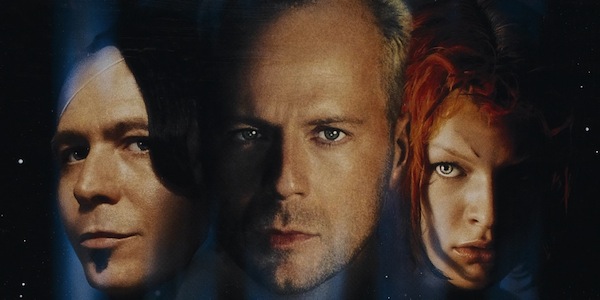 When I first stumbled upon this fact, I starred at the wall for a while, trying to make sense of it, although it's plainly obvious in retrospect. But "plainly obvious" doesn't always mean that people actually notice something, which seems to happen a lot in the case of Luc Besson's crazy sci-fi romp The Fifth Element. What's amazing about the movie (aside from its creative juices), though, is that the good guy and the bad guy never meet one another. Or to take it a step further: they never even communicate with one another. Not over the phone, or through some bizarre futuristic device. In fact, it's not really even shown that Bruce Willis' troubled taxi driver Korben Dallas, and Gary Oldman's nutty villain Zorg, are even aware of one another's existence. They only time they're even close together is played for laughs, as Dallas goes into an elevator, and Zorg steps out of the one next to it. What fun!
6. Seth Rogen & Evan Goldberg Started Writing Superbad When They Were Thirteen
 Superbad depicts what has to be one of the most insanely enviable night-outs ever committed to the screen - not because it's a perfect night or anything, but because it's so darn memorable. You wouldn't forget something like that happening to you anytime soon, right? And Superbad is a movie crammed with brilliant one-liners, great characters, and some brilliant gross-out moments... it's almost as if it were written by an adolescent, don't you think? Bingo. It might surprise some to discover that Seth Rogen (who plays one of the cops who befriends McLovin in the movie) and his best friend and writing partner Evan Goldberg wrote the first draft of Superbad when they were just thirteen-year-old kids growing up in Vancouver. Fogell (McLovin) was even based on a real kid they used to know, and the script was conjured up out of things that had both happened to them and wanted to happen to them. You can probably make the differentiations yourself (not getting served alcohol; yes - Emma Stone; no).
5. Danny DeVito Was A Producer On Pulp Fiction
When anybody says the words "Danny DeVito," chances are you're reminded of his hilariously awful character, Frank, on TV's It's Always Sunny In Philadelphia, or those movies he did with Arnold Schwarzenegger in the '80s, or how about just an incredibly small, round man with large glasses and a distinct voice? What you probably don't think of? Danny DeVito as the producer of, oh, how about Pulp Fiction? Actors produce movies all the time, of course, and although DeVito has acted, directed and produced movies before, nobody ever seems to bring up the fact that he was involved with Pulp Fiction. Presumably this is because DeVito's isn't visible on the poster, but he does own the production company - Jersey Films - which gave the project a $1 million cash injection during the initial stages, in exchange for a chance to shop the script around to a studio. Eventually Miramax agreed to make the movie and the rest - as you know - is history.
4. Richard Kelly Worked Backwards When Writing Donnie Darko From An Idea About A Falling Jet Engine
 Donnie Darko is one of those movies in which you feel like the director has spent their entire life working out the incredibly comprehensive and complicated plot, to the point where they know so much that you don't, and how could we even think to understand what they were trying to say? Alas, no true: Donnie Darko is an undoubtably awesome movie, but it's actually nothing more than a brilliantly entertaining hodgepodge. According to its director, anyway. Richard Kelly originally sat down to write Donnie Darko with only one idea in his head: a falling jet engine. This, of course, would form the basis of the story, which begins with teenager Donnie narrowing avoiding death when a jet engine lands in his bedroom. But watching the movie, it's easy to think that Kelly had the rest of this crazy story planned out from the get-go. Nah: he took all the things he liked and worked backwards - his goal was to write something that resolved the problem of a mysterious jet engine coming out of nowhere, opted to include time travel, and Donnie Darko is what his brain spat out. Not a bad way to write if you're talented enough.
3. A Clockwork Orange Was Shot Without A Script
 It might seem insane to suggest that somebody like Stanley Kubrick - a renowned perfectionist - would make a movie without a script, but when his dream project ("Napoleon") fell through, he set out to make what would be his quickest and - at least, from a budgetary point of view - cheapest movie ever, A Clockwork Orange, using only a copy of the novel as a guide - the American version, mind you, which differs from the original publication in a few ways. It's a real credit to Kubrick's talents, then, that he managed to make something so brilliant on what must have been something of a whim - scenes and lines were being improvised and planned without the comprehensive attention to detail you can glimpse in say, 2001: A Space Odyssey, and yet there's no way to tell. A Clockwork Orange looks and feels as Kubrickian as anything else in his filmography, despite being... well, made up mostly on the spot.
2. The Dude Never Bowls In The Big Lebowski
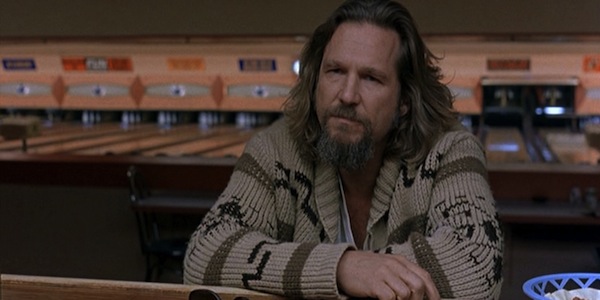 I know, right? You could have swore that the Dude bowls in The Big Lebowski - half of the movie is set in a freakin' bowling alley, after all, and the guy is always talking about bowling, isn't he? And yet - for all the dialogue about bowling and scenes that take place in bowling-based scenarios - there's not a single point in which get to watch Jeff Bridges' bowl a ball. This is one of those nice little ironic Coen Brother touches, of course. If you do want to get your fill of Jeff Bridges bowling scenes, though, make sure you check out The Contender, a 2000 political drama where the actor actually does get to bowl a ball - it's not a great movie, by any means, but it does contain something that The Big Lebowski lacks. Anyway, this is a just a minor point, but it's interesting because most people would presumably say - when asked - that the Dude definitely bowls, based on the movie's aesthetics alone.
1. Lost In Translation Would Have Been Abandoned If Bill Murray Had Said No
 Thank God he said yes. That's all I can say about this one as I picture a world in which Bill Murray wasn't really in the mood for Lost In Translation, and had passed. So Sofia Coppola would have just found somebody else, though, right? Not quite. What lots of people don't realise about this Oscar-winner movie is that Coppola wrote the role specifically for Bill Murphy - he had not agreed, Coppola said she would never have made the movie. But she at least knew Murray when she wrote the script, right? Uh, not quite. Not at all, in fact. When she'd finished the screenplay, she spent months and months calling Bill Murray and trying to get him on board, all to no avail. Eventually Murray read the script and agreed, although he didn't sign any formal contract and agreed to meet Coppola in Tokyo on the first day of shooting. And there she waited, unsure as to whether or not he'd actually turn up. When he did, the crew breathed a sign of relief, and movie magic was made. Rather brilliantly, Murray cites Lost In Translation as his favourite of all the movies he's ever made, and he even got nominated for an Oscar for his turn as movie star Bob Harris. And to think... it almost never happened. Like this article? Let us know in the comment section below.