10 Interesting Facts About The Making Of The Lion King
Discover the secrets behind one of the greatest animated films of all time.

There’s no clear consensus when it comes to the best Disney film, but The Lion King is definitely up there with the best. Released back in 1994, this animated classic captivated audiences with its sensational soundtrack, its distinctive characters, and its timeless themes about responsibility, greed, and the circle of life.
Over the years, the critical and public acclaim has continued, and the film has become a subject of interest for movie buffs, particularly those who are fond of animated storytelling. Fortunately, the cast and crew have spoken at length about their experiences, providing fans with plenty of insights.
Some of these insights focus on specific challenges, ranging from tricky animation sequences to exterior factors that hindered the creative process. There are also some interesting anecdotes from the cast along with a number of fascinating tales about the various changes that took place during the film’s production.
Whilst many of us grew up watching this iconic film, few know what happened behind the scenes. Even if you’re a diehard fan of The Lion King, you’ll probably discover plenty of interesting facts that you were previously unaware of.
10. An Earthquake Disrupted The Production Of The Film

Creating a feature-length film is always stressful. Overcoming unforeseen problems is simply part of the process, and during the making of The Lion King, the creators were interrupted by an earthquake in Los Angeles on the 17th of January 1994.
The incident killed fifty-seven people and thousands more were injured. Whilst those involved with the making of The Lion King were unharmed, the earthquake still led to a considerable amount of disruption.
The infrastructure in and around the city was damaged, which meant many of the animators were unable to get to work during this vital period of the film’s production. Some slept overnight in the studio, whilst others had to work from home, completing their drawings in kitchens, garages, and living rooms in order to stay on schedule for the film’s release date in June.
Despite this inconvenience, the team managed to stay on track, and the quality of the drawings they produced never faltered.
9. Nathan Lane And Ernie Sabella Originally Auditioned To Play Hyenas

Timon and Pumbaa are probably the most iconic duo in the Disneyverse. Nathan Lane and Ernie Sabella have terrific chemistry, and their performances add plenty of comedy to the second half of the movie.
But these two gentlemen didn’t originally audition for Timon and Pumbaa. To begin with, Lane and Sabella auditioned to play hyenas. After their audition, the producers contacted them and said they hadn’t been accepted to play the hyenas. But rather than turning them away completely, the producers asked them to come back and audition for something else.
At this point, Lane and Sabella knew virtually nothing about Timon and Pumbaa – the producers just told them they wanted to add a bit of comic relief because the story was getting too dark. The actors accepted the offer, auditioned for their new characters, and the rest is history.
It’s strange to think this iconic duo originally auditioned for two completely different parts, but the producers obviously knew what they were doing when they offered them the roles of Timon and Pumbaa.
8. The Character Names Have An Actual Meaning

Storytellers like to slip in some meaningful names even if the audience are completely unaware of them. The Lion King is no exception, and there are plenty of meaningful names dotted throughout the story.
Simba is the most obvious example, as his name literally means “lion” in Swahili. Rafiki, which means “friend”, also comes from Swahili, as does the name Nala, which means “gift” or “beloved”. Pumbaa, meanwhile, is Swahili for “stupid” or “slow-witted”. Timon is one of the few characters who doesn’t follow this pattern. Instead, his name comes from the Greek word for “respect”.
Scar obviously doesn’t have an African name either, but during the early stages of production, he was originally called Taka, meaning “waste” or “garbage” in Swahili. As for the hyenas, Shenzi means “savage”, and Banzai means “skulk”.
Whilst these deeper meanings aren’t a vital part of the story, they’re still a neat piece of trivia for the diehard fans who want to know as much as possible about the movie.
7. The Stampede Scene Took Three Years To Make

There are many outstanding scenes in The Lion King. The opening sequence, Scar’s musical number, and the epic finale are all brilliant moments. The stampede at the end of the first act is also a highlight, and this thrilling sequence took three years to make.
From a technical standpoint, this sequence was really challenging. Unlike many of the other animals in the film, the wildebeests weren’t drawn by hand – they were computer-generated instead. Computer animation was still in its infancy during the making of The Lion King, so the animators had to grapple with this unfamiliar technology to make the scene work.
What’s more, the loss of Simba’s father is an emotional moment, and Disney didn’t want it to be too dark for younger audiences. The scene had to be sad without being overly traumatic, and striking this balance took a long time to figure out.
Needless to say, the final product is perfect. The scene nails what it sets out to do and leads smoothly into the second act of the story.
6. A Voice Actor Created The Lions’ Roars

There are many great sound effects throughout The Lion King. The lions' roars are particularly striking, and they’re so authentic that most of us have always assumed they’re genuine roars from real lions. But this isn’t the case.
The lions' roars were actually created by a talented voice actor called Frank Welker, who is probably best known for his work on Scooby-Doo. Using a bucket to amplify his voice, Welker performed roars, growls, howls, and rips during the making of The Lion King, and the results were truly remarkable.
Whilst some of the lion noises came from real-life recordings of tigers, Welker’s performance was a fundamental part of the movie. How he managed to create such realistic noises is beyond comprehension. At no point in the film does it sound like you’re listening to a human rather than an animal.
For those who are eager to witness Welker working his magic, you can check out his performance over on Youtube.
5. It Wasn’t Always Called The Lion King

The Lion King is a great title. It rolls off the tongue and ties in with Simba’s transition from a runaway adolescent to the ruler of the Pride Lands. But before settling on this title, Disney went through a couple of others.
According to screenwriter Irene Mecchi, the film was originally presented to her under the title of Bamblet, as the plot was similar to both Bambi and Hamlet. King of Beasts was another name that was used during the early stages of production, but this was soon replaced by King of the Jungle, a phrase that is often used to describe lions. But this phrase is factually inaccurate, as lions don’t actually live in jungles, so Disney had to abandon it.
Various screenplays were written under these names, and the storylines were generally much darker than the plot we’re all familiar with. Ultimately, Disney scrapped the darker narrative and settled on a new name: The Lion King.
4. ‘Can You Feel The Love Tonight’ Was Originally A Duet By Timon And Pumbaa

In the second act of the movie, Simba befriends Timon and Pumbaa and discovers a life of freedom in the jungle. After growing into a mature lion, his carefree life is interrupted by the arrival of Nala, who tries to persuade Simba to return to the Pride Lands.
Though Simba is reluctant to return, the two lions develop a romantic interest in one another, which leads to the iconic song, ‘Can You Feel The Love Tonight’.
However, the version we all know and love wasn’t the only version recorded for the film. Originally, Timon and Pumbaa sung the duet, but this rendition was scrapped after Elton John – who composed the song – saw an early screening of the film and criticised what he heard:
“'I don't want a big, stinky warthog singing my love song!”
This blunt response may seem a little harsh, but Elton was spot on. Whilst everyone enjoys Timon and Pumbaa’s humour, their personalities don’t match the tone of the song at all. In the final cut of the film, the pair of them perform the closing lines, but if they’d sung the whole thing, it simply wouldn’t have worked.
3. The Hyena March In ‘Be Prepared’ Was Inspired By Nazi Germany
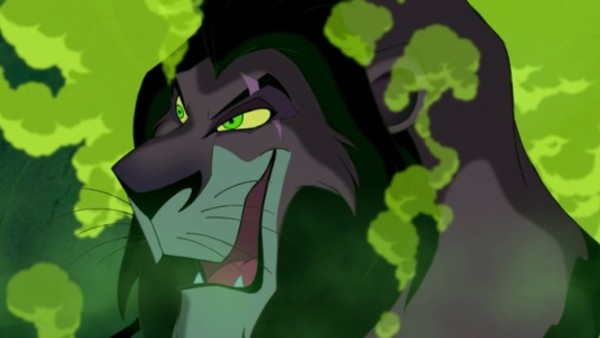
Scar is a wickedly entertaining villain with many memorable moments, including his epic musical number: ‘Be Prepared’. During this sequence, he prowls around and sings about his evil scheme. It’s a visually stimulating sequence with green geysers, hot lava, and a large onslaught of marching hyenas.
This sequence – as strange as it may sound – was actually inspired by Nazi Germany. Throughout the 1930s, there were plenty of Nazi rallies in Germany. These frightening events often featured marching soldiers, and during the making of The Lion King, the animators took inspiration from Triumph of the Will, a Nazi propaganda film directed by Leni Riefenstahl. The film chronicles the Nuremberg Rally in 1934, which featured Nazi soldiers, supporters, and their infamous leader, Adolf Hitler.
Using the Nazis as an influence may seem like an odd thing to do when making a kids’ movie, but no one can deny the end result is a spectacle to behold.
2. The Iconic Opening Used To Be Completely Different

It’s hard to pick a favourite moment in The Lion King. The movie is packed with some of the best scenes Disney has ever created. Really, the entire film is a series of unforgettable moments.
But there’s one scene that sticks in the mind more than any other: the opening sequence. From the moment the sun starts to rise, this scene captures the audience with stunning visuals and an iconic piece of music.
However, it wasn’t always like this. At one point, the opening sequence featured a fair amount of dialogue from the assembled lions, and they even said a Swahili prayer at one point. Another version of the story centred around Scar as he overlooked Simba’s ceremony before slouching away from the scene.
Though it would have been interesting to see these openings, the filmmakers definitely made the right decision when they decided to ditch the dialogue. The reason the opening sequence works so well is that it relies entirely on visual storytelling.
1. Disney Thought Pocahontas Would Be More Successful

Since it was released, The Lion King has been lavished with unanimous praise. But – ironically enough – Disney didn’t think the movie would be a big hit.
They actually expected Pocahontas (which was made concurrently with The Lion King) to be more successful because it was a romantic story that was more consistent with other successful Disney movies, such as The Little Mermaid and Beauty and the Beast.
According to producer Don Hahn, The Lion King was seen as a bit of an experiment:
“On The Lion King, we were always referred to as the B-movie, because it was a great risk. Doing a movie about Africa, doing a movie with no humans. A movie with Elton John, who hadn’t really written a musical before. It was seen as an experiment, a branch out into new territory.”
Even Jeffrey Katzenberg (the Disney chairman) didn’t expect the film to break the $50-million mark. His expectations were shattered when The Lion King became the highest-grossing film of the year, raking in $750 million.
Pocahontas, on the other hand, received a mixed response from critics and earned around $350 million at the box office. It was still a financial success, but it made significantly less than The Lion King.