10 Horror Movies That Are Pro-Feminism
You don't have to be a chauvinist to love scary movies...
Let’s face it: horror isn’t exactly the most feminist-compatible of film genres. All too often, female characters are consigned to predictable eye candy character tropes who make the same mistakes over and over. They flash the flesh, they have sex, they go into the basement when they really should be running out of the door – it all contributes to their inevitable and grisly demise. Which can raise a few issues if you’re a horror fan who just happens to be pro-feminism too.
But fear not, feminists! There are a handful of horror movies, however few and far between, that you can actually enjoy watching without totally compromising your beliefs – films that put females and/or feminist issues at the forefront, subvert tropes and expectations and some of which are even directed by women too.
Of course, these films won’t please everyone of a feminist persuasion. It is, after all, horror and that means harrowing and horrible things are going to happen regardless of gender, but thanks to their acknowledgement of feminism on some level, they’re arguably more enjoyable for women than your average horror.
10. Ginger Snaps

Far from the female character tropes usually seen in horror, the female protagonists in John Fawcett’s Canadian horror Ginger Snaps, sisters Brigitte and Ginger, aren’t perky cheerleaders or damsels in distress but goth outcasts who navigate the trials and tribulations of high school with a mix of sarcasm and morbid obsession.
Drawing parallels between lycanthropy and adolescence, the action begins when Ginger starts her period on the same night she gets bitten by a werewolf kick-starting her transformation into a hairy, hostile, lusty beast. Meanwhile, Brigitte grapples with her sister’s newfound bloodthirst while trying to find a cure for her werewolfism.
Beyond its focus on female adolescence and sexuality, solidarity is explored through the sisterhood of the siblings while Ginger’s new werewolf persona is presented as a liberating - if murderous and bloody - alternative to typical female roles in horror. As Ginger knowingly says, "No one ever thinks chicks do sh*t like this. A girl can only be a sl*t, a bitch, a tease, or the virgin next door."
9. Honeymoon
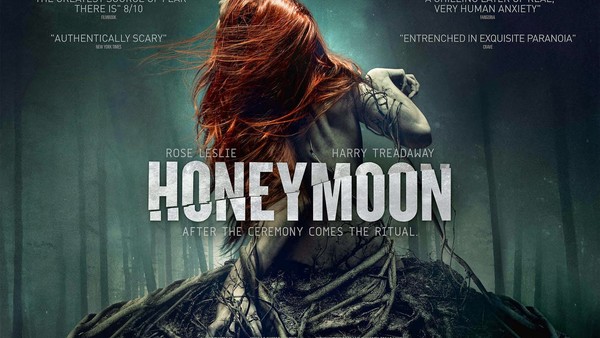
A creepy indie debut from Leigh Janiak – who is currently set to direct a sequel of another female focused horror, 1996’s teen witch flick The Craft – Honeymoon tells the tale of two young newlyweds Bea (Rose Leslie, Game of Thrones) and Paul (Harry Treadaway, Penny Dreadful) who retreat to a remote cabin for a romantic getaway. Their plans are scuppered however, when Bea disappears one evening only to turn up wandering confused and naked in the woods. Soon after, her behaviour takes a strange turn.
Though it’s a modern homage to body snatcher films of yore on the surface, upon closer inspection of Bea’s behaviour both before and after her woodland escapades – her apprehension and bewilderment at becoming a wife, her visible bristling when Paul quips about ‘resting her womb’, and a later visceral scene in which she attempts a DIY abortion – hint towards her fear of losing her identity as a married woman and all that marriage is supposed to entail.
Sort of like a Stepford Wives for millennials questioning whether monogamy and marriage is really for them … except with a terrifying vaginal worm-like creature.
8. Drag Me To Hell

Hailed as a return to Sam Raimi’s Evil Dead roots (sans the tree rape scene, thankfully), Drag Me To Hell is a schlocky, camp comedy horror about a young bank loan officer, Christine, who inadvertently invokes a demonic curse when she refuses Hungarian grandma Mrs. Ganush a mortgage extension. It’s been variously interpreted as a cautionary tale against female career ambition or an allegory for Christine’s perceived problems with bulimia, hence the film’s fixation with all things oral. But that’s just one way of looking at it.
One of the major criticisms leveled at the film by feminists is that Christine’s reluctance to show typical ‘female’ qualities (compassion, kindness etc.) at her work and her subsequent curse is Raimi’s denouncement of career-oriented women, but perhaps that’s precisely the point. In a damned-if-you-do, damned-if-you-don’t sort of situation, Christine demonstrates a more ‘male’, hard-edged working ethic to be on a par with her male co-workers and is consequently punished in her private life – more a parody of sexism in the workplace and wider world than an endorsement of it.
There’s also something to be said about what Christine fears the most – returning to her formally overweight self and, of course, the film’s villain Mrs. Ganush who just so happens to be pretty damn old. While it might seem Raimi is warning against being fat, old and/or career-focused, he is perhaps really pointing out that the idea these are undesirable qualities for women is still quite prevalent today.
7. The Babadook

One of the most pervasive myths about lady folk is that motherhood is the most rewarding, fulfilling thing they can do with their loins and life. The mere suggestion that being a parent might possibly not be all it’s cracked up to be or, god forbid, might involve a modicum of regret or resentment is often met with all kinds of outrage.
Australian director Jennifer Kent’s feature debut The Babadook tackles the potential downsides of motherhood head on. In it, grieving widowed mother Amelia is raising her six-year-old son Samuel alone after the death of her husband in car accident on the way to the hospital to give birth, leaving her feeling somewhat resentful, however unwarranted that may be, towards her son. Samuel is a bit of a weird kid: demanding and obsessed with the idea a monster is after him, his behaviour grows increasingly erratic and violent after the mysterious arrival of an even more mysterious book about the titular monster. Meanwhile, Amelia becomes increasingly disturbed and desperate as she tries to cope. Once physically manifest, the Babadook stalks the pair, eventually possessing Amelia and compelling her to kill her kid.
Ultimately, the Babadook is a metaphor for Amelia’s suppressed grief and depression and while it kind of reverts to type towards the end in that her love for her son allows her to overcome the Babadook, the film’s depiction of a multi-faceted female character – a reluctant mother, a worker and a sexual being experiencing negative emotions not usually portrayed hand in hand with parenthood – is refreshing in itself.
6. American Psycho

How could a film about a murderous, misogynist yuppie who dispatches sex workers with chainsaws possibly be even vaguely feminist? Well, before Gloria Steinem – who famously protested both the film and the Bret Easton Ellis book on which it was based, but funnily enough went on to marry star Christian Bale’s dad (which probably made for a few awkward Christmas dinners) – butts in, consider this: while it’s no Bechdel Test winner, American Psycho isn’t quite the anti-female film some purport it to be.
Directed by Mary Harron, who also wrote the script alongside Guinevere Turner, the film actually serves as a scathing indictment of 1980s neoliberal capitalism and the toxic hyper-masculinity it encouraged. Patrick Bateman isn’t a glorified character or portrayed as something to aspire to but more a pitiful person whose shallow, egotistic and status-obsessed lifestyle – evidenced throughout the film from his fanatic skincare regimen to his pathetic business card envy – is something to be avoided at all cost.
It’s actually a feminist takedown of the values that suit-wearing neoliberals espouse … if you can get past all the sexual torture and murder, of course.
5. The Descent

If there’s one horror film that sends the Bechdel Test meter a dinging it’s Neil Marshall’s claustrophobic, female-fronted nightmare The Descent in which a group of friends go on a spelunking adventure in the North Carolina wilds and find that a cave-in isn’t the absolute worst thing that can happen when you’re stuck miles beneath the surface of the earth.
Bar a few extras, practically no men appear in the film and neither is its all-woman cast some gung-ho sisterhood interpretation of feminism: they’re complex people capable of both honourable and dishonourable actions who both panic and fight back when faced with super pale, cave-dwelling flesh munchers. While their friendship is by no means perfect – anti-hero Juno, for example, is allowed her moments of courage but is also shown as a flawed character willing to betray her friends – it’s a more realistic portrayal of female friendship than, say, the sugar-coated likes of Steel Magnolias.
Heads-up: check out the original British version’s ending, rather than the Hollywood edit, if you like your finales dark rather than predictable.
4. The Slumber Party Massacre
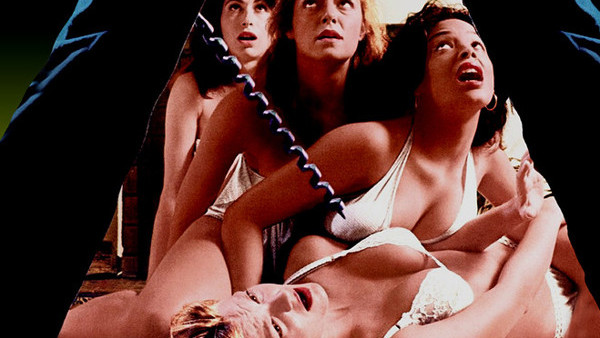
Though its title might conjure up images of nubile young woman prancing about in gauzy nightwear while having pseudo Sapphic pillow fights (well, at least before getting massacred), if you consider that The Slumber Party Massacre – whose creative crew include director Amy Holden Jones and feminist writer Rita Mae Brown – was actually intended as a parody of slasher flicks, it’s a different kind of film entirely.
Without a doubt, the male gaze is inflicted upon the film’s females – from horny high school boys to the film’s villain, a drill wielding escaped mass murderer – but here it’s played more for self-knowing kicks than outright objectification. It also isn’t above indulging in a neutralizing spot of female gazing too with its female characters making sexual quips at men’s expense and flicking through the pages of a copy of Playgirl.
While its premise of a bunch of teen girls being stalked by a male killer isn’t anything overtly subversive, his phallic choice of weapon - a large drill often wielded at crotch level and suggesting a bit of sexual overcompensation on his part - and its symbolic castration during the film’s finale certainly are.
3. Under The Shadow

Imagine if The Babadook was transferred to war-torn 1980s Iran and given a more explicitly political context, and that’s what you have with director Babak Anvari’s feature-length debut Under the Shadow.
Former political activist and mother Shideh decides to stay alone in heavily bombarded Tehran during the Iran-Iraq conflict’s War of the Cities to look after her young daughter Dorsa, while her doctor husband is drafted to help out on the front lines. But before long the constant bombing isn’t the only terrifying aspect of their existence and Shideh starts to suspect that a Djinn - that’s a terrifying Middle Eastern spirit for those not in the know - is haunting her family.
Rewardingly creepy and atmospheric for fans of pure horror, the feminist horror enthusiast will enjoy Under the Shadow’s addressing of the issues facing women in Iran and the juxtaposition of the oppressive presence of the demonic spirit, war, and sexism.
2. A Girl Walks Home Alone At Night

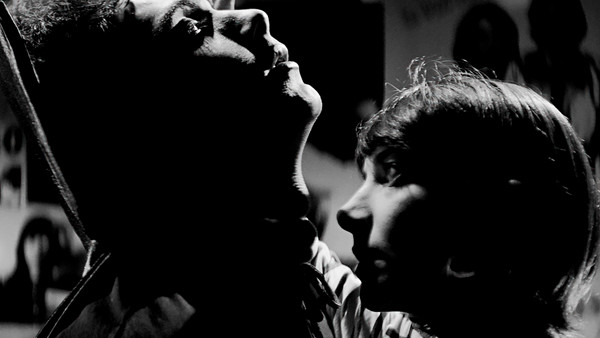
Styled as ‘the first Iranian vampire western’, director Ana Lily Amirpour has tried to sidestep the feminism tag with her first-time feature A Girl Walks Home Alone At Night, but considering that its content subverts all that its title suggests – the vulnerable female as soon-to-be victim – it’s easy to understand why it’s also been described as a ‘feminist Iranian vampire movie’ too.
Set in the fictitious Bad City, a depressed Iranian oil town whose real-life setting was actually southern California and reflects Amirpour’s own American-Iranian make-up, the film focuses on the titular Girl – a mysterious vampire who oozes cool as she stalks the barren streets on skateboard decked out in heavy eyeliner, Breton stripes, and a chador that floats around her like Dracula’s cape. As she goes, she dispatches the less than desirable men folk of the town whilst developing a tentative romance with one of its few good men.
A love story might be at its core but it’s hard to deny its Reclaim the Night connotations. Plus, it’s beautifully shot in black and white, spoken entirely in Farsi, and boasts a David Lynch meets Jim Jarmusch aesthetic which gives it instant bonus points for being one of the most artfully executed horrors since Suspiria.
1. The Witch

A movie that not only managed to impress fans of a more psychological, slow-burning type of horror but mainstream film critics too, Robert Eggers’ directorial debut The Witch tells the tale of a family of breakaway Puritans whose simple, isolated existence is torn asunder by religious superstition and black magic after the vanishing of their infant son, with the finger of blame pointed solely at the film’s young protagonist, eldest daughter Thomasin.
The Puritan lifestyle wasn’t exactly the most liberating for its female participants. Basically, if you were born female, the only option was to live a pious life full of prayer, marry a fellow devotee and birth a brood of mini Puritans – a wash, rinse, repeat existence that if deviated from usually indicated you were a witch worthy of execution by hanging. But in Eggers’ film, the traditions of religious zealotry represent confinement, and the occult freedom for young Thomasin.
Not that witchery and devil worship is necessarily a preferable route to the more, shall we say, heaven-oriented religions or indeed activities that should be equated with feminism (well, at least not the first two waves). But if posed with the choice of Puritan-style oppression and pious drudgery or the alternative of ‘living deliciously’, it’s definitely an affirmative to the latter.