10 Horror Movie Trilogies That Absolutely Kill It
These are some incredible trifectas of horror that everyone needs to see.

With the exception of a few standout examples, trilogies have a reputation for diminishing in quality as the series goes on. Even if the original film pushed the boundaries of its respective genre, all the movie magic is sure to have worn off by the time the dreaded threequel arrives.
This is especially true within the horror genre. As studios insist on churning out sequels to popular franchises to profit on the success of the originals, the need to make each sequel a grander spectacle only causes the franchise to move further away from what originally made it special. It's this soulless approach to filmmaking that led to Jason Vorhees going into space in Jason X and an exploding shark in Jaws 4: The Revenge.
Despite the plethora of ridiculous horror sequels that studios have insisted on making over the years, there are some trilogies that do stick the landing.
Whether these are the singular creative visions of a talented filmmaker brought to life, a thoughtful evolution of a strong premise, or a collection of standalone films connected by common themes, there are excellent trifectas of horrors out there for those who look hard enough.
10. Fear Street Trilogy

Netflix's Fear Street trilogy, adapted from R.L. Stine's book series of the same name, delivered a fierce and refreshing homage to the slasher genre with a wickedly witchy twist.
Set within the tragedy-prone town of Shadyside, the plot follows a group of high schoolers who discover that the legends about a witch's curse are more than just stories when they're pursued by killers from the town's grisly past. It's therefore up to them to find a way to break the curse before they become the latest tragedy.
After Part One delivered an entertaining slice of '90s-inspired slasher goodness, the sequel took the action to a summer camp in 1978. Alongside even more gleefully grotesque kills, Part Two's love letter to the genre expanded upon the wider plot in intriguing ways by revealing crucial details about the overarching mystery.
Everything culminated in Part Three, which whisked viewers back to the curse's chilling origins in 1666. Not only did the climactic chapter answer the questions surrounding Shadyside's dark history, but it did so while delivering an unexpectedly emotional punch before drawing the centuries-long tale of tragedy to a satisfying close.
Mixing self-aware fun with a compelling mystery, Fear Street is modern horror done right.
9. One Missed Call Trilogy

Whether it's the heart-stopping dread of Ring or the haunting meditation on loneliness found in Kairo, nobody does techno-horror like Japan. One series in this subgenre that tends to get overlooked, however, is the One Missed Call trilogy.
Based on the novel by Yasushi Akimoto, the first film (directed by Audition's Takeshi Miike) saw a group of college students plunged into terror when they receive ominous voice messages predicting their future deaths. Combining spine-chilling scares with a tragic mystery, this film demonstrates why Japanese horror is so effectively unsettling.
Set one year after the first picture's shocking twist, the sequel took the horror to Taiwan, where it expanded upon the tragic backstory of the curse in meaningful ways while introducing new wrinkles to how the curse operates.
Third entry One Missed Call: Final took the series in a different but nonetheless interesting new direction. Following a group of high schoolers on a school trip to Korea, the script shifted its focus to cyberbullying and spam mail. Although this installment didn't quite reach the same chilling heights as its predecessors, its range of inventively gruesome kills still made hearing that creepy ringtone a frightening delight.
8. Ginger Snaps Trilogy

Werewolves in horror have long been compelling allegories for puberty. While Teen Wolf may be the best-known example, the cult classic Ginger Snaps trilogy is the female equivalent.
Centred around death-obsessed sisters Ginger (Katherine Isabelle) and Bridgette (Emily Perkins), the first film follows Bridgette's quest to stop her sister's monstrous transformation when she's bitten by a werewolf. With its sardonic wit, sharp feminist edge, and healthy dose of creature feature shlock, this flick remains one of the best werewolf outings ever made.
Following the bittersweet finale of the first film, sequel Ginger Snaps: Unleashed picks up shortly after with a now-infected Bridgette being admitted into a psychiatric ward. Swapping its themes of sisterhood for addiction and paranoia, this entry expands on her plight in intriguing ways while maintaining the biting tone of the original.
Taking the action back to 1815, threequel Ginger Snaps Back saw Isabelle and Perkins play the ancestors of their characters who find themselves in a fort besieged by vicious monsters. While different, it's nevertheless an effective historic horror that reminded viewers how well these actors worked together.
A tender tale of sisterhood that spans centuries, the Ginger Snaps films are consistently enthralling, rightfully earning their spots as cult classics.
7. Christopher Lee's Dracula Trilogy

Out of every ghoulish monster and frightening serial killer that has appeared onscreen, none are as iconic as Dracula. Whether it was Bela Lugosi's charismatic portrayal of the monster in Universal's 1931 film or Gary Oldman's performance as the Count in Francis Ford Coppola's retelling of Bram Stoker's novel, no character is as recognisable as the vampiric Prince of Darkness.
While there have been countless depictions of this villain, no collection of Dracula films has been as consistently solid as the first three Hammer Horror efforts that saw Christopher Lee appear as Dracula.
Beginning with 1958's Dracula (also known as Horror of Dracula), this loose adaptation of Stoker's novel paired Lee with fellow horror legend Peter Cushing as Van Helsing to deliver a chilling Gothic horror. Alongside memorable performances from the genre greats, this was one of the goriest movies of its time, with Dracula's graphic death scene facing severe censorship.
Sequels Prince of Darkness and Risen from the Grave continued to deliver the same effective mixture of atmospheric chills and shocking violence. While Lee expressed frustrations about playing Dracula in the sequels, the star nevertheless gives a remarkable performance every time he's onscreen, forever cementing him as an all-time cinematic icon.
6. Scream Trilogy
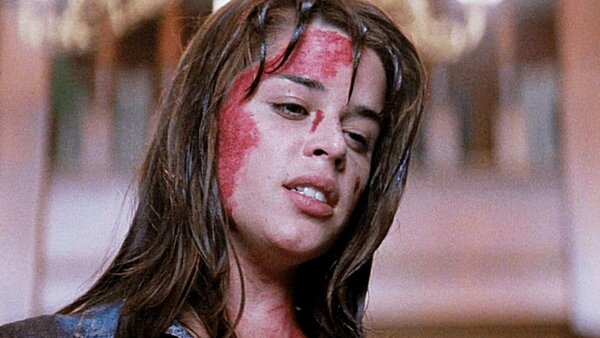
Not only did Wes Craven create genre-defining cult classics in the '70s and revolutionise the slasher genre in the '80s, but the horror legend also kickstarted a whole new wave of slashers in the late '90s with the Scream trilogy.
Originally titled Scary Movie, this 1996 classic saw a masked killer terrorise high school student Sydney Prescott (Neve Campbell) and her friends. While this sounds like the standard slasher affair, the genius of Scream lay in its razor-sharp satire. Not only did it playfully poke fun at genre tropes, but it also functioned as a gripping mystery of who was behind the mask.
The sequels continued the metacommentary of contemporary horror trends as the core group of survivors evolved throughout each installment. Campbell is consistently entertaining as Sydney, while David Arquette and Courteney Cox's onscreen chemistry was always a delight.
Although Scream 3 has garnered a reputation for being the weakest entry in the franchise to date, thanks to its convoluted plot and less engaging mystery, Craven still delivered a solid outing full of everything that made the other films work so well.
Even as the Scream franchise continues to grow, Wes Craven's original trilogy remains a pillar of the genre.
5. The Terrifier Trilogy

First appearing in a collection of grungy short films that would later become the 2013 anthology flick All Hallows' Eve, sadistic killer Art the Clown got his own feature-length outing with Terrifier.
Written, directed, co-produced, and edited by Damien Leone, the first entry in the Terrifier trilogy saw the deranged clown stalk and terrorise two friends on their way home from a Halloween party. What follows is nothing short of meanspirited depravity as Art viciously butchers anyone unfortunate enough to encounter him in graphic detail. Complete with a darkly comedic performance from David Howard Thornton as Art, Terrifier became an instant sensation amongst horror fans.
With a significantly larger budget to work with, the sequel was bigger and nastier than before as Art continued his massacre. The body count was higher and more creatively grotesque, and a more ambitious plot expanded upon the villain's demonic origins in intriguing ways.
Leone upped the ante once again with Terrifier 3. Setting the carnage during the festive season, Art's twisted antics continued to equally sicken and delight moviegoers with its unapologetic violence as it built upon what came before.
With Terrifier 4 scheduled for 2026, Art's reign of terror is far from over.
4. The X Trilogy

Before making what would become the X trilogy, Ti West had established himself within the horror genre with The Innkeepers, The House of the Devil, and his segment for anthology flick V/H/S. While these hidden gems showcased West's talents as a writer, director, and editor, it was 2022's X that saw him become one of the biggest names in modern horror.
After viewers were introduced to aspiring movie star Maxine Minx (Mia Goth) in '70s sexploitation homage X, prequel Pearl took viewers back to the 1940s to explore how fixation and tragedy transformed the titular farmgirl (also played by Goth) from a starry-eyed dreamer into the psychotic killer she'd become in in X (again played by Goth). Drawing heavily upon the video nasty aesthetic and early slashers of the '80s, MaXXXine then followed Minx's fight for the movie role she believes she deserves.
These films were more than stylish homages to different eras of cinema history, they served as compelling explorations of themes of fame, beauty, and obsession, each of which was carried by a tour de force performance from Mia Goth.
Equally stylish and thoughtful, West's X trilogy has already cemented itself as one of the most memorable horror trilogies in recent years.
3. The Dead Trilogy

Out of the horde of zombie flicks that have populated cinema over the decades, none have been as masterful as celebrated filmmaker George A. Romero's Dead Trilogy.
Comprised of Night of the Living Dead, Dawn of the Dead, and Day of the Dead, each title wasn't only instrumental in establishing the foundations for what the genre would become today, but they also delivered biting commentaries on American society at the time.
After touching upon racial tensions during Night, Romero turned his attention to consumerism within Dawn before exploring the crumbling remnants of society in Day. Each installment offered a bleak reflection of humanity at its most desperate as the world around the characters collapsed into total chaos.
While the first entry remains an all-time cinematic classic, it wasn't until the later films that Romero really hit his stride. Aided by the practical effects wizardry of Tom Savini and higher budgets, both Dawn and Day were visceral in their head-exploding violence.
Throw in some memorable performances, iconic lines that are still regularly quoted, alongside a healthy mix of comedy, and it's not surprising that these are still regarded as being the best zombie films ever created.
2. John Carpenter's Apocalypse Trilogy

Alongside directing the likes of They Live and Escape from New York, John Carpenter is the creative force behind numerous horror heavyweights. Some of his best works have been collected into what's become known as his Apocalypse Trilogy.
Comprised of The Thing, Prince of Darkness, and In the Mouth of Madness, each film, despite being its own separate entity, tackles similar themes of paranoia and isolation as the characters face potentially world-ending terrors.
In body horror classic The Thing, these ideas surfaced when a group of Arctic researchers fall prey to a shapeshifting alien creature. In Prince of Darkness, the threat came in the form of a manifestation of pure evil that desires to bring about the literal apocalypse. In the Mouth of Madness took these themes to Lovecraftian heights as reality and fiction blended as an insurance investigator hunts down the whereabouts of a horror author whose writing changes the fabric of reality.
Although each movie is wildly different, all three pictures blend cosmic and body horror to remarkable, and even brain-bending, effect. It's because of films like these that John Carpenter has earned his reputation as one of the all-time great horror filmmakers.
1. The Evil Dead Trilogy
When it comes to horror trilogies, they don't get much better than Sam Raimi's Evil Dead films.
Starting life as a 1978 short titled Within the Woods, the first flick saw Ash (the spectacular Bruce Campbell) and his friends' weekend trip descend into chaos when they're terrorised by sadistic demons. Despite being made on a shoestring budget, Raimi's creative use of gnarly practical effects and visceral filmmaking style saw it become a huge hit amongst horror fans following its premiere at Cannes Film Festival.
After earning a reputation for being one of the most violent movies of its time, the series only got better with Evil Dead II. This entry was gorier, crazier, and even more insane than before as it embraced a more comedic tone. More importantly, though, this was the picture that saw Ash become the chainsaw-wielding, deadite-killing horror icon who fans continue to adore.
Even when Army of Darkness turned the claustrophobic cabin-in-the-woods horror into a historic action-comedy, Raimi's cinematic flair and Campbell's charismatic screen presence proved once again to be an unbeatable combination.
As great as the recent Evil Dead films have been, they haven't come close to what the original trilogy accomplished.