10 Horror Movie Sequels Nobody Wanted…. But Everyone Loved
Follow-up films that easily surpassed expectations!

Despite frequently making more money than their predecessors, movie sequels aren’t always welcomed with open arms. In fact, many are met with apathy and confusion – if not disdain – as soon as they’re announced.
Of course, there can be some good reasons for that, such as the original film(s) being so beloved and significant that the mere thought of adding to the legacy is seen as sacrilegious.
On the other hand, maybe those earlier titles were so critically and/or commercially underwhelming that it feels foolish to try again. In more recent years, there’s also been the rise of “legacy sequels” arriving decades later with the presumed purpose of solely being nostalgia-fueled cash grabs.
No matter the motivation, these films leave many cinemagoers asking, “Who is this for?”
As the ten superb follow-ups on this list prove, however, first impressions can be misguided. Regardless of whether they were desired or even necessary, each of them justified their existence and earned plenty of praise from countless viewers.
(Also, note that although some of these titles are narrative prequels, they still count because they came after other entries in their series.)
For film lovers, it’s simply never felt so good to be so wrong.
10. A Nightmare on Elm Street 3: Dream Warriors

The original A Nightmare on Elm Street was a significant success upon its release (in 1984), garnering a lot of love from casual audiences and critics while also heightening the profiles of writer/director Wes Craven and Freddy Kreuger actor Robert Englund.
In contrast, successor Freddy’s Revenge (shoved out less than a year later and without the involvement of Craven) was much less appreciated. The chief reasons were its almost complete disconnection from its predecessor – including altering the rules, tone, and mythos Craven established – and inferior acting, directing, and storytelling.
Obviously, Freddy’s Revenge has received more love in hindsight, but at the time, it did little to generate excitement and validation for more movies.
That’s why it was such a pleasant surprise that said third entry – Dream Warriors – delighted skeptics and detractors alike when it emerged in 1987.
Co-written by Craven and the great Frank Darabont (and directed by the great Chuck Russell), it was a huge improvement because of its stellar characters, engaging connections to the original, poignant social commentaries, mischievous villain, and imaginative set pieces.
Beyond that, Dream Warriors helped turn Freddy into a wisecracking pop culture icon, and many people now deem it the best of the series.
9. Final Destination 5

Despite not being a hit with critics, 2000’s Final Destination was generally beloved by horror aficionados thanks to its Twilight Zone-esque premise, several nail-biting death scenes, and the star power of lead actors Devon Sawa, Ali Larter, Kerr Smith, and Sean William Scott.
The second and third films were roughly as popular, with each one being ranked above the other two by certain fans. When it came to the fourth entry in the franchise (2009’s The Final Destination), however, nearly everyone agreed that it was an immensely lackluster follow-up whose gimmicky 3-D visuals, unpleasant protagonist and subpar slays may’ve single-handedly killed the franchise.
Two years later, Final Destination 5 hit theaters with the presumed destiny of faring even worse in, well, every way.
As it turned out, though, the film was a massive improvement on its immediate predecessor, with arguably the greatest opening disaster – the collapsing bridge – of the whole lot. Beyond that, it had likeable protagonists, smartly conceived and executed executions, and an enticingly colorful and enjoyable tone.
Those features alone made Final Destination 5 an appreciated breath of fresh air, yet it’s the movie’s cleverly foreshadowed twist ending that truly amazed the majority of premature naysayers.
8. Ouija: Origin of Evil
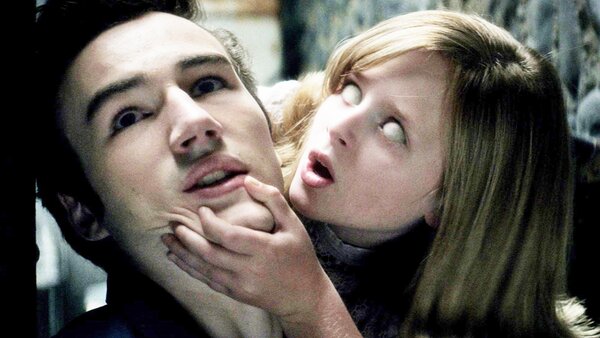
The first Ouija was released in October of 2014 rather than in January, but it might as well have emerged during the theatrical “dump month” because it exemplified the sort of low-effort and instantly forgettable trash that typically assaults moviegoers during that time.
As such, no one was asking for another attempt to do the concept justice, and while his prior full-length ventures (including Oculus, Hush, and Before I Wake) showed promise, writer/director Mike Flanagan hadn’t yet established himself as a leading force in the genre.
To the shock of just about everyone, though, Flanagan’s turn a bat – 2016’s Ouija: Origin of Evil – was a substantially better experience.
For one thing, and as its title suggests, the movie takes place during the 1960s, with Flanagan’s signature attention to detail capturing the look, vibe, and film techniques of the era.
More importantly, it hinted at Flanagan’s now-trademark knack for mixing inventive creepiness and dread with palpable emotional resonance and empathetic characters. Critics even championed lead Lulu Wilson for capturing the same sort of childlike innocence and sinister corruption Linda Blair achieved as Regan MacNeil in The Exorcist.
Today, Ouija: Origin of Evil is still touted as a remarkable course-correction.
7. Doctor Sleep

2019’s Doctor Sleep faced three obstacles the moment it became an official project, as it simultaneously had to be a respectful adaptation of Stephen King’s 2013 book; a satisfying sequel to King’s 1977 book The Shining; and a satisfying sequel to late auteur Stanley Kubrick’s 1980 adaptation of The Shining (which King famously disliked).
In other words, it needed to appease two masters (and innumerable fans) at once, which inherently set it up for failure and derision.
If anyone could accomplish such a feat, however, it was writer/director Mike Flanagan since he’s a diehard King fan who’d recently blown people away with the aforementioned Ouija: Origin of Evil and his first King adaptation (2017’s Gerald’s Game).
Luckily, Flanagan succeeded with flying colors by carving out a relatively faithful and beautifully realized reimagining of the Doctor Sleep novel during its first two acts. What’s more, he wisely – and painstakingly – fashioned the final act so that it expanded upon elements from both versions of The Shining.
The result was a profoundly ambitious compromise between all possibilities that pleased all sides (including King, who famously remarked: “Everything that I ever disliked about the Kubrick version of The Shining is redeemed for me here”).
6. Candyman (2021)

Based on Clive Barker’s short story The Forbidden, the original Candyman from 1992 is a highpoint of the genre because it brilliantly mixed grisly frights/gore and perpetually relevant social commentaries on American classism, gentrification and the legacy of racial violence stemming from slavery.
As if often the case, it was swiftly followed by multiple continuations (1995’s Candyman: Farewell to the Flesh and 1999’s Candyman: Day of the Dead) that fell far short of matching what the first Candyman conjured up. Consequently, the property was left dormant for over 20 years.
Despite having the names of rising talents Nia DaCosta, Yahya Abdul-Mateen II, and Jordan Peele behind it, 2021’s Candyman reboot/sequel was preemptively viewed by many as another inevitably bad sequel without a discernable target demographic.
All of that changed when it hit theaters, though, and pessimists had to admit that Candyman was an artfully constructed gem full of lively shot compositions, tense scenarios, meaningful messages, and thoughtful connections to its forerunners.
Sure, the last 20 minutes or so are rushed, but that does little to diminish how well Candyman charts its own path amidst deepening the series’ lore. The final scene, in particular, is extremely arresting and cleverly reflective.
5. The Exorcist III

It’s difficult to exaggerate the initial impact of 1973’s The Exorcist.
Directed by William Friedkin and written by William Peter Blatty (who penned the novel two years earlier), its visual and thematic horrors literally caused people to faint. Naturally, it’s since been hailed as one of the greatest – and scariest – horror movies of all time.
Four years on, however, John Boorman’s Exorcist II: The Heretic had the complete opposite effect. With its stagey acting, laughably awkward dialogue, muddled narrative, and poor special effects, it quickly and definitively became known as a so-bad-it’s-good curiosity and one of the worst sequels ever made.
Over a decade later, 1990’s The Exorcist III – helmed entirely by Blatty – arrived long after the brand lost its luster (with countless fans of the original still feeling offended by Exorcist II).
Fortunately, The Exorcist III became rightly celebrated as a massively superior sequel thanks to Blatty’s confidently contemplative and disturbing vision alongside the lead performances of George C. Scott and Brad Dourif.
Granted, the possession elements themselves aren’t particularly frightening or necessary, but The Exorcist III’s storytelling, chilling moodiness, dynamic direction, and philosophical/theological depth is top-tier stuff. Plus, it arguably spawned the greatest jump scare of all time.
4. Saw X

The Saw series began on a relatively high note, kickstarting the careers of creative duo James Wan and Leigh Whannell as a bold blending of Fincher-esque gritty thriller and stomach-churning sadomasochistic carnage.
Although the franchise’s yearly releases remained largely profitable, moviegoers gradually got tired of being subjected to the trademark “torture porn” gore and convoluted continuity. It was finally put to bed with 2010’s Saw: The Final Chapter, only to be fruitlessly revived twice with 2017’s Jigsaw and 2021’s Spiral: From the Book of Saw.
Shortly thereafter, news spread of another seemingly desperate upcoming resurrection attempt: Saw X (which would take place between Saw II and Saw III, with Tobin Bell returning as John “Jigsaw” Kramer).
As the saying goes – and to a degree few could’ve anticipated – the third time was the charm, with Saw X being the highest-grossing chapter since Saw 3D. It’s currently the most positively received Saw film on Rotten Tomatoes and Metacritic as well, with the majority opinion being that it’s nearly as commendable as what Wan and Whannell accomplished.
With its streamlined and relatable storytelling injecting energy and pathos into Kramer’s actions and philosophy, it’s no wonder why Saw X was such an unforeseeable treat.
3. The First Omen
1976’s The Omen is a horror classic, and like so many movies that spawn franchises, it was perfectly self-contained. Hollywood can’t leave well enough alone, though, so they pumped out three unnecessary new installments (yes, there was an Omen IV) and a pointless remake by 2006.
That disappointing track record – coupled with the tendency for prequels to answer questions no one asked – generated more confusion than excitement for The First Omen. (The fact that the undeniably similar looking Immaculate was marketed and released around the same time didn’t help, either.)
Then the trailer premiered, delighting just about everyone by promising a significantly distinctive, haunting, and justified journey.
Indeed, The First Omen lived up to those fresher assumptions, with Nell Tiger Free excelling in the lead role and director Arkasha Stevenson’s keen eye for disturbing imagery injecting several scenes with artfully abject terror. Its viscerally bleak nature (complete with a spot-on homage to 1981’s Possession) added unsettling depth and authenticity, too.
Consequently, The First Omen was quickly praised by casual audiences and critics (including eminent horror YouTubers), with the consensus being that it was both the best entry in the series since the original and one of 2024’s foremost horror outings.
2. Annabelle: Creation

The first two Conjuring movies were hugely successful creatively and commercially, with plenty of people championing them as two of the best horror pictures of the 2010s.
Prequel Annabelle, on the other hand, was widely panned as nothing more than a derivative, shallow, and uninteresting waste of time. (It also established the ongoing trend for movies in the Conjuring Universe that aren’t directed by James Wan turning out bad.)
Given Annabelle’s awfulness, there was clearly no desire from audiences to add more fuel to the fire with another Annabelle catastrophe.
Fortunately, though, Annabelle: Creation wound up exceeding expectations, ultimately becoming the third highest-rated chapter of the Conjuring Universe on Metacritic (next to The Conjuring and The Conjuring II).
Aside from Annabelle co-writer Gary Dauberman being the sole writer of Annabelle: Creation (leading to a much tighter and more fleshed out story), director David F. Sandberg brought the same sort of fluidity and inventiveness he’d previously shown with 2016’s Lights Out to the experience.
Consequently, Annabelle: Creation was sufficiently scary, absorbing, and warranted, with old-school techniques and compelling plot points setting it apart from the pack while also adding worthwhile lore and answers to the haunted doll’s intriguing history.
1. Psycho II

Alfred Hitchcock was one of the most revered filmmakers who ever lived, and although it was made during the last quarter of his career, 1960’s Psycho was seen as a career highlight.
That distinction, alongside the fact that “legacy sequels” weren’t a thing yet, meant that 1983’s Psycho II was preemptively judged as a bafflingly blasphemous prospect. (In fact, director Richard Franklin was asked what he hoped to achieve with such a seemingly doomed endeavor.)
Having proven himself as a capable Hitchcock protégé with 1981’s Road Games, and with genre maestro Tom Holland penning the screenplay, Franklin fulfilled his mission to craft a follow-up that satisfyingly continued to tale of tragic serial killer Norman Bates.
Chiefly, it’s more of a considerate character study than a throwaway slasher, with star Anthony Perkins delivering a nuanced performance that adds pathos to Bates’ Oedipal complex and desire for rehabilitation and assimilation back into society.
His dramatic relationship with newcomer Mary Loomis is strong, too, as are the motivations behind what Mary’s mother (returning character Lila Loomis) is doing behind the scenes.
In the ensuing decades, Psycho II has only grown more beloved for offering a multifaceted character study that enriches Hitchcock’s groundbreaking feature.