10 Greatest Film Characters Who Never Say A Word

Actions speak louder than words.
Harold Pinter once said that there are two types of silence: one where nothing is spoken, and one where a ceaseless torrent of conversation effectively takes meaning away from the words. Under normal circumstances, a huge part of an actor's performance is dependent on the dialogue they are given. That's how we determine the type of person that they are, and without those words, actors have to work even harder to develop characterization in a way that the audience can understand. So to play a character who, for one reason or another, does not speak, creates quite a challenge. When you don't have the luxury of words, you have to use your face and your body as the only way to communicate with not only the other characters in the film, but with the audience as well. Anyone who has seen particularly dated silent films knows how easy it is to fall into a pattern of overacting in an attempt to be understood. But in a way, it can be quite liberating to play a character who is free from meaningless chatter, and communicates in a more organic and genuine way. There are a number of actors who have risen to the challenge, and created really interesting characters that deserve to be recognized.

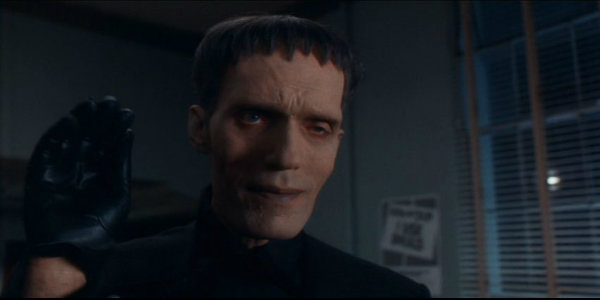
10. Lurch - The Addams Family

Lurch is one of the most enduring figures in popular culture, and he never even said a word. He didn't have to. Other men may fill their days with meaningless chatter and empty words. Not Lurch. He could communicate perfectly well without dialogue. Well, OK, Lurch spoke in the 1960s sitcom, but that's only because Jim Cummings ad-libbed the famous, "You rang?" line and they decided to stick with it. But in the original comics and the theatrical films, there's no talking. So he still counts. Since the 1930s, Lurch has been the faithful butler of the wildly macabre Addams Family. Absurdly tall and silent as the grave (except for the occasional well-timed grunt), he took on the day to day minutiae of running the spooky Addams household, which mainly consisted of opening the front door when visitors rang the bell and glaring menacingly at people. His role was limited, to be sure -- out of necessity, characters like Gomez, Morticia, Wednesday, and Uncle Fester got the lion's share of screen time. After all, deadpan sardonic humor is much easier to pull off when you can actually speak. But Lurch will always have a special place in our hearts, and the Addams Family wouldn't have been the same without him.

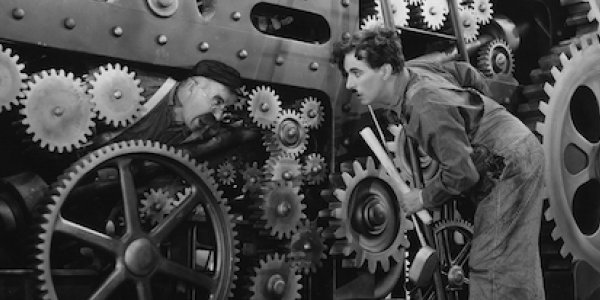
9. The Little Tramp - Modern Times

In the beginning, the Little Tramp character was silent out of necessity more than any artistic choice. Films were silent, so it only follows that its stars would be as well. But after a certain point, everyone else started to talk while the Tramp stayed quiet. It was a deliberate decision by Charlie Chaplin to delay transitioning into the sound era for as long as possible. By the time Modern Times came out, he was one of the only filmmakers still making silent movies, and the Little Tramp had become a quaint remnant of a nearly obsolete medium. It's a credit to Chaplin's unparalleled talent that he also happens to be one of the most endearing characters in film history. Words are redundant for the Tramp, who makes himself perfectly understood with just his face and body. In Modern Times, just as Chaplin is feeling left behind in Hollywood, the Tramp begins to find himself overwhelmed by the breakneck pace and oppressive machinery of the modern age. It's a silent, helpless scream against all the unpleasant side effects of progress, done with a sense of humor that only Charlie Chaplin could bring to the table.

8. Dopey - Snow White And The Seven Dwarfs
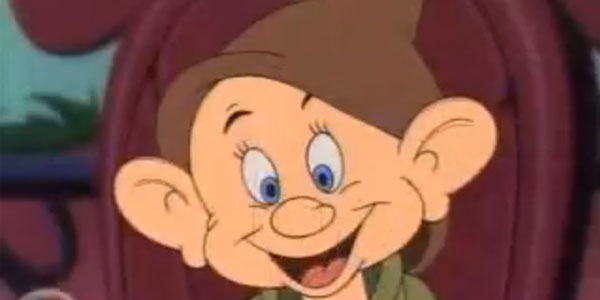
Dopey is easily the most adorable of Snow White's miniature roommates, and it's not hard to see why. He's the tiniest of all the dwarfs, with gigantic eyes, long lashes, and a childlike sensibility. He pulls it off without anything more than a few sound effects. It's not that he can't talk, it's just that...well, he's not sure if he can or not. He's never really tried. If that kind of eccentricity doesn't make for one of the cutest characters Disney's ever created, we don't know what does. We're immediately inclined to like Dopey, as all of the other dwarfs seem to regard him as a sweet little brother who must be protected at all costs. Even the more curmudgeonly dwarfs have a soft spot for Dopey, and Snow White dotes upon him as well. There's just something about a massively over-sized tunic and hat, enormous ears, and an inability to speak that endears such a character to audiences right away.

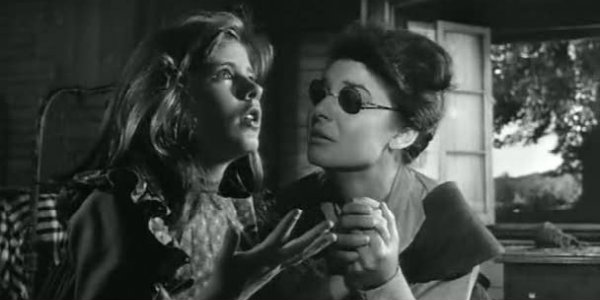
7. Helen Keller - The Miracle Worker

Helen Keller is, as we all know, one of the most famous silent figures of all time. Although the real Helen Keller eventually learned to speak (an astounding achievement, given that she was both blind and deaf), the film The Miracle Worker takes place when she is just a child, before she had progressed that far. In fact, she's pretty much a wild child, completely detached from the world around her, until her tutor Anne Sullivan (played by the incomparable Anne Bancroft) manages to break through to Helen by helping her understand the connection between sign language and physical sensations (running water, for example, or the doll she holds in her hand). The Miracle Worker has long been considered an actor-proof play -- it doesn't matter how good or bad the performances are, people are going to cry. But Patty Duke puts in a wonderful showing as Helen Keller, reprising her role from the critically acclaimed Broadway production and earning herself an Academy Award in the process.

6. Hattie - Sweet And Lowdown

Sweet and Lowdown is one of Woody Allen's lesser known works, about Emmet Ray, a jazz guitarist (who believes himself to be the second best in the world) played by Sean Penn, and Hattie, a mute laundress played by Samantha Morton. While both were nominated for an Academy Award and Sean Penn turns in a predictably high caliber performance, Morton seems to be the one who has the more difficult role. Her performance is a throwback to the silent film era, where she isn't so much acting as she is radiating a specific character. Although she can fully hear and understand the world around her (and as such is privy to both Ray's genius and his painfully inept social graces), she is incapable of communicating with it. While it's troubling to consider the idea that Woody Allen's idea of a dream girl is a childlike woman who can't talk back, Morton's performance is nonetheless first rate.

5. Rocky - Rocky Horror Picture Show

Rocky is one of those rarest of all creatures -- he can sing, but not speak. He's the sexiest science project ever (two possible exceptions: Kelly LeBrock in Weird Sciene and Benedict Cumberbatch in Frankenstein), the mysterious Dr Frank-N-Furter's desperate attempt at building the perfect man, one who is both an exemplary physical specimen and utterly devoted to his creator. Naturally, things don't go exactly as planned, because although Rocky has a certain amount of loyalty to Frank, that doesn't stop him from having sex with Janet. He's one eighth of an immensely convoluted love octagon, despite the fact that he doesn't seem capable of mastering the power of speech. Then again, when you look like Rocky and you wear a tiny golden speedo, no one would even be paying attention to what you said anyway. He's the glam rock, outrageously campy version of Frankenstein's Creature, and sure, maybe he's not the most loquacious character in the movie. But his name's in the title, and that's got to count for something.

4. Belinda - Johnny Belinda

Throughout the 1930s and 1940s, Jane Wyman was largely relegated to the roles of the dumb blonde best friend character. She didn't really have too many opportunities to prove herself as a dramatic actor until her 1948 performance in Johnny Belinda, a film about a deaf-mute young woman who goes on trial for the murder of her rapist. It was a rare film for the time, one of the few that was allowed to frankly depict issues of rape and sexual violence when most films were heavily censored as a result of the strict production codes in place in Hollywood. Johnny Belinda has more than a touch of the melodrama, not an uncommon element of postwar films, but Wyman's strong and emotionally effective performance elevates the material into something that stands the test of time. She was awarded an Academy Award for her work in the film, and her career blossomed as a result, giving her the opportunity to go on to star in films like The Glass Menagerie and Magnificent Obsession.

3. John Singer - The Heart Is A Lonely Hunter
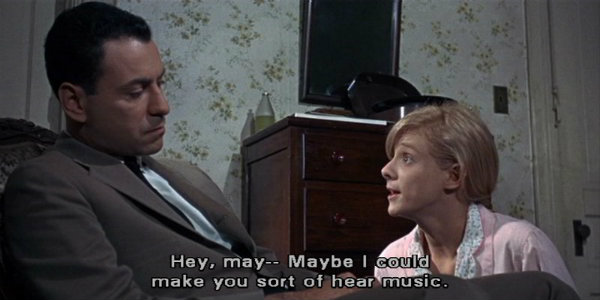
The world of The Heart is a Lonely Hunter is filled with broken people, characters who are damaged and hurt and unlikely to find a way out of their circumstances. It is there that Alan Arkin's John Singer finds a home. A deaf-mute in the South of the 1960s, his only friend is a mentally challenged individual named Antonapoulos. But when Antonapoulos is institutionalized, Singer moves to a town near the facility to be closer to his friend, and rents a room from a family struggling with the recent crippling injury of their patriarch. There's a very special aspect of Arkin's performance that is particularly worthy of note -- despite the fact that he can't speak or hear, the character never comes off as dumb or slow, which is something that a lot of actors struggle with. His intelligence and dignity is significant to the film, as he becomes friends with the family's teenage daughter, but never becomes cloyingly sentimental.

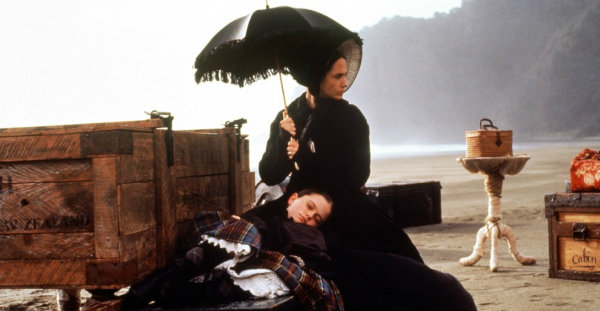
2. Ada McGrath - The Piano

Ada is nothing more or less than a total enigma. She's a melancholy figure, mute from childhood due to an unknown trauma in her past, travelling from England to New Zealand with her young daughter to marry a man that she's never met. Despite the fact that we do hear her thoughts through an interior monologue, she feels very much like a woman without a voice. And the film, along with her blossoming (if bizarre) relationship with Harvey Keitel, is about her discovering that part of herself. Throughout her life, she uses her piano as a means of communication. When her new husband sells the piano she brought with her all the way from England, he silences her more effectively than if he had cut out her tongue. By the end of the movie, she may have lost a finger or two, but she's beginning to heal -- we learn that she's taking speech therapy to help develop her ability to talk again.

1. The Renter - Extremely Loud And Incredibly Close
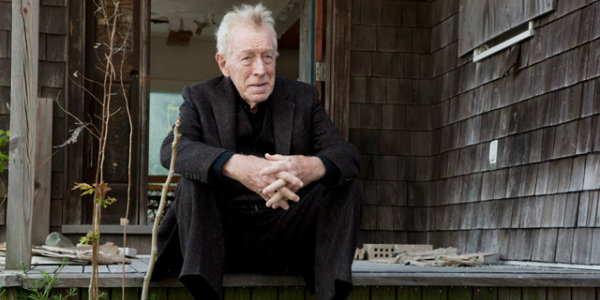
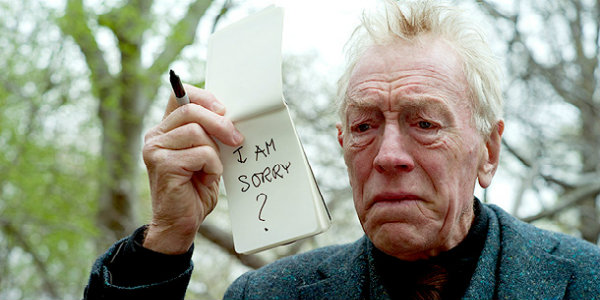
The brilliance of combining young, exuberant Oskar with the melancholy old man is in the striking contrast that exists between the two. Oskar has a racing mind, with thoughts and images and anxieties tumbling past one another so quickly that he hardly has time to process them before they've flitted away. The Renter has a sense of stillness and calm, which would be comforting if it weren't a defense mechanism to help him cope with a deep emotional wound. He has taken a vow of silence, communicating only with words printed on a notepad that he carries around with him wherever he goes. But incredibly, they work together, when he volunteers to help Oskar with his Herculean task of tracking down one specific Mr Black in all of Manhattan, almost as an act of penance for some long ago sin. Long before we begin to know his situation, there's an aching sadness that fills every inch of his character. His regrets and sorrow, it seems, we can understand without words.

Contributor
Contributor

Audrey Fox is an ex-film student, which means that she prefers to spend her days in the dark, watching movies and pondering the director's use of diegetic sound. She currently works as an entertainment writer, joyfully rambling about all things film and television related. Add her on Twitter at @audonamission and check out her film blog at 1001moviesandbeyond.com.