10 Great Movies That Prove Blockbusters Don't Have To Be Dumb

Some movies prove you don't have to dumb things down to have a huge hit on your hands.

For the most part, when people go to the cinema to watch a blockbuster movie they're not sitting down to think - action and spectacle is what they demand and Hollywood more often than not is happy to oblige. Different films serve different functions: blockbusters are largely escapist entertainment, about as far removed from the kind of smart and intelligent cinema found playing in the smaller art house venues as you can possibly get, designed to be the cinematic equivalent of a theme park ride. The fact that some of the biggest blockbusters of all time - Jaws (the first of the new era blockbusters), Back To The Future and Jurassic Park to name but a few - have all had theme park rides based on their movies speaks volumes to this dynamic. But while a film like Pirates Of The Caribbean might prove that even theme park rides themselves can be suitable material for blockbuster movies, others demonstrate that a big budget event movie doesn't have to be so shallow and unchallenging. While it might only be a small percentage of blockbusters, there are a few which deliver action and excitement against a complex narrative and thematic backdrop. The following list covers ten great blockbuster movies which prove that a big budget event movie doesn't have to be dumb to be a hit.

10. Mission: Impossible

It says something about the state of modern cinema that Mission: Impossible, the first instalment in the franchise, directed by Brian de Palma and starring Tom Cruise as super spy Ethan Hunt, was lambasted by some for being "too convoluted." If a movie based on spies can't have plenty of twists and turns, what else can? While Mission: Impossible is no Smiley's People or Tinker, Tailor, Soldier, Spy, it's inventive and intriguing enough to put it head and shoulders above the rest of the espionage movies which have emerged from Hollywood. While it might not be a masterpiece, you only have to watch the sequels to see just how much the plots ended up being sacrificed in favour of increasingly mindless action. Still, as lacking in the brains department as the sequels are, Tom Cruise clearly knows his target audience - the Mission: Impossible series doesn't look like it'll be coming to an end any time soon, regardless of how simplistic the storylines may have become.

9. Inception

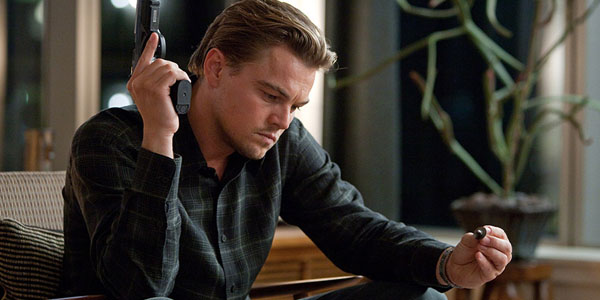
If there's one individual who has single-handedly succeeded in reinventing the comic book movie adaptation it is Christopher Nolan. With the Dark Knight trilogy he proved that a comic book could be brought to the screen with a perfect blend of visual panache while discussing broader philosophical themes concerning identity and morality. That Christopher Nolan is one of the more cerebral filmmakers working in the mainstream is difficult to dispute, and Inception stands as perhaps his most daring attempt to infuse a big budget event movie with ideas usually found in lower budget, independent cinema. On the surface it is essentially a heist movie, but beyond that it is a layered examination of the nature of the subconscious and dreaming. While Inception doesn't hold a candle to more art house fare which explore similar themes (for instance, Luis Buñuel's Belle de Jour, Satoshi Kon's Paprika and David Lynch's Mulholland Drive) it deserves credit for touching on interesting ideas that are rarely seen in big budget films with mass appeal.

8. Robocop

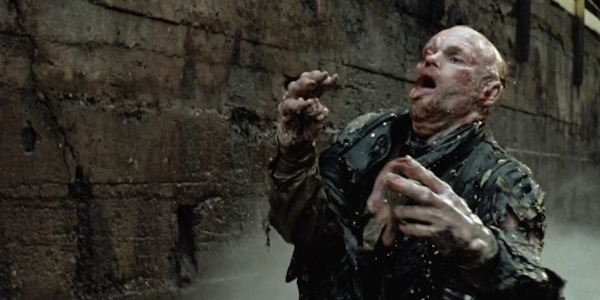
If there's one thing that Dutch-born director Paul Verhoeven knows a thing or two about it's generating controversy. While films such as Basic Instinct and Showgirls might have aimed low and suffered for it, his first great movie in the American mainstream, Robocop, proved that loud, violent films didn't have to be message-free. Make no mistake, Robocop is a truly violent movie with on-screen bloody carnage on a level which has rarely been surpassed since. Officer Murphy's gunning down at the hands of a vicious criminal gang, leaving him for dead, is one of the most graphic scenes of violence you'll ever see, and the film rarely lets up before the final confrontation with the corrupt head of evil corporation OCP. Yet Verhoeven misses no opportunity to deliver knowing swipes at everything from mindless consumerism ("I'd buy that for a dollar!"), corporate greed, the repressive nature of authoritarian politics and the nature of identity, transforming Robocop into one of the most brutally scathing satires in movie history.

7. The LEGO Movie

In 2014, the last movie anyone expected to turn out to be any good was The LEGO Movie - the title alone seemed to make it painfully obvious that this would be a predictably shallow, bland corporate movie tie-in for a product which has no conceivable narrative function. Against all the odds, The LEGO Movie turned out to be pretty damn good by anyone's standards. The lack of narrative potential for a toy which has no backstory turned out to be a huge help rather than a hindrance, allowing the filmmakers to use the endless possibilities of LEGO bricks to build an equally imaginative universe, while the film retained a cheeky, irreverent attitude towards the very corporate blandness many feared it would itself exhibit. It is fair to say that this commentary on creativity left a bitter taste in some critics' mouths, who saw it as hypocritical for a film about a toy which rakes in countless millions a year in profits to berate - albeit subtly - corporations similar to itself. Still, it's impossible to deny that The LEGO Movie is a whole lot of fun full of witty humour and knowing references of a higher calibre than many other animated movies aimed at kids.

6. District 9

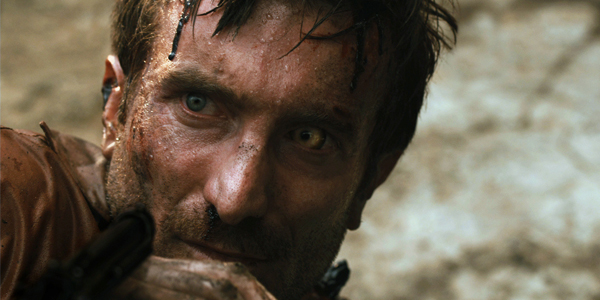
Genre cinema has often functioned as an analogy for contemporary social and political issues. Science fiction in particular is noted for this dynamic, with many of the classic sci-fi B-movies of the 1950s playing on the Red Scare and anti-Communist paranoia of the time. Neill Blomkamp's directorial debut District 9 strikes you first and foremost with its exceptional production design and visual effects. Blomkamp's background lies in 3D animation and his attention to detail really shines through. But this consideration of detail is more than skin deep - underneath the exciting set pieces lies an allegory for racism under South African apartheid. While Elysium continued Blomkamp's trend of infusing imaginatively conceived science fiction with an undercurrent of social commentary - although his critique of stratified society was certainly more heavy-handed - it looks like he's dropped the ball with Chappie, a sub-par Short Circuit rip-off which can't seem to decide on what tone it wants to be.

5. Minority Report

As Ridley Scott's Blade Runner proved, Philip K. Dick is the go-to-guy when it comes to scouring through obscure pulp science fiction stories to uncover hidden gems. Dick had a real knack for delivering startlingly vivid alternative worlds which explored and often lambasted everything from psychotropic medication to corporate culture and society which has lost its identity. While some of Dick's other adaptations are best avoided like the plague (steer clear of Next and Paycheck at all costs) others proved that his particular brand of high concept science fiction was perfect for the movie treatment. Steven Spielberg's adaptation of Minority Report might have disappointed fans of the original short story with its radically different ending but the spirit remained firmly in place. Taking the idea of precognition as its central theme, Minority Report takes the tried and trusted premise of an innocent man trying to clear his name and turns it on his head, the hero (Tom Cruise, of course) having yet to actually commit the act which leads to his arrest. Free will versus determinism aren't philosophical ideas you see in blockbusters very often, and it's to Spielberg's credit that they remain central to the narrative of Minority Report.

4. The Exorcist

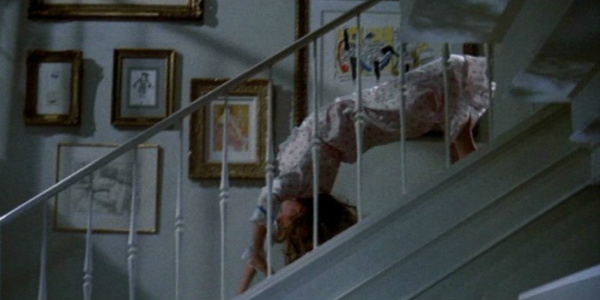
Horror movies aren't often associated with "smart" and "intelligent" cinema - perhaps more so than any other genre, horror is one most akin to theme park rides and the raw, visceral thrills they deliver. For many, however, William Friedkin's adaptation of William Peter Blatty's novel The Exorcist is an exception. The Exorcist remains one of the most expertly executed horror movies to this day, retaining the same potency to shock audiences as it had back in 1973. While on the surface it's certainly a lean horror movie about the exorcist of a young girl, underneath lies layers of subtext about the nature of guilt and faith which far surpasses the depth of most other horror movies. Not all critics agreed that The Exorcist was a truly important film when it was released but in the decades since it has widely been recognised as a masterpiece. British critic Mark Kermode goes so far as to state that he believes it is the best movie of all time, and whether you agree or not it's certainly smarter than most hugely profitable horror movies.

3. The Godfather

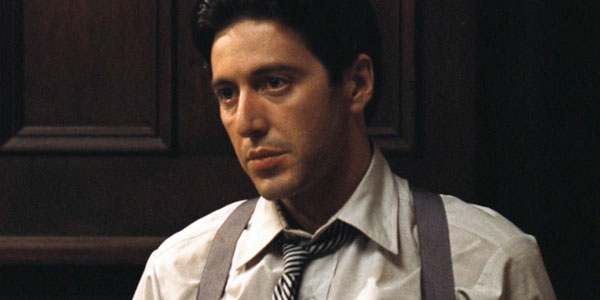
It's difficult to imagine a gangster movie as detailed, complex and talkative - not to mention nearly three hours long - performing as well if released today as The Godfather did on its release in 1972. From a $6 million budget it went on to gross nearly $300 million worldwide, putting it up there with some of the biggest hitters of all time. The Godfather, adapted from Mario Puzo's epic novel about the Mafia by Francis Ford Coppola and starring Marlon Brando and Al Pacino, might not have been the first gangster movie to take hold of the public's imagination (James Cagney had carved a niche in this field decades before), but it's certainly one of the most intelligent, weaving the intricate machinations of its gangster protagonists and antagonists into a carefully unfolding insight into the criminal underworld. It's a superior film to its nearest contemporaries in every respect - you only have to watch Gangster Squad or the music video-esque Cockney gangster movies by Guy Ritchie to see just how far removed from such masterpieces filmmakers have fallen in the years since.

2. The Matrix

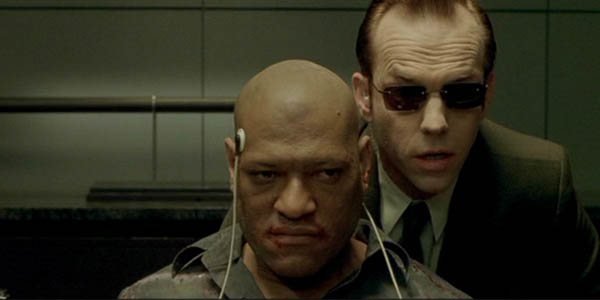
The appearance of The Matrix on a list of movies which prove that blockbusters don't have to be dumb is completely inevitable - and to miss it out would be to do it an injustice, regardless of the fact that its legacy was nearly ruined in the eyes of many by its own creators. Leaving aside the misguided, muddled and confusing sequels, however, and the original The Matrix stands alone as a textbook example of how to merge "high concept" ideas into a mainstream, action-packed science fiction movie. While movies like The Terminator had played with the idea of machines taking over the planet before, few had twisted the concept to introduce a manipulated reality in quite the same way as The Matrix. The Wachowski siblings proved that it was okay for big movies to get their audiences to think once they'd left the theatres and sure enough The Matrix remains one of the most culturally significant science fiction films of the 20th century. It's a shame that they turned out to be one-hit wonders, failing to deliver anything even remotely as potent since.

1. Total Recall

Total Recall It's no surprise that critics who took a disliking to Total Recall when it first came out did so on account of the level of violence depicted - this, after all, was a Paul Verhoeven-directed movie starring the king of action movies at the time, Arnold Schwarzenegger. But Total Recall is far more than simply a brainless action film. What separates it from the rest of the pack is the way in which the movie can be read on different layers - to begin with it's a story about a construction worker Douglas Quaid (Arnie) having dreams about Mars and a beaufitul woman who decided to go to the Rekall company to have a memory implanted of a trip to Mars as a secret agent, but as the film progresses it starts to merge fantasy and reality until both Quaid and the audience can't tell the two apart. Not surprisingly, like Minority Report this was also based on a short story by the great Philip K. Dick, We Can Remember It For You Wholesale. Unlike the average-at-best remake starring Colin Farrell, Total Recall remains one of the most cerebral big budget Hollywood blockbusters of all time, its box office success proving that it's okay to make the audience think while they enjoy the on-screen pyrotechnics. What other movies prove that blockbusters don't have to be dumb? Why not let us know in the comments below?

In this post: 
district-9
 
Posted On: 
Contributor
Contributor

Andrew Dilks hasn't written a bio just yet, but if they had... it would appear here.