10 Great Movie Performances (That Got Better The Second Time You Watched)
Fight Club's twist actually improved Brad Pitt the second time...
In economics, the law of diminishing returns states that there's a point at which the level of benefits gained is less than the amount of money or energy invested. In cinema, generally speaking, if you watch something repeatedly, you'll gain less and less with each viewing. Even the reward of your favourite film will change the more you watch it... Or so general thinking would assume, anyway.
In some cases, though, it takes a repeat for something to really be appreciated as it deserves to be. Some of the best whisky is double aged. Some of the best chips are twice-cooked. There's even a song about the first being the worst and second the best.
And if all of that concrete evidence isn't enough for you, there are some acting performances throughout some of the biggest films in Hollywood that only mature properly the second time you watch them...
10. Guy Pearce - Memento

On first viewing, Guy Pearce's performance - arguably the most impressive of his career to date - as the tragic Leonard in Christopher Nolan's breakout feature is hugely impressive. He is the heart and hero of a fairly typical, but chronologically confused neo-noir, unpicking a twisting narrative mystery around the death of his wife and the assault that led to his profound memory loss.
That's a genius concept on its own, with Pearce's performance acting as a dependable, sympathetic anchor even as the story jumps between two points on the timeline. Nevertheless, even before the revelation, it's a performance marked by existential dread, which is exactly Nolan's intention.
When that revelation eventually comes and we learn the truth of Leonard's tragic story and he is essentially flipped into the villain of the piece, the film immediately demands a rewatch. This time, you watch as the detective investigating Leonard, rather than the same case he is, and the performance is even more impressive - losing absolutely nothing of its nuance because of your awareness heading in.
9. Jack Nicholson - The Shining

The Shining is pretty much the single most compelling monument to the warped, controversial genius of Stanley Kubrick. He takes Stephen King's source material and adds his own spin - to the extent that King was less than enthusiastic about his handling of the story - with subtexts and provocative symbolism that is weighty enough to inspire discourse, but vague enough to defy concrete interpretation. It's also a busy story, with supernatural lore at work as well as the conflicts within the Torrence family.
Crucially, it's a film that demands subsequent rewatches, particularly because the density of the story makes it impossible to appreciate everything at once. And those rewatches only improve Jack Nicholson's stunning, career-best performance as Jack. Knowing the revelation at the end hinted by that photograph, you head back in looking for clues of his true nature and watching him closer is infinitely rewarding.
There is subtlety behind the mania and his spiral into darkness is horribly convincing. While Shelley Duvall's performance is also brilliant, hers is a product of Kubrick's mental assault of her, whereas Nicholson's is built more in smaller details and it's one that just gets better and better.
8. Bruce Willis - The Sixth Sense

Bruce Willis might get a lot of flack these days for his career choices, but he remains a gifted, versatile actor whose credits don't always match his ability. It happens. He's been genuinely brilliant over the years, in the likes of Death Becomes Her, Unbreakable and Die Hard, but his most surprising turn came in The Sixth Sense.
As Malcolm Crowe, he is a picture of restraint - a cynic dropped into a ghost story he doesn't believe in while the audience can see how wrong he is. The first time you watch it, he's a mentor gradually building a rapport with young Cole and learning to give him a voice. He's a fairly conventional hero, with emotional turmoil of his own that is barely hinted at and the kind of backstory - of failing a former patient - that makes his link to Cole even more rewarding.
But then on second viewing, after we know he's a ghost, the perception of him completely changes. Knowing that Shyamalan used various tricks to frame ghostly sequences (predominantly the use of red), you're primed to go back and investigate Willis' performance for the same hints. Crucially, it holds up. It's an artful con built both on Shyamalan's writing but also Willis' acting and how convincing it is only improves the latter with subsequent watches.
7. Jeff Bridges - The Big Lebowski

The Dude is one of those characters - like The Joker, Tyler Durden and Ferris Bueller - who transcends the limits of their own initial material. He's endlessly quotable, has inspired a philosophical movement and remains Jeff Bridges' most cherished role, despite how many brilliant performances he's offered before and since.
The best thing about his performance is not merely that he's an aspirational slacker, or that his deliciously no-f*cks attitude to pretty much everything (or even his copious drug use, which makes him a prophet for stoner culture), it's that there appears to be so little to the performance. He appears to float through the movie as a passenger in a world far weirder and more manic than he has any time for.
But watching it a second time without the burden of attention to the story, Bridges' genius shines through far more. His observations in that performance are glorious, particularly if you're familiar with anyone so deeply embedded in stoner/slacker culture.
6. Christian Bale - American Psycho

Christian Bale's Patrick Bateman is another character who changes completely in the audience's perception thanks to a revelation - or in this case the hint of one - that comes late on in his story. The moment we get some suggestion that he's so far out of touch with reality that he might have imagined the crimes that have come to define our journey with him, everything turns upside down.
A second viewing, again, is about investigation - about attempting to unpick what he actually did, who he killed and what was all perverse fantasy. The key is that there's absolutely no hint in there of where the line is. As the audience, you're no more aware of what is real, which makes Bale's irresistible, visceral performance all the more rewarding as you watch it again.
And even more surprisingly, after seeing how... ludicrous the ending gets, the second time you watch it, you'll begin to realise - horrifyingly - that it's the blackest of black comedies. Almost as if the part-fantasy reveal makes it ok to see the humour a lot more and you're free of questioning what the f*ck is wrong with you.
5. Jon Favreau - Chef
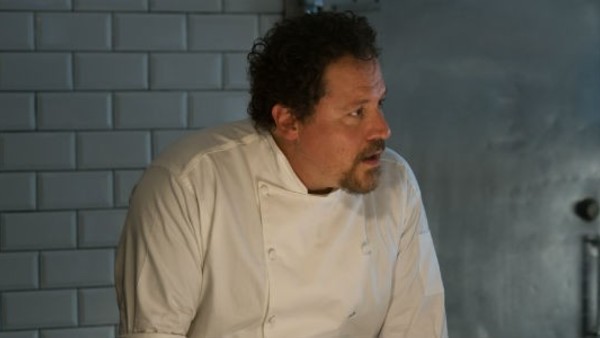
Jon Favreau's performance in the simply wonderful Chef may not seem to fit with the others in this list, but it is the crowning glory in a film that becomes more and more intoxicating every time you watch it. It's a film told entirely wrongly in traditional terms, with all of the dramatic difficulty right at the start and the rest of the story geared towards a sort of humanist propaganda that will make your heart as hungry as the food sequences make your belly.
Crucially, Favreau's role - and indeed the whole process of making this film - is a cathartic process and it's only the second time you watch it that that subtext really appears. Favreau made Chef as an antidote to big studio films that he didn't have full control over - a palate cleanser after the unfortunate experience of Cowboys & Aliens (and Iron Man 2 before that).
It is the food he wanted to make while his over-bearing restaurant-owner bosses were demanding he made chocolate lava cake and his rebirth as a chef in touch with his passion is Favreau's story as a film-maker. Once you know that, watching him again is even more heart-warming. Plus, it's just a really great film that rewards multiple viewings.
4. Jack Black - Jumanji: Welcome To The Jungle

When he's great in movies, Jack Black is really, really great. He's eminently watchable in School Of Rock, Bernie and High Fidelity (and even Tropic Thunder, though it's a far more charitable role) and it's a major shame that he seems to have misread what made Chris Farley so brilliant and chased the wrong roles.
Thankfully, it looks like he's put the nonsense roles like Gulliver's Travels and The D Train behind him and is in a renaissance period of sorts, crowned by his genius performance in Jumanji: Welcome To The Jungle. In a film defined mostly by effects, impressive action set-pieces and the chemistry between The Rock and Kevin Hart, Black steals the show.
Playing a teenage girl trapped in the body of a fully-grown, middle-aged man, his observations are incredible and considering how easily he could have gone the root of a Wayans gross-out comedy character, the subtlety he brings to the performance is glorious. It's so good, in fact, that it deserves rewatching closer without the story getting in the way, which reveals even more of how great it is.
3. Ewan McGregor - The Star Wars Prequels

Sometimes, a performance ends up being under-appreciated because of its context. In the case of Ewan McGregor's performance as Obi-Wan Kenobi across the Star Wars Prequel Trilogy - and in particular the first movie - there is so much questionable context around him that it's impossible not to be completely distracted.
Strip away all of that distraction - which can only be achieved by consuming it once - and McGregor's performance is far easier to appreciate. Once you can put aside George Lucas' many missteps and the story is out of the way, you start to see how great he is, not only in his subtle tribute to Alec Guinness but also in his own respect.
Even when he's lumbered with Hayden Christensen's performance to feed off or when he's engaging with Jar-Jar Binks, he's brilliant, never once letting the material distract from his character work. That's definitely something to admire.
2. Brad Pitt - Fight Club

Fight Club was one of those litmus paper artworks that channelled a cultural movement and hit a nerve with an entire generation of disaffected youths. Admittedly, it was widely misunderstood as a monument to the challenges facing "modern masculinity" (when in fact it's a criticism of toxic masculinity), but it partly sold on how cool its most iconic character was.
Tyler Durden might have been a distilled Anarchy For Dummies figure who we're supposed to realise is the villain of the piece by the end, but he's also inherently aspirational. His very creation is a fantasy: he's better looking, in better shape, has no social anxiety, f*cks who and how he wants and has seemingly successfully cast of the rules and limits of society. That's why he became such an important character even after the film's twist reveals he's an imaginary monster.
The twist obviously also demands you rewatch, to see whether it's obvious that Tyler is a projection and the knowledge that he is ostensibly an imaginary friend just makes him even better to watch.
1. Christian Bale - The Prestige

Christian Bale's acting ability is such that you shouldn't be surprised that he's on this list twice. Nor that it's for two entirely different performances. Well, three, really.
The Prestige is one of his biggest achievements in performance, despite the fact that the role is nowhere near as flashy or as provocative as some of his others. And it becomes even better the second time you watch it because of the twist that reveals you've actually been watching Bale twice without realising it.
And the genius of this duel performance is that there are very subtle hints of when he's playing which Borden twin, particularly when he's being forced into performing the illusion himself. It's a masterful performance from an actor who revels in roles that offer him a contradiction like Batman and Bruce Wayne or Patrick Bateman's public front and his murderous heart. And watching it repeatedly only adds to the appreciation of it.
Which other performances belong on this list? Share your suggestions below in the comments thread.