10 Genius Movie Moments That Came Out Of Nowhere
Nobody saw these incredible movie moments coming.
Generally speaking, a great movie moment will be accompanied by other great movie moments, because it's rare for a filmmaker to strike gold in just a single sequence, all while the rest of the film is just... there.
But there are absolutely times where a movie stumbles upon a single nugget of cinematic gold among everything else, and sure as hell wants you to know about it.
The result can be pleasantly surprising for sure, but also quite jarring, as you wonder how something so brilliant, even genuinely genius, made it into a film that's otherwise anything but.
And that's certainly true of these 10 films which, while hardly terrible for the most part, simply weren't up to much interesting - until they were, of course.
These incredibly smart and inventive scenes were so good they left many wondering why the rest of the movie wasn't anywhere near this level.
And even years later, many will periodically check out these scenes once again on YouTube while having little memory of everything else in the film.
And so, for as generic and forgettable as a movie might seem, it's always possible it ends up delivering a single-scene masterpiece totally out of nowhere...
10. Murphy Gets Taken Apart - RoboCop (2014)
2014's RoboCop remake was largely dismissed by critics and fans of Paul Verhoeven's 1987 original because it just felt like a toothless rehash that lacked the satirical bite of its predecessor while heavily toning down the violence - per its restrictive PG-13 rating.
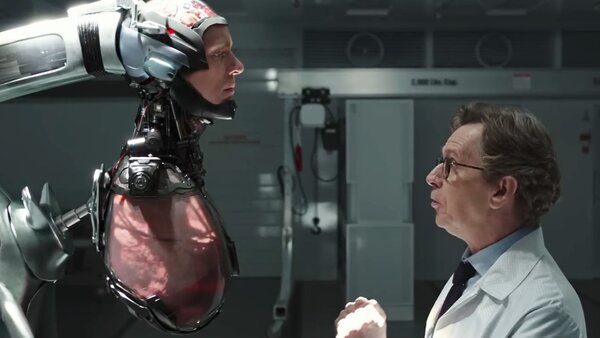
But there is a single scene that actually builds on the existential terror of the original concept, when the newly "rebuilt" Alex Murphy (Joel Kinnaman) wakes up in the lab of RoboCop creator Dr. Dennett Norton (Gary Oldman).
Murphy's robotic chassis is promptly disassembled in front of him, revealing that his only original body parts which survived the car bombing are his head, lungs, heart, and right hand.
Murphy is understandably incredibly disturbed by this revelation, and to make it even more unsettling for the audience to sit through, his organs are on full display throughout.
Between all this and Murphy's request for euthanasia being swiftly denied by Norton, the scene hammers home the viscerally horrifying nature of Murphy's resurrection, arguably even more effectively than Verhoeven's film did.
9. The Henchman Mask Reveal - Mission: Impossible II
You won't find many Mission: Impossible fans who will argue with the assertion that the second film is the dumbest entry in the franchise by a massive margin, for better or worse.
But there's a sure irony about the fact that the John Woo-directed Mission: Impossible II also features the single smartest and most effective "mask reveal" scene in the entire series.
Ethan Hunt (Tom Cruise) and his team using extremely lifelike face masks for infiltration purposes is one of the franchise's most consistent tropes, and it gets its best showing later on in Mission: Impossible II, when villain Sean Ambrose (Dougray Scott) seemingly guns down Ethan once and for all.
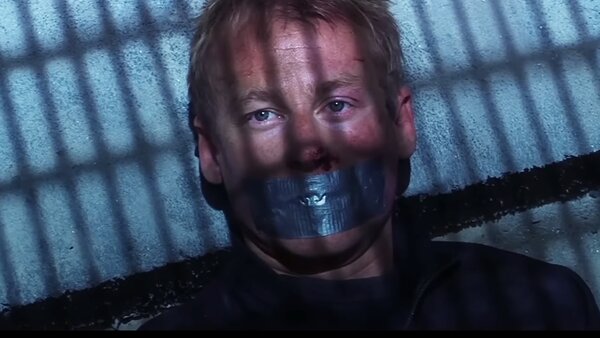
Except after executing "Ethan," Ambrose notices a wound on Hunt's finger, at which point he tugs at Ethan's face and pulls off a mask, revealing that he actually just murdered his own henchman, Hugh Stamp (Richard Roxburgh).
As Ambrose flies into a rage the real Ethan, who was mere feet away from Ambrose and wearing a mask of Stamp, runs off with the cure to the Chimera virus. Genius.
As much as Mission: Impossible II gets wrong - and it sure does get a lot wrong - this scene is a mini-masterpiece in its own right.
8. The Split Screen Tracking Shot - The Green Hornet
Remember when Hollywood tried to make The Green Hornet a thing again, rather boldly mounting 2011's big-screen reboot as a blockbuster romp starring Seth Rogen?
Despite a solid performance from Jay Chou as Kato, the film came and went in a flash and was swiftly forgotten, largely because it watered down the personality of the source material into a generically glossy action film.
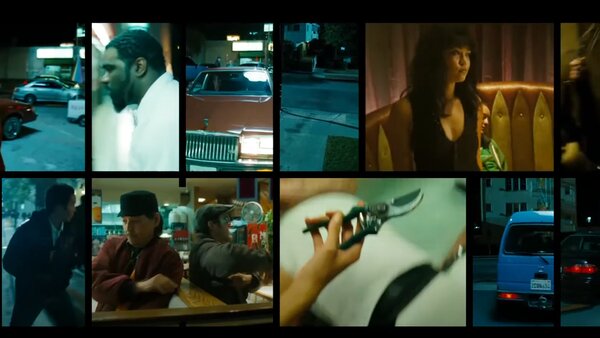
There is one scene, however, which is anything but "generically glossy," and that's a mesmerising mid-film sequence where villain Benjamin Chudnofsky (a wasted Christoph Waltz) instructs his network of goons to hunt down The Green Hornet.
The scene begins as a tracking shot following one henchman talking to several associates, but as they walk their separate ways, the screen suddenly starts dividing into boxes as it continues tracking each character, and splits into further boxes as more and more goons are introduced.
The seamlessness with which these tracking shots are split apart is absolutely mind-boggling from a technical perspective, and so it's little surprise that it proved quite the challenge for the film's VFX team.
If you somehow managed to remember anything else about The Green Hornet, give yourself and your tack-sharp memory a firm pat on the back.
7. Microsleep - A Nightmare on Elm Street (2010)
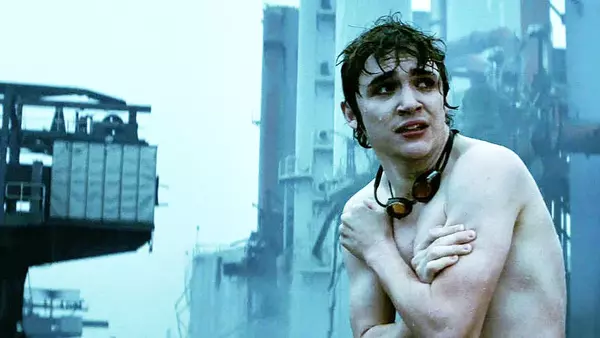
2010's remake of A Nightmare on Elm Street is a largely uninspired effort that's mostly only remembered for Jackie Earle Haley's rock solid performance as Freddy Krueger, taking over from the great Robert Englund.
On a narrative and filmmaking level, though, it's doing very little of interest at all. That is, save, for the single compelling new wrinkle the script introduces - microsleep.
As our embattled heroes Nancy (Rooney Mara) and Quentin (Kyle Gallner) attempt to stay awake in order to avoid being killed by Freddy, they begin experiencing microsleep - sudden bouts of sleep in the middle of their waking life which leave them vulnerable to Freddy even when awake.
It was a fun way to ramp up the stakes and give Freddy a fresh method of terrorising the heroes, while also being somewhat rooted in the actual science of sleep.
Apart from this, though, there's little reason to give much consideration to a remake that was so keen to just go through the motions.
6. THAT Line - Spy Kids 2: The Island of Lost Dreams

Love it or hate it, Spy Kids 2: The Island of Lost Dreams is hardly a movie anyone expects to get deep. This is a Robert Rodriguez joint after all.
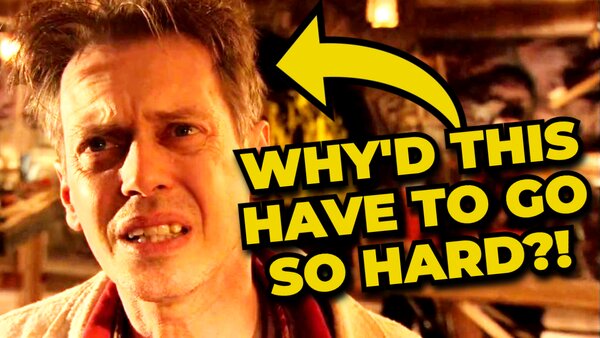
And yet, the spy comedy sequel comes swinging wildly out of left field with a brilliant cameo from Steve Buscemi as mad scientist Romero, who lets out a noodle-baker of a one-liner so poetic you probably assumed it was paraphrasing one of history's great philosophers.
Romero asks the kids, "Do you think God stays in Heaven because he too lives in fear of what he's created, here on Earth?"
It's a bafflingly thought-provoking line for any family-friendly action comedy, let alone Spy Kids of all things, enough that viewers might spend the next few minutes of the movie thinking about it rather than focusing on the actual plot.
Hilariously the quote often gets passed around online without attribution, only for folk to be left shook when they find out where it really came from.
5. Mickey Rourke's Monologue - The Expendables

When action hero team-up movie The Expendables was first announced, audiences quite understandably assumed it'd be a gleefully silly, action-packed B-movie with virtually zero desire to be taken seriously.
And while it's for the most part a watchable throwback romp that trains its focus firmly on the gory action, there is one scene that just comes out of nowhere and sticks out like a very sore thumb.
Mid-way through the movie, Expendables leader Barney Ross (Sylvester Stallone) meets up with his good bud Tool (Mickey Rourke), where they discuss an old mission they both undertook in Bosnia.
Tool tells an absolutely haunting story where, during a massacre, he saw a woman on a bridge and knew she was about to jump, but did nothing to help her.
Tool is clearly wracked with guilt about this as he spills his guts to Barney and Rourke, who was fresh off an Oscar nomination for The Wrestler, commits to the scene like he's gunning for another nod from the Academy.
To be clear, it's an absolute acting masterclass from Rourke and the only scene in the movie with any dramatic meat on it whatsoever, enough that even predominantly negative reviews of The Expendables singled it out as a highlight.
It doesn't fit the tone of the rest of the movie at all, but as a self-contained monologue about guilt and inaction, it's a home run.
4. The FBI Sting - Jason Goes to Hell: The Final Friday

The ninth and not-so-final Friday the 13th movie didn't exactly invite stellar expectations from the outset, because following up the risible Jason Takes Manhattan as it did, why would it?
And the opening scene initially seems to be recycling the same tired slasher scenario we've seen countless times throughout the franchise - a scantily clad woman being attacked by Jason Voorhees (Kane Hodder) and clumsily attempting to flee him.
But the scene climaxes with an unexpected twist - the woman is actually an FBI agent who was part of a sting to trap Jason.
And so, just as Jason catches up to the woman to dice her up, the full might of the FBI swoops in, absolutely riddling Jason with gunfire before blowing him to kingdom come with a grenade launcher.
As ridiculous as it is, as a closed-off ending to the Friday the 13th franchise it honestly makes for a pretty great short film in its own right.
It's just a shame about the rest of the movie, where the coroner eats Jason's still-beating heart, allowing Jason's spirit to possess him and later other people to continue his killing spree.
3. The Story of Creation - Noah
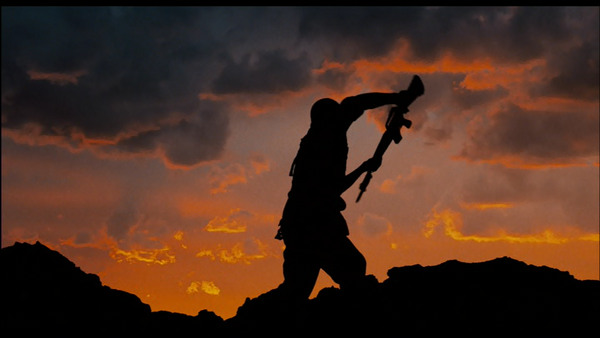
Darren Aronofsky's Noah is by no means a bad movie, but it's far and away the least interesting film in the visionary director's back catalogue, and probably the only one that can be fairly called, well, a bit boring at times.
Yet there is an absolute gem of a sequence sure to perk viewers up in the second half of the movie, when Noah (Russell Crowe) regales his family with the story of creation.
Noah's gravelly narration is set against a gorgeous visual montage of the birth of the universe as we know it - the Big Bang, the formation of Earth, the beginnings of basic life, leading into the origins of man by way of Adam and Eve, the Original Sin, and how it has shaped humanity's penchant for violence ever since.
Beyond its thoughtful fusion of religious, scientific, and philosophical concepts, the decision to render the sequence as an eye-catching timelapse-style montage further helps it stand out.
It's the one scene in the movie that truly feels like Aronofsky cooking at the full height of his powers.
2. The Tanning Bed Match Cut - Final Destination 3
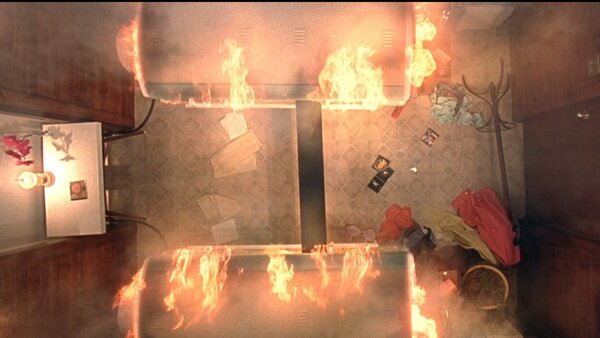
As enjoyable as the Final Destination movies are, few expect much in the way of genuine artistry-with-a-capital-A from them, and yet, the third film in the series served up one of the most brilliantly delicious match cuts of the last 20 years.
Nobody who's seen the film will surely forget the traumatic sequence where poor Ashley (Chelan Simmons) and Ashlyn (Crystal Lowe) are burned to death inside their tanning beds.
The scene ends on an overhead shot of the two aflame tanning beds as Ashley and Ashlyn continue to scream in agony, before director James Wong suddenly cuts to an overhead shot of the pair's coffins at their funerals with the exact same framing, all while their screams continue to ring out.
Match cuts are often deployed by filmmakers to generate an instant audience association between two moments, and cutting from two tanning beds to two coffins was an unexpectedly smart and darkly humourous piece of visual storytelling in a franchise that isn't exactly known for being intellectually stimulating.
Though many have dismissed the franchise as artless gore porn, this brilliant little flourish shows that thoughtful imagery can abound in unexpected places.
1. The Guggenheim Shootout - The International

The International is a perfectly watchable and yet entirely forgettable action thriller that's actually rather light on the action for the most part.
The bulk of the movie settles for brief bursts of violence while mostly focusing on its rather ho-hum conspiracy thriller plot, but then director Tom Tykwer serves up an absolute banger of an action set-piece at the end of the second act.
The scene, a gloriously well-staged and chaotic shootout at New York's Guggenheim Museum, makes the absolute most of the Guggenheim's distinctive architectural design to ensure it sticks in the mind.
But it's ultimately the only scene in the film just about anyone remembers over 15 years after The International's release.
It's such a bombastic and well-crafted sequence that it feels like the climax of the movie, but the story in fact carries on for another half-hour or so, ending on a decidedly more pared-down note.
Considering how frustratingly mannered and middle-of-the-road the rest of the movie is, this insane action sequence feels totally at odds with it.